Alif Surgery: How It Works, Recovery, and What to Expect

Alif surgery stands for anterior lumbar interbody fusion and is done through the abdomen rather than the back. It is most often used for selected lower spine conditions such as degenerative disc disease, instability, and some cases of spondylolisthesis.
Key Takeaways
- Alif surgery stands for anterior lumbar interbody fusion and is done through the abdomen rather than the back.
- It is most often used for selected lower spine conditions such as degenerative disc disease, instability, and some cases of spondylolisthesis.
- The procedure can help restore disc height, improve spinal alignment, and reduce pressure on nearby nerves.
- Recovery happens in stages, with early walking encouraged and bone fusion developing over several months.
- Not everyone with lower back pain needs surgery; careful imaging, symptom review, and specialist evaluation are important.
Alif surgery is a type of lumbar spinal fusion performed through the front of the body, usually to treat painful disc damage, spinal instability, or certain forms of spondylolisthesis. It works by removing a damaged disc and placing a spacer and bone graft between the vertebrae so the bones can heal into one stable segment over time.
Overview: What alif surgery is and how it works
Alif surgery, short for anterior lumbar interbody fusion, is an operation used to treat certain problems in the lower spine. In this approach, the surgeon reaches the lumbar spine from the front of the body through the abdomen rather than through the back. The damaged disc between two vertebrae is removed and replaced with an implant, often called a cage or spacer, along with bone graft material that helps the bones fuse together over time.
The goal of alif surgery is to create a more stable spinal segment and reduce pain caused by movement at a damaged level. By restoring the space between vertebrae, the procedure may also help improve alignment and indirectly reduce pressure on nerves. For many people, this can ease symptoms such as persistent low back pain, leg pain, numbness, or weakness when these symptoms are linked to a specific structural problem.
One reason this technique is considered in selected patients is that it avoids cutting through the major back muscles. This may help preserve the tissues at the back of the spine. At the same time, alif surgery is a major procedure and is not the right choice for every person with back pain, so treatment planning is individualized.
Who may be a candidate for alif surgery

Alif surgery is usually considered when symptoms are significant, last for a meaningful period of time, and do not improve enough with non-surgical treatment. A specialist may discuss it for people with degenerative disc disease, spinal instability, recurrent disc-related pain, or selected cases of spondylolisthesis. It may also be used in some revision surgeries or when restoring disc height and spinal alignment is especially important.
Candidacy depends on more than the diagnosis alone. Doctors look at where the problem is located, whether the pain matches imaging findings, overall bone quality, body structure, previous abdominal or spinal operations, nerve symptoms, and general health. Some people with severe osteoporosis, active infection, certain vascular concerns, or abdominal scar tissue from earlier surgery may need a different approach.
Importantly, alif surgery is not a routine treatment for ordinary back strain or short-term lower back pain. Many patients improve with physical therapy, activity modification, medications, injections, or structured rehabilitation. Surgery is generally considered when the expected benefit of stabilizing the spine outweighs the risks and recovery demands.
Step by step: what happens during the procedure
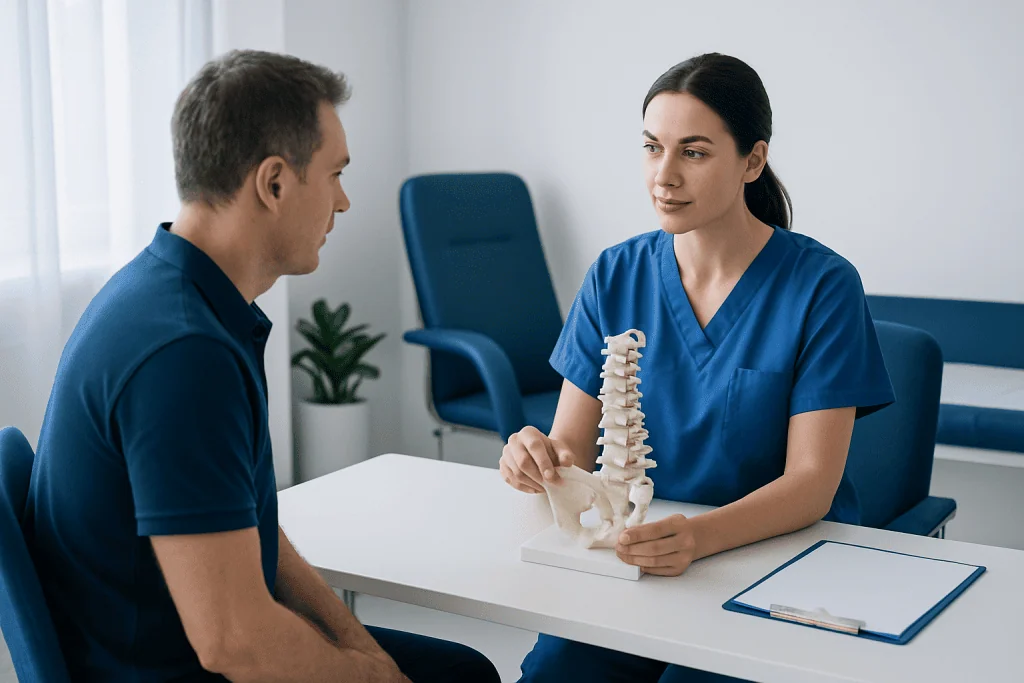
Before surgery, the care team reviews imaging such as X-rays, MRI, and sometimes CT scans to confirm the level and nature of the spinal problem. Blood tests, anesthesia assessment, and medication review are also part of preparation. Patients are usually asked about smoking, blood thinners, and other factors that can affect healing, because these can influence both safety and the chances of a solid fusion.
During alif surgery, the patient is under general anesthesia. The surgeon makes an incision in the lower abdomen and carefully moves soft tissues and blood vessels aside to reach the front of the lumbar spine. The damaged disc is then removed, and the disc space is prepared. A spacer or cage filled with bone graft or a bone-graft substitute is placed between the vertebrae to restore height and support fusion. In some cases, screws or plates are added from the front, and in others the surgeon may combine alif with additional fixation from the back for extra stability.
The exact technique depends on the spinal level being treated, the degree of instability, and the person’s anatomy. The operation may involve one or more levels, although surgeons try to limit the procedure to the segments most likely to be causing symptoms. After placement of the implant and any fixation devices, the incision is closed and the patient is monitored in the recovery area.
Because alif surgery involves both spinal and nearby abdominal structures, it is typically planned carefully by an experienced multidisciplinary team. Patients who are learning about spine surgery are often advised to ask about the approach, expected fusion method, whether additional posterior instrumentation may be needed, and how success will be assessed after surgery.
Potential benefits and possible risks
The main potential benefit of alif surgery is stabilization of a painful spinal segment. Removing the damaged disc can reduce motion-related pain, while the spacer helps restore disc height and may improve the opening where nerves pass. Some patients also benefit from better lumbar alignment, which can support posture and reduce stress on nearby structures.
Another advantage of the anterior approach is that it may avoid direct disruption of the back muscles and some of the scar tissue found in patients who have had earlier posterior surgery. For selected individuals, this can make the procedure a useful option when access from the back would be more difficult. However, the benefits are greatest when symptoms, imaging findings, and the planned fusion level match closely.
Like all major spine operations, alif surgery carries risks. These can include bleeding, infection, blood clots, ongoing pain, nerve injury, problems related to anesthesia, and incomplete fusion, sometimes called nonunion. There are also approach-specific risks because the surgeon works near large blood vessels, abdominal tissues, and, in some patients, nerves involved in sexual function. The exact risk profile varies by age, anatomy, smoking status, medical conditions, and the number of levels being treated.
It is also important to understand that fusion changes how force moves through the spine. While many patients do well, nearby segments can experience increased stress over time. A thoughtful discussion with the surgeon helps set realistic expectations about pain relief, mobility, work, sports, and the possibility that additional treatment could be needed in the future.
Recovery timeline and what to expect after surgery
Recovery after alif surgery starts in the hospital, where the team monitors pain control, circulation, wound healing, and early movement. Many patients are encouraged to stand and walk relatively soon after surgery, depending on their condition and the details of the operation. Early walking helps support circulation, breathing, and overall recovery, even though lifting, twisting, and bending are usually limited at first.
The first few weeks often focus on protecting the fusion while gradually increasing daily activity. Some people need a brace, while others do not, depending on the surgeon’s plan. Sitting for long periods may be uncomfortable early on, so short walks and position changes are often recommended. Driving, desk work, and return to routine chores vary from person to person and should follow individualized medical advice.
Bone fusion itself takes much longer than incision healing. It commonly develops over several months, and follow-up imaging may be used to check progress. Physical therapy may be introduced in stages to rebuild strength, flexibility, and movement patterns safely. Full recovery can take months rather than weeks, especially for people having multilevel surgery or combined anterior and posterior fixation.
Smoking or nicotine use can interfere with fusion healing, so doctors often strongly advise stopping before and after surgery. Good nutrition, careful management of diabetes or other chronic conditions, and adherence to restrictions all support better recovery. People with severe nerve compression may also need time for numbness or weakness to improve, and in some cases symptoms improve only partially.
How doctors diagnose the problem before recommending alif surgery
Alif surgery is not recommended based on imaging alone. Doctors first take a detailed history of symptoms, including where the pain is felt, whether it travels into the leg, what activities worsen it, and whether there is numbness, weakness, or balance difficulty. The physical examination helps identify whether the pain is more likely to come from the disc, the joints, the nerves, or another source.
Imaging is then used to confirm the suspected cause. MRI is often central because it can show discs, nerves, and soft tissues. X-rays can reveal alignment problems or instability, and flexion-extension views may help show abnormal motion between vertebrae. CT may be used for bony detail, especially in complex anatomy or prior surgery. In some situations, doctors also assess whether symptoms fit conditions such as herniated disc or spinal narrowing that may require a different operative plan.
Before surgery is considered, non-surgical treatment is usually reviewed carefully. This may include medication, structured exercise therapy, spinal injections, or a rehabilitation plan. The aim is to confirm that surgery is being offered for a clearly defined structural problem that has not responded enough to conservative care and that the expected benefit is meaningful for the patient’s daily life.
When to seek medical care
Medical care is appropriate when lower back pain lasts for weeks, keeps returning, limits walking or work, or is accompanied by leg pain, numbness, tingling, or weakness. A specialist assessment is also important when pain continues despite physical therapy, medications, or other conservative treatment. Persistent symptoms do not always mean surgery is needed, but they do deserve a careful diagnosis.
Urgent medical attention is needed for warning signs such as new loss of bowel or bladder control, rapidly worsening leg weakness, numbness in the groin or saddle area, fever with severe back pain, or pain after significant trauma. These symptoms can point to emergencies that should not wait for a routine appointment.
For people considering surgery, it is reasonable to seek evaluation from a center with spine expertise. Acibadem International’s multidisciplinary specialists and JCI-accredited hospitals diagnose and treat complex spinal conditions for international patients, including options such as advanced spine surgery and supportive physical therapy and rehabilitation when appropriate.
Frequently asked questions
What does alif stand for in spine surgery?
Alif stands for anterior lumbar interbody fusion. It describes a spinal fusion procedure in which the surgeon reaches the lower spine from the front of the body to remove a damaged disc and place an implant between the vertebrae.
Is alif surgery the same as other lumbar fusion surgeries?
No. Alif surgery is one type of lumbar fusion, but it differs from posterior or lateral approaches because the spine is reached through the abdomen. The best approach depends on the spinal level involved, the diagnosis, anatomy, prior surgeries, and the surgeon’s goals.
How painful is recovery after alif surgery?
Some pain and soreness are expected after surgery, especially in the early days. Pain is usually managed with a recovery plan that may include medication, gradual walking, and activity restrictions. Most people notice recovery progressing in stages rather than all at once.
How long does it take to recover from alif surgery?
Initial recovery may take several weeks, but bone fusion usually takes months. Return to desk work, driving, exercise, and heavier activity varies based on the number of levels treated, overall health, and whether additional fixation was used. The surgeon’s advice should guide the timeline.
Who is not a good candidate for alif surgery?
People may be less suitable for alif surgery if they have certain vascular or abdominal issues, poor bone quality, active infection, or other factors that make the anterior approach less safe or less likely to succeed. Some patients also have pain that does not match a fusion-treatable problem and may need different treatment.
What are the main risks of alif surgery?
The main risks include infection, bleeding, blood clots, nerve injury, ongoing pain, and failure of the bones to fuse fully. Because the operation is done near major blood vessels and abdominal structures, there are also approach-specific risks that should be reviewed carefully before surgery.
References
- American Academy of Orthopaedic Surgeons
- National Institute of Arthritis and Musculoskeletal and Skin Diseases
- North American Spine Society
- National Institute of Neurological Disorders and Stroke
- MedlinePlus
This article is for general information only and is not a substitute for professional medical advice. Please consult a qualified doctor about your individual situation.
Joint and spine care in Turkey — expert assessment & treatment
JCI-accredited · board-certified surgeons · reply within 24h

More from the Health Library



Related Specialists

Dr. Nihat Ağar
General Surgery
Prof. Dr. Saime Paydaş
Internal Medicine
Asst. Prof. Dr. Mustafa Sungur
Orthopedic Surgery & Traumatology
Assoc. Prof. Dr. M. Murat Sezer
Pulmonology