Venous: What Patients Need to Know

Venous conditions involve the veins, most often in the legs, where blood has difficulty returning to the heart. Common symptoms include swelling, aching, heaviness, visible varicose veins, cramping, and skin discoloration.
Key Takeaways
- Venous conditions involve the veins, most often in the legs, where blood has difficulty returning to the heart.
- Common symptoms include swelling, aching, heaviness, visible varicose veins, cramping, and skin discoloration.
- Risk factors include age, family history, pregnancy, prolonged sitting or standing, obesity, and reduced mobility.
- Diagnosis may involve a physical examination and duplex ultrasound to assess blood flow and vein function.
- Treatment ranges from lifestyle measures and compression therapy to minimally invasive procedures or clot treatment.
- Prompt medical care is important for sudden leg swelling, chest pain, shortness of breath, or skin ulcers.
Venous refers to the veins and the blood flow returning to the heart. When this system does not work well, it can lead to symptoms such as leg heaviness, swelling, visible veins, skin changes, or blood clots, and many venous problems improve with timely evaluation and treatment.
Overview: what “venous” means in health
Venous means related to the veins, the blood vessels that carry blood back to the heart. In everyday medical use, the term often refers to problems in the leg veins, where blood must travel upward against gravity. When the valves inside the veins become weak, damaged, or blocked, blood can pool in the legs instead of flowing efficiently.
This broad group of conditions is often called venous disease. It includes issues such as spider veins, varicose veins, chronic venous insufficiency, superficial vein inflammation, and deep vein thrombosis. Some venous problems are mainly a comfort or quality-of-life issue, while others need urgent medical attention because they can affect circulation more seriously.
A practical way to think about venous health is that it depends on three things working together: healthy vein walls, functioning valves, and good muscle movement in the legs. Walking and calf muscle contractions help push blood upward. When any part of this system is not working well, symptoms can develop gradually or suddenly.
How venous problems can feel and look
Symptoms vary depending on which veins are affected and how severe the problem is. Many people first notice visible changes such as blue or purple surface veins, twisting varicose veins, or swelling around the ankles by the end of the day. Others feel a dull ache, heaviness, throbbing, itching, or nighttime leg cramps before they notice obvious vein changes.
Long-standing venous disease may also cause skin changes. The skin around the lower legs can become dry, irritated, darker in color, or firmer than usual. In more advanced cases, poor venous circulation may lead to slow-healing sores called venous ulcers, usually near the ankle.
Symptoms that deserve prompt attention include one-sided leg swelling, sudden pain, marked warmth or redness, or shortness of breath. These can suggest a blood clot and should not be ignored.
- Leg heaviness or tiredness that worsens after standing
- Swelling in the ankles, feet, or lower legs
- Visible spider veins or varicose veins
- Aching, burning, cramping, or itching in the legs
- Skin discoloration or thickening near the ankles
- Slow-healing wounds or ulcers
Common venous conditions and why they happen
One of the most common venous disorders is chronic venous insufficiency, in which vein valves do not close properly. This allows blood to flow backward and collect in the legs. Over time, pressure inside the veins rises, which can lead to swelling, discomfort, and skin damage. Varicose veins are a visible sign of this process in many patients.
Another important venous condition is deep vein thrombosis, or DVT, a clot in a deep vein, usually in the leg. DVT can interfere with circulation and may become dangerous if part of the clot travels to the lungs. Because of this, a suspected clot needs medical evaluation without delay. Readers looking for a focused overview may find it helpful to review deep vein thrombosis.
Some venous issues are more superficial, such as spider veins or superficial thrombophlebitis, which involves inflammation and clotting in a surface vein. These are often less dangerous than deep clots but can still be painful and may occur alongside deeper venous disease. In some cases, venous symptoms may overlap with varicose veins or other circulation problems, which is why a proper assessment matters.
Risk factors that can affect venous circulation
Venous problems become more likely when there is extra pressure on the veins or reduced support from the calf muscles. Age increases risk because vein walls and valves can weaken over time. Family history also matters, suggesting a genetic tendency in some people.
Pregnancy, obesity, and jobs that involve prolonged standing or sitting can all contribute to venous symptoms. Hormonal changes and reduced physical activity may also play a role. After surgery, during long travel, or with illness that limits movement, the risk of a venous blood clot can rise because blood flow becomes slower.
Other contributors include smoking, prior vein injury, a previous blood clot, and certain medical conditions that increase clotting tendency. Many people have more than one risk factor, which helps explain why venous disease can develop gradually over years rather than from a single cause.
- Older age
- Family history of vein disease
- Pregnancy
- Obesity or reduced mobility
- Long periods of standing, sitting, or travel
- Previous blood clot or vein injury
How doctors diagnose venous disease
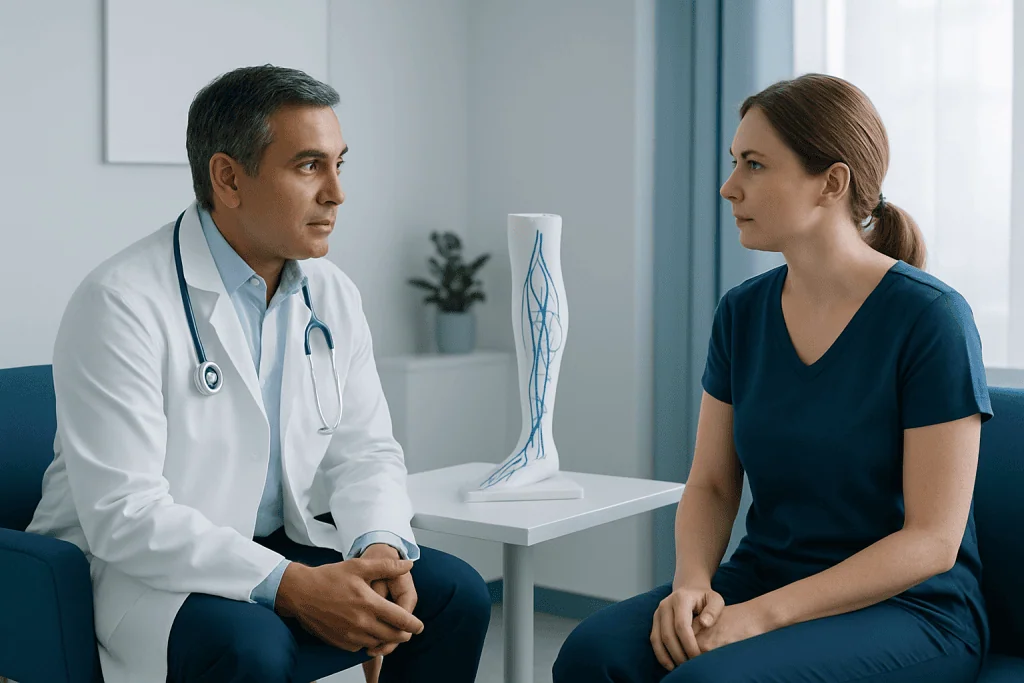
Diagnosis starts with a medical history and physical examination. A doctor will ask when symptoms began, whether swelling affects one or both legs, and whether discomfort changes with standing, walking, or elevation. Visible veins, skin changes, and areas of tenderness can offer important clues.
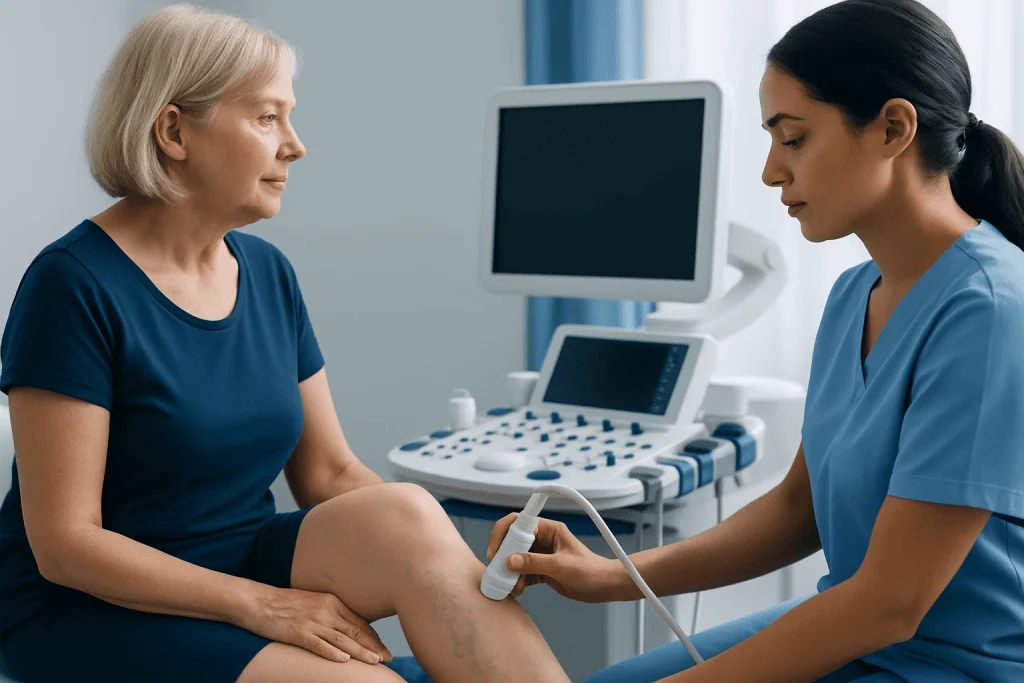
The most common imaging test for venous problems is duplex ultrasound. This painless test uses sound waves to show the structure of the veins and the direction of blood flow. It can help identify valve failure, vein reflux, obstruction, or a blood clot. Ultrasound is often the key test used to guide treatment planning.
Some patients may need additional testing depending on the suspected condition, overall health, or planned procedure. Blood tests, clotting evaluation, or more specialized imaging are sometimes used, but many people can be assessed accurately with examination and ultrasound alone.
Treatment options for venous conditions
Treatment depends on the type of venous problem, its severity, and the patient’s symptoms and goals. Mild venous symptoms may improve with leg elevation, regular walking, weight management, avoiding prolonged standing or sitting, and compression stockings when recommended by a clinician. These steps support blood flow and may reduce swelling and discomfort.
When veins are significantly enlarged, painful, or causing skin changes, minimally invasive treatment may be considered. Options can include sclerotherapy, endovenous thermal techniques, or other catheter-based procedures that close or treat abnormal veins. In appropriate cases, a vascular specialist may discuss treatment for varicose veins or sclerotherapy to improve symptoms and reduce venous pressure.
If a deep vein clot is diagnosed, treatment usually focuses on preventing the clot from growing and lowering the risk of complications. This may involve medication and close follow-up, and some patients need hospital-based care. For selected vein blockages or more complex circulation problems, doctors may also consider vascular surgery or other interventional approaches.
Care is most effective when matched to the underlying problem rather than the appearance of the veins alone. A personalized plan can help relieve symptoms, protect the skin, and lower the chance of recurrence.
Prevention, self-care, and daily habits
Not every venous condition can be prevented, but daily habits can support vein health and lower the chance of worsening symptoms. Regular walking is one of the most helpful measures because the calf muscles act like a pump for venous return. Taking movement breaks during long periods of sitting or standing can also help reduce pressure in the leg veins.
Leg elevation above heart level for short periods may ease swelling in some people. Maintaining a healthy weight and following a balanced diet can reduce strain on the circulation. Compression stockings may be useful for selected patients, but they should ideally be chosen after medical advice, especially if there is concern about arterial circulation or significant swelling.
For travel or desk-based work, simple measures such as ankle movements, standing up regularly, staying hydrated, and avoiding very restrictive clothing can be sensible. People with a history of clotting or major surgery should ask their doctor whether they need additional preventive steps.
When to seek medical care
Medical care is appropriate when venous symptoms are persistent, uncomfortable, or affecting daily life. Ongoing leg swelling, pain, visible varicose veins, skin discoloration, or a sore that is slow to heal should be assessed by a qualified doctor. Early evaluation can help identify the cause and prevent progression.
Urgent medical attention is needed for sudden one-sided leg swelling, new severe leg pain, warmth or redness, unexplained chest pain, or shortness of breath. These symptoms can be linked to a blood clot and require immediate assessment. Any leg ulcer, bleeding vein, or rapidly worsening skin change also deserves prompt care.
For international patients seeking coordinated evaluation, Acibadem International’s multidisciplinary specialists and JCI-accredited hospitals diagnose and treat venous conditions using modern imaging and individualized care plans.
Frequently asked questions
What does venous mean in simple terms?
Venous means related to the veins, which carry blood back to the heart. When doctors talk about venous problems, they usually mean conditions affecting blood flow in the veins, especially in the legs.
Are venous conditions the same as varicose veins?
Not exactly. Varicose veins are one type of venous condition, but venous disease also includes chronic venous insufficiency, superficial vein inflammation, and deep vein thrombosis. The right diagnosis depends on symptoms, examination, and often ultrasound.
Can venous disease go away on its own?
Mild symptoms may improve with movement, leg elevation, and avoiding long periods of standing or sitting. However, underlying valve weakness or vein reflux often does not fully reverse without treatment, so persistent symptoms should be assessed.
Is leg swelling always caused by a venous problem?
No. Leg swelling can also be related to heart, kidney, lymphatic, medication, or other medical issues. That is why swelling, especially if it is new or one-sided, should be evaluated by a doctor.
How are venous problems usually diagnosed?
Doctors usually begin with a medical history and physical examination. A duplex ultrasound is commonly used to check blood flow, look at vein valves, and identify problems such as reflux or a clot.
When is a venous problem an emergency?
A venous problem may be urgent if there is sudden one-sided leg swelling, significant pain, warmth, redness, chest pain, or shortness of breath. These symptoms can suggest a blood clot and require immediate medical attention.
References
- World Health Organization
- Centers for Disease Control and Prevention
- National Heart, Lung, and Blood Institute
- Society for Vascular Surgery
- American Heart Association
This article is for general information only and is not a substitute for professional medical advice. Please consult a qualified doctor about your individual situation.
Explore treatments in Turkey — costs, top hospitals & a free quote
JCI-accredited · board-certified surgeons · reply within 24h