Bone Anatomy: What Patients Need to Know
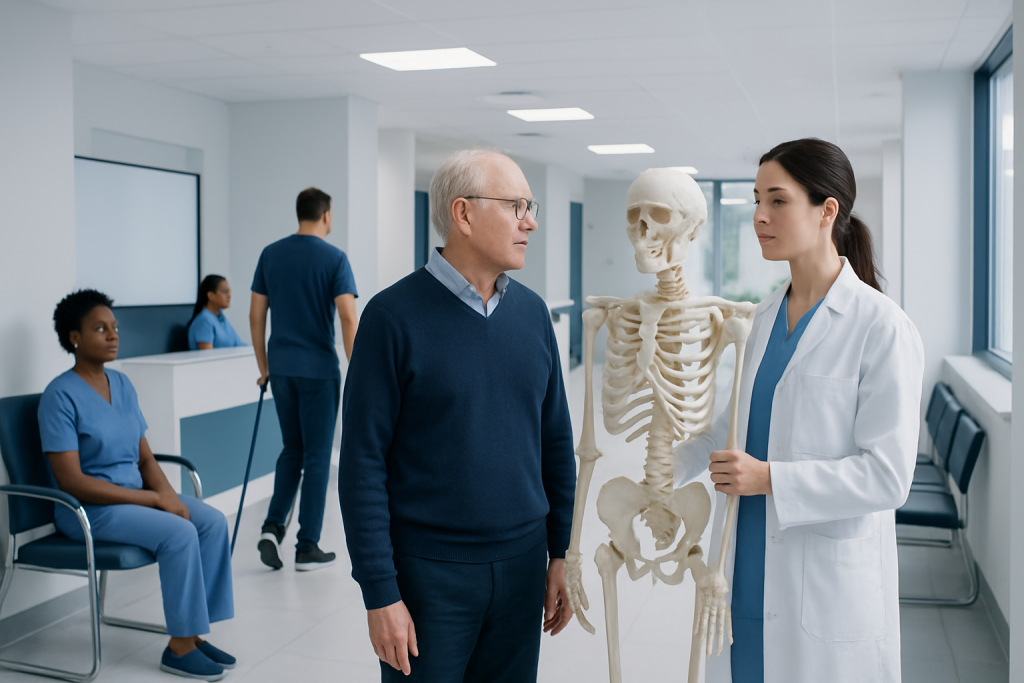
Bones are living tissue that constantly rebuilds and adapts to stress, nutrition, and age. A bone has an outer hard layer, an inner spongy layer, marrow spaces, blood vessels, and cartilage near joints.
Key Takeaways
- Bones are living tissue that constantly rebuilds and adapts to stress, nutrition, and age.
- A bone has an outer hard layer, an inner spongy layer, marrow spaces, blood vessels, and cartilage near joints.
- The skeleton supports movement, protects organs, stores minerals such as calcium and phosphorus, and helps make blood cells.
- Bone strength depends on genetics, hormones, physical activity, nutrition, and overall health.
- Pain, swelling, deformity, repeated fractures, or unexplained loss of height should be assessed by a doctor.
Bone anatomy describes how bones are shaped, layered, and connected to help the body move, stay upright, protect organs, and support lifelong health. Understanding basic bone structure can also help patients make sense of fractures, osteoporosis, joint problems, and imaging results.
Overview: what bone anatomy means
Bone anatomy is the study of how bones are built and how that structure helps them work. In simple terms, bones are not just hard sticks inside the body. They are living organs made of specialized tissue, blood vessels, nerves, and marrow, all arranged to give strength without excessive weight.
For patients, learning basic bone anatomy can make many health topics easier to understand. It explains why some fractures happen at certain points, why joints wear down, why bone density matters, and how conditions such as osteoporosis can weaken the skeleton over time.
The adult human skeleton has more than 200 bones, each with a shape and role suited to its location. Some bones are long and designed for movement, some are flat and protective, and others are small and complex to allow fine control and stability. Together, they form a framework that supports the body from childhood through older age.
How bones are built: the main parts of a bone
Although bones come in different shapes, many share the same basic design. The outside is covered by a thin membrane called the periosteum. This layer contains blood vessels and nerves and helps nourish the bone. It also plays an important role in healing after injury.
Beneath the periosteum is compact bone, the dense outer shell that gives a bone much of its strength. Inside many bones is spongy bone, also called cancellous bone. This has a lighter, lattice-like structure that helps absorb stress while keeping the skeleton lighter than it would be if it were solid throughout.
At the center of some bones is the medullary cavity, which contains bone marrow. Red marrow helps produce blood cells, while yellow marrow contains more fat and serves as an energy reserve. Bones also have a network of tiny canals that carry blood and nutrients to living bone cells.
Key parts patients may hear about include:
- Periosteum: the outer covering of the bone
- Compact bone: the hard, dense outer layer
- Spongy bone: the inner supportive network
- Bone marrow: tissue involved in blood cell production and energy storage
- Articular cartilage: smooth tissue covering bone ends at joints
- Growth plate: an area in children and teens where bones lengthen
Types of bones and what they do
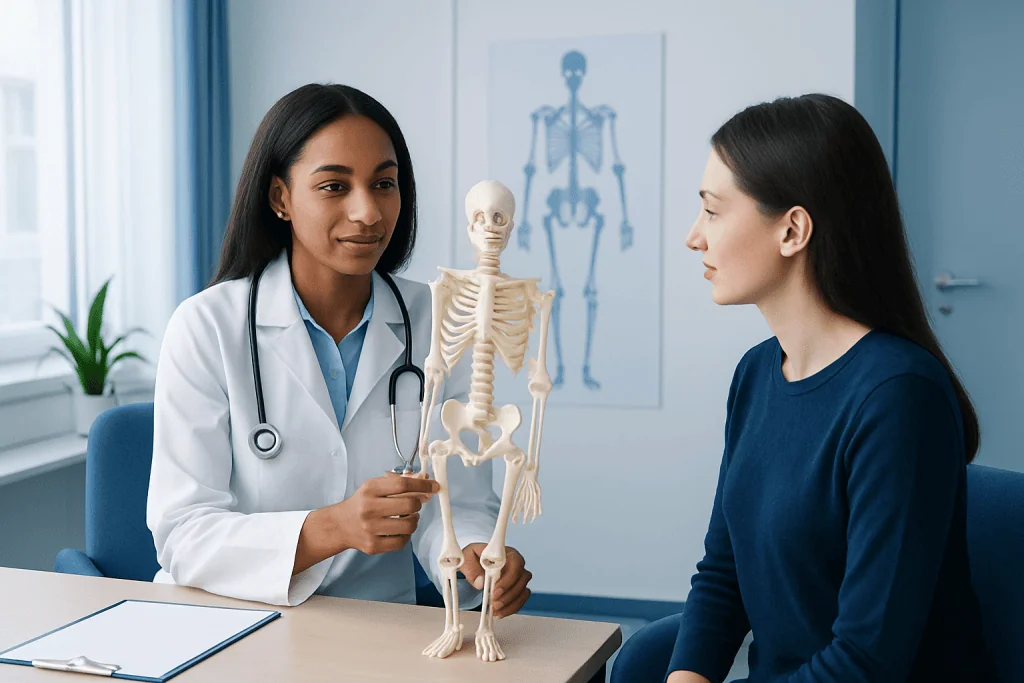
Doctors often describe bones by shape because shape is closely linked to function. Long bones, such as the femur and humerus, help with movement and support body weight. Short bones, such as those in the wrist and ankle, provide stability with limited motion. Flat bones, including the skull, ribs, and breastbone, protect important organs.
Irregular bones have more complex shapes and special roles. Examples include the vertebrae of the spine and some facial bones. Sesamoid bones, such as the kneecap, develop within tendons and help improve how muscles pull across joints.
Each type contributes to the skeleton’s larger functions. Bones provide attachment points for muscles, form joints that allow motion, shield structures such as the brain and lungs, and create spaces where blood cells are made. Understanding these categories can help patients better interpret imaging reports and orthopedic explanations.
Bone function beyond support: why bones matter to whole-body health
Many people think of bones mainly as support structures, but their role is broader. Bones protect vital organs, including the skull around the brain and the rib cage around the heart and lungs. They also work with muscles, tendons, and ligaments to create movement. Without healthy bones, even strong muscles cannot move the body effectively.
Bones also serve as a mineral reservoir. They store calcium and phosphorus and release them when the body needs them for nerve signaling, muscle contraction, and other essential processes. This means bone health is closely connected to hormonal balance, kidney function, nutrition, and general metabolism.
Another important function is blood cell production. Red marrow produces red blood cells, white blood cells, and platelets. For this reason, bone anatomy is relevant not only in orthopedics but also in blood health and systemic disease.
Because bone is living tissue, it is constantly remodeled. Specialized cells break down old bone while others build new bone. This ongoing cycle helps bones adapt to exercise, repair microscopic damage, and respond to aging or illness. When remodeling becomes unbalanced, the risk of weakness or fracture rises.
How bones grow, change, and weaken over time
Bone anatomy is not static. In childhood and adolescence, bones grow in length at the growth plates and increase in density as the skeleton matures. During early adulthood, most people reach peak bone mass. After that point, bone remodeling continues, but the balance between formation and breakdown may gradually shift.
Aging, reduced physical activity, low calcium or vitamin D intake, hormonal changes, smoking, and some medications can all contribute to bone loss. This is one reason older adults are at greater risk of fractures, especially in the hip, spine, and wrist. Patients may hear doctors discuss thinning bones in the context of bone density loss or age-related changes.
Some diseases affect bone more directly. Joint wear can alter how bones meet and move, as in osteoarthritis. Trauma can damage bone tissue suddenly, sometimes requiring immobilization or orthopedic procedures. In selected cases, doctors may recommend orthopedic surgery to restore alignment, stability, or function.
Even when bone problems develop gradually, early assessment can help. Bone pain, repeated fractures, or loss of height may point to underlying weakness that deserves medical evaluation rather than self-treatment alone.
How doctors assess bone structure and bone health
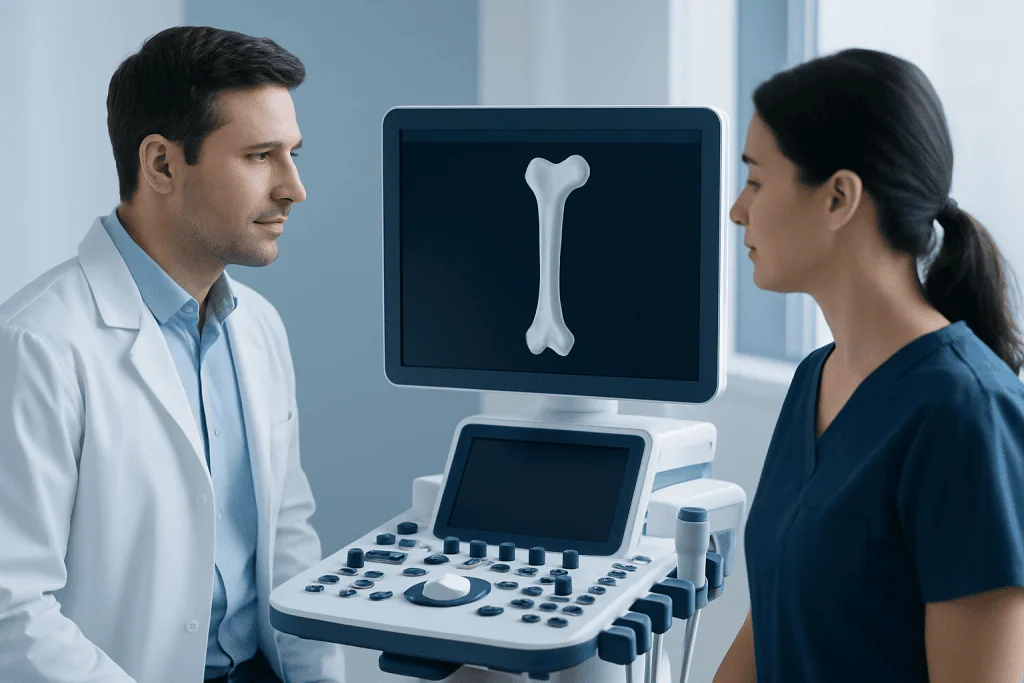
Doctors evaluate bone anatomy using a combination of medical history, physical examination, and imaging. A standard X-ray can show the overall shape of a bone, many fractures, alignment problems, and some signs of joint damage. It is often the first test used after an injury or for persistent bone pain.
When more detail is needed, other imaging tests may be recommended. CT can show complex bone structure in greater detail, while MRI helps assess nearby soft tissues, bone marrow, and subtle injuries. In people at risk of fragility fractures, bone density testing can help identify reduced bone strength and guide preventive care.
Blood tests may also be part of the assessment. These can help look for mineral imbalances, inflammation, vitamin D deficiency, hormone-related causes of bone loss, or other medical conditions affecting the skeleton. If a fracture is severe or unstable, treatment may include casting, bracing, or procedures such as fracture treatment.
The aim of diagnosis is not only to name a problem but also to understand why it happened. For example, a low-impact fracture in an older adult may prompt evaluation for hidden bone weakness, while repeated stress injuries in an athlete may point to overuse, training errors, or nutritional factors.
Supporting healthy bones: prevention and self-care
Good bone health depends on daily habits over many years. Weight-bearing and muscle-strengthening exercise encourages bones to maintain strength. Walking, stair climbing, resistance training, and balance exercises can all be helpful when chosen appropriately for a person’s age and health status.
Nutrition is also important. Adequate calcium, vitamin D, protein, and overall balanced eating support bone remodeling and muscle function. A doctor or dietitian may advise individualized guidance for people with restricted diets, digestive disorders, kidney disease, or known bone loss.
Other practical steps include avoiding smoking, limiting excess alcohol, reducing fall risk at home, and discussing long-term medication use with a physician if it may affect bone strength. People with established weakness may benefit from targeted care such as osteoporosis treatment and follow-up bone density monitoring.
Self-care should be realistic and safe. Sudden increases in high-impact exercise, especially in people who are deconditioned or already have bone loss, can raise injury risk. When there is uncertainty about exercise limits, previous fractures, or ongoing pain, medical advice is the safest next step.
When to seek medical care
Medical care is recommended for sudden bone pain after a fall or twist, inability to bear weight, visible deformity, major swelling, or suspected fracture. These symptoms may indicate a structural injury that needs prompt evaluation and proper imaging.
It is also wise to seek medical advice for persistent bone or joint pain, repeated stress injuries, unexplained loss of height, stooped posture, or fractures that occur after minor trauma. These can sometimes signal reduced bone strength or an underlying condition rather than a simple strain.
Children and teenagers should be assessed if they have significant pain near a growth plate, limp without a clear reason, or fail to return to normal activity after an injury. Adults with risk factors such as older age, menopause, long-term steroid use, low body weight, or previous fragility fractures may benefit from preventive review even before symptoms appear.
Near the end of a patient’s care journey, coordinated support can matter as much as diagnosis. Acibadem International’s multidisciplinary specialists and JCI-accredited hospitals evaluate bone conditions for international patients, particularly when imaging, rehabilitation, and orthopedic expertise are needed together.
Frequently asked questions
What is bone anatomy in simple terms?
Bone anatomy refers to the structure of bones and the different parts that help them function. It includes the hard outer layer, the spongy inner layer, bone marrow, blood supply, and the cartilage found where bones meet at joints.
Are bones living tissue?
Yes. Bones are living tissue with cells, nerves, blood vessels, and a constant cycle of breakdown and rebuilding. This is why bones can heal after injury and also change over time with age, exercise, and illness.
What are the main functions of bones?
Bones support the body, protect organs, and help muscles create movement. They also store minerals such as calcium and phosphorus and contain marrow that helps produce blood cells.
Why do bones become weaker with age?
Bone strength can decline when the rate of bone breakdown becomes greater than the rate of new bone formation. Aging, hormonal changes, low physical activity, poor nutrition, smoking, and some medications can all contribute to this process.
What is the difference between compact bone and spongy bone?
Compact bone is the dense outer layer that provides much of a bone’s strength and durability. Spongy bone is lighter and more porous, usually found inside bones, where it helps absorb stress and supports marrow spaces.
How do doctors check bone health?
Doctors may use an examination, X-rays, and sometimes CT or MRI scans to look at bone structure and injuries. Bone density testing and blood tests can also help assess fracture risk or identify conditions that affect bone strength.
When should someone worry about bone pain?
Bone pain should be assessed if it follows an injury, does not improve, returns repeatedly, or is associated with swelling, deformity, or trouble using a limb. Pain with minor trauma or repeated fractures also deserves medical attention because it may suggest underlying bone weakness.
References
- National Institute of Arthritis and Musculoskeletal and Skin Diseases
- MedlinePlus
- American Academy of Orthopaedic Surgeons
- National Institutes of Health Osteoporosis and Related Bone Diseases Resource Center
- Mayo Clinic
This article is for general information only and is not a substitute for professional medical advice. Please consult a qualified doctor about your individual situation.
Joint and spine care in Turkey — expert assessment & treatment
JCI-accredited · board-certified surgeons · reply within 24h