Glossopharyngeal Neuralgia: Early Signs, Risk Factors, and How It Is Treated

Glossopharyngeal neuralgia typically causes brief but severe stabbing or shock-like pain in the throat, tongue base, tonsil region, or ear. Pain attacks are often triggered by swallowing, talking, chewing, coughing, or yawning.
Key Takeaways
- Glossopharyngeal neuralgia typically causes brief but severe stabbing or shock-like pain in the throat, tongue base, tonsil region, or ear.
- Pain attacks are often triggered by swallowing, talking, chewing, coughing, or yawning.
- Diagnosis is based on the pattern of symptoms, examination, and imaging to look for a blood vessel pressing on the nerve or another underlying cause.
- Treatment usually begins with nerve-pain medicines and may include procedures or surgery when symptoms do not improve.
- Prompt medical assessment is important because similar symptoms can be caused by other head, neck, or nerve conditions.
Glossopharyngeal neuralgia is a rare pain condition that causes sudden, intense, electric shock-like pain in areas served by the glossopharyngeal nerve, especially the throat, back of the tongue, tonsil area, and sometimes the ear. Treatment often starts with medicines that calm overactive nerve signals, while some people may need procedures or surgery if symptoms are persistent or severe.
Overview
Glossopharyngeal neuralgia is a rare disorder that causes sudden bursts of severe nerve pain in the throat, back of the tongue, tonsil area, under the jaw, or deep in the ear. The pain comes from irritation of the glossopharyngeal nerve, also called the ninth cranial nerve, which helps carry sensation from these areas and plays a role in swallowing and taste from the back of the tongue.
People often describe the pain as sharp, stabbing, burning, or like an electric shock. Attacks are usually short, lasting seconds to a few minutes, but they can happen repeatedly in clusters. Some people have pain-free periods between episodes, while others notice attacks returning over weeks or months.
Although the pain can feel alarming, glossopharyngeal neuralgia is treatable. Care focuses on confirming the diagnosis, ruling out other causes of throat or ear pain, and choosing treatment based on symptom severity, overall health, and whether a structural cause such as a blood vessel pressing on the nerve is found.
How glossopharyngeal neuralgia feels
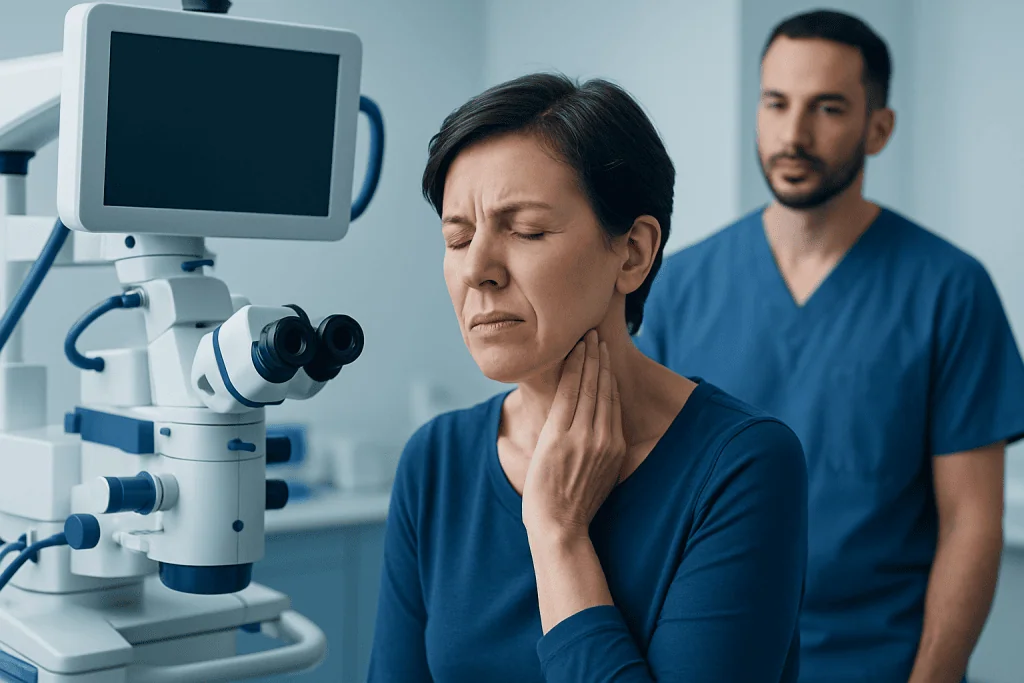
This condition has a distinctive pain pattern. Unlike the constant soreness of an infection or irritation, glossopharyngeal neuralgia usually causes sudden attacks of very intense pain. The pain is most often felt on one side and may start in the throat or tonsil area, spread to the back of the tongue, and sometimes shoot toward the ear.
Everyday actions can trigger attacks because they stimulate the affected nerve. Common triggers include swallowing food or liquids, talking, chewing, coughing, sneezing, laughing, and yawning. Even touching certain areas inside the mouth or throat may provoke pain in some people.
Possible symptoms include:
- Sharp, stabbing, or electric shock-like pain in the throat, tongue base, tonsil region, jaw angle, or ear
- Brief attacks lasting seconds or minutes
- Repeated episodes over a short period
- Pain triggered by swallowing, speaking, or coughing
- Fear of eating or drinking because of pain triggers
- Occasionally, a dull ache between attacks
Rarely, because the glossopharyngeal nerve is close to structures involved in heart rate and blood pressure reflexes, some people may also feel lightheadedness, faintness, or changes in heartbeat during attacks. These symptoms need prompt medical attention.
Causes and risk factors

In many cases, glossopharyngeal neuralgia happens because the nerve is irritated where it exits the brainstem. A common explanation is compression by a nearby blood vessel that repeatedly touches or presses on the nerve. This can make the nerve overly sensitive and more likely to send pain signals in response to normal activity such as swallowing.
Less commonly, symptoms may be linked to another underlying problem. These can include tumors, cysts, infections, inflammation, elongated styloid process or Eagle syndrome, multiple sclerosis, or prior injury or surgery in the head and neck region. For that reason, doctors usually look beyond the pain itself and assess whether another condition might be causing the nerve irritation.
Glossopharyngeal neuralgia is uncommon, and there is not always a clear preventable risk factor. It tends to be diagnosed more often in adults than in children. A careful evaluation is important because several disorders can mimic it, including trigeminal neuralgia, temporomandibular joint problems, dental disease, throat infections, tonsil disease, ear disorders, and some types of head and neck tumors.
How doctors diagnose it
Diagnosis begins with a detailed description of the pain. The location, the shock-like quality, the short duration of attacks, and clear triggers such as swallowing or talking are all clues. A doctor will also ask about associated symptoms including voice changes, swallowing difficulty, fainting spells, hearing symptoms, fever, weight loss, or ongoing persistent pain, which can suggest a different cause.
A physical examination usually includes the head and neck, mouth and throat, ears, and a neurologic assessment. Because symptoms can overlap with ENT, dental, and neurologic problems, some people may need evaluation by more than one specialist. Imaging is often used to look for structural causes, especially when symptoms are new, unusual, or difficult to control.
Tests may include magnetic resonance imaging of the brain and nearby nerves, sometimes with angiographic sequences to identify a blood vessel compressing the nerve. Depending on the situation, doctors may also use other imaging or examinations to assess the throat and surrounding structures. In selected cases, a local anesthetic nerve block can help support the diagnosis if it temporarily relieves the pain.
When the symptoms are complex or another disorder is suspected, clinicians may also investigate related conditions such as brain tumor or inflammatory neurologic disease. The goal is not only to label the pain syndrome, but to identify whether there is a treatable root cause.
Treatment options
Treatment usually starts with medicines that reduce abnormal nerve firing. Doctors commonly use medications also prescribed for other neuralgias or seizure disorders because they can calm overactive pain pathways. The specific choice depends on a person’s age, medical history, other medicines, and how frequent or severe the attacks are. Follow-up matters, because doses may need careful adjustment and side effects such as sleepiness, dizziness, or imbalance may need monitoring.
If medicines do not give enough relief, or if side effects are difficult to tolerate, other options may be considered. A glossopharyngeal nerve block can sometimes provide temporary relief and may also help confirm the diagnosis. In selected cases, minimally invasive pain procedures may be discussed as part of broader pain management.
When imaging shows blood vessel compression and symptoms remain disabling despite medication, surgery may be an option. The best-known operation is microvascular decompression, which aims to separate the vessel from the nerve and reduce ongoing irritation while preserving nerve function. Depending on the person and the findings, neurosurgical teams may also discuss other procedures within neurosurgical care.
The right treatment plan is individualized. Some people do very well with medication alone, while others benefit from a staged approach that includes imaging review, nerve block, and surgery if needed. The main goals are to reduce pain, improve eating and speaking, and protect quality of life.
Living with the condition: self-care and prevention
There is no guaranteed way to prevent glossopharyngeal neuralgia, especially when it is caused by an anatomic problem such as a blood vessel compressing the nerve. Still, practical steps may help reduce attacks and support daily comfort. Identifying personal triggers is often useful, such as very hot or cold foods, large bites, prolonged talking, or frequent throat clearing.
During symptomatic periods, some people find it easier to choose softer foods, eat slowly, sip liquids carefully, and avoid activities that repeatedly trigger pain. Good hydration and oral care remain important, particularly if fear of pain is leading to reduced eating or drinking. However, self-care should support medical treatment rather than replace it.
Because severe pain can affect mood, sleep, and nutrition, broader support may also help. Keeping a symptom diary can make it easier to identify patterns and guide medical visits. People should avoid starting or stopping prescription medicine on their own and should speak with a qualified clinician before trying new remedies or supplements.
For international patients who need coordinated assessment, Acibadem International’s multidisciplinary specialists in JCI-accredited hospitals diagnose and treat complex nerve pain conditions with input from neurology, ENT, radiology, and neurosurgery teams.
When to seek medical care
Medical care is appropriate whenever recurring throat, tongue, or deep ear pain is severe, sudden, or triggered by swallowing or speaking. Even if the episodes are brief, this pattern deserves assessment because it may reflect a nerve pain condition that can often be treated effectively. Early evaluation is also important to rule out infections, masses, dental causes, and other neurologic disorders.
People should seek urgent care if pain is accompanied by fainting, marked dizziness, breathing difficulty, inability to swallow fluids, dehydration, weakness, new numbness, persistent hoarseness, unexplained weight loss, fever, or symptoms that are steadily worsening. These features are not typical of simple recurrent irritation and need prompt medical review.
A specialist consultation may be especially helpful if pain continues despite initial treatment, if imaging suggests nerve compression, or if the diagnosis is uncertain. Neurology, ENT, and neurosurgery teams can work together to confirm the cause and discuss the most suitable next steps.
Frequently asked questions
What is glossopharyngeal neuralgia?
Glossopharyngeal neuralgia is a rare nerve pain disorder affecting the glossopharyngeal nerve. It causes sudden, severe, shock-like pain in the throat, back of the tongue, tonsil area, or ear, usually on one side.
What triggers glossopharyngeal neuralgia pain?
Pain is often triggered by normal actions that stimulate the throat and tongue. Common triggers include swallowing, chewing, talking, coughing, yawning, or sneezing.
How is glossopharyngeal neuralgia different from trigeminal neuralgia?
Both are facial nerve pain conditions, but they usually affect different areas. Glossopharyngeal neuralgia more often causes pain in the throat, tonsil region, tongue base, and ear, while trigeminal neuralgia usually affects the cheek, jaw, teeth, or forehead.
Can glossopharyngeal neuralgia go away on its own?
Some people have periods when attacks lessen or temporarily stop, but the condition can return. Because symptoms may persist or worsen over time, medical evaluation is important rather than waiting indefinitely.
What tests are used to diagnose glossopharyngeal neuralgia?
Doctors mainly diagnose it from the symptom pattern and examination. MRI is often used to look for a blood vessel pressing on the nerve or another structural cause, and sometimes a nerve block may help support the diagnosis.
What is the usual treatment for glossopharyngeal neuralgia?
Treatment often begins with prescription medicines that calm irritated nerve signals. If these do not work well enough, doctors may consider a nerve block, other pain procedures, or surgery such as microvascular decompression in selected cases.
When should someone worry about throat or ear pain?
Recurring severe pain that is brief, one-sided, and triggered by swallowing or speaking should be assessed by a doctor. Urgent care is needed if there is fainting, difficulty breathing, inability to drink, neurologic symptoms, or unexplained weight loss.
References
- National Institute of Neurological Disorders and Stroke
- National Institute of Dental and Craniofacial Research
- American Association of Neurological Surgeons
- Cleveland Clinic
- Merck Manual Professional Edition
This article is for general information only and is not a substitute for professional medical advice. Please consult a qualified doctor about your individual situation.
Explore treatments in Turkey — costs, top hospitals & a free quote
JCI-accredited · board-certified surgeons · reply within 24h
Check your numbers in seconds
BMI, calories, due date, blood pressure and 30+ more clinical calculators — free, instant, doctor-reviewed ranges.