Brain Tumor
Brain Tumor information: symptoms, causes, diagnosis, treatment options, prognosis and when to see a specialist for medical assessment.
Quick answer
A brain tumor is an abnormal growth of cells in the brain that can be benign or malignant and may affect brain function by increasing pressure or invading nearby tissue. Treatment depends on the tumor’s type, size, and location, and at Acibadem in Turkey it is planned by a multidisciplinary team using advanced imaging, neurosurgery, radiation therapy, chemotherapy, and supportive…
What is brain tumor?
A brain tumor is a growth of abnormal cells in or around the brain. The word “tumor” simply means a mass of cells that have multiplied in a way the body did not intend. Some brain tumors are benign, which means they are not cancerous and do not spread to other parts of the body. Others are malignant, which means they are cancerous, can grow quickly, and may invade nearby brain tissue. Understanding what is brain tumor as a diagnosis begins with knowing that both benign and malignant tumors can cause serious problems, because the skull is a closed space and any growing mass can press on healthy brain tissue.
Doctors also divide brain tumors into two broad groups based on where they start. A primary brain tumor begins in the brain itself or in the tissues close to it, such as the membranes covering the brain (called the meninges), the nerves, or the pituitary gland. A secondary brain tumor, also called a metastatic brain tumor, starts as cancer somewhere else in the body, for example the lung, breast, or skin, and then spreads to the brain. Secondary brain tumors are more common in adults than primary ones.
Brain tumors can affect people of any age, from young children to older adults. Certain types are more common in children, such as medulloblastoma, while others, such as glioblastoma and meningioma, occur more often in adults. Overall, brain tumors are relatively uncommon compared with many other health conditions, but they are among the more frequent solid tumors in childhood. Men and women can both be affected, and the risk of many tumor types increases with age.
Symptoms of a brain tumor
Brain tumor symptoms vary widely from person to person. They depend on the tumor’s size, its location in the brain, and how fast it is growing. Some tumors cause noticeable problems early, while others grow slowly and produce few or no symptoms for a long time. Because the brain controls everything from movement and speech to memory and vision, a tumor can affect almost any function of the body.
Common brain tumor symptoms include:
- Headachesoften new or different from previous headaches, sometimes worse in the morning or when lying down, coughing, or straining.
- Seizuressudden episodes of abnormal electrical activity in the brain, which may cause shaking, staring spells, or loss of awareness. A first seizure in an adult always needs medical evaluation.
- Nausea and vomitingespecially in the morning or together with headaches, which may reflect increased pressure inside the skull.
- Vision problemsblurred vision, double vision, or loss of part of the visual field.
- Weakness or numbnessoften affecting one side of the body, an arm, or a leg.
- Speech and language difficultiestrouble finding words, slurred speech, or difficulty understanding others.
- Balance and coordination problemsunsteadiness while walking or clumsiness in the hands.
- Changes in personality, memory, or thinkingconfusion, irritability, difficulty concentrating, or unusual behavior noticed by family members.
- Hearing problems or ringing in the earsparticularly with tumors near the hearing nerve.
- Increased drowsiness or fatigue that cannot be explained by other causes.
Symptoms often depend on the tumor type and how advanced it is. Slow-growing benign tumors, such as many meningiomas, may cause gradual, subtle changes over months or years, or may even be discovered by chance on a scan done for another reason. Fast-growing malignant tumors tend to cause symptoms that appear and worsen over weeks. Tumors located in the frontal lobe may mainly change personality and judgment, while tumors near the brainstem may affect swallowing, eye movement, and balance. In young children, symptoms can be harder to recognize and may include an enlarging head size in infants, developmental delays, irritability, or repeated vomiting.
It is important to remember that all of these symptoms are far more often caused by conditions other than a brain tumor, such as migraines, infections, or stress. Having a headache does not mean you have a brain tumor. However, symptoms that are new, persistent, progressively worsening, or occurring in combination should always be discussed with a doctor.
Causes and risk factors
In most cases, doctors cannot identify a single clear cause for a brain tumor. Primary brain tumors develop when cells in the brain acquire changes (mutations) in their genetic material, called DNA. These changes make the cells grow and divide when they should not, and prevent them from dying when healthy cells would. Why these mutations happen in a particular person is usually unknown, which is why questions about brain tumor causes rarely have a simple answer.
Research has identified some factors that can increase the risk of developing a brain tumor:
- Exposure to ionizing radiationpeople who have received radiation therapy to the head, for example as treatment for another cancer, have a somewhat higher risk of developing a brain tumor later in life. Everyday sources of radiation, such as normal medical X-rays, carry a much smaller exposure.
- Family history and inherited conditionsa small proportion of brain tumors occur in people with inherited genetic syndromes, such as neurofibromatosis, tuberous sclerosis, Li-Fraumeni syndrome, or von Hippel-Lindau disease. Having a close relative with a brain tumor slightly raises risk in some families, but most brain tumors are not inherited.
- Agethe risk of many brain tumor types increases with age, although certain tumors are more common in children.
- Cancer elsewhere in the bodycancers such as lung, breast, kidney, colon cancer, and melanoma can spread to the brain and cause secondary brain tumors.
- Weakened immune systempeople with significantly reduced immune function have a higher risk of certain rare brain tumors, such as primary brain lymphoma.
Many patients ask whether cell phones, power lines, or specific foods cause brain tumors. Large studies have not established a proven link between cell phone use and brain tumors, although research is ongoing. There is no reliable evidence that diet, stress, or head injuries cause brain tumors. Because the causes are largely unknown, there is no proven way to prevent most brain tumors.
Diagnosis
Brain tumor diagnosis usually begins when a person sees a doctor because of persistent or unusual symptoms. The doctor will take a detailed medical history and perform a neurological examination, which checks vision, hearing, balance, coordination, strength, reflexes, and mental function. Abnormal findings on this exam can point toward a problem in a specific part of the brain and guide further testing.
The key steps in confirming a brain tumor typically include:
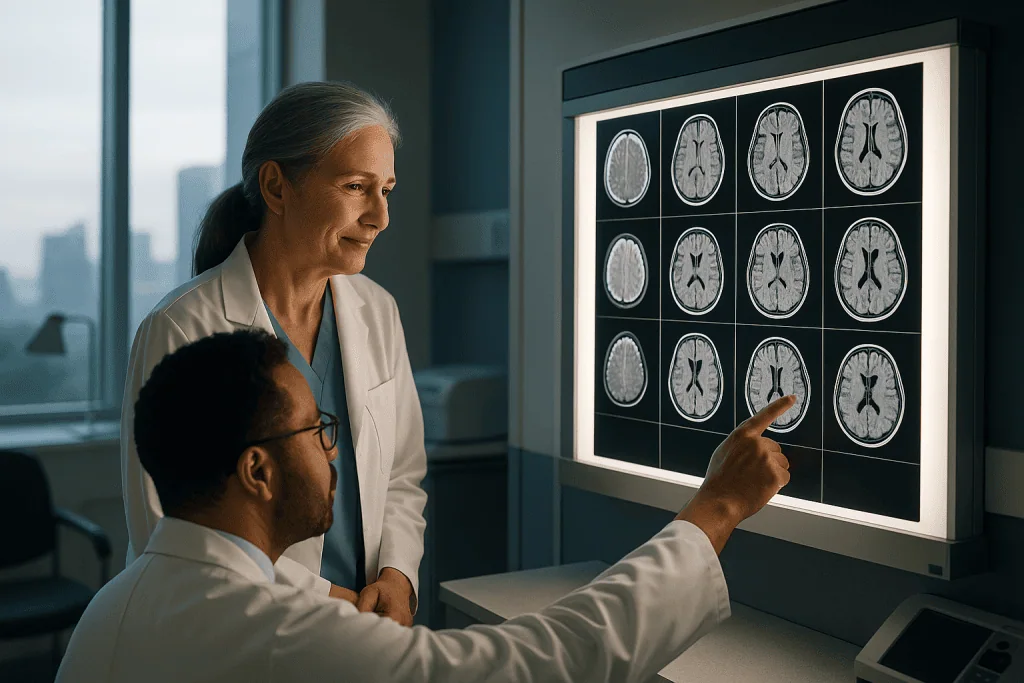
- Magnetic resonance imaging (MRI)MRI is the most important imaging test for the brain. It uses magnetic fields, not radiation, to create detailed pictures of brain tissue. A contrast dye is often injected into a vein to make tumors easier to see. Special MRI techniques can provide additional information about blood flow and the chemistry of the tumor.
- Computed tomography (CT) scana CT scan uses X-rays to build cross-sectional images of the head. It is often the first test performed in emergency situations because it is fast and widely available.
- PET-CT imagingpositron emission tomography combined with CT can show how active cells are in different parts of the body. It is sometimes used to look for a cancer elsewhere in the body when a secondary brain tumor is suspected, or to help distinguish tumor tissue from treatment-related changes. You can read more about PET-CT imaging and how it is used in cancer care.
- Biopsya biopsy means removing a small sample of the tumor so that a pathologist (a doctor who studies tissue under a microscope) can examine it. A biopsy may be done through a small opening in the skull using precise, computer-guided techniques (a stereotactic biopsy), or the tissue may be examined after surgery to remove the tumor. In most cases, a biopsy is the only way to determine the exact tumor type and grade with certainty.
- Molecular and genetic testingmodern diagnosis often includes laboratory tests on the tumor tissue to look for specific genetic markers. These results help doctors classify the tumor precisely and can influence treatment decisions.
Once a tumor is confirmed, doctors assign a grade, usually from 1 to 4, which describes how abnormal the cells look and how quickly the tumor is likely to grow. Grade 1 tumors are the slowest growing, while grade 4 tumors, such as glioblastoma, are the most aggressive. Unlike many other cancers, brain tumors are generally described by grade and type rather than by the staging systems used for cancers that spread through the body.
Treatment options
Brain tumor treatment is highly individualized. The best approach depends on the tumor’s type, grade, size, and location, as well as the patient’s age, overall health, and personal preferences. Treatment decisions are usually made by a multidisciplinary team that may include a neurosurgeon (a surgeon specializing in the brain and nervous system), a medical oncologist (a doctor who treats cancer with medicines), a radiation oncologist, a neurologist, and rehabilitation specialists. In many centers, including Acibadem, non-surgical cancer care for brain tumors is coordinated through a dedicated medical oncology department.
The main treatment options include:
- Watchful waiting (active surveillance)some small, benign, slow-growing tumors that cause no symptoms may simply be monitored with regular MRI scans. Treatment is started only if the tumor grows or begins to cause problems. This approach avoids the risks of treatment when it may not be needed.
- Surgeryfor many brain tumors, surgical removal is the first and most important treatment. The goal is to remove as much of the tumor as safely possible without damaging important brain functions. Modern techniques, such as intraoperative imaging, neuronavigation (a form of surgical GPS), and monitoring of brain function during the operation, help surgeons work more safely. Sometimes only part of a tumor can be removed if it lies close to critical areas. In children, brain tumor surgery is performed by specialists in pediatric neurosurgery, because children’s brains and needs differ from those of adults.
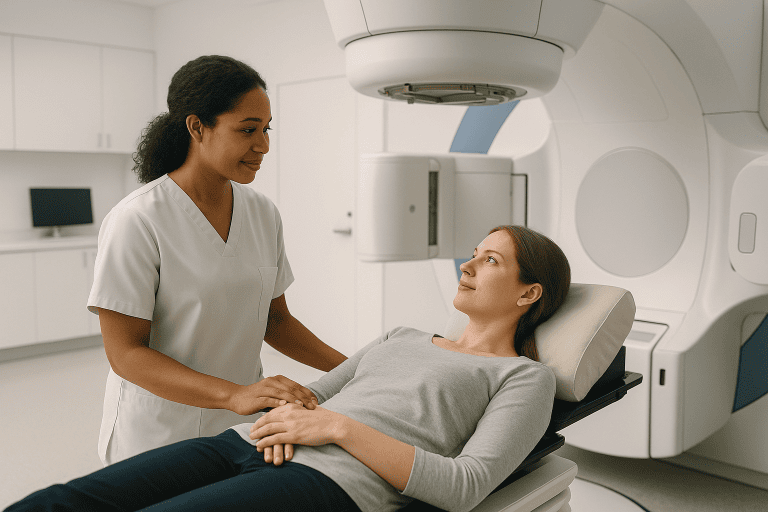
- Radiation therapythis treatment uses carefully targeted beams of high-energy radiation to destroy tumor cells or slow their growth. Conventional radiation therapy is delivered in small daily doses over several weeks. It is often used after surgery for malignant tumors, or as the main treatment when surgery is not possible.
- Stereotactic radiosurgerydespite the name, this is not surgery with a scalpel. It delivers very precise, highly focused radiation to the tumor in one or a few sessions, sparing surrounding healthy tissue as much as possible. Technologies used for this purpose include Gamma Knife, which is often used for well-defined tumors and metastases within the head, and CyberKnife, a robotic system that can also treat lesions in other parts of the body. Radiosurgery may be an option for smaller tumors, tumors in hard-to-reach locations, or patients who cannot undergo open surgery.
- Chemotherapychemotherapy uses medicines that kill rapidly dividing cells. For certain brain tumors, such as glioblastoma, chemotherapy is a standard part of treatment, often combined with radiation. Some drugs are taken as pills; others are given through a vein.
- Targeted therapy and other medicinessome newer drugs act on specific molecular changes found in tumor cells. Whether a targeted therapy is suitable depends on the genetic test results of the tumor tissue. Doctors may also prescribe supportive medicines, such as corticosteroids to reduce swelling around the tumor and anti-seizure medicines to prevent or control seizures.
- Rehabilitationafter treatment, many patients benefit from physical therapy, occupational therapy, or speech therapy to recover functions affected by the tumor or its treatment.
Children with brain tumors need care tailored to their growing bodies and developing brains. Chemotherapy protocols, radiation planning, and follow-up in children are managed by teams specializing in pediatric oncology, working closely with pediatric neurosurgeons.
In many cases, several treatments are combined. For example, a patient with a malignant tumor may have surgery first, followed by radiation therapy and chemotherapy. Your medical team will explain the expected benefits and possible side effects of each option so you can take part in decisions about your care.
Living with brain tumor and outlook
The outlook for a person with a brain tumor varies enormously depending on the tumor type, its grade, its location, how completely it can be removed, and the patient’s age and general health. Many benign tumors can be removed completely or controlled for many years, and some people return to their normal lives after treatment. Aggressive malignant tumors are more difficult to control, and treatment often focuses on slowing the disease, relieving symptoms, and preserving quality of life for as long as possible. Because every situation is different, no one can predict an individual outcome with certainty, and statistics that apply to groups of patients may not reflect what will happen to any single person.
Living with a brain tumor often involves regular follow-up MRI scans to watch for regrowth, ongoing medicines such as anti-seizure drugs, and gradual rehabilitation. Fatigue, memory changes, and emotional ups and downs are common and understandable. Many patients find it helpful to involve family members in appointments, keep a written record of symptoms and questions, and seek psychological support or patient support groups. Practical issues, such as driving restrictions after seizures and returning to work, should be discussed openly with the care team. Palliative care, specialized care focused on comfort and quality of life, can be valuable at any stage of a serious illness, not only at the end of life.
Frequently asked questions
What is a brain tumor in simple terms?
A brain tumor is a lump of abnormal cells growing in or around the brain. It can be benign (not cancer) or malignant (cancer). Because the skull cannot expand, even a benign tumor can cause problems by pressing on healthy brain tissue, which is why most brain tumors need medical evaluation and follow-up even if they do not need immediate treatment.
What are the first symptoms of a brain tumor?
Early brain tumor symptoms are often vague and depend on where the tumor is located. Common first signs include persistent or worsening headaches, a new seizure, gradual weakness or numbness on one side of the body, vision changes, or subtle changes in memory or personality noticed by others. These symptoms have many other, more common causes, so having them does not mean you have a tumor, but new, persistent, or worsening symptoms should always be checked by a doctor.
Can a brain tumor be cured?
It depends on the tumor type. Many benign brain tumors can be cured with complete surgical removal, and some low-grade tumors can be controlled for many years. High-grade malignant tumors are much harder to cure, and treatment usually aims to control the disease and maintain quality of life. Your doctors can explain what is realistic in your specific situation, but honest medicine avoids promises, because every tumor and every patient is different.
How serious is a brain tumor?
All brain tumors are taken seriously, but their severity ranges widely. A small, slow-growing benign tumor found by chance may need only monitoring, while an aggressive malignant tumor is a life-threatening illness requiring urgent, combined treatment. Seriousness depends on the tumor’s type, grade, size, and location, and on how it affects brain function. Only a full diagnostic workup, usually including MRI and often a biopsy, can determine how serious a particular tumor is.
How is a brain tumor diagnosed?
Brain tumor diagnosis typically involves a neurological examination followed by imaging, most importantly an MRI scan with contrast. A CT scan may be done first in emergencies, and PET-CT is sometimes used in specific situations. In most cases, the exact tumor type is confirmed by a biopsy, in which a small tissue sample is examined under a microscope and tested for genetic markers. These results guide treatment planning.
What is recovery like after brain tumor surgery?
Recovery varies with the type of operation, the tumor’s location, and the person’s overall health. Most patients spend several days in the hospital, and full recovery can take weeks to months. Some people experience temporary fatigue, headaches, or difficulties with speech, movement, or memory, which often improve with time and rehabilitation therapy. Your surgical team will explain what to expect in your case and arrange follow-up scans to monitor the results.
Do cell phones cause brain tumors?
Large studies to date have not established a proven link between cell phone use and brain tumors, and health authorities continue to review new research. Because absolute certainty is difficult in this kind of research, some people choose to use hands-free devices as a precaution. What is clear is that most brain tumors have no identifiable cause, and known risk factors, such as prior head radiation and rare inherited syndromes, account for only a small share of cases.
When to see a doctor
Most headaches and moments of forgetfulness are not caused by a brain tumor. However, some symptoms should never be ignored. Make an appointment with a doctor if you have headaches that are new, unusual for you, becoming more frequent or severe, or waking you from sleep, or if you notice gradual changes in vision, hearing, balance, memory, or personality that persist for more than a few days.
Seek urgent or emergency medical care if you or someone near you experiences any of the following red-flag signs:
- A first-time seizure at any age.
- Sudden weakness, numbness, or paralysis of the face, arm, or leg, especially on one side of the body.
- Sudden difficulty speaking, understanding speech, or sudden severe confusion.
- A sudden, extremely severe headache unlike any experienced before.
- Sudden loss of vision or double vision.
- Repeated vomiting together with worsening headache or drowsiness.
- Progressive drowsiness, difficulty waking, or loss of consciousness.
- In infants: a rapidly enlarging head, a bulging soft spot, persistent vomiting, or unusual sleepiness.
Some of these signs can also indicate a stroke or other emergency, which makes rapid medical assessment even more important. If a brain tumor is suspected, early diagnosis gives doctors the widest range of treatment options and the best chance of protecting brain function. Do not try to diagnose yourself; a doctor can determine whether your symptoms need further investigation and guide you to the right specialists.
Patient Guides for This Condition
From the Acibadem Blog

Brain Tumor Early Symptoms: Early Signs, Warning Signs and When to See a Doctor
Early brain tumor symptoms depend on where the tumor sits, but the most commonly reported are new or changing headaches (often worse in the…

Brain Tumor Survival Rate: What the Statistics Mean, Stage by Stage, and What Changes Them
Brain tumor survival rate is a population average, not a personal forecast. Roughly one in three adults diagnosed with a malignant primary brain tumor…
Brain Tumor Prognosis: What Shapes the Outlook and What the Numbers Really Mean
Brain tumor prognosis depends less on the words "brain tumor" than on the specific diagnosis: the tumor's type and WHO grade, its molecular features,…

Brain Tumor Warning Signs: What It Means, What to Expect and When to See a Specialist
Brain tumor warning signs include a new or changing headache pattern (often worse on waking or when lying flat), a first-ever seizure in an…
Medically reviewed by the Acıbadem International Medical Board September 13, 2026
See our medical review board →
Update history
- PublishedJune 8, 2026
- Medical review approvedSeptember 13, 2026
- Last content updateSeptember 12, 2026