Proton Therapy
Proton therapy is an advanced form of radiation treatment that uses proton particles rather than X-rays to target tumors. Protons release most of their energy at a precise depth and then stop,…
Quick answer
Proton therapy, or proton beam therapy, is a type of radiation treatment that uses protons instead of X-rays to destroy cancer cells. Because protons stop at a set depth inside the body, less radiation reaches healthy tissue behind the tumor. It is used for brain, skull base, eye, childhood, prostate, breast, and other cancers.
What is proton therapy?
Proton therapy, also called proton beam therapy, is a form of radiation therapy. Radiation therapy is a cancer treatment that uses high-energy beams to damage the genetic material of cancer cells so they stop growing and dividing. Standard radiation therapy uses X-rays (photons). Proton therapy instead uses protons, which are positively charged particles taken from hydrogen atoms and accelerated to high speed inside a large machine called a cyclotron or synchrotron.
The key difference is how the two types of beam behave inside the body. An X-ray beam deposits energy along its whole path and continues beyond the tumor, exposing healthy tissue on the far side. A proton beam slows down as it travels and releases most of its energy at a set depth, then stops. This point of maximum energy release is known as the Bragg peak. By adjusting the beam energy, the treatment team can place the Bragg peak inside the tumor, which often means less radiation reaches the organs behind it.
Proton therapy is used for a range of cancers and some non-cancerous growths, particularly when a tumor sits close to sensitive structures. Common examples include:
- Brain tumors and tumors at the base of the skull, such as chordoma and chondrosarcoma
- Tumors of the spine and spinal cord
- Eye tumors, especially ocular melanoma
- Childhood cancers, where protecting growing tissue is a priority
- Head and neck cancers
- Prostate cancer
- Breast cancer, especially when the heart or lungs would otherwise receive radiation
- Some lung, esophageal, liver, and pancreatic cancers
- Certain sarcomas (cancers of bone or soft tissue) and lymphomas
- Tumors that have come back in an area that has already been treated with radiation
Who is a candidate
Whether proton therapy is a good option depends on the type of tumor, its location, its size, the patient’s overall health, and whether standard radiation is likely to give a similar result with acceptable side effects. The decision is usually made by a multidisciplinary team that may include a radiation oncologist (a doctor who specializes in treating cancer with radiation), a medical physicist, a surgeon, and a medical oncologist. In many hospital groups, including Acibadem, this care is coordinated through the radiation oncology department.
Proton therapy may be considered when:
- The tumor lies next to critical organs such as the brainstem, optic nerves, spinal cord, heart, or bowel
- The patient is a child or young adult, because lower doses to healthy tissue may reduce long-term effects
- The area has been irradiated before and the surrounding tissue cannot safely receive much more radiation
- A high dose is needed to control the tumor but conventional planning cannot deliver it safely
- The patient has a condition that makes them more sensitive to radiation damage
Proton therapy is generally not suitable, or offers little extra benefit, in the following situations:
- Cancer that has spread widely through the body, where whole-body treatments such as chemotherapy or immunotherapy are the main approach
- Tumors that move a great deal with breathing or digestion, unless reliable motion-management techniques are available
- Situations where standard radiation is expected to give equally good results with very low risk
- Patients who cannot lie still for the session, unless sedation or anesthesia can be arranged
- Certain metal implants near the treatment area that make dose planning unreliable
Because proton therapy is available at relatively few centers, some patients travel to receive it. A specialist can explain whether the potential advantages are meaningful in a given case or whether conventional radiation is a sensible alternative.
How the procedure works
Before treatment. After the initial consultation, you will attend a planning appointment called a simulation. The team positions you exactly as you will lie during treatment and makes a personalized immobilization device, such as a molded cushion or, for head treatments, a thin plastic mesh mask. A CT scan (a detailed X-ray image) is taken in this position, often combined with MRI or PET images. Small skin marks or tiny permanent tattoo dots may be placed so the same position can be reproduced each day. Medical physicists and dosimetrists then design a treatment plan that shapes the beam to the tumor. This planning stage can take one to two weeks.
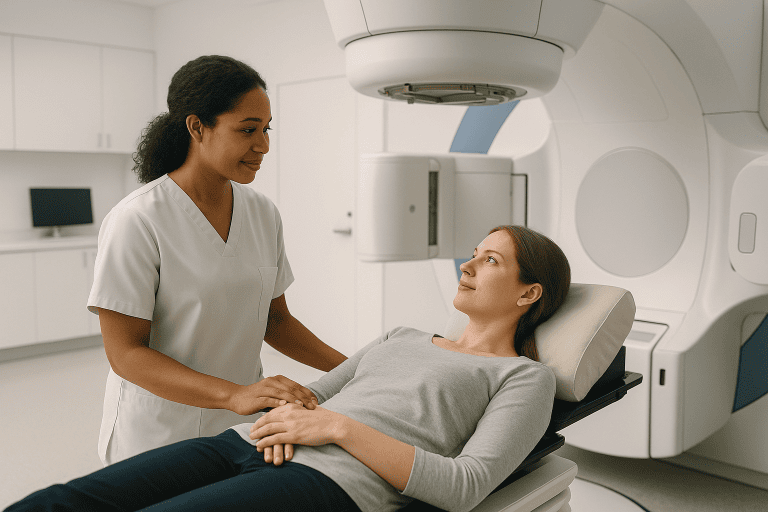
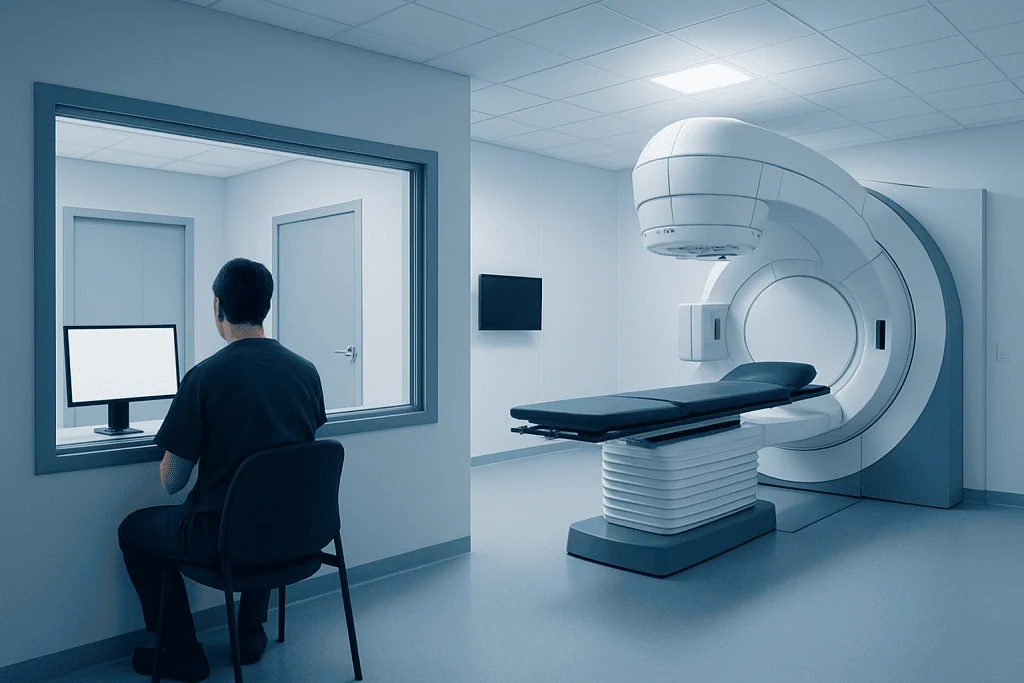
During treatment. Each session follows a similar routine. You lie on the treatment couch in your immobilization device. Staff use imaging to check your position, sometimes adjusting the couch by millimeters. They then leave the room and monitor you by camera and intercom. The gantry, a large arm carrying the beam nozzle, rotates around you, and the proton beam is delivered from one or more angles. The beam itself is invisible and silent, and you feel nothing. Beam delivery usually lasts only a few minutes, but positioning and imaging mean the whole appointment often takes 30 to 45 minutes.
After each session. Most patients leave immediately and carry on with their day. Treatment is typically given once a day, five days a week. The total course may range from a few sessions to seven or eight weeks depending on the cancer type and the dose plan. Shorter courses with higher daily doses, known as hypofractionation, are used for some conditions.
Preparation for proton therapy
Preparation varies with the part of the body being treated, and your care team will give specific instructions. General points include:
- Medical review. Bring a full list of medications and supplements. Some blood-thinning or photosensitizing drugs may need adjustment.
- Pelvic treatments, including proton therapy for prostate cancer. You may be asked to arrive with a comfortably full bladder and an empty rectum, sometimes following a low-gas diet. Before planning, small markers called fiducials may be placed in the prostate, and some patients have a gel spacer inserted between the prostate and rectum to increase the distance between them.
- Breast and chest treatments. You may be coached in a breath-hold technique that moves the heart away from the treatment field.
- Head and neck treatments. A dental check is usually recommended beforehand, because radiation can affect the teeth and jaw.
- Children and patients who cannot lie still. Daily sedation or general anesthesia may be used, which requires fasting before each session.
- Fertility. If the treatment area is near the reproductive organs, ask about fertility preservation options before starting.
- Skin and clothing. Wear loose, comfortable clothing and avoid applying lotions, deodorants, or powders to the treatment area unless approved by the team.
Recovery after proton beam therapy
Proton therapy is an outpatient treatment, and many patients continue working or studying, at least part-time, throughout the course. Recovery is gradual rather than sudden, because side effects build slowly and then fade.
- During the course: fatigue and local effects such as skin redness typically appear after the first one to two weeks and increase toward the end.
- The first two weeks after finishing: side effects often peak at this point, even though treatment has stopped, because tissue reactions continue for a while.
- Two to eight weeks after finishing: skin changes, tiredness, and most acute symptoms usually settle. Many patients feel close to normal within one to two months, although fatigue can linger longer in some people.
- Long term: follow-up visits and imaging continue for years to check for tumor response and any delayed effects.
Practical aftercare often includes gentle skin care with fragrance-free products, protecting treated skin from sun, staying well hydrated, eating a balanced diet, and light exercise such as walking, which is generally encouraged to help with fatigue. Your team may prescribe creams, mouth rinses, or medications for specific symptoms.
Risks and side effects
Proton therapy side effects depend mainly on where the beam is aimed rather than on the beam itself. Because less healthy tissue is exposed, some side effects may be milder or less frequent than with conventional radiation, but they are not eliminated. Tissue inside the target area receives a full dose, so effects in that region are similar to those of standard radiation.
Short-term (acute) effects may include:
- Fatigue, which is very common with any radiation treatment
- Skin redness, dryness, itching, or peeling over the treatment area
- Hair loss limited to the treated area
- For head and neck or brain treatment: sore mouth, altered taste, headaches, or nausea
- For chest and breast treatment: mild cough, difficulty swallowing, or breast swelling
- For pelvic treatment: urinary frequency or urgency, loose stools, or rectal irritation
Long-term (late) effects are less common and can appear months or years later. Examples include tissue stiffness or fibrosis, changes in sexual function after prostate treatment, hormone changes after brain treatment, and a small increase in the risk of a new cancer in irradiated tissue. In children, effects on growth and development are a particular concern, and the aim of proton therapy is to reduce these risks.
There are also disadvantages of proton beam therapy that are not about side effects:
- It is available at a limited number of centers, which may mean travel and time away from home
- Planning is more complex and can take longer to start
- Small uncertainties in exactly where the beam stops mean treatment plans must include safety margins
- Tumors that move can be harder to treat accurately
- For several cancer types, high-quality studies directly comparing protons with modern X-ray techniques are still ongoing
- It is usually more expensive than conventional radiation
Results and outlook
The evidence to date suggests that proton therapy controls tumors about as well as conventional radiation when the same dose is delivered, because the biological effect of protons on cancer cells is similar. Its main potential advantage is reducing the dose to surrounding healthy tissue, which may translate into fewer or less severe side effects for some patients. The strength of this evidence varies by cancer type.
Support is strongest for tumors of the skull base, the eye, the spine, and for many childhood cancers, where reducing radiation to developing tissue is widely accepted as valuable. For proton therapy for prostate cancer and proton therapy for breast cancer, outcomes appear comparable to modern X-ray techniques, and clinical trials are still working out whether the reduction in dose to the rectum, bladder, heart, or lungs leads to clear long-term benefits. Your specialist can explain how the evidence applies to your specific diagnosis, stage, and treatment goals, and whether proton therapy is likely to change your outcome or your quality of life compared with other options.
Cost considerations
Proton therapy cost is generally higher than that of conventional radiation, largely because the equipment is large and complex and the planning process is labor-intensive. Factors that affect the overall price include:
- The number of treatment sessions, which depends on the cancer type and dose schedule
- The complexity of planning, including the number of imaging scans and beam angles
- Whether sedation or anesthesia is needed for each session
- Additional procedures such as fiducial marker placement or a rectal spacer
- Combination with other treatments such as chemotherapy or surgery
- Accommodation and travel if treatment is far from home, since the course may last several weeks
- Follow-up visits, imaging, and management of side effects
Insurance coverage and public health funding vary considerably between countries and between diagnoses. Some systems fund proton therapy only for specific indications, so it is sensible to clarify funding before treatment begins.
Frequently asked questions
What is the difference between proton therapy and standard radiation therapy?
Both treatments damage cancer cells with radiation, and both are planned and delivered in a similar way. The difference is the type of beam. X-rays pass through the body and deposit dose beyond the tumor, while protons stop at a controlled depth. This can reduce exposure of healthy organs, although the dose inside the tumor and its effect on cancer cells are broadly similar.
Is proton therapy for prostate cancer better than other radiation options?
Current evidence suggests that cancer control with proton therapy for prostate cancer is comparable to modern X-ray techniques. Protons may lower the dose to the rectum and bladder, but whether this results in noticeably fewer long-term side effects is still being studied in clinical trials. Suitability also depends on cancer stage, prostate size, and other health conditions.
Can proton therapy be used for breast cancer?
Yes. Proton therapy for breast cancer is most often considered when the heart or lungs would receive a significant dose with conventional planning, for example in left-sided cancers or when lymph nodes near the chest wall need treatment. Skin reactions are still expected because the skin lies within the target. Research comparing long-term heart effects between protons and X-rays is ongoing.
What are the main disadvantages of proton beam therapy?
The main drawbacks are limited availability, higher cost, longer planning time, and the fact that for some cancers the evidence of a real-world advantage over modern X-ray radiation is not yet conclusive. Side effects within the treated area are similar to those of standard radiation, and a small degree of uncertainty about where the beam stops must be built into the plan.
Is proton beam therapy available in the UK?
Proton beam therapy is available in the UK through a small number of centers, and public funding is generally directed at specific indications such as childhood cancers and certain adult tumors near critical structures. Eligibility is assessed by specialist panels, and some patients seek treatment abroad for indications not covered locally. Availability and criteria change over time, so a treating oncologist is the best source of current information.
How much does proton therapy cost?
Costs vary widely depending on the country, the center, the number of sessions, and whether anesthesia or extra procedures are needed. Proton therapy is typically more expensive than conventional radiation because of the specialized equipment and planning. Whether insurance or a national health system covers it often depends on the diagnosis.
Does proton therapy hurt?
No. The beam itself cannot be felt, seen, or heard. Some patients find lying still in the immobilization device uncomfortable, and side effects such as skin soreness or mouth irritation may develop over the course of treatment, but the sessions are painless.
When to see a doctor
You should be assessed by a specialist if you have been diagnosed with a cancer located near sensitive organs, if you have had radiation to the same area before, or if a child in your care needs radiation treatment. A radiation oncologist can explain whether proton therapy or another approach is appropriate.
During and after proton therapy, contact your treatment team promptly if you notice:
- Skin that blisters, weeps, or shows signs of infection
- Fever, chills, or feeling generally unwell
- Persistent vomiting or inability to eat or drink
- Worsening headaches, confusion, seizures, or new weakness after brain or spine treatment
- Difficulty swallowing or breathing after chest, neck, or head treatment
- Blood in the urine or stool, or severe pain when passing urine after pelvic treatment
- Sudden chest pain, shortness of breath, or swelling and pain in one leg, which need urgent medical attention
New or changing symptoms months or years after treatment should also be reported at follow-up visits so that any late effects or signs of recurrence can be checked early.
Preparation
- Attend a planning simulation where an immobilization device is made and a CT scan is taken in the treatment position. Follow site-specific instructions, such as bladder and bowel preparation for prostate treatment or breath-hold coaching for breast treatment. Bring a full medication list, avoid creams or deodorants on the treatment area, and ask about dental checks or fertility preservation if relevant.
Aftercare
- Use gentle, fragrance-free skin care and protect the treated area from sun. Expect fatigue and local side effects to peak in the first two weeks after treatment ends and then gradually settle. Stay hydrated, eat a balanced diet, and keep active with light exercise. Attend all follow-up appointments so tumor response and any late effects can be monitored.
Medically reviewed by the Acıbadem International Medical Board September 8, 2026
See our medical review board →
Update history
- PublishedSeptember 8, 2026
- Medical review approvedSeptember 8, 2026
- Last content updateSeptember 8, 2026
References2
From the Acibadem Blog
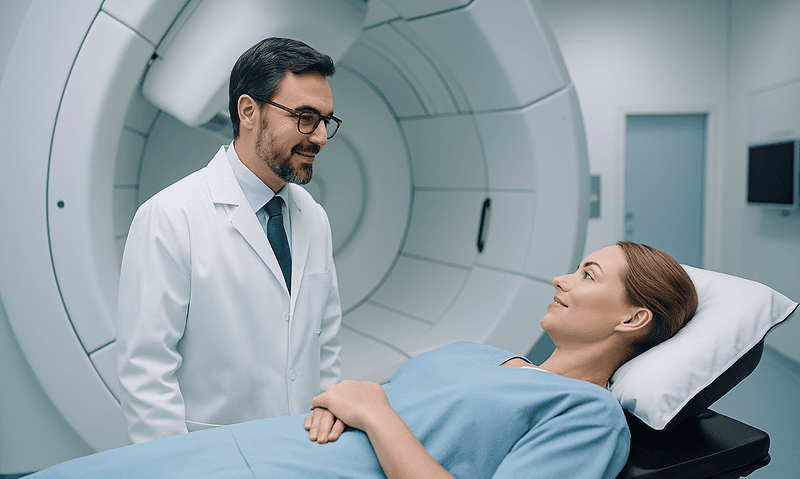
Inside a Proton Therapy Session: Positioning, Image Checks and the Minutes the Beam Is On
A proton therapy session is usually an outpatient visit of about 15 to 45 minutes, and most of that time goes to positioning you…

What Protons Change: How Proton Therapy Stops at the Tumor Instead of Passing Through
Proton therapy and photon radiation both treat cancer with high-energy beams, but they behave differently inside the body. Photon (X-ray) beams deposit dose along…

Who May Be a Candidate for Proton Therapy: Tumors Near Critical Organs and Younger Patients
People most often considered for proton therapy have a tumor sitting close to organs that tolerate radiation poorly, such as the brainstem, spinal cord,…

Why Proton Therapy Side Effects Often Peak After the Last Session, Then Settle
Proton therapy side effects often peak in the first week or two after the final session because radiation damages the deep cell layers that…