

Skin Care and Hydration During Proton Therapy: Daily Habits for a Multi-Week Course
Key Takeaways
- Protons stop inside the body and spare tissue beyond the tumor, but the entrance skin still receives a daily dose, so skin reactions with proton therapy are real and sometimes comparable to photon treatment.
- Visible skin changes most often appear a few weeks into a course, and the reaction frequently peaks one to two weeks after the final session, so the routine should outlast the appointments.
- Current guidance favors gentle daily washing with lukewarm water and a fragrance-free cleanser, patting dry, rather than the outdated advice to avoid washing treated skin.
- A plain unscented moisturizer approved by the radiation team helps dryness and itch; no branded product has been shown superior in robust trials, and anything stinging on application should be stopped.
- Transparent film dressings applied from the start of proton therapy have shown promising results in small studies but are not yet a mandated standard; teams that use them generally manage them in clinic.
- Treated skin stays sun-sensitive long after healing, so clothing, shade and broad-spectrum SPF 30 or higher on intact skin follow CDC prevention guidance as a lifelong minimum for the field.
Skin care during proton therapy centers on a few steady habits: wash the treated area once or twice daily with lukewarm water and a mild, fragrance-free cleanser, pat dry, apply a plain unscented moisturizer approved by your radiation team, avoid friction, heat, shaving blades and sun on the field, and report any peeling, blistering or oozing promptly. Protons spare deeper tissue, but skin in the beam path can still react, so the routine runs for the whole course and several weeks beyond.
On the first morning of treatment, a woman stands in her bathroom holding two bottles she bought over the weekend. One promises radiance. The other promises repair. Neither label mentions what she actually wants to know: will any of this matter, or make things worse, once the beam starts?
Her question is the quiet one behind almost every conversation about skin care during proton therapy. Patients are told the protons stop inside the body rather than passing through, and that is true. What gets less airtime is that the entrance skin still takes a share of the dose, every weekday, for weeks. The skin does not care how elegant the physics is.
So this is a practical guide to the unglamorous parts: washing, drying, moisturizing, drinking enough, dressing comfortably, staying out of the sun, and knowing which changes are expected and which deserve a phone call. Most of it is boring. That is rather the point.
What actually happens to skin during proton therapy, and why the exit side matters less
Proton therapy is a form of radiation treatment that uses positively charged particles instead of X-rays. The defining feature is physical: a proton slows as it travels through tissue and releases most of its energy at a set depth, then stops. Physicists call that final burst the Bragg peak. Beyond it there is very little dose, which is why proton plans can spare organs sitting behind a tumor in a way that conventional photon plans often cannot (Mayo Clinic).
Skin sits at the entrance, not the exit. A proton beam aimed at a tumor several centimeters deep still has to cross the skin and the fat and muscle beneath it, and it deposits a meaningful dose along that path. For some sites, particularly tumors close to the surface, the skin dose can be similar to what a photon plan would deliver. The exit-dose advantage protects what lies behind the target; it does not switch off the entrance.
Radiation of any type damages rapidly dividing cells, and the basal layer of the epidermis, the deepest layer of skin that makes new skin cells, divides constantly. Over repeated daily sessions the supply of replacement cells falls behind the natural shedding rate. Small blood vessels in the dermis dilate, which shows up as warmth and pinkness. Oil and sweat glands slow down, which is why treated skin feels tight and dry even before anything visible appears (NIH, National Cancer Institute).
This mechanism explains most of the daily advice that follows. Anything that adds friction, heat, chemical irritation or ultraviolet light to an epidermis already short on new cells makes the reaction worse. Anything that keeps the surface clean, cool, supple and protected gives the basal layer room to catch up. The physics decides where the dose lands. The habits decide how the skin copes with it.
Who needs the most careful skin care during proton therapy, and who is asked to wait on new products
Every patient receiving a multi-week course gets a baseline routine. Some people are flagged for closer attention because their circumstances raise the odds of a stronger reaction.
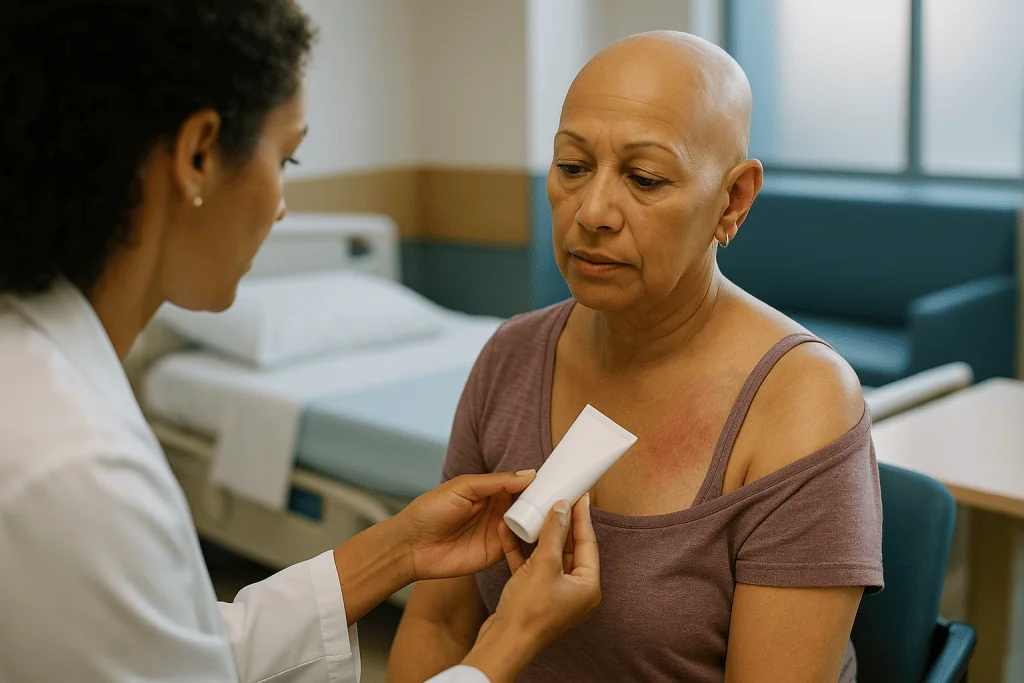
Location comes first. Skin folds trap moisture and rub against themselves: under the breast, in the groin, the armpit, the neck creases, and the perineum. Treatment to the head and neck, chest wall or pelvis commonly involves one of these zones. Thin skin over bone, such as the collarbone or shin, also tends to react earlier (MedlinePlus).
Then there is the treatment itself. Courses that deliver a higher total dose to the surface, or that are combined with chemotherapy or certain targeted drugs that sensitize skin, carry a higher chance of visible reactions. Your radiation oncologist will know whether your plan falls into that group; it is a fair question to ask at the planning visit.
Personal factors matter too. Smoking reduces blood flow to the skin and slows healing. Diabetes and low body weight can both affect wound repair. Pre-existing skin conditions such as eczema or psoriasis in the field may flare. People with darker skin tones are not spared radiation reactions, but early changes can look different: deeper hyperpigmentation rather than obvious redness, so the team may rely more on how the skin feels and whether it is peeling (NIH, National Cancer Institute).
Who is asked to wait? Almost everyone, when it comes to anything new. Most teams ask patients to pause acids, retinoids, exfoliating scrubs, perfumed lotions and any product they have not shown the nurse, until the course and the early healing period are over. Introducing an unfamiliar ingredient onto compromised skin makes it impossible to tell a radiation reaction from an allergic one. Waiting is not caution for its own sake; it keeps the picture clear for the people monitoring you.
Proton therapy skin reactions: what the first weeks usually look like
The timeline surprises people in one direction: nothing much happens at first. A typical course delivers one short session a day, five days a week, over several weeks, and the skin usually looks unchanged for the first one to two of them (Mayo Clinic). The dose is accumulating; the surface simply has not run out of reserve cells yet.
Skin changes most often become noticeable within a few weeks of the start of treatment, according to the National Cancer Institute, and they tend to build gradually rather than arrive overnight (NIH). Early signs are mild: a feeling of tightness, slight warmth, faint pinkness or, in darker skin, a subtle deepening of color. Many people describe it as a day-old sunburn that never quite peaks.
Later in the course, dry desquamation can appear. That is the medical term for dry flaking and peeling, like skin after a beach holiday. Itch often accompanies it. For a smaller number of patients, especially where skin folds are involved, moist desquamation develops: the top layer lifts off and the surface beneath looks raw, shiny and may weep clear fluid. This is the point at which teams typically step in with specific dressings or prescribed topical treatments.
Hair in the treated field usually thins or falls out partway through, because hair follicles share the basal layer’s vulnerability. Sweating in the area may drop. None of this is a sign that the treatment is failing or that the skin is permanently damaged.
One detail worth holding onto: the reaction often peaks after the last session, not during it. The NHS notes that skin soreness can continue for a period after radiotherapy finishes before settling (NHS). Patients who stop their routine on the final day are frequently caught out a week later. Plan for the routine to outlast the appointments.
Washing the treated area: the daily routine most teams agree on
For decades, some radiotherapy departments told patients not to wash the treated skin at all. That advice has been retired. Current guidance from mainstream sources favors gentle daily washing, which removes sweat, loose skin cells and bacteria that would otherwise sit on an already irritated surface (MedlinePlus).
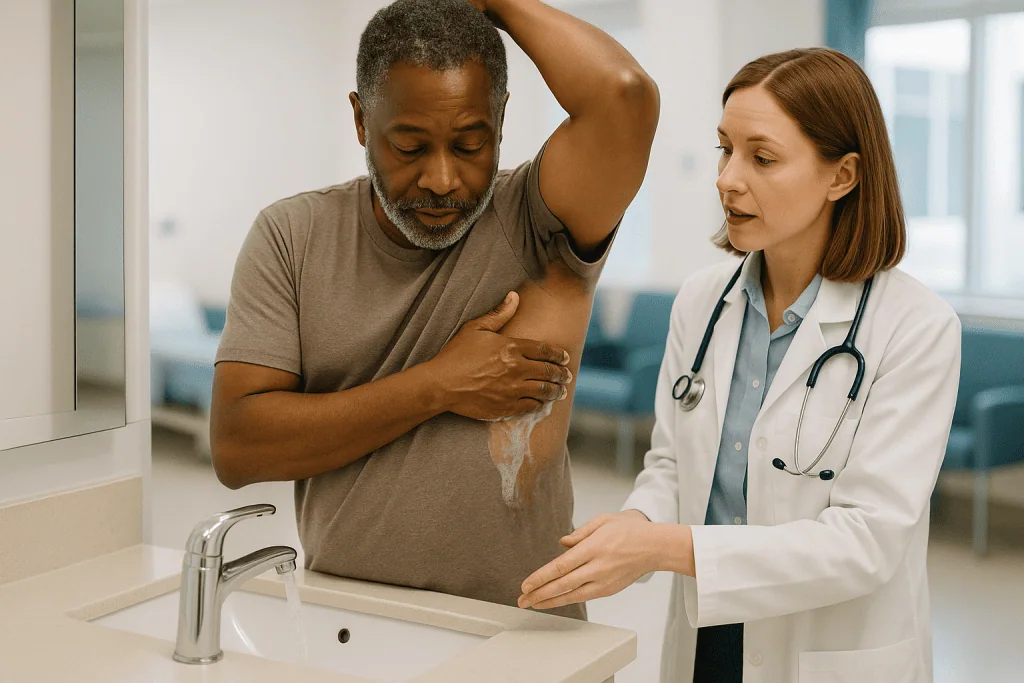
The method matters more than the frequency. Use lukewarm water; hot water dilates surface vessels and strips the little oil the glands are still producing. Choose a mild, fragrance-free cleanser or plain water. If you use soap, let it be the simplest one you can find, without deodorant agents, exfoliating beads or strong perfume. Apply it with your hand rather than a washcloth or sponge, and do not rub.
Drying is where most accidental damage happens. Pat with a soft towel, or let the area air-dry for a minute. Never scrub, and never use a towel so vigorously that it drags the skin. In folds, make sure the surface is fully dry before dressing, since trapped moisture encourages maceration, the softening and breakdown of skin that stays wet too long.
Two practical questions come up constantly. Can you shower? Yes, a brief shower is fine for most patients, as long as the spray is not aimed hard at the field. Can you bathe? A short soak in lukewarm water is generally acceptable, but long hot baths are discouraged for the same reason as hot showers.
The skin markings deserve a word. Many centers use small permanent tattoo dots for alignment and these will not wash away. Some still use ink marks, and those should be left alone: pat around them and ask the radiographers if they fade. Never redraw a mark yourself.
Finally, keep the routine the same at weekends when there are no sessions. The skin does not know it is Saturday.
What to put on skin during radiation and proton therapy: choosing a moisturizer
Moisturizing is the one active step patients can take every day, and it is where the shelves become confusing. The evidence supports a simple principle: a plain, unperfumed, hypoallergenic moisturizer applied regularly from the first week helps keep the surface supple and may reduce itching and dryness. No particular branded product has been shown to outperform another in robust trials, and the National Cancer Institute advises checking any product with your team before using it on treated skin (NIH).
What to look for on an ingredient list:
- No fragrance, including botanical oils marketed as natural scents.
- No alcohol high on the list, which stings and dries.
- No alpha-hydroxy acids, retinol or other exfoliating actives.
- No metal-containing ingredients unless your team has specifically approved them.
Thickness is a trade-off. Light lotions absorb quickly and suit daytime use under clothing. Heavier creams and ointments seal better and suit evenings. Many teams suggest a lighter product in the morning and a richer one at night, but your nurses may have a department preference, and following it keeps everyone on the same page.
Timing has a long history of debate. Older advice said to avoid applying anything within a few hours before a session, on the theory that a layer of cream might increase the surface dose. More recent physics work suggests thin layers make little difference, but practice still varies, and some departments prefer the skin to be clean at treatment time. Ask, then follow what your own team says rather than what another patient was told.
Apply with clean hands, in gentle strokes rather than rubbing, and stop at the edge of any skin that is broken or weeping. Open areas need the team’s assessment, not more lotion.
Hydration inside and out: does drinking water help treated skin?
The title of this article pairs skin care with hydration, and it is worth being honest about what that pairing means. There are two separate ideas, and only one of them is strongly supported.
Topical hydration, meaning moisturizer on the skin surface, has reasonable evidence behind it for comfort and for reducing dryness and itch during radiation treatment, as the previous section described. Systemic hydration, meaning drinking water in the hope that it reaches the treated epidermis and softens it, is a much weaker claim. Normal, adequate fluid intake supports every tissue in the body, but no mainstream guideline suggests that drinking extra water beyond thirst prevents or treats radiation skin reactions. Anyone selling that idea is ahead of the data.
That said, staying properly hydrated during a multi-week course matters for other reasons. Fatigue is among the most common side effects of radiation treatment of any type (NHS), and mild dehydration compounds it. Patients treated to the head and neck may have a dry mouth or sore throat that makes drinking uncomfortable, and they are at particular risk of falling behind on fluids. Pelvic treatment can cause bowel changes that increase fluid loss. For these groups, the care team often tracks intake closely.
Practical habits beat targets. Keep a bottle in sight and sip through the day rather than drinking in bursts. Soups, milk, yogurt and watery fruit all count. If plain water tastes metallic, a side effect some patients report during treatment, try it at room temperature or with a slice of citrus, provided your mouth is not sore.
Humidity in the home is the overlooked middle ground. Dry indoor air pulls moisture from any skin, treated or not. A simple humidifier in the bedroom, kept clean, can take the edge off nighttime tightness and itch. It is low-tech, low-risk and, unlike a water-drinking target, it acts on the surface that is actually struggling.
Clothing, shaving, heat and friction: small habits that add up
Picture a shirt collar moving across the same patch of neck a thousand times a day. On healthy skin, that is nothing. On skin whose basal layer is running a deficit, it is a thousand small insults. Most of the practical guidance on this topic is really about removing those insults one at a time (MedlinePlus).
Clothing should be loose and soft. Cotton and bamboo breathe; synthetic sports fabrics often do not. For chest-wall or breast treatment, many patients go without a bra or switch to a soft, wire-free cotton style with no seams across the field. For pelvic treatment, loose underwear and trousers that do not bind at the waist help. Tags can be cut out. New clothes should be washed before wearing to remove manufacturing residues.
Shaving in the treated field is a frequent question, especially for head and neck and axillary sites. Blades nick skin that heals slowly and can introduce infection. Most teams advise against wet shaving the area for the whole course and ask patients who must remove hair to use an electric razor gently, or to leave it. Depilatory creams and wax are off the table; both are chemical or mechanical trauma.
Heat and cold both belong on the avoid list. No heating pads, hot-water bottles, ice packs, saunas, steam rooms or very hot baths on the treated skin. Dilated vessels do not need more dilating, and numbed or fragile skin can burn or freeze without the usual warning.
Adhesives are the quiet culprit. Tape, plasters and some medical dressings pull off surface cells when removed. If something must be stuck near the field, ask the team which products they use and how to remove them.
Chlorinated pools and hot tubs are usually discouraged during the course, both for chemical irritation and infection risk, though a brief dip in clean water with the field covered is sometimes allowed. Ask first.
Sun protection during and long after a proton course
Treated skin and ultraviolet light are a poor combination at every stage: during the course, in the healing weeks afterward, and for years into the future. The reasons differ at each stage, and so does the practical advice.
During treatment, the skin is already receiving a daily dose of ionizing radiation. Adding ultraviolet, a different kind of radiation that damages the same superficial cells, simply stacks injury on injury. The straightforward rule is to keep the field out of the sun entirely. Clothing is the first line: a tightly woven long sleeve, a scarf, a wide-brimmed hat for head and neck fields. Fabric does not need reapplying and does not sting.
Sunscreen on the field during the course is a judgment call for your team. Some departments prefer nothing but the approved moisturizer on the skin; others allow a mineral sunscreen on intact skin if it will be exposed. Never apply sunscreen to broken or peeling skin without asking.
After treatment ends, the skin remains more sensitive to sun for a long time, in some people indefinitely, because the dermis has been remodeled and pigment cells may respond unevenly. This is where general skin cancer prevention guidance becomes directly relevant. The Centers for Disease Control and Prevention recommends seeking shade in the middle of the day, wearing protective clothing and a hat, and using a broad-spectrum sunscreen with SPF 30 or higher on exposed skin, reapplied after swimming or sweating (CDC). For a previously irradiated patch, treat that as the minimum, not the ceiling.
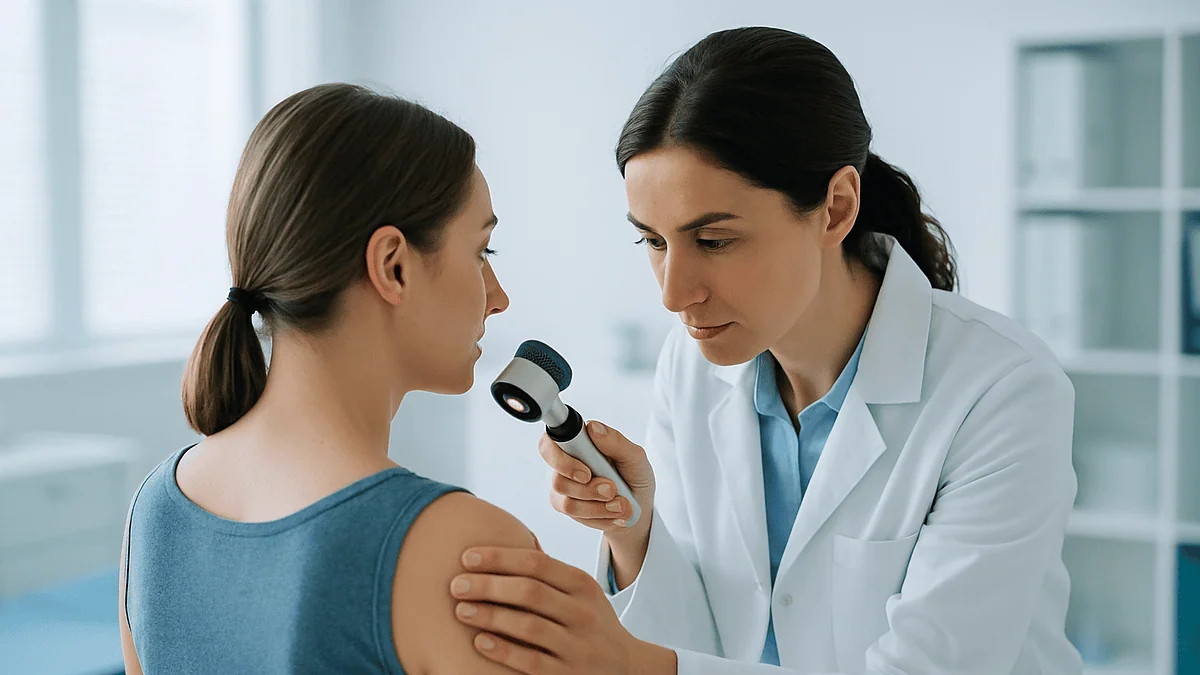
One more habit worth starting now: look at the treated area in good light once a month, the way you would check a mole, and show your follow-up team anything new. Radiation changes skin texture, and getting to know your own baseline makes it easier to notice something that does not belong.
Protective dressings and barrier films: what the evidence actually shows
Search results on this topic include studies of transparent film dressings applied to the skin from the start of proton therapy, and patients understandably ask whether they should request one. The honest answer is that this is an area of active research rather than settled practice.
The idea is sound. A thin, breathable, transparent polyurethane film placed over the entrance skin reduces friction from clothing and keeps the surface humid, both of which are known to help. Small clinical studies, several of them in proton therapy specifically, have reported less severe skin reactions in patients who wore such a film compared with those who used moisturizer alone. These are encouraging signals. They are also mostly small, often from single centers, and they do not all measure outcomes the same way. A signal from small studies is not the same as a proven standard, and mainstream guidance from bodies such as the National Cancer Institute still describes general skin care rather than mandating any dressing (NIH).
Practical issues also arise. Films can be fiddly over folds and may lift at the edges with sweat. Some patients develop irritation at the adhesive border. Removing a film from peeling skin without pulling off cells takes technique. For all these reasons, departments that use preventive films usually apply and change them in clinic rather than asking patients to manage them at home.
Once moist desquamation has occurred, the picture changes. Specific wound-care dressings designed for raw or weeping skin are well established in supportive oncology care, and your team will choose among them based on the size of the area, how much fluid it produces and whether infection is a concern. That decision belongs to the nurses and physicians who can see the skin. Do not buy wound dressings independently and apply them to an open area; the wrong product can trap bacteria or tear healing tissue on removal.
If a trial of preventive film is running where you are treated, asking about it is reasonable. Treat it as a question, not a demand.
A week-by-week skin care table for a multi-week course
Courses vary from a handful of sessions to seven or eight weeks, and the pace of skin change depends on site, dose and the individual. Still, patients often find it helpful to see the arc laid out. The table below is a general pattern drawn from mainstream guidance, not a schedule your skin is obliged to follow (NIH; NHS).
| Phase | What skin commonly does | Daily habits that matter most |
|---|---|---|
| Weeks 1–2 | Usually looks unchanged; may feel slightly tight or dry | Start the full routine anyway: gentle wash, pat dry, approved moisturizer, loose clothing, no sun on the field |
| Weeks 3–4 | Pinkness or deepening of color, warmth, mild itch, early hair thinning in the field | Continue routine; avoid scratching, switch to softer fabrics, mention itch to the team early |
| Weeks 5 onward | Dry flaking and peeling is common; some develop raw or weeping patches in folds | Stop applying moisturizer to any broken area; let the team assess and dress it; keep folds clean and dry |
| Week 1–2 after last session | Reaction often peaks here before beginning to settle | Keep the routine exactly as before; do not resume old products or shaving yet |
| Weeks 2–6 after | Most reactions gradually improve; tanning or darker patches may persist | Gradual return to normal care with team approval; strict sun protection continues |
Two caveats sit under this table. First, the peak after treatment is real and often underestimated; supplies and patience should last beyond the final appointment. Second, the right-hand column is a floor, not a replacement for individual instructions. If your nurses tell you something different, they are looking at your skin and this page is not.
What people often get wrong about skin care during proton therapy
Some myths are harmless. A few lead patients to make their skin worse while believing they are helping. Here are the ones that come up most often in treatment rooms.
Protons mean no skin reaction. The exit dose is small; the entrance dose is not. Skin reactions with proton therapy are real and, for superficial targets, can be comparable to photon treatment. Expecting nothing sets people up to ignore early signs.
Natural means safe. Aloe straight from the plant, coconut oil, essential oils and herbal balms are frequently recommended by well-meaning friends. Botanical products can contain fragrance compounds and allergens, and a reaction on treated skin is hard to distinguish from a radiation reaction. Mainstream sources advise checking every product with the team first (NIH).
Not washing protects the skin. This is old advice, now reversed. Gentle washing reduces bacteria and debris and is recommended by current guidance (MedlinePlus).
Peeling means you should exfoliate. Flaking skin is tempting to rub off. Doing so removes cells the body has not finished replacing. Let it shed on its own.
If it stings, it is working. Stinging on application means the product is irritating compromised skin. Stop and tell the team.
You can stop the routine on the last day. The peak often arrives a week or two after the final session. The routine should carry on until the team says otherwise.
Any redness means infection. Pinkness and warmth are expected. Infection looks different: spreading redness beyond the field, pus, fever, increasing pain. The distinction is covered in the final section.
The thread through all of these is the same. Treated skin needs less done to it, not more, and the one person who should decide what goes on it is someone who can see it.
What not to do after radiation therapy ends: the first month of healing
The final session feels like a finish line, and in one sense it is. For the skin it is closer to a halfway point. Reactions commonly peak in the week or two after treatment stops and then begin to settle over the following weeks (NHS). The habits that mattered during the course matter just as much now, and a few specific temptations arrive on cue.
Do not resume your old skincare the day after the last appointment. Retinoids, acids, scrubs and perfumed products should wait until the treated skin is fully intact and your follow-up team has had a look. Reintroduce one product at a time, on a small patch, so that any irritation can be traced.
Do not wet shave, wax or use hair-removal cream on the field until the skin has healed completely. Hair may regrow with a different texture or not at all in heavily treated areas, and new growth comes through fragile skin.
Do not expose the area to sun. If anything, protection should be tighter in these weeks than during the course, because people go outdoors more once appointments stop. Clothing and shade first, then broad-spectrum sunscreen on intact skin, following CDC guidance of SPF 30 or above (CDC).
Do not pick at peeling or scabbed areas, and do not apply moisturizer to anything still raw. Open skin needs the dressing regimen the team set up, until they discharge it.
Do not assume persistent changes are permanent. Darker or tanned patches, dryness and altered sensation can take weeks to months to fade, and some texture change may remain. Scheduled follow-up exists partly to track this.
Do not stop reporting. If the skin worsens rather than improves after the first two weeks, or anything in the next section appears, call. The treatment team remains responsible for the skin until it has healed, not until the last beam is delivered.
Questions to ask your care team about skin care during proton therapy
Departments differ in the details of their skin advice, and the most useful thing a patient can do is get their own team’s version in writing early. These questions tend to produce the answers that matter.
- Which areas of my skin will the beam enter through, and are any of them in folds or over bone?
- Based on my plan and total dose, how strong a skin reaction do you expect, and when?
- Which moisturizer or cleanser does this department recommend, and is there anything on your list I should specifically avoid?
- Should I apply anything to the skin before a session, or arrive with it clean?
- Do you use any preventive dressing or film on the entrance skin, and if so, who applies and changes it?
- Am I allowed to shower, bathe or swim, and are there limits on temperature or duration?
- How should I manage the skin marks, and what do I do if one fades?
- If I develop itch, what is the first step, and when would you prescribe something?
- What does moist desquamation look like, and what exactly should I do the day I notice it?
- Who do I call about skin problems in the evening or at the weekend, and at what point should I go to an emergency department instead?
- How long after the last session should I keep this routine before returning to normal products?
- Will the treated skin need lifelong sun precautions, and should it be checked at follow-up appointments?
Bring the products you already own to the first review. A nurse who can read the label in front of you gives a far more useful answer than one asked to approve a brand name from memory. Write the answers down; the first few weeks of treatment involve a great deal of information, and skin advice is the kind that gets lost between the bigger conversations.
When to call your doctor
Expected skin changes during a multi-week course include mild pinkness or darkening, warmth, dryness, itch and later some flaking. Those belong in your next routine conversation with the radiographers or nurses, who see the skin every weekday. A separate group of signs should prompt a same-day call, and a few should take you to urgent care without waiting (NIH; Mayo Clinic).
Call your treatment team the same day if you notice:
- Skin that has lifted off to leave a raw, shiny or weeping surface, anywhere in the field
- Blisters, or peeling that is spreading quickly
- Pain in the treated area that is new, worsening or keeping you awake
- Yellow or green discharge, crusting, or an unpleasant smell from the skin
- Redness spreading beyond the edges of the treated field
- Bleeding from the treated skin
- A reaction to a product: stinging, hives or swelling after applying something
- Skin that is getting worse rather than better more than two weeks after your last session
Seek urgent medical care if you have:
- A fever, chills or feeling generally unwell alongside skin changes, since this can signal infection, which carries higher risk if your blood counts are low from other treatments
- Rapidly spreading redness, heat and swelling in the skin
- Difficulty breathing or swelling of the face, lips or throat after using a new product
Call sooner rather than later. Skin reactions are easier to manage when caught at the dry-peeling stage than once an area is open, and your team would rather hear about something that turns out to be expected than miss something that is not. The decision about dressings, prescribed creams or any pause in treatment rests with the radiation oncologist and nursing team who can examine the skin directly.
Frequently asked questions
What is proton therapy best for?
Proton therapy is most often considered when a tumor sits close to sensitive structures that a conventional X-ray beam would pass through, such as parts of the brain, spine, eye or the organs of children, whose growing tissue is especially vulnerable. Protons release most of their energy at a set depth and then stop, limiting dose beyond the target. Whether it suits a particular person depends on tumor type, location and the treating team’s assessment, not on the technology alone.
What skincare is best for cancer patients receiving radiation?
The best skincare during radiation treatment is the simplest: a mild, fragrance-free cleanser, lukewarm water, patting dry, and a plain unperfumed moisturizer approved by your team, applied regularly from the first week. Avoid acids, retinoids, scrubs, alcohol-heavy products and anything with added scent, including botanical oils. No branded product has been shown to outperform another in strong trials, so show your nurses whatever you plan to use before it touches treated skin.
What are the most common proton therapy side effects on skin?
The most common skin effects are dryness, tightness, pinkness or darkening, warmth and itch in the area where the beam enters, usually appearing a few weeks into the course. Later, dry flaking is common, and some patients, particularly where skin folds are treated, develop raw or weeping patches. Hair in the field often thins. These reactions typically settle over the weeks after treatment ends, though skin color and texture changes can persist longer.
What not to do after radiation therapy ends?
In the weeks after the last session, avoid restarting old skincare products, wet shaving or waxing the field, sun exposure, hot baths or heating pads on the area, and picking at peeling skin. The reaction often peaks one to two weeks after treatment stops, so keep the gentle routine going until your team confirms the skin has healed. Reintroduce products one at a time so any irritation can be traced.
How do you stop skin cancer from spreading?
There is no home method for stopping a skin cancer from spreading; that depends on early diagnosis and treatment planned by a specialist, which may include surgery, radiation or medicines depending on type and stage. What everyone can do is lower future risk and catch changes early: protect skin from ultraviolet light with shade, clothing and SPF 30 or higher, avoid tanning beds, and have any new, changing or non-healing skin lesion examined promptly.
What should I put on my skin during radiation if it starts to peel?
Dry flaking on intact skin can usually continue to be moisturized gently with the product your team approved, without rubbing the flakes off. If any area becomes raw, shiny or weepy, stop applying moisturizer there and contact your treatment team the same day. Open skin needs specific dressings chosen by nurses who can see it, and the wrong product can trap bacteria or tear healing tissue when removed.
Does drinking more water help skin during proton therapy?
Not directly. Adequate fluid intake supports general wellbeing and helps with fatigue, which is common during radiation treatment, but no mainstream guideline suggests that drinking extra water prevents or treats radiation skin reactions. The hydration that matters for the skin surface is topical: regular moisturizer on intact skin and, for some people, a humidifier in a dry bedroom. Drink to thirst, more if your team advises it.
Can I use deodorant or sunscreen on the treated area?
Policies vary between departments, so ask your own team. Many allow a simple fragrance-free deodorant on intact skin in the armpit during treatment, while others prefer nothing but the approved moisturizer. Sunscreen on the field during the course is a similar judgment call; the usual advice is to keep the area covered with clothing instead. After healing, broad-spectrum sunscreen of SPF 30 or higher on the treated skin becomes a long-term habit.
Why do skin reactions get worse after proton therapy ends?
Radiation damages the deepest layer of the epidermis, which produces new skin cells, and the effect of each day’s dose takes time to show on the surface. By the final session, the skin is still working through damage accumulated over the preceding days, so peeling and soreness commonly peak one to two weeks later before improving. This lag is expected and is why the skin care routine should continue after appointments stop.
What are good radiation skin care tips for people with darker skin?
The same gentle routine applies, but the early signs look different. Instead of obvious redness, treated skin often shows deepening of color, a dusky or grayish tone, or increased dryness and tightness, so pay attention to how the skin feels and whether it is flaking rather than waiting for pinkness. Point out any change to your team early. Hyperpigmentation can persist for months after treatment and strict sun protection helps limit it.
References
- Radiation therapy: skin care (MedlinePlus)
- Radiotherapy: side effects (NHS)
- Skin cancer prevention (CDC)
This article is for general information only and is not a substitute for professional medical advice. Please consult a qualified doctor about your individual situation.

More from the Blog
Recovery After Vulvar Cancer Surgery: Wound Healing, Hygiene and the First Weeks
Recovery after vulvar cancer surgery usually means a hospital stay of a few days, followed by several weeks of gradual healing at home. Gentle…

How Long to Plan for a Stem Cell Transplant Abroad Before Flying Home
Most people should plan to remain near their transplant center for weeks to months after a stem cell transplant, not days. Patient guidance from…

Eating After Stomach Cancer Surgery: Small Frequent Meals and the New Digestive Rhythm
Eating after gastrectomy usually means six to eight small meals a day instead of three large ones, chewing slowly, putting protein first, separating drinks…
What Debulking Surgery for Ovarian Cancer Removes and Why Completeness Matters
Debulking surgery for ovarian cancer, also called cytoreductive surgery, removes the ovaries, fallopian tubes, uterus, omentum and every visible tumor deposit a surgeon can…
Robotic Partial Nephrectomy Recovery: Early Walking, Lifting Limits and the First Six Weeks
Robotic partial nephrectomy recovery usually means walking within hours of surgery, a hospital stay of one to three days, and light activity within one…
Life After Vulvar Cancer Treatment: Intimacy, Body Image and Emotional Support
Life after vulvar cancer treatment usually involves a slow physical recovery, changes in how the genital area looks and feels, and an emotional adjustment…