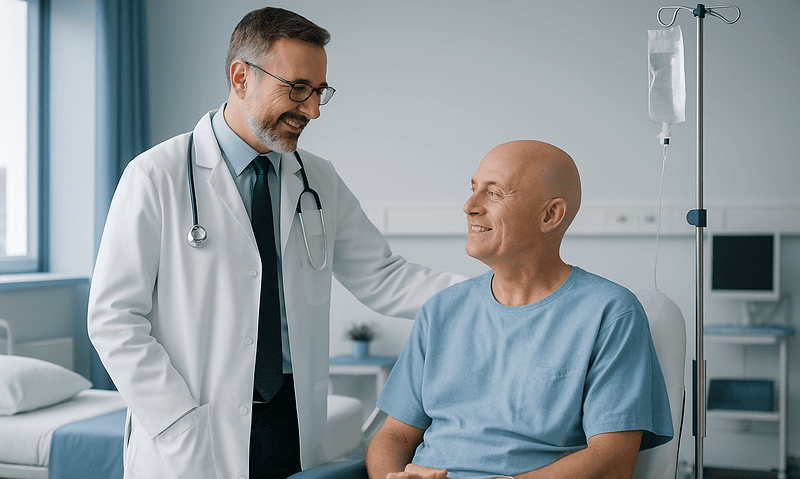
When Targeted Therapy Stops Working: Resistance, Repeat Biopsies and the Next Options
When targeted therapy stops working, it usually means the cancer has found a way around the drug, a process called acquired resistance. The care…
Read article

Articles for patients and families facing cancer: how screening and diagnosis work, what staging means, how the main treatment types differ and how to prepare for appointments. General information; treatment decisions belong to your oncology team.
When targeted therapy stops working, it usually means the cancer has found a way around the drug, a process called acquired resistance. The care…
Cystoscopy surveillance after bladder cancer continues for years because the disease has one of the highest recurrence rates of any solid tumor, and new…
Radiation precautions after radioactive iodine usually mean keeping extra distance from other people, sleeping alone, and taking care with urine, saliva and sweat for…
Acute lymphoblastic leukemia is treated in sequential phases rather than one course. Induction, usually about four weeks, aims to clear leukemia cells from the…
Sarcoma follow-up combines scheduled imaging, wound checks and function assessments. Guideline consensus suggests chest imaging by CT or X-ray, plus MRI or ultrasound of…
Flying after radioactive iodine treatment is usually possible once your treating team confirms your radiation level has fallen enough for close contact with other…
After colon cancer surgery, the bowel usually pauses for a day or two, then gas and loose, frequent stools return over the following days.…
For early-stage non-small cell lung cancer, surgery to remove the affected lobe or segment is the standard first option for people who are fit…
Hormone therapy for hormone receptor-positive breast cancer is usually planned for at least five years after surgery, and some people are advised to continue…
Life after mastectomy usually means a few weeks of protected healing, then a gradual return to normal movement, work and exercise; NHS guidance puts…
A melanoma tumor board is a scheduled meeting where dermatologists, surgeons, medical and radiation oncologists, pathologists and radiologists review one patient's slides, scans and…
Doctors judge whether CAR-T has worked mainly with imaging and laboratory tests done on a schedule, not in the first days after infusion. For…
A candidate for CyberKnife is usually someone with a small, well-defined tumor, benign or cancerous, that imaging can outline clearly, often sitting near sensitive…
Brachytherapy for cervical cancer delivers radiation from a sealed source placed inside the uterus and vagina through a hollow applicator. Each session usually involves…
Neck dissection removes lymph nodes when cancer has spread to the neck or is likely to. A radical neck dissection takes all node groups…
On bone marrow transplant day, often called Day Zero, donated or previously collected blood-forming stem cells are given through a central line, much like…
Acute and chronic graft-versus-host disease are distinguished mainly by their clinical features, not just by timing. Acute GVHD usually appears within the first weeks…
People most often considered for proton therapy have a tumor sitting close to organs that tolerate radiation poorly, such as the brainstem, spinal cord,…
Choose which cookies you allow. Essential cookies are always on because the site cannot work without them.