

Is a Second Pathology Review Useful for Lymphoma? Why Subtype Accuracy Matters

Key Takeaways
- A second pathology review examines the original slides and tissue block; a new biopsy is needed only if the sample turns out to be inadequate.
- In a national series of more than 40,000 lymphoma cases, expert review changed the diagnosis in about 17 percent and altered expected treatment in about 11 percent.
- Diagnoses made on small needle cores, rare or T-cell subtypes, and borderline reactive-versus-lymphoma cases are the ones most often revised.
- Hedging words in a report such as favor, consistent with, or cannot exclude are a signal that specialist review may add value.
- Staging scans, blood tests and bone marrow assessment can proceed in parallel with review, so the added wait is usually days to a couple of weeks rather than a stalled pathway.
- A pathology second opinion answers what the disease is; a clinical second opinion answers what to do about it, and the first should come before the second when the subtype is uncertain.
A second pathology review of a lymphoma biopsy is widely considered worthwhile, especially before treatment begins. Lymphoma has dozens of subtypes that can look alike under the microscope, and published series from expert reference networks report that a meaningful minority of diagnoses are revised on review. The subtype drives the treatment plan, so confirming it with a hematopathologist is a reasonable step to discuss with the treating team.
The envelope says “pathology report” and the first line reads like a foreign language: “atypical lymphoid infiltrate, favor low-grade B-cell lymphoma, see comment.” Underneath, the comment is three paragraphs long and ends with a suggestion that more stains are pending. Most people in that moment want one thing: a clear name for what they have, so a plan can start.
That hesitation in the report is not carelessness. Lymphoma is one of the hardest diagnoses in all of pathology, which is exactly why a lymphoma second opinion pathology review has become routine practice in many cancer services. The question patients ask is simple and fair: if a trained doctor has already looked, why look again?
The honest answer is that lymphoma is not one disease but a family of dozens, and the difference between two close relatives can decide whether someone is watched for years or treated within weeks. This article explains what a second review involves, what the evidence shows it changes, and how to raise it without feeling you are doubting anyone.
What is a lymphoma second opinion pathology review?
A pathologist is a doctor who makes diagnoses by examining tissue and cells under a microscope. A hematopathologist is a pathologist who has done extra training in diseases of blood and lymph tissue, including lymphoma. A second opinion pathology review means the original biopsy material, the glass slides and sometimes the small wax block of preserved tissue, is sent to a second pathologist, usually a hematopathologist, who examines it independently and issues their own written report.
Two points are worth separating at the start. First, this is a review of the tissue, not a repeat biopsy. No new procedure is needed unless the second reviewer finds that the sample is too small or too crushed to answer the question. Second, it is distinct from a second opinion on treatment, where a different oncologist comments on the plan. Both can be useful, and they answer different questions.
Why does lymphoma get this attention when, say, a straightforward skin cancer often does not? Because the diagnosis rests on pattern recognition layered on top of laboratory markers, and the number of possible answers is large. The World Health Organization classification groups lymphoid cancers into dozens of distinct entities, each defined by a mix of cell appearance, protein markers and genetic changes, as described in patient-facing overviews from Cleveland Clinic and MedlinePlus.
In practice, many cancer services already build this in. In some systems every new lymphoma diagnosis is automatically reviewed by a specialist panel before treatment is planned. Elsewhere the first report comes from a general pathologist and the review happens only if someone asks. Knowing which situation applies to you is the first useful question for your care team.
How does a pathologist actually diagnose lymphoma?
Picture the biopsy as a tiny slice of a lymph node, thinner than a human hair, stained pink and purple and laid on glass. The first pass is architecture: has the normal honeycomb structure of the node been replaced, and if so, by what pattern? Diffuse sheets of large cells suggest one group of diseases; small cells arranged in nodules suggest another.

Appearance alone is rarely enough. The next layer is immunohistochemistry, a technique that uses antibodies to stain specific proteins on the cells so the pathologist can see which markers are present. A B-cell lymphoma and a T-cell lymphoma can look nearly identical on the basic stain, yet they are treated differently, and their marker profiles tell them apart. Hodgkin lymphoma is identified partly by distinctive large cells called Reed-Sternberg cells, which carry their own characteristic set of markers.
Flow cytometry adds a third layer when fresh tissue is available. Cells are suspended in fluid and passed one by one past a laser that reads their surface proteins, producing a fingerprint of the population. Molecular tests, including fluorescence in situ hybridization (FISH), a method that lights up specific gene rearrangements inside the nucleus, can confirm or exclude certain subtypes that are defined by a genetic change rather than by appearance.
Each layer narrows the options. The final diagnosis is the one name consistent with the architecture, the marker profile and the genetics together. When one layer is missing, perhaps because the sample was a thin needle core rather than a whole node, the report hedges, and that hedge is where a second reviewer with access to more stains, or simply more experience with rare patterns, often adds value. The NHS and Mayo Clinic both describe this stepwise approach in their patient guidance.
Why subtype accuracy matters so much in lymphoma
In many cancers the key questions after diagnosis are about stage: how far has it spread? In lymphoma the subtype often matters as much as the stage, sometimes more. Two patients can have swollen nodes in the same places with the same scan appearance, and one may be advised to wait and watch while the other starts chemotherapy within days. The difference sits entirely in the pathology report.
Consider the broad groups. Indolent lymphomas grow slowly; some people live with them for years before any treatment is needed, and starting treatment early does not necessarily help. Aggressive lymphomas grow quickly and are generally treated promptly, with the intention of controlling the disease fully. Hodgkin lymphoma follows a different pathway again, with its own drug combinations and radiation decisions. Call an aggressive disease indolent and a person may lose valuable time; call an indolent disease aggressive and they may receive intensive treatment and its side effects without need.
Subtype also decides which targeted options are even relevant. Antibody-based therapies that recognize a surface protein called CD20 can only act on cells that display that protein, which is why the report states whether the cells are CD20-positive. T-cell lymphomas lack it, so those therapies are not part of the conversation. Certain genetic rearrangements define subtypes that behave very differently from their look-alikes and are managed on separate pathways.
Treatment intensity, timing, drug class, trial eligibility and even the expected rhythm of follow-up all flow from that one line of text. That is the practical reason specialists treat the subtype as the foundation of the plan, and why confirming it is not a formality. The decision about which pathway applies always rests with the treating hematology or oncology team, but it is a decision built on the pathologist’s answer.
How often does a second pathology review change a lymphoma diagnosis? The lymphoma misdiagnosis rate
This is the question that justifies the whole practice, and the evidence is clearer here than for many topics in cancer care. The largest published series comes from a national network in which every new lymphoma diagnosis was referred for expert review. Among more than 40,000 cases, the diagnosis was changed in roughly 17 percent, and in about 11 percent the change was classified as major, meaning it would be expected to alter treatment. The most frequent revisions involved reclassifying one subtype as another, followed by changes between a cancer diagnosis and a benign or reactive condition. These figures are from the study published in the Journal of Clinical Oncology and indexed in PubMed.
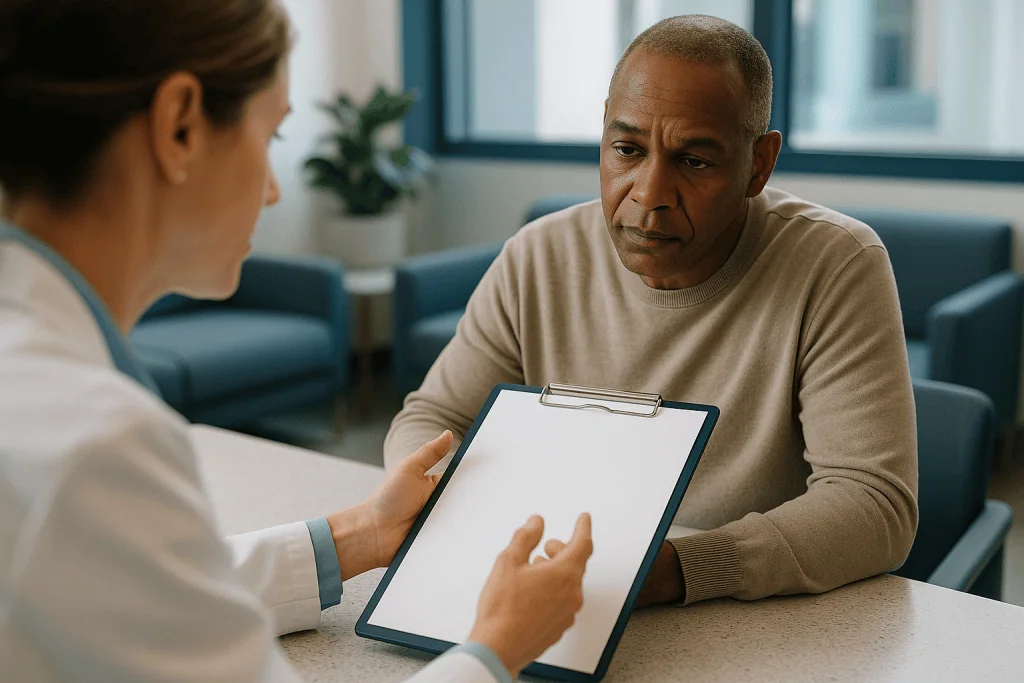
Two cautions apply. The reviewers in that network were specialist hematopathologists, so the rate reflects general pathology compared with expert review, not expert compared with expert. And “changed” does not mean the first pathologist was wrong in a simple sense; often the first report was a reasonable preliminary read on limited material, and the reviewer had access to additional stains or molecular tests.
Which cases were most often revised? The pattern across series is consistent: small needle biopsies, rare subtypes, T-cell lymphomas, borderline cases between reactive and malignant, and samples that were small, crushed or poorly preserved. Common diagnoses on generous tissue were rarely overturned.
What this means for an individual is simply this: the chance that review changes something is far from negligible, and it is highest exactly when the first report sounds uncertain. A report with words like “favor,” “consistent with,” “cannot exclude” or “suggest expert consultation” is a signal, not a failure. Whether review is needed in a specific case is a judgment for the treating team, informed by the quality of the sample and the clarity of the first result.
Who is usually offered a lymphoma biopsy second opinion, and who is usually asked to wait?
Not every lymphoma biopsy needs to travel. Services tend to prioritize review when the stakes of getting the subtype wrong are highest or when the first result is genuinely uncertain. Typical situations where review is commonly arranged include:
- A diagnosis made on a core needle biopsy or fine needle sample rather than a whole lymph node, because small samples limit the stains that can be done and can miss the overall architecture.
- A report that uses hedging language or lists more than one possible subtype.
- A rare subtype, including most T-cell and NK-cell lymphomas, where even experienced general pathologists see only a handful of cases a year.
- A borderline call between reactive lymph node swelling and early lymphoma, which is one of the most common reasons for revision in published series.
- A diagnosis that does not fit the clinical picture, for example an indolent subtype reported in someone with rapidly enlarging nodes, drenching night sweats and weight loss.
- Any case where the first pathologist has suggested consultation.
- Relapsed disease, where the lymphoma may have transformed into a more aggressive form and a new biopsy is being read.
Who is usually asked to wait, or told review is unlikely to add much? Someone with a common subtype diagnosed on a well-preserved excised node with a complete marker panel and a clear, unhedged report. Someone already being treated in a service where specialist panel review is built into the pathway, where asking for yet another review would duplicate work. And someone in an emergency, such as a tumor pressing on the airway or spinal cord, where treatment cannot be delayed and review runs in parallel rather than beforehand.
“Wait” in this context rarely means “never.” It usually means the team is confident enough to proceed while reserving the option to review if anything about the course does not fit. That judgment belongs to the treating team, and it is reasonable to ask them to explain it.
What happens to your tissue during the review
People are often surprised to learn that their biopsy is not used up. After a lymph node or core is removed, most of it is preserved in formalin, embedded in a block of paraffin wax and sliced into sections for staining. The block is archived, typically for many years, and can be re-cut to make new slides when further tests are needed. A portion may also be frozen or sent fresh for flow cytometry at the time of biopsy. The MedlinePlus overview of biopsies describes this preservation process.
For a second review, the original laboratory sends either the existing stained slides, a set of unstained slides cut from the block, or the block itself. The reviewer looks at the basic stains first, then at the existing marker panel, then decides whether additional stains or molecular tests would resolve any remaining question. If they do, those tests are run on the new sections. Nothing is taken from the patient again unless the material is exhausted or inadequate.
The reviewer’s output is a formal written report with their own diagnosis, a description of what they saw, a list of stains performed and, often, a comment explaining how they weighed any ambiguity. That report goes back to the referring team, who then reconcile it with the first. Where the two agree, the diagnosis is strengthened. Where they differ, the treating team decides how to proceed, which may mean a conversation between the two pathologists, a further test, or occasionally a repeat biopsy of a different node.
Your original material eventually returns to the archive, and the second report becomes part of your record. If you later move between services, the combined pathology, with both opinions, travels with you and saves the next team from starting over.
Second review by situation: what it typically adds
Not all reviews do the same job. The table below summarizes what a second pathology review most often contributes in common scenarios, drawing on the patterns described in published review series and in guidance from the NHS and Mayo Clinic. It is a guide to the kinds of questions a reviewer answers, not a prediction for any individual case.
| Situation | Main question for the reviewer | What review most often adds |
|---|---|---|
| Needle core biopsy, hedged report | Is there enough tissue to name a subtype? | Extra stains on re-cut sections; sometimes advice that an excisional biopsy is needed |
| Common subtype, excised node, clear report | Confirmation only | Usually agreement; adds confidence before treatment |
| Suspected T-cell or rare subtype | Which of several similar entities is this? | Specialist marker panels and molecular tests that general laboratories may not run |
| Reactive versus early lymphoma | Is this cancer at all? | Clonality testing and pattern expertise; one of the most frequent sources of revision |
| Relapse or suspected transformation | Has the disease changed character? | Side-by-side comparison with the original slides |
| Report conflicts with symptoms or scans | Does the tissue match the clinical story? | Fresh eyes on the integration of pathology with the clinical picture |
A few observations stand out. The scenarios in which review most often changes something are also the ones where the first report tends to be cautious, which means the system is partly self-flagging. And the “confirmation only” row is not wasted effort: a diagnosis confirmed by two specialists supports a treatment plan that may last months and involve real side effects. The decision to request review in any row sits with the treating team, weighing urgency against the benefit of certainty.
Hodgkin vs non-Hodgkin pathology: why the line matters
The first fork in the lymphoma road is between Hodgkin lymphoma and the much larger group called non-Hodgkin lymphoma. The two are treated along different pathways with different drug combinations, different roles for radiation and different follow-up, so this is a distinction a second reviewer checks carefully.
Hodgkin lymphoma is defined by Reed-Sternberg cells, large abnormal cells that are often scattered sparsely among a crowd of normal immune cells. The cancer cells can be a tiny minority of what is on the slide, which creates a particular trap: a small needle sample may miss them entirely, or the background inflammation may be mistaken for a reactive node. Reed-Sternberg cells also have a characteristic marker profile that overlaps with a few non-Hodgkin subtypes, so immunohistochemistry has to be read with care. MedlinePlus outlines the Hodgkin and non-Hodgkin groups for general readers.
On the non-Hodgkin side, the reviewer’s main task is to place the disease within the B-cell or T-cell lineage and then within the correct entity. Some entities are near-identical twins of others under the basic stain and are separated only by a single marker or a specific gene rearrangement. A handful of aggressive B-cell lymphomas are defined partly by genetic events, and identifying them changes the expected behavior and the pathway the treating team follows.
Why does this fork draw so much scrutiny? Because misplacing a case across it is a major revision, not a minor one. Review series consistently list Hodgkin versus non-Hodgkin reclassification among the changes that alter treatment. For anyone whose report sits near that line, or whose Hodgkin diagnosis was made on a small sample, asking whether the material has been seen by a hematopathologist is a sensible question for the care team.
What the following days and weeks usually look like
Once the treating team requests a second review, the practical steps are mostly administrative, which is part of why the wait can feel frustrating. The original laboratory locates the block and slides, cuts additional unstained sections if the reviewer wants to run new tests, packages everything and ships it. Reference laboratories log the case, assign it to a hematopathologist, and begin the review. Each of those steps takes real time.
Patient guidance from the NHS notes that initial lymphoma biopsy results can take days to a few weeks, largely because of the number of specialized stains required. A second review generally adds a further period in the same range, longer if molecular tests such as FISH are needed, since those are often batched and run on specific days. Shipping delays and holidays can stretch it. These are typical ranges, not promises, and your team can give you a more specific expectation based on where the slides are going.
What should you be doing during that window? Usually, the rest of the workup continues in parallel. Staging scans, blood tests, heart and kidney function checks and, in some cases, a bone marrow biopsy do not depend on the final subtype and can be completed so that treatment can start promptly once the pathology is settled. Many teams also schedule the first discussion of likely treatment options during this time, framed as “if the diagnosis is confirmed, here is what we would propose.”
When the reviewer’s report arrives, the team reconciles it with the first and discusses the result with you. Agreement means the plan proceeds. Disagreement is not a crisis; it usually leads to a direct conversation between pathologists or one further test. Throughout, the sequencing of staging, review and treatment is set by the treating team, who weigh how urgent your particular situation is.
Does a second opinion delay lymphoma treatment?
This is the worry underneath most hesitation, and it deserves a direct answer: review does add time, usually measured in days to a couple of weeks, and for most lymphomas that interval is acceptable because the alternative, treating the wrong subtype, costs far more. For indolent lymphomas, where months of observation may be the plan anyway, the delay is immaterial. For many aggressive lymphomas, teams routinely complete staging and review together within a short window before starting treatment.
There are exceptions, and good teams recognize them. A rapidly growing mass compressing the airway, a tumor threatening the spinal cord, severe organ dysfunction from the lymphoma, or a very fast-growing subtype suspected on initial review can all justify starting treatment on the best available diagnosis while the review continues. In those cases the second opinion still happens; it simply runs alongside the first cycle of treatment rather than before it, and the plan is adjusted if the reviewer’s answer differs.
The way to reduce delay is largely logistical. Confirming early that the block and slides are available, that the receiving laboratory has accepted the case, and that staging investigations are being booked in parallel rather than one after another keeps the overall timeline tight. Asking your team whether review will be done before or alongside treatment, and why, usually produces a clear and reassuring explanation.
One more point is worth making plainly. A second review is meant to protect you from a mismatch between diagnosis and treatment. It is not a reason to pause everything else or to postpone appointments. The team coordinating your care balances the value of certainty against the need for speed, and that balance, not a fixed rule, decides the order of events. The Mayo Clinic patient guidance describes how staging and diagnosis are integrated before treatment planning.
What people often get wrong about pathology second opinions
A few misunderstandings come up again and again, and clearing them away makes the conversation with your team easier.
“Asking for review means I think my pathologist made a mistake.” Review is a quality step built into many lymphoma services precisely because the diagnosis is difficult. Pathologists themselves request consultation on hard cases; it is a mark of good practice, not a complaint.
“A second opinion means another biopsy.” Almost never. The reviewer works from the existing slides and block. A repeat biopsy is advised only if the original sample is too small or damaged to answer the question, which is itself useful information.
“If two pathologists disagree, nobody knows what I have.” Disagreement usually reflects genuine ambiguity in a borderline case, and it narrows the options rather than widening them. The treating team resolves it through discussion and further testing, and the result is typically a more confident diagnosis than either report alone.
“A scan can tell the subtype, so the slides do not matter that much.” Imaging shows where disease is and how active it looks; it cannot distinguish subtypes that are defined by cell markers and genes. Cleveland Clinic describes biopsy as the only way to confirm the specific type.
“The reviewer will tell me my prognosis.” The pathology report names the disease and describes its features. How it is likely to behave, and what to do about it, is a clinical judgment the treating team makes by combining pathology with stage, symptoms, blood tests and overall health.
“More review is always better.” Once a case has been seen by a specialist hematopathologist and the two reports agree, further opinions rarely add much and can delay care. The point is a confident, specialist-confirmed diagnosis, not an endless chain.
Second opinion on the biopsy versus second opinion on the treatment plan
The two kinds of second opinion are easy to conflate, and each answers a different question. A pathology review asks: what is this disease? A clinical second opinion asks: given this disease, what should be done? Both can be valuable, but they involve different people, different materials and different timing.
The pathology review involves slides, a block and a hematopathologist. It happens largely out of sight; most patients never meet the reviewer. Its product is a report. The clinical second opinion involves an appointment with a different hematologist or oncologist, who reviews the whole record, including both pathology reports, the scans and the blood work, and offers a view on the plan. Its product is a conversation and a letter.
Sequence matters. A treatment second opinion is only as good as the diagnosis it is based on, so if the subtype is uncertain, the pathology review should come first, or the clinician giving the second opinion will usually request it anyway. Conversely, when the pathology is clear and specialist-confirmed, a treatment second opinion may still be worthwhile for complex decisions: whether to watch and wait or treat, whether a trial is appropriate, how to weigh intensive versus gentler approaches given other health conditions.
Patients sometimes assume that a second clinical opinion will automatically include a fresh look at the slides. It often does, but not always, so it is reasonable to ask explicitly. Patient guidance from the NHS describes multidisciplinary team review, in which pathologists, radiologists and clinicians discuss each case together; in services that use this model, both forms of second opinion are partly built in.
Neither type of second opinion takes the decision away from your treating team. They remain responsible for the plan, and a good team welcomes independent input because it strengthens the foundation on which they are working.
How to ask for a lymphoma second opinion pathology review without awkwardness
The social hurdle is real. People worry about seeming distrustful, about slowing things down, or about being labeled difficult. In practice, clinicians who treat lymphoma are used to this request and many make it themselves before anyone asks. A few approaches tend to work well.
Start with a factual question rather than a demand: “Has my biopsy been reviewed by a hematopathologist, or is that something that happens as part of the pathway here?” The answer may be that it already has, in which case the conversation is over and you have learned something reassuring. If not, the follow-up is simple: “Would it be reasonable to arrange that before we finalize the plan?”
Anchor the request in the report itself. If the wording includes “favor,” “cannot exclude” or a recommendation for consultation, pointing to that language makes the case for you. If the sample was a needle core, mentioning that you understand small samples can limit the diagnosis shows you have thought about why review might help rather than simply wanting a different answer.
Ask about logistics at the same time. Where would the slides go, roughly how long does it usually take, and can staging continue in parallel? These questions signal that you are not trying to pause care, only to make sure the foundation is solid.
Keep a copy of both reports. Ask for the final diagnosis to be stated in plain language, and ask what, if anything, changed. Patients who later move between services, or who relapse years down the line, benefit enormously from having the complete pathology history in one place.
If you feel you are not being heard, most services have a patient liaison or advocacy route, and a calm written request tends to get a clear response. The aim is collaboration: you, your clinicians and the pathologists all want the same thing, which is the right name for the disease before treatment begins.
Questions to ask your care team
Bringing a short list to the appointment keeps the discussion focused and makes it easier to remember answers later. These questions cover the points that most often matter for lymphoma pathology.
- What is the exact subtype named on my pathology report, and how confident is the pathologist in it?
- Was the diagnosis made on an excised lymph node or a needle core, and does the sample size limit what can be said?
- Has a hematopathologist reviewed the slides? If not, is review part of the standard pathway here, or does it need to be requested?
- Which marker tests and molecular tests were done, and are any still pending?
- Does the pathology fit with my symptoms, blood results and scans, or is there anything that does not add up?
- If a second review is arranged, where would the material go and roughly how long does it typically take?
- Can staging investigations continue while the review is in progress?
- Would treatment start before or after the review result, and what is the reasoning in my case?
- If the second reviewer disagrees with the first, how would that be resolved?
- Will I receive copies of both pathology reports, and can the final diagnosis be explained in plain language?
- Is there a multidisciplinary team meeting where my case will be discussed, and when?
- Would a clinical second opinion on the treatment plan be reasonable once the diagnosis is confirmed?
Write the answers down or ask whether a companion can take notes. People consistently report retaining only a fraction of what is said in cancer consultations, and the subtype name in particular is easy to mishear. If the team uses an abbreviation, ask them to spell it out. Patient guidance from Mayo Clinic includes further suggested questions about diagnosis and treatment planning that complement this list.
When to call your doctor
While pathology review is in progress, most people are waiting rather than being treated, and it is natural to wonder which changes warrant a call rather than patience until the next appointment. Some symptoms indicate that the lymphoma itself may be causing a problem that cannot wait for a finalized diagnosis, and the treating team would want to know promptly.
Contact your care team the same day, or seek emergency care, if you develop any of the following:
- Difficulty breathing, noisy breathing, or a feeling of pressure in the chest or neck, which can indicate a mass pressing on the airway or major blood vessels.
- Swelling of the face, neck or arms, especially with a sense of fullness in the head, which may signal obstruction of a large vein in the chest.
- New weakness, numbness in the legs, difficulty walking, or loss of bladder or bowel control, which can indicate pressure on the spinal cord.
- A fever, particularly if accompanied by chills, confusion or feeling very unwell, since infection in someone with lymphoma can progress quickly.
- Severe abdominal pain, persistent vomiting, or inability to keep fluids down.
- Unusual bleeding or bruising, or marked pallor and breathlessness on minimal exertion.
- Rapid growth of a lump over days, or new lumps appearing quickly.
- Severe or escalating pain that is not controlled by what you have been advised to use.
Drenching night sweats, unexplained weight loss and persistent fatigue are classic lymphoma symptoms and should be reported, but if they are stable and already known to your team they are usually addressed at the next review rather than as an emergency. Guidance from the Cleveland Clinic and MedlinePlus covers these symptoms in more detail.
Your care team will usually give you a direct contact number and clear instructions about who to call out of hours. If you have not been given these, ask. Whether a symptom needs urgent assessment, and whether it changes the timing of treatment relative to the pathology review, is a judgment for the treating team, and they would rather hear from you early than late.
Frequently asked questions
Is a lymphoma biopsy second opinion really necessary if my report seems clear?
Often it is still reasonable, though less critical. A clear report on a well-preserved excised node with a full marker panel is rarely overturned, and in many services it will already have been seen by a specialist panel. Ask whether a hematopathologist has reviewed it; if the answer is yes, further review usually adds little. If the diagnosis came from a needle core or involves a rare subtype, review is more commonly advised.
What is the lymphoma misdiagnosis rate on first pathology reading?
The largest published series, from a national expert review network, reported that about 17 percent of lymphoma diagnoses were revised on specialist review, with roughly 11 percent classified as major changes likely to affect treatment. Most revisions were reclassification between subtypes rather than a switch between cancer and no cancer. Rates vary by sample type and subtype, and the figure reflects general pathology compared with expert review.
Does a second opinion delay lymphoma treatment?
It usually adds days to a couple of weeks, depending on shipping, laboratory workload and whether molecular tests are needed. For most lymphomas that interval is acceptable because staging can proceed in parallel. In urgent situations, such as airway compression or a very aggressive subtype, teams may start treatment on the best available diagnosis while review continues. Your treating team decides the sequence based on your circumstances.
Will I need another biopsy for the second review?
Almost always, no. The reviewer works from the original slides and the paraffin block, which is archived and can be re-cut for new stains. A repeat biopsy is suggested only when the original material is too small, crushed or poorly preserved to answer the question, or when a different node is needed to check for transformation. Your team will explain if that applies.
How is Hodgkin vs non-Hodgkin pathology told apart on the slides?
Hodgkin lymphoma is identified by Reed-Sternberg cells, large abnormal cells scattered among normal immune cells, together with a characteristic marker profile on immunohistochemistry. Non-Hodgkin lymphomas are classified by lineage, B-cell or T-cell, and then by specific markers and sometimes gene rearrangements. Because Reed-Sternberg cells can be sparse and overlap with some non-Hodgkin subtypes, this distinction is one a second reviewer checks carefully.
What happens if the two pathologists disagree?
Disagreement usually reflects a genuinely borderline case, and it tends to narrow the possibilities rather than create confusion. The treating team typically arranges a direct discussion between the pathologists, runs an additional stain or molecular test, or occasionally requests a repeat biopsy of a different site. The final working diagnosis, and the treatment plan built on it, is settled by the treating team with that input.
Can a scan tell my lymphoma subtype instead of a second pathology review?
No. Imaging shows where the disease is and how metabolically active it appears, which helps with staging, but it cannot distinguish subtypes that are defined by cell surface proteins and genetic changes. Only tissue examination with immunohistochemistry, flow cytometry and molecular tests can name the subtype, which is why biopsy and its review remain central to planning treatment.
Who performs the second review, and will I meet them?
The review is done by a hematopathologist, a pathologist with specialist training in lymphoma and blood disorders, usually working in a reference laboratory. Most patients never meet the reviewer; their output is a written report sent to your treating team, who discuss it with you. If you want to understand the reasoning, ask your clinician to walk you through the report’s comment section.
Should I get a second opinion on treatment as well as on the pathology?
They serve different purposes. The pathology review confirms what the disease is; a clinical second opinion offers another view on what to do about it. If the subtype is uncertain, the pathology review should come first because any treatment advice depends on it. Once the diagnosis is specialist-confirmed, a clinical second opinion can be reasonable for complex decisions such as watching versus treating or trial eligibility.
What should I do while waiting for the second pathology report?
Keep every scheduled appointment, complete staging tests your team has ordered, and ask for a direct contact number for urgent concerns. Report new or worsening symptoms promptly, especially breathing difficulty, facial or arm swelling, new leg weakness, fever, or lumps growing over days. Use the time to gather questions and ask for copies of your reports so you have the full pathology record in one place.
References
- Non-Hodgkin lymphoma: Diagnosis (NHS)
- Lymphoma (Cleveland Clinic)
- Lymphoma (MedlinePlus)
- Biopsy (MedlinePlus)
This article is for general information only and is not a substitute for professional medical advice. Please consult a qualified doctor about your individual situation.

More from the Blog

Preparing for HIPEC: Bowel Preparation, Fasting and the Medication Review Before Surgery
Preparing for HIPEC usually begins several weeks before surgery and centers on three tasks: a structured medication review covering blood thinners, diabetes medicines and…

What the Pathology Report Says After Basal Cell Carcinoma Removal and Why Margins Matter
After basal cell carcinoma removal, the pathology report confirms the diagnosis, names the growth pattern (subtype), and states whether cancer cells reach the cut…

Can a Second Opinion Change a Pancreatic Cancer Plan? When Surgical Review Is Requested
A second opinion can change a pancreatic cancer plan, though it more often confirms one. A surgical review re-reads the scans to judge whether…

What a Neck Dissection Removes and How the Neck Heals After Surgery
A neck dissection removes lymph nodes, and the fatty tissue around them, from defined zones of the neck so a pathologist can check whether…

Staging Stomach Cancer: What Endoscopy, CT and Laparoscopy Each Contribute
Stomach cancer staging tests work as a set. Endoscopy with biopsy confirms the diagnosis and, with endoscopic ultrasound, measures how deeply the tumor has…

Is Radiation Needed After Endometrial Cancer Surgery? How Risk Factors Guide the Answer
Radiation is not automatically needed after hysterectomy for endometrial cancer. Many people with early, low-risk disease are treated with surgery alone and monitored. Radiation…