Non-Hodgkin Lymphoma
Non-Hodgkin Lymphoma explained: symptoms, causes, diagnosis, treatment options, and when to see a doctor for swollen lymph nodes.
Quick answer
Non-Hodgkin lymphoma is a group of cancers that begin in the lymphatic system, usually affecting lymphocytes in lymph nodes, bone marrow, or other organs. At Acibadem, evaluation focuses on the lymphoma type and stage using imaging and laboratory tests, and treatment may include chemotherapy, targeted therapy, immunotherapy, radiotherapy, or stem cell transplantation depending on the disease profile.
What is non-hodgkin lymphoma?
Non hodgkin lymphoma is a type of cancer that begins in the lymphatic system, the network of vessels, nodes, and organs that helps the body fight infection. The lymphatic system carries a clear fluid called lymph and contains white blood cells known as lymphocytes. In non hodgkin lymphoma, some of these lymphocytes grow abnormally and multiply without the usual controls. Over time, these abnormal cells can collect in lymph nodes (small, bean-shaped glands found throughout the body), in the spleen, in the bone marrow, or in other organs.
Understanding what is non hodgkin lymphoma often starts with knowing how it differs from Hodgkin lymphoma, a related but distinct disease. The two conditions are told apart under a microscope: Hodgkin lymphoma contains a particular abnormal cell called a Reed-Sternberg cell, while non hodgkin lymphoma does not. Non hodgkin lymphoma is actually a broad group of many different subtypes rather than a single disease. Some subtypes grow slowly over years (doctors call these indolent lymphomas), while others grow quickly and need prompt treatment (aggressive lymphomas).
Most non hodgkin lymphomas arise from one of two kinds of lymphocytes: B cells, which make antibodies, or T cells, which help direct the immune response. B-cell lymphomas are the more common group. The disease can occur at any age but becomes more common as people get older, and it is diagnosed slightly more often in men than in women. It can also affect children and younger adults, although the subtypes seen in younger people often differ from those seen later in life.
Symptoms of non-hodgkin lymphoma
Non hodgkin lymphoma symptoms can vary widely depending on the subtype, where in the body the lymphoma is growing, and how advanced it is. Some people notice a clear change, such as a swollen lymph node, while others feel generally unwell without an obvious cause. Common signs and symptoms include:
- Painless swelling of lymph nodes, most often in the neck, armpit, or groin
- Persistent fatigue that does not improve with rest
- Fever without an infection to explain it
- Drenching night sweats that may soak clothing or bedding
- Unintended weight loss, often described as losing more than about a tenth of body weight over six months without trying
- Itchy skin without a rash in some cases
- Abdominal pain, swelling, or a feeling of fullness if the spleen or abdominal lymph nodes are enlarged
- Chest pressure, cough, or shortness of breath if lymph nodes in the chest are affected
- Frequent or severe infections, because the abnormal cells can weaken normal immune function
Doctors group fever, drenching night sweats, and significant unintended weight loss together and call them “B symptoms.” Their presence can influence how the disease is staged and how urgently treatment is planned.
Symptoms often differ by type and stage. Slow-growing (indolent) lymphomas may cause few or no symptoms for a long time; sometimes the only finding is a lymph node that slowly enlarges, shrinks, and enlarges again. Fast-growing (aggressive) lymphomas tend to cause symptoms that appear and worsen over weeks rather than months. In early-stage disease, symptoms may be limited to one area of the body, such as a single group of swollen nodes. In more advanced stages, the lymphoma may involve the bone marrow or organs outside the lymphatic system, which can lead to anemia (low red blood cells causing tiredness and paleness), easy bruising or bleeding, or symptoms related to the specific organ involved. It is important to remember that swollen lymph nodes are far more often caused by common infections than by lymphoma, so these symptoms do not mean a person has cancer, but persistent or unexplained changes deserve medical evaluation.
Causes and risk factors
In most people, the exact non hodgkin lymphoma causes cannot be identified. The disease begins when a lymphocyte develops changes (mutations) in its genetic material that allow it to survive longer than it should and to keep dividing. Why these changes happen in a particular person is usually unknown. However, research has identified several factors that can increase the risk of developing the disease:
- Age. The risk rises with age, and many cases are diagnosed in people over 60, although the disease can occur at any age.
- Weakened immune system. People whose immune systems are suppressed, for example, after an organ transplant, because of HIV infection, or due to certain inherited immune disorders, have a higher risk.
- Autoimmune diseases. Conditions such as rheumatoid arthritis, Sjögren syndrome, and celiac disease have been linked with a modestly increased risk of certain lymphoma subtypes.
- Certain infections. Some viruses and bacteria are associated with specific lymphomas. Examples include Epstein-Barr virus, human T-cell leukemia virus type 1, hepatitis C virus, HIV, and the stomach bacterium Helicobacter pylori, which is linked with a lymphoma of the stomach lining.
- Chemical exposures. Long-term exposure to certain pesticides, herbicides, and industrial chemicals may raise risk, although the evidence varies by substance.
- Previous cancer treatment. Some chemotherapy drugs and radiation therapy given for earlier cancers can slightly increase the risk of developing lymphoma later.
- Family history. Having a close relative with lymphoma appears to raise risk somewhat, although most people with lymphoma have no family history of it, and the disease is not directly inherited in a simple way.
Having one or more risk factors does not mean a person will develop lymphoma, and many people diagnosed with the disease have no known risk factors at all. Non hodgkin lymphoma is not contagious and cannot be passed from person to person.
Diagnosis of non-hodgkin lymphoma
A non hodgkin lymphoma diagnosis is confirmed only by examining tissue, most often from a lymph node. The diagnostic process usually involves several steps:
- Medical history and physical examination. The doctor asks about symptoms, including B symptoms, and examines the lymph nodes, spleen, and liver.
- Blood tests. These check blood cell counts, kidney and liver function, and markers such as lactate dehydrogenase (LDH), an enzyme that can be elevated in fast-growing lymphomas. Blood tests alone cannot confirm lymphoma but help build the overall picture.
- Lymph node biopsy. This is the key test. A biopsy means removing tissue so a pathologist (a doctor who examines tissue under a microscope) can study the cells. Whenever possible, doctors prefer to remove an entire lymph node (excisional biopsy) or a large piece of it, because the pattern of the tissue helps identify the exact subtype. Special laboratory studies, including immunohistochemistry (staining that identifies proteins on the cells) and sometimes genetic tests, determine whether the lymphoma comes from B cells or T cells and which subtype it is.
- Bone marrow biopsy. In many cases, a small sample of bone marrow is taken, usually from the back of the hip bone, to see whether lymphoma cells are present there.
- Imaging. Computed tomography (CT) scans and, very often, positron emission tomography (PET) scans are used to see which parts of the body are involved. A PET scan uses a small amount of radioactive sugar that active cancer cells tend to absorb, making them visible on the scan.
- Additional tests when needed. Depending on the subtype and symptoms, doctors may test the fluid around the spinal cord (lumbar puncture), perform heart and lung function tests before treatment, or test for viruses such as hepatitis B and C and HIV, because these can influence treatment choices.
Once the subtype is confirmed, doctors assign a stage from I to IV. Stage I means one lymph node area is involved; stage IV means the lymphoma has spread widely, for example to the bone marrow, liver, or lungs. Unlike many other cancers, an advanced stage in lymphoma does not automatically mean the disease cannot be treated effectively: the subtype and the person’s overall health often matter as much as the stage.
Treatment options for non-hodgkin lymphoma
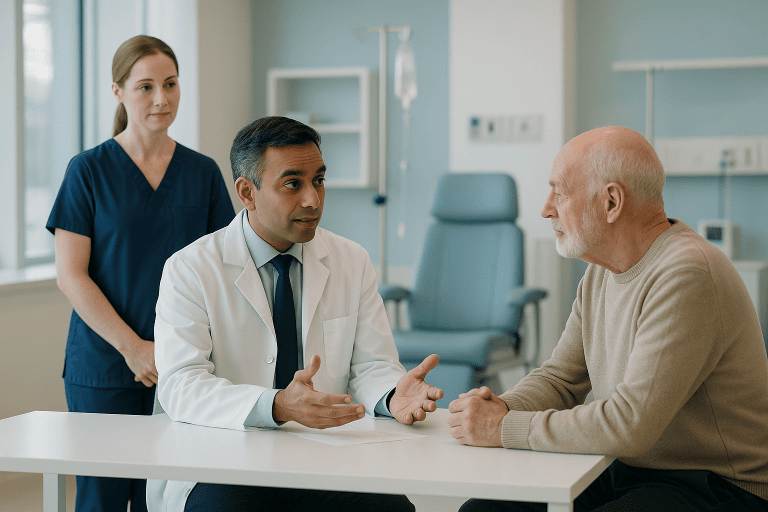
Non hodgkin lymphoma treatment depends heavily on the subtype, the stage, the presence of symptoms, and the person’s age and general health. Because the disease has so many forms, treatment plans differ considerably from one person to another. Care is typically coordinated by hematologists and medical oncologists, physicians who specialize in blood disorders and cancer medicines; at Acibadem, for example, this condition is managed within the Medical Oncology Department. The main approaches include:
- Watchful waiting (active surveillance). For some slow-growing lymphomas that are not causing symptoms, doctors may recommend regular checkups and scans instead of immediate treatment. This approach avoids treatment side effects while the disease is stable, and therapy is started if the lymphoma grows or begins to cause problems. Studies suggest that in carefully selected patients, delaying treatment in this way does not worsen long-term outcomes.
- Chemotherapy. These are medicines that kill fast-dividing cells. Chemotherapy is often given as a combination of several drugs in cycles, with rest periods in between. It remains a cornerstone of treatment for many subtypes, especially aggressive lymphomas.
- Immunotherapy and targeted therapy. Monoclonal antibodies are laboratory-made proteins that attach to specific markers on lymphoma cells and help the immune system destroy them; they are frequently combined with chemotherapy for B-cell lymphomas. Targeted drugs block specific signals that lymphoma cells need to survive. Newer approaches, such as CAR T-cell therapy (in which a patient’s own immune cells are modified in a laboratory to recognize the lymphoma), may be options for certain subtypes that have returned after earlier treatment.
- Radiation therapy. High-energy beams aimed at affected lymph node areas can be used alone for some early-stage, slow-growing lymphomas or combined with other treatments.
- Stem cell (bone marrow) transplantation. For some people whose lymphoma returns or does not respond to initial therapy, doctors may recommend high-dose chemotherapy followed by a transplant of blood-forming stem cells, usually the patient’s own, to restore the bone marrow.
- Surgery. Surgery is rarely used to treat lymphoma itself, because the disease responds better to medicines and radiation. Its main role is in obtaining biopsy tissue for diagnosis, or occasionally in managing specific complications.
- Treatment of underlying causes. In some situations, treating a linked infection helps; for example, certain stomach lymphomas associated with Helicobacter pylori may improve after antibiotics eradicate the bacterium.
Supportive care is an important part of every treatment plan. This includes medicines to prevent nausea, protect against infection, and manage side effects, as well as attention to nutrition and emotional well-being. Your doctor may also discuss fertility preservation before treatment begins, since some therapies can affect the ability to have children later.
Living with non-hodgkin lymphoma and outlook
The outlook for people with non hodgkin lymphoma varies widely because the disease includes many different subtypes. Some aggressive lymphomas, although fast-growing, respond well to treatment, and in many cases treatment aims to achieve a complete remission, meaning no detectable disease, with the possibility of long-term cure. Some slow-growing lymphomas, by contrast, may not be curable in the traditional sense but can often be controlled for many years, with periods of treatment followed by long stretches without therapy. Doctors use factors such as the subtype, stage, blood test results, age, and overall health to estimate prognosis for an individual, and these estimates are always general guides rather than predictions for any single person.
Living with the disease usually involves regular follow-up visits, blood tests, and periodic scans to watch for any sign of the lymphoma returning. Many people are able to continue working and maintaining daily routines during and after treatment, though fatigue is common and may last for months. Practical steps that often help include:
- Keeping scheduled follow-up appointments, even when feeling well
- Reporting new symptoms, such as new lumps, fevers, or night sweats, promptly
- Staying up to date on recommended vaccinations, following your care team’s guidance, since treatment can weaken the immune system
- Eating a balanced diet, staying physically active as tolerated, and not smoking
- Seeking support for anxiety or low mood, which are common and treatable; counseling and patient support groups can help
Survivors of lymphoma may face late effects of treatment, such as heart or thyroid problems or an increased risk of other cancers, depending on the therapies received. Long-term follow-up care is designed to monitor for these issues and address them early.
Frequently asked questions
What is non hodgkin lymphoma in simple terms?
It is a cancer of the lymphatic system, the body’s infection-fighting network. Certain white blood cells called lymphocytes become abnormal and multiply out of control, collecting in lymph nodes and sometimes in other organs. It differs from Hodgkin lymphoma in the type of abnormal cells seen under the microscope, and it includes many subtypes that behave differently from one another.
Can non hodgkin lymphoma be cured?
In many cases, yes, particularly for certain aggressive subtypes that respond well to combination treatment, where long-term remission and cure are realistic goals. Some slow-growing subtypes are harder to eliminate completely but can often be controlled for many years with periodic treatment. No doctor can guarantee an outcome, and the likelihood of cure depends on the specific subtype, the stage, and individual health factors, which your care team can explain in your situation.
How serious is non hodgkin lymphoma?
It is a serious diagnosis that requires specialist care, but seriousness varies greatly by subtype. Some forms grow slowly and may not need immediate treatment, while others grow quickly and need prompt therapy. Importantly, even advanced-stage lymphoma often responds to treatment, so the stage alone does not determine the outlook the way it does in many other cancers.
What are the first symptoms of non hodgkin lymphoma?
The most common early sign is a painless swollen lymph node in the neck, armpit, or groin that does not go away. Other early non hodgkin lymphoma symptoms can include ongoing fatigue, unexplained fevers, drenching night sweats, unintended weight loss, and itching. Because these symptoms overlap with many harmless conditions, only medical evaluation, usually including a biopsycan determine the cause.
What causes non hodgkin lymphoma?
In most people, no single cause can be identified. The disease starts with genetic changes inside a lymphocyte that allow it to grow uncontrollably. Known risk factors include older age, a weakened immune system, certain autoimmune diseases, some viral and bacterial infections, and certain chemical exposures. Many people diagnosed with lymphoma have none of these risk factors, and having a risk factor does not mean a person will develop the disease.
How long does treatment and recovery take?
Treatment length varies by subtype and plan. Chemotherapy and immunotherapy are typically given in cycles over several months, while radiation therapy usually involves shorter daily sessions over a few weeks. Recovery of energy and immune function after treatment often takes additional months, and fatigue can persist for some time. Follow-up monitoring continues for years afterward, gradually becoming less frequent if the disease remains in remission.
Can non hodgkin lymphoma come back after treatment?
Yes, relapse is possible, which is why regular follow-up is important. If lymphoma returns, further treatment options are often available, including different drug combinations, targeted therapies, CAR T-cell therapy for some subtypes, or stem cell transplantation. The chance of relapse and the options if it occurs depend on the subtype and prior treatments, and your care team can discuss what applies to you.
When to see a doctor
See a doctor promptly if you notice possible signs of lymphoma, especially a lymph node that stays enlarged for more than a few weeks, keeps growing, or is not linked to an obvious infection. Also seek medical advice for any combination of unexplained fevers, drenching night sweats, or unintended weight loss.
Seek urgent medical attention if you experience any of the following red-flag symptoms, whether or not you have been diagnosed with lymphoma:
- Difficulty breathing, chest pressure, or swelling of the face and neck, which can indicate that enlarged nodes are pressing on airways or blood vessels
- High fever with shaking chills, particularly during or after chemotherapy, when infections can become dangerous quickly
- Severe or rapidly worsening abdominal pain or swelling
- Unusual bleeding or bruising, such as bleeding gums, blood in urine or stool, or widespread small red spots on the skin
- New confusion, severe headache, vision changes, or weakness in an arm or leg
- Rapidly enlarging lumps anywhere in the body
If you are already receiving treatment for non hodgkin lymphoma, follow the specific warning-sign instructions your care team has given you, since some symptoms, especially fever, require immediate assessment in people with weakened immune systems.
Medically reviewed by the Acıbadem International Medical Board September 3, 2026
See our medical review board →
Update history
- PublishedJune 8, 2026
- Medical review approvedSeptember 3, 2026
- Last content updateSeptember 3, 2026