Brachytherapy
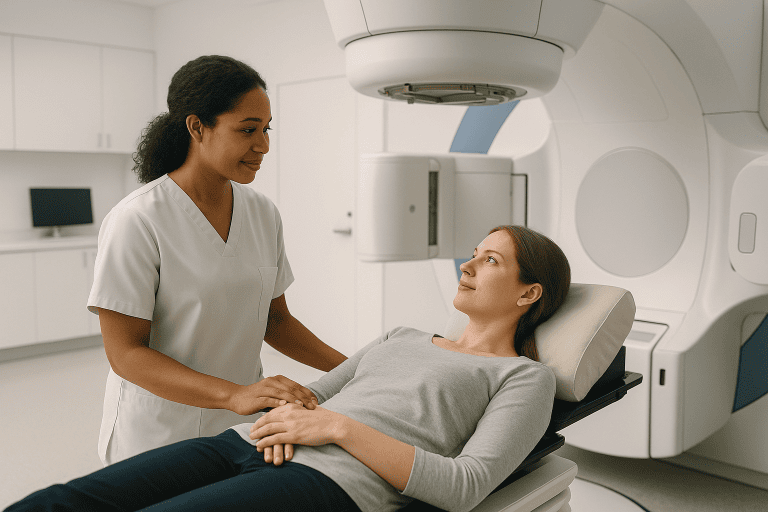
Brachytherapy is a type of radiation therapy in which a sealed radioactive source is placed directly in or beside a tumor. It is widely used for prostate cancer, cervical and endometrial cancer,…
Quick answer
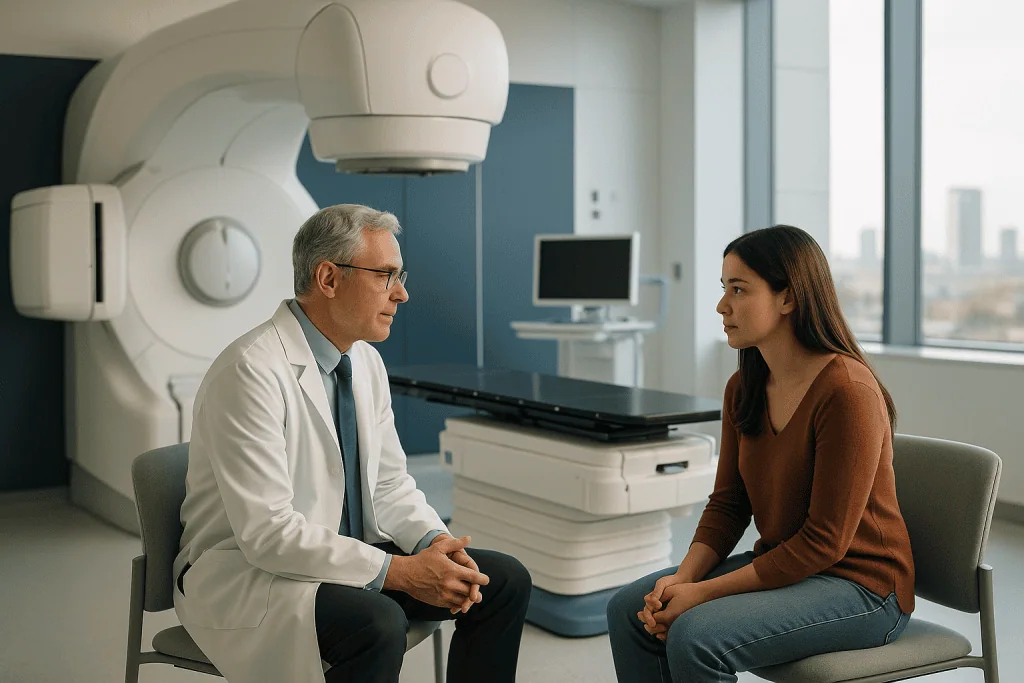
Brachytherapy is internal radiation therapy in which a small sealed radioactive source is placed inside or next to a tumor. Because the radiation travels only a short distance, a high dose reaches the cancer while nearby healthy tissue receives less. It is commonly used for prostate, cervical, endometrial, and some breast and skin cancers.
What is brachytherapy?
Brachytherapy is a form of radiation therapy in which a sealed radioactive source is placed inside the body, either directly into a tumor or very close to it. The word comes from the Greek term for “short distance,” and this describes the main idea: the radiation travels only a few millimeters to a few centimeters, so a high dose reaches the target while nearby healthy tissue receives much less. Because the source is inside the body, brachytherapy is often called internal radiation therapy, in contrast to external beam radiation therapy, where a machine directs radiation at the body from the outside.
The radioactive material is contained in small seeds, pellets, wires, ribbons, or capsules. These are placed using thin hollow tubes (catheters) or specially shaped holders called applicators. Depending on the type, the source may stay in the body permanently while it slowly loses its activity, or it may be inserted for minutes, hours, or a few days and then removed.
Brachytherapy is used for several types of cancer. The most common applications include:
- Brachytherapy for prostate cancer, either alone or combined with external radiation.
- Brachytherapy for cervical cancer, usually alongside external radiation and chemotherapy.
- Cancers of the uterus (endometrial cancer) and vagina.
- Early breast cancer after breast-conserving surgery, as a form of partial breast irradiation.
- Some skin cancers, head and neck cancers, esophageal cancers, lung cancers, and eye tumors (ocular melanoma).
In some centers, brachytherapy is also used for certain non-cancerous conditions, although this is less common. In a hospital setting, brachytherapy is generally planned and delivered by a radiation oncology team, which includes a radiation oncologist (a doctor who treats disease with radiation), medical physicists, dosimetrists (specialists who calculate the dose), and radiation therapists and nurses.
Who is a candidate
Whether brachytherapy is suitable depends on the type of cancer, its size and location, its stage (how far it has spread), and your general health. It is typically considered when a tumor is well defined and can be reached with an applicator or needle, and when the surrounding organs can be spared by keeping the radiation dose localized.
Common situations in which a doctor may recommend brachytherapy include:
- Localized prostate cancer, particularly low- or intermediate-risk disease, or as a boost added to external radiation in higher-risk cases.
- Locally advanced cervical cancer, where brachytherapy is a standard part of curative treatment together with external radiation and chemotherapy.
- Endometrial cancer after surgery, to lower the risk of recurrence at the top of the vagina.
- Selected early-stage breast cancers in patients who meet specific criteria.
- Tumors that have returned in an area already treated with external radiation, where further external treatment may not be safe.
- Symptom relief (palliation), for example when a tumor narrows the esophagus or an airway.
Brachytherapy is not suitable for everyone. It may not be appropriate when:
- The cancer has spread widely to other parts of the body, so a local treatment would not address the main problem.
- The tumor is too large or irregular for the source to cover it evenly.
- Anatomy makes it difficult to place an applicator safely, for example a very large prostate, a narrow vagina, or scarring from earlier surgery.
- Severe urinary symptoms are already present in prostate cancer, because brachytherapy may worsen them.
- Other medical conditions make anesthesia or a hospital procedure too risky.
The decision is usually made in a multidisciplinary meeting, where surgeons, medical oncologists, radiation oncologists, and radiologists review the scans and biopsy results together. Your doctor may also discuss alternatives such as surgery, external beam radiation, or active surveillance, depending on the diagnosis.
How the procedure works
Brachytherapy is delivered in several ways, and the details vary between cancer types. However, most treatments follow a similar general pattern.
Before the procedure. You will have imaging, such as ultrasound, computed tomography (CT, a detailed X-ray scan), or magnetic resonance imaging (MRI, a scan using magnetic fields). These images help the team map the tumor and nearby organs, and the physicist and radiation oncologist use them to plan where the source will go and for how long. You will also have a consultation about anesthesia, blood tests if needed, and a discussion of the risks and benefits.
Types of brachytherapy. There are two main dose-rate approaches:
- Low-dose-rate (LDR) brachytherapy delivers radiation slowly over days to months. In prostate cancer, tiny radioactive seeds are implanted permanently and become inactive over time. For some other cancers, temporary LDR sources are left in place for one to several days and then removed.
- High-dose-rate (HDR) brachytherapy delivers a strong dose over a few minutes. The source is stored in a shielded machine called an afterloader and is moved through the applicator by computer control, then withdrawn. Treatment is typically given in several sessions.
During the procedure. Placement of the applicator or needles is usually done in an operating room or a dedicated brachytherapy suite. Depending on the site, you may receive general anesthesia (fully asleep), regional anesthesia such as a spinal block (numb from the waist down), or local anesthesia with sedation. In brachytherapy for prostate cancer, needles are guided through the skin between the scrotum and anus using ultrasound, and seeds or catheters are positioned through them. In brachytherapy for cervical cancer, an applicator is placed through the vagina into the cervix and uterus, sometimes with additional fine needles if the tumor extends sideways. For breast, skin, or head and neck cancers, catheters or surface molds are positioned over or within the treatment area.
Once the applicator is in place, imaging is repeated to confirm its position, and the final dose calculation is made. For HDR treatment, you are then connected to the afterloader, staff leave the shielded room, and the source travels into the applicator for the planned time, usually a few minutes. You do not feel the radiation itself. For LDR seed implants, the seeds remain in place and you go to recovery once the needles are removed.
After the procedure. Temporary applicators are removed after the treatment session or after the planned number of days. You are monitored for pain, bleeding, and urinary function. Many HDR treatments are performed as outpatient or day-case procedures, while some LDR treatments and complex cervical cases may require an overnight stay. Staff will explain any radiation safety precautions before you leave.
Preparation for brachytherapy
Preparation depends on the type of cancer and the anesthesia planned, but several steps are common:
- Medication review. Tell your team about all medicines, including blood thinners, aspirin, diabetes medication, and herbal supplements. Blood-thinning drugs may need to be paused for a few days under medical guidance, because needle placement can cause bleeding.
- Fasting. If you will have general or spinal anesthesia, you will usually be asked not to eat or drink for several hours beforehand.
- Bowel preparation. For prostate and gynecologic brachytherapy, an enema or laxative may be requested so the rectum is empty, which improves imaging and reduces the risk of injury.
- Planning scans. A volume study ultrasound or CT/MRI is often done before the procedure day to measure the target.
- Practical arrangements. Arrange for someone to take you home after anesthesia, and plan a few restful days afterward.
- Pregnancy. Women of childbearing age should tell the team if there is any possibility of pregnancy, as radiation can harm an unborn child.
You should also ask how the treatment fits with other therapies. Cervical cancer brachytherapy, for example, is usually scheduled toward the end of a course of external radiation, and the timing matters for the overall result.
Recovery and aftercare
Recovery after brachytherapy is often quicker than after major surgery, but it varies with the treatment site and the number of sessions.
The first days. Soreness, bruising, or mild bleeding at needle or applicator sites is common and typically settles within a few days. After prostate brachytherapy, many patients notice burning on urination, a weaker stream, or a need to pass urine more often; these symptoms often peak in the first weeks and then gradually improve over several months. After gynecologic brachytherapy, light vaginal discharge or spotting and some pelvic cramping are common. Pain is usually managed with over-the-counter or short courses of prescribed medication.
Returning to activity. Many patients resume light daily activities within a few days and normal routines within one to two weeks. Heavy lifting and vigorous exercise are often restricted for a short time after needle-based procedures, and your team will give specific advice.
Radiation safety at home. With HDR brachytherapy, the source is removed after each session, so you are not radioactive and no precautions are needed. With permanent LDR seed implants, a small amount of radiation may be detectable near the body for a limited period. Your team may advise keeping some distance from pregnant women and small children for a few weeks, and using a condom for a period because, rarely, a seed can pass in semen. Airport scanners occasionally detect implants, so a card describing your treatment may be provided.
Follow-up. You will typically have appointments with your radiation oncologist to check symptoms and, for prostate cancer, blood tests for prostate-specific antigen (PSA, a protein that rises with prostate activity). Imaging or examinations are scheduled according to the cancer type. Longer-term effects, such as changes in bowel, bladder, or sexual function, may develop over months and are monitored at these visits. Vaginal dilators are often recommended after pelvic brachytherapy to reduce narrowing and scarring.
Risks and side effects
Brachytherapy side effects are mostly limited to the treated area because the radiation dose falls off quickly with distance. Side effects can be early (during or shortly after treatment) or late (months to years later). Not everyone experiences them, and severity varies.
Common early effects include:
- Pain, swelling, or bruising where needles or applicators were placed.
- Fatigue, which is usually mild compared with a long course of external radiation.
- For prostate treatment: urinary frequency, urgency, burning, a slow stream, and occasionally difficulty passing urine that requires a temporary catheter; rectal irritation or loose stools.
- For cervical or uterine treatment: vaginal discharge, spotting, bladder irritation, and diarrhea.
- For breast treatment: skin redness, tenderness, and small fluid collections.
Possible late effects include:
- Persistent urinary symptoms or, less commonly, stricture (narrowing of the urethra) after prostate brachytherapy.
- Erectile dysfunction, which may develop gradually and is more likely in men with existing risk factors.
- Rectal bleeding or bowel changes from radiation effects on the rectal wall.
- Vaginal dryness, narrowing, or scarring after pelvic treatment, which can affect sexual comfort.
- Fistula (an abnormal connection between organs), which is rare but serious.
- A small increased risk of a second cancer many years later, as with any radiation treatment.
- Seed migration in permanent implants, where a seed moves to another part of the body; this is uncommon and usually causes no harm.
Risks related to the procedure itself include infection, bleeding, and reactions to anesthesia. Your radiation oncologist will discuss which risks are most relevant to your situation and how they are monitored.
Results and outlook
The evidence for brachytherapy is strongest in prostate and cervical cancer. For localized prostate cancer, long-term studies generally show that brachytherapy provides cancer control comparable to surgery or external beam radiation in appropriately selected patients, with a different side-effect profile. Adding a brachytherapy boost to external radiation in higher-risk disease has been associated with improved control of the cancer in the prostate in clinical trials, though with a higher rate of urinary side effects.
In cervical cancer, brachytherapy is considered an essential component of curative treatment. Studies have consistently found that patients who receive brachytherapy as part of their radiation course have better outcomes than those treated with external radiation alone, which is why guidelines recommend including it whenever feasible.
For endometrial cancer, vaginal brachytherapy after surgery reduces the chance of local recurrence with fewer side effects than pelvic external radiation in selected patients. In breast cancer, partial breast brachytherapy is an option for some women with early disease, and outcomes appear similar to whole breast radiation in suitable candidates.
Outcomes always depend on the individual cancer, its stage, and overall health. No treatment can guarantee a cure, and your doctor may discuss expected results based on your own findings rather than general figures.
Cost considerations
The cost of brachytherapy varies widely and depends on several factors rather than a single fee:
- Type of brachytherapy. Permanent seed implants involve the cost of the radioactive seeds themselves, while HDR treatment relies on a shared afterloader and reusable or single-use applicators.
- Number of sessions. HDR courses may require several visits, each with imaging and planning, whereas an LDR implant is usually a single procedure.
- Anesthesia and hospital stay. Day-case treatment costs less than admission, and complex gynecologic cases with applicators left in place for days require more nursing time.
- Imaging and planning. MRI-based planning, repeat scans, and physics quality checks add to the total.
- Combined treatment. When brachytherapy is a boost added to external radiation or chemotherapy, the overall treatment course is longer and more expensive.
- Follow-up. Ongoing visits, blood tests, imaging, and management of any side effects are part of the total picture.
Insurance coverage and national health systems differ in what they cover, so patients are usually advised to clarify these details with their provider and the hospital’s administrative team before treatment. At Acibadem, brachytherapy is delivered within the radiation oncology department, and cost estimates are prepared on an individual basis.
Frequently asked questions
What is brachytherapy, in simple terms?
Brachytherapy is radiation treatment delivered from inside the body. A small radioactive source is placed in or next to a tumor so that a high dose reaches the cancer while the radiation fades quickly with distance, sparing much of the surrounding healthy tissue. It may be permanent (seeds left in place) or temporary (a source inserted and removed).
How does brachytherapy for prostate cancer compare with surgery?
Both are accepted treatments for localized prostate cancer, and studies generally show similar cancer control in suitable patients. The side effects differ: brachytherapy is more likely to cause urinary irritation in the first months, while surgery carries a higher risk of urinary leakage and immediate erectile changes. The right choice depends on the cancer’s features, prostate size, urinary function, age, and personal preferences, and your doctor may discuss both options.
Why is brachytherapy for cervical cancer usually combined with other treatments?
External radiation and chemotherapy treat the whole pelvis, including lymph nodes, while brachytherapy delivers the very high dose needed to control the tumor in the cervix itself. External radiation alone cannot safely reach that dose without harming the bladder and rectum. Combining them has been shown in studies to give better outcomes than external radiation alone.
What are the most common brachytherapy side effects?
Side effects depend on the treated area. Prostate treatment often causes temporary urinary frequency and burning; pelvic treatment in women may cause vaginal discharge, bladder irritation, and later dryness or narrowing. Fatigue is usually mild. Most early effects settle over weeks to months, while some late effects, such as sexual or bowel changes, can develop gradually and are monitored at follow-up.
Am I radioactive after brachytherapy?
After HDR brachytherapy, no; the source is removed at the end of each session. After permanent seed implants, a low level of radiation can be detected near the body for a limited time, so your team may advise short-term precautions around pregnant women and young children. Body fluids are not radioactive, and normal contact with adults is generally considered safe.
How long does brachytherapy take?
Placing the applicator or needles usually takes one to two hours, including anesthesia. Each HDR radiation delivery lasts only minutes, though the entire visit with imaging and planning may take several hours. Permanent prostate implants are typically a single procedure, while HDR courses may involve two to six sessions over days or weeks.
Can brachytherapy be repeated if cancer comes back?
In some cases, yes. Because brachytherapy is so localized, it is sometimes used to treat a recurrence in an area that has already received radiation, where further external treatment would be unsafe. Whether this is possible depends on the earlier dose, the location, and the health of nearby tissues, and it requires careful review by the radiation oncology team.
When to see a doctor
You should be assessed by a specialist if you have been diagnosed with a cancer for which brachytherapy is commonly used, such as prostate, cervical, endometrial, or early breast cancer, and want to understand whether it is an option alongside surgery or external radiation. It is also reasonable to seek a specialist review if you have been told external radiation alone is planned for cervical cancer, since brachytherapy is normally part of curative treatment.
After brachytherapy, contact your treatment team promptly if you notice:
- Inability to pass urine, or a very weak stream with a painful, full bladder.
- Fever above 38°C (100.4°F), chills, or increasing redness and swelling at the needle or applicator site.
- Heavy bleeding from the rectum, vagina, or urinary tract, or passing large clots.
- Severe or worsening pelvic or abdominal pain that is not controlled by prescribed medication.
- Persistent vomiting, or inability to keep fluids down.
- Leakage of urine or stool from an unusual place, which could suggest a fistula.
- Chest pain, shortness of breath, or a swollen, painful leg, which can indicate a blood clot and need urgent care.
Less urgent but important reasons to arrange a follow-up include new or worsening bowel or bladder symptoms months after treatment, pain with intercourse, or any concern about how you are recovering. Ongoing review with your radiation oncologist allows side effects to be treated early and the response to treatment to be monitored.
Preparation
- Tell your team about all medications, especially blood thinners, which may need to be paused under medical guidance. Fast as instructed if general or spinal anesthesia is planned, and complete any bowel preparation requested for prostate or pelvic treatment. Attend planning scans before the procedure day and arrange for someone to take you home afterward.
Aftercare
- Expect mild soreness, bruising, or urinary or vaginal irritation for several days to weeks, and use pain relief as advised. Follow any radiation safety precautions if you have permanent seeds, and use vaginal dilators if recommended after pelvic treatment. Keep follow-up appointments for symptom checks, PSA tests, or imaging, and report fever, inability to urinate, or heavy bleeding promptly.
Medically reviewed by the Acıbadem International Medical Board September 8, 2026
See our medical review board →
Update history
- PublishedSeptember 8, 2026
- Medical review approvedSeptember 8, 2026
- Last content updateSeptember 8, 2026
References2
From the Acibadem Blog

Living With Permanent Brachytherapy Seeds: Contact With Children, Pets and Partners
Permanent brachytherapy seeds give off low-energy radiation that is mostly absorbed within a few millimeters of surrounding tissue, so everyday contact such as sharing…
Why Brachytherapy for Cervical Cancer Is Usually Paired With External Beam Radiation
Brachytherapy for cervical cancer is usually paired with external beam radiation because each does a job the other cannot. External beam treats the whole…