Quick answer
Cervical cancer is a malignancy that begins in the cells of the cervix, often developing gradually from precancerous changes linked to persistent human papillomavirus infection. At Acibadem in Turkey, care is based on the stage and may include screening and diagnostic evaluation, surgery, radiotherapy, chemotherapy, targeted therapy, or combinations planned by a multidisciplinary team.
What is cervical cancer?
Cervical cancer is a type of cancer that begins in the cervix, the lower, narrow part of the uterus (womb) that connects the uterus to the vagina. Cancer develops when cells in the cervix begin to grow in an abnormal, uncontrolled way. Over time, these abnormal cells can form a tumor and, if left untreated, may spread to nearby tissues or to other parts of the body.
To answer the common question “what is cervical cancer” in the simplest terms: it is a disease in which the cells lining the cervix change and multiply abnormally, most often because of a long-lasting infection with certain types of human papillomavirus (HPV), a very common virus passed through intimate skin-to-skin contact.
Cervical cancer affects people with a cervix, most commonly women between their mid-30s and mid-60s, although it can occur at younger and older ages. It usually develops slowly. Before true cancer appears, the cervix often goes through a stage called precancer or dysplasia, in which cells look abnormal under a microscope but have not yet become invasive cancer. This slow development is important, because it means regular screening tests can often find changes early, when they are easiest to treat.
There are two main types. Squamous cell carcinoma starts in the thin, flat cells that cover the outer surface of the cervix and is the most common type. Adenocarcinoma starts in the glandular cells that line the cervical canal and produce mucus. Both types are managed in broadly similar ways, though your care team will tailor treatment to your specific situation.
Symptoms of cervical cancer
One of the most important facts about cervical cancer symptoms is that early cervical cancer, and the precancerous changes that come before it, often cause no symptoms at all. This is why screening tests such as the Pap test and HPV test matter: they can find abnormal changes before any warning signs appear.
When symptoms do develop, they may include:
- Abnormal vaginal bleedingbleeding between periods, after sexual intercourse, or after menopause
- Unusual vaginal dischargedischarge that is watery, bloody, heavier than usual, or has a strong odor
- Pain during sexual intercourse
- Pelvic painpain in the lower belly or pelvis that is not related to your menstrual cycle
- Menstrual periods that are heavier or last longer than usual
Symptoms tend to change as the disease progresses. In early-stage cervical cancer, abnormal bleeding and discharge are the most typical signs, and some people have no symptoms at all. In more advanced stages, when the cancer has grown into surrounding tissues or spread further, symptoms may include persistent back or leg pain, swelling in one or both legs, difficulty or pain when urinating, blood in the urine or stool, unintended weight loss, and ongoing tiredness (fatigue).
It is important to remember that all of these symptoms are far more often caused by conditions other than cancer, such as infections, hormonal changes, or benign (non-cancerous) growths. Having one or more of them does not mean you have cervical cancer. However, because early detection makes a real difference, any persistent or unexplained symptom should be discussed with a doctor rather than ignored.
Causes and risk factors
Understanding cervical cancer causes begins with HPV. Nearly all cases of cervical cancer are linked to persistent infection with high-risk types of human papillomavirus. HPV is extremely common; most sexually active people are exposed to it at some point in their lives. In the great majority of cases, the immune system clears the virus on its own without any harm. In a small proportion of people, however, the infection persists for years and can gradually cause cervical cells to change, first into precancerous cells and eventually, in some cases, into cancer.
Having HPV does not mean you will develop cervical cancer. It means the risk exists, which is why follow-up and screening are recommended when high-risk HPV is found.
Other factors that can increase the risk of cervical cancer include:
- Smokingtobacco byproducts can damage cervical cells and weaken the local immune response, making it harder for the body to clear HPV.
- A weakened immune systemfor example, due to HIV infection or medicines that suppress immunity, which makes persistent HPV infection more likely.
- Long-term use of oral contraceptivessome studies suggest a modestly increased risk with many years of use; this often decreases after stopping.
- Multiple full-term pregnanciesassociated with a somewhat higher risk in women with HPV infection.
- Early sexual activity and multiple sexual partnersthese increase the likelihood of HPV exposure rather than causing cancer directly.
- Not attending regular screeningmany cervical cancers are found in people who have never been screened or have not been screened for many years.
- Other sexually transmitted infectionssuch as chlamydia, which may increase risk in combination with HPV.
Prevention is a major part of the cervical cancer story. HPV vaccination, ideally given before first exposure to the virus, protects against the HPV types most often responsible for cervical cancer. Regular screening with Pap tests and HPV tests can detect precancerous changes, which can usually be treated before cancer ever develops. Not smoking, or quitting if you smoke, also lowers risk.
Diagnosis of cervical cancer
Cervical cancer diagnosis usually follows a stepwise path, starting either from an abnormal screening result or from the investigation of symptoms.
Screening and initial tests
The Pap test (also called a Pap smear) collects cells from the surface of the cervix so they can be examined under a microscope for abnormalities. The HPV test checks the same sample, or a separate one, for the presence of high-risk HPV types. Neither test diagnoses cancer by itself; they identify people who need closer examination.
Colposcopy and biopsy
If screening results are abnormal or the doctor sees or suspects a problem, the next step is usually colposcopy. This is an office procedure in which the doctor examines the cervix through a lighted magnifying instrument called a colposcope. During colposcopy, small tissue samples (biopsies) can be taken from any areas that look abnormal. A biopsythe removal of tissue for examination by a pathologist, a doctor who studies cells and tissues, is the only way to confirm a diagnosis of cervical cancer.
Sometimes a larger sample is needed. A cone biopsy (conization) or a loop electrosurgical excision procedure (LEEP), which uses a thin heated wire loop, removes a cone-shaped or disc-shaped piece of cervical tissue. These procedures can both confirm the diagnosis and, in some very early cases, remove all of the abnormal tissue at the same time.
Staging tests
Once cancer is confirmed, doctors need to find out how far it has grown or spread. This process is called staging, and it guides all treatment decisions. Staging may involve a thorough pelvic examination, blood tests, and imaging studies such as magnetic resonance imaging (MRI), computed tomography (CT), or combined PET-CT imaging, which merges a scan of the body’s metabolic activity with detailed anatomical pictures and can help show whether cancer has spread to lymph nodes or distant organs. In some situations, doctors may also examine the bladder or rectum with a thin camera if there is concern the cancer has reached those areas.
Stages range from stage I, where the cancer is confined to the cervix, through stages II and III, where it has grown into nearby tissues or structures, to stage IV, where it has spread to nearby organs or to distant parts of the body. Your care team will explain your stage and what it means for your treatment options.
Treatment options for cervical cancer
Cervical cancer treatment depends on the stage of the disease, the type of tumor, your overall health, and, where relevant, your wishes about preserving fertility. Care is usually planned by a multidisciplinary team that may include gynecologic oncologists (surgeons who specialize in cancers of the female reproductive system), radiation oncologists, and medical oncologists. In many hospital groups, including Acibadem, systemic drug treatment for this condition is coordinated through a dedicated medical oncology department working alongside surgical and radiation specialists. An overview of how this condition is managed can also be found on the cervical cancer treatment page.
Management of precancerous changes
Precancerous cervical changes are not cancer, and mild changes often go away on their own. In these cases, doctors may recommend careful monitoring with repeat testing rather than immediate treatment: a form of watchful waiting. More significant precancerous changes are usually removed or destroyed with procedures such as LEEP, cone biopsy, cryotherapy (freezing abnormal tissue), or laser treatment. Treating precancer is highly effective at preventing cervical cancer from developing.
Surgery
Surgery is a common treatment for early-stage cervical cancer. Options range in extent:
- Cone biopsy or LEEPfor some very small, very early cancers, removing a cone of tissue may be sufficient, particularly when preserving fertility is important.
- Trachelectomyremoval of the cervix and upper vagina while leaving the uterus in place, which may allow future pregnancy in selected early-stage cases.
- Hysterectomysurgical removal of the uterus and cervix. A radical hysterectomy also removes some surrounding tissue and the upper part of the vagina, and nearby lymph nodes are often removed and examined to check for spread. After a hysterectomy, pregnancy is no longer possible, so doctors discuss fertility implications carefully beforehand.
Radiation therapy
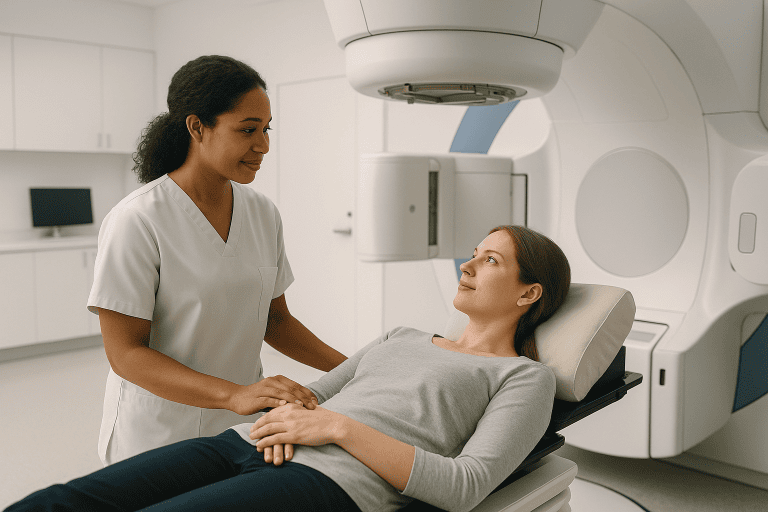
Radiation therapy uses high-energy beams to destroy cancer cells. It may be given externally, from a machine outside the body, or internally, by placing a radioactive source near the tumor for a short time (a technique called brachytherapy). Radiation is often the main treatment for locally advanced cervical cancer, frequently combined with chemotherapy, and may also be used after surgery in some cases to reduce the chance of the cancer returning.
Chemotherapy and other drug treatments
Chemotherapy uses medicines that kill fast-growing cells throughout the body. For cervical cancer, it is often given in low doses alongside radiation to make the radiation more effective, or in higher doses for cancer that has spread or come back. Newer options, such as targeted therapy (drugs aimed at specific features of cancer cells or the blood vessels that feed tumors) and immunotherapy (drugs that help the immune system recognize and attack cancer), may be considered in certain situations, particularly for advanced or recurrent disease. Your oncology team can explain which drug treatments, if any, are appropriate for your stage and health status.
Whatever the treatment plan, supportive care, managing pain, side effects, nutrition, and emotional well-being, is an essential part of cervical cancer treatment at every stage.
Living with cervical cancer / outlook
A diagnosis of cervical cancer is frightening, but the outlook varies widely and depends most strongly on the stage at diagnosis. In general, cervical cancer found at an early stage is often treatable with good long-term results, and many people go on to live full lives after treatment. When the cancer is more advanced, treatment can still control the disease in many cases, relieve symptoms, and extend life, although outcomes are less certain. No doctor can promise a specific result for an individual; prognosis discussions should always happen with your own care team, who know the details of your case.
Life during and after treatment brings practical challenges. Side effects such as fatigue, changes in bowel or bladder habits, vaginal dryness or narrowing after radiation, early menopause after removal of the ovaries, and changes in sexual function are common and can often be managed with medical help: it is worth raising them rather than enduring them silently. For people treated before completing their families, fertility loss can be a significant source of grief, and counseling or fertility-preservation discussions before treatment can help.
After treatment ends, regular follow-up visits are important, typically including physical examinations and sometimes imaging or laboratory tests, so that any recurrence can be found early. Emotional support matters, too: many people find that support groups, counseling, or talking openly with family and friends helps them cope with uncertainty. Healthy habits, not smoking, staying physically active as able, and attending all follow-up appointments, support recovery and overall well-being.
Frequently asked questions
What is cervical cancer in simple terms?
Cervical cancer is a disease in which cells in the cervix, the lower part of the uterus that opens into the vagina, grow abnormally and can form a tumor. It is most often caused by a long-lasting infection with high-risk types of HPV, a common virus. It usually develops slowly over years, often starting as precancerous changes that can be found and treated through routine screening.
What are the first symptoms of cervical cancer?
Early cervical cancer often causes no symptoms, which is why screening is so important. When early symptoms occur, the most common are abnormal vaginal bleeding, such as bleeding after intercourse, between periods, or after menopause, and unusual vaginal discharge. Pelvic pain and pain during intercourse can also occur. These symptoms usually have other, less serious causes, but they should always be checked by a doctor.
Can cervical cancer be cured?
In many cases, especially when cervical cancer is found at an early stage, treatment can remove or destroy the cancer completely, and the person remains cancer-free long term. Doctors often use the word “remission” rather than “cure,” because a small risk of recurrence remains and follow-up is needed. For more advanced disease, treatment may still control the cancer for extended periods, but outcomes are less predictable. Your own care team is the best source of information about your individual outlook.
How serious is cervical cancer?
Cervical cancer is a serious condition that can be life-threatening if it is not treated, particularly once it has spread beyond the cervix. However, its seriousness depends heavily on the stage at diagnosis. Because it typically develops slowly and can be detected early through screening, many cases are found at a stage where treatment is often effective. This is one reason regular Pap and HPV testing is so strongly recommended.
Does HPV always lead to cervical cancer?
No. HPV infection is extremely common, and in most people the immune system clears the virus without any lasting harm. Only a persistent infection with certain high-risk HPV types can, over years, lead to precancerous changes and eventually cancer in a minority of cases. Finding high-risk HPV on a test means closer monitoring is needed, not that cancer is inevitable.
What is recovery like after cervical cancer treatment?
Recovery depends on the treatment received. After surgery such as a hysterectomy, people typically need several weeks to heal, gradually returning to normal activities as advised by their surgeon. Radiation and chemotherapy can cause fatigue and other side effects that may take weeks or months to settle. Long-term effects, such as changes in sexual function or early menopause, are possible and can often be managed with medical support. Regular follow-up visits continue for years after treatment.
Can I still have children after cervical cancer treatment?
It depends on the stage and the type of treatment. Some very early cancers can be treated with fertility-sparing procedures, such as a cone biopsy or trachelectomy, that leave the uterus in place. Treatments such as hysterectomy or pelvic radiation, however, end the ability to carry a pregnancy. If having children in the future matters to you, tell your care team before treatment begins so that fertility-preserving options can be discussed where they are safe and appropriate.
When to see a doctor
See a doctor promptly if you notice any of the following warning signs, even if they seem mild or come and go:
- Vaginal bleeding after sexual intercourse
- Bleeding between menstrual periods or after menopause
- Unusual vaginal discharge, especially if it is bloody, watery, foul-smelling, or persistent
- Pelvic pain or pain during intercourse that does not go away
- Periods that become much heavier or longer than usual
- Persistent back or leg pain, leg swelling, blood in the urine or stool, or unexplained weight lossthese can indicate more advanced disease and need urgent evaluation
You should also see a doctor if you have never had cervical screening, if you are overdue for a Pap or HPV test, or if you have previously had an abnormal result and have not completed the recommended follow-up. Most people with these symptoms will not have cancer, but only a medical evaluation can determine the cause, and if cervical cancer is present, finding it early gives treatment the best chance of success.
Medically reviewed by the Acıbadem International Medical Board September 2, 2026
See our medical review board →
Update history
- PublishedJune 14, 2026
- Medical review approvedSeptember 2, 2026
- Last content updateSeptember 2, 2026