Quick answer
Endometrial cancer is a cancer that starts in the lining of the uterus, often causing abnormal vaginal bleeding and requiring prompt gynecologic evaluation. Treatment depends on the cancer’s type and stage and may include surgery, radiation therapy, chemotherapy, hormone therapy, or targeted approaches planned through multidisciplinary assessment at Acibadem in Turkey.
What is endometrial cancer?
Endometrial cancer is a cancer that begins in the endometrium, the inner lining of the uterus (womb). The endometrium is the layer of tissue that thickens each month during the menstrual cycle and is shed during a period. When cells in this lining begin to grow in an uncontrolled way, they can form a tumor, which is an abnormal mass of tissue. Because the disease starts in the uterus, it is sometimes grouped together with other uterine cancers, but endometrial cancer specifically refers to cancer of the lining rather than the muscle wall of the uterus.
To answer the common question “what is endometrial cancer” in the simplest terms: it is the most common cancer of the female reproductive organs in many countries, and it most often affects women after menopause, which is the point in life when monthly periods stop permanently. Most people diagnosed with endometrial cancer are over the age of 50, although it can occur earlier, particularly in women with certain hormonal conditions or inherited genetic risks.
Doctors often describe two broad groups of the disease. Type 1 endometrial cancers are usually linked to the hormone estrogen, tend to grow slowly, and are often found at an early stage. Type 2 endometrial cancers are less common, are not clearly driven by estrogen, and tend to grow and spread more quickly. Knowing the type and stage, that is, how far the cancer has spread, helps doctors plan treatment.
An important and reassuring point is that endometrial cancer often causes noticeable symptoms early, most commonly abnormal vaginal bleeding. Because of this, many cases are found while the cancer is still confined to the uterus, when treatment is generally more effective.
Symptoms of endometrial cancer
The most common endometrial cancer symptoms involve abnormal bleeding from the vagina. In women who have gone through menopause, any vaginal bleeding at all, even light spotting, is considered abnormal and should be discussed with a doctor. In women who are still having periods, the warning signs are usually changes in the usual pattern of bleeding.
Common symptoms include:
- Vaginal bleeding after menopausethe single most important warning sign, even if it happens only once.
- Bleeding between periods in women who have not yet reached menopause.
- Unusually heavy or prolonged periods, or periods that change noticeably from your normal pattern.
- Abnormal vaginal discharge, which may be watery, blood-tinged, or have an unusual odor, sometimes without visible bleeding.
- Pelvic pain or pressure, meaning discomfort in the lower abdomen or pelvis.
- Pain during intercourse.
- Pain or difficulty when urinating, in some cases.
Symptoms can differ depending on how advanced the disease is. In early-stage endometrial cancer, abnormal bleeding or discharge is often the only sign, and some women feel entirely well otherwise. In more advanced disease, when the cancer has grown beyond the uterus, symptoms may include persistent pelvic or abdominal pain, a feeling of a mass or fullness in the pelvis, unintended weight loss, ongoing tiredness, and changes in bowel or bladder habits. Type 2 cancers, which tend to be more aggressive, may sometimes cause fewer early bleeding symptoms and be discovered at a later stage.
It is important to remember that abnormal bleeding has many possible causes, including benign (non-cancerous) conditions such as polyps, fibroids, hormonal changes, or thinning of the vaginal tissues after menopause. Having these symptoms does not mean you have cancer, but it does mean the cause should be properly investigated by a doctor.
Causes and risk factors
Like most cancers, endometrial cancer develops when cells acquire changes (mutations) in their genetic material that allow them to grow and divide out of control. The exact endometrial cancer causes are not fully understood in every case, but research has identified a clear pattern: many endometrial cancers are linked to long-term exposure of the uterine lining to estrogen without enough of the balancing hormone progesterone. Estrogen encourages the endometrium to grow; progesterone normally keeps that growth in check. When estrogen acts on the lining for many years without opposition, the risk of abnormal cell changes increases.
Known risk factors include:
- Agemost cases occur after menopause, typically in women over 50.
- Obesityfat tissue produces estrogen, so excess body weight raises estrogen levels and is one of the strongest risk factors.
- Hormonal factorsstarting periods early, reaching menopause late, or never having been pregnant all increase the total lifetime exposure of the endometrium to estrogen.
- Estrogen-only hormone therapytaking estrogen after menopause without progesterone, in women who still have a uterus, increases risk.
- Polycystic ovary syndrome (PCOS)a hormonal condition that can cause irregular ovulation and unopposed estrogen.
- Tamoxifena medication used to treat breast cancer that can act like estrogen on the uterine lining; the overall benefit of tamoxifen usually outweighs this risk, but doctors monitor for it.
- Diabetes and high blood pressureboth are associated with increased risk, partly through their link with obesity.
- Family history and inherited conditionsin particular Lynch syndrome, an inherited condition that raises the risk of endometrial, colorectal, and some other cancers. Women with Lynch syndrome may develop endometrial cancer at a younger age.
- Endometrial hyperplasiaa thickening of the uterine lining with abnormal cells, which can be a precursor to cancer, especially the form called atypical hyperplasia.
Having one or more risk factors does not mean cancer will develop, and some women with endometrial cancer have no identifiable risk factors at all. Factors that appear to lower risk include pregnancy, use of combined hormonal contraceptives, maintaining a healthy body weight, and regular physical activity, though none of these guarantees protection.
Diagnosis
Endometrial cancer diagnosis usually begins when a woman reports abnormal bleeding or discharge to her doctor. The doctor will typically ask about symptoms, menstrual history, medications, and family history, and perform a pelvic examination to check the uterus and surrounding organs.
The main tests used to confirm or rule out endometrial cancer include:
- Transvaginal ultrasoundan imaging test in which a small probe placed in the vagina uses sound waves to create pictures of the uterus. It allows the doctor to measure the thickness of the endometrium. In postmenopausal women, a very thin lining makes cancer unlikely, while a thickened lining prompts further testing.
- Endometrial biopsythe key diagnostic test. A thin, flexible tube is passed through the cervix (the opening of the uterus) to remove a small sample of the lining. A pathologist, a doctor who examines tissue under a microscope, then checks the sample for cancer cells. This is usually done in an outpatient clinic and may cause cramping.
- Hysteroscopya procedure in which a thin, lighted camera is inserted into the uterus so the doctor can look directly at the lining and take targeted tissue samples.
- Dilation and curettage (D&C)a minor surgical procedure, sometimes performed under anesthesia, in which tissue is gently scraped from the uterine lining. It may be used when an office biopsy is not possible or does not give a clear answer.
A diagnosis of endometrial cancer is confirmed only when cancer cells are found in the tissue sample. The pathology report also describes the cancer’s grade, which indicates how abnormal the cells look and how quickly they are likely to grow.
If cancer is confirmed, further tests help determine the stage, whether the cancer is confined to the uterus or has spread to nearby structures, lymph nodes (small glands that filter fluid in the body), or distant organs. These tests may include magnetic resonance imaging (MRI) of the pelvis, computed tomography (CT) scans of the chest and abdomen, blood tests, and in selected cases combined PET-CT imaging, which merges a scan of metabolic activity with detailed anatomical pictures to look for cancer spread. Final staging is often completed at the time of surgery, when the removed tissue is examined in detail.
Treatment options
Endometrial cancer treatment depends on the type and grade of the cancer, its stage, the woman’s age and overall health, and, in some younger patients, whether preserving fertility is a goal. Treatment plans are usually made by a team that may include a gynecologic oncologist (a surgeon specializing in cancers of the female reproductive system), a medical oncologist (a doctor who treats cancer with medications), and a radiation oncologist. At hospital groups such as Acibadem, this coordinated care typically involves the gynecologic oncology surgeons together with the Medical Oncology Department. A general overview of how the condition is managed is also available on the endometrial cancer treatment page.
Surgery
Surgery is the main treatment for most endometrial cancers. The standard operation is a hysterectomy, which is the surgical removal of the uterus, usually together with the cervix, both ovaries, and both fallopian tubes (a procedure called bilateral salpingo-oophorectomy). Depending on the situation, the surgeon may also remove or sample nearby lymph nodes to check whether the cancer has spread. In many cases the operation can be performed using minimally invasive techniques, such as laparoscopic or robot-assisted surgery, which use small incisions and often allow a shorter recovery; open surgery is used when this approach is more appropriate. For early-stage, low-grade cancers, surgery alone may be sufficient treatment.
Radiation therapy
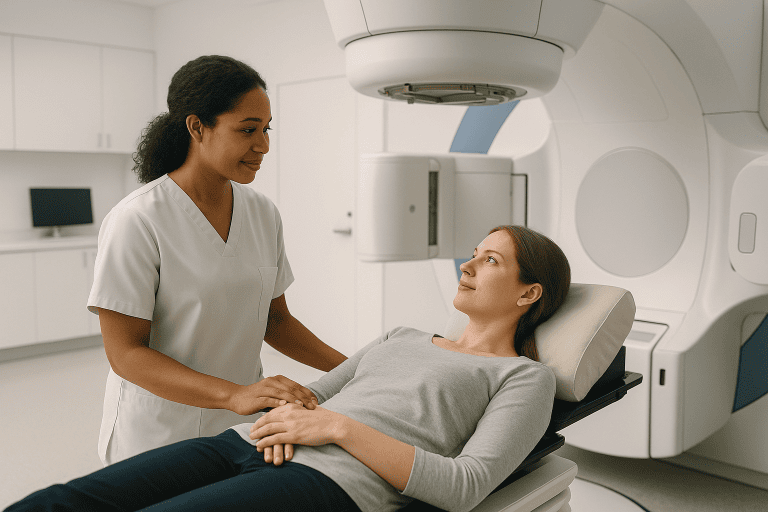
Radiation therapy uses high-energy beams to destroy cancer cells. It may be delivered from outside the body (external beam radiation) or from inside the vagina using a small device placed close to the treated area (brachytherapy). Radiation is often used after surgery to reduce the risk of the cancer returning, particularly when the tumor showed features associated with recurrence. In women who cannot safely undergo surgery, radiation may sometimes be used as the primary treatment.
Chemotherapy
Chemotherapy uses medications that kill rapidly dividing cells throughout the body. It is generally recommended for more advanced endometrial cancers, for aggressive Type 2 tumors, or when the cancer has returned after initial treatment. Chemotherapy may be given alone or combined with radiation, and is usually delivered in cycles with rest periods in between.
Hormone therapy
Because many endometrial cancers are sensitive to hormones, hormone therapy, most often progestin, a synthetic form of progesterone, can slow the growth of certain tumors. It is sometimes used for advanced or recurrent disease, and, in carefully selected young women with very early, low-grade cancer who wish to preserve fertility, it may be offered as an alternative to immediate surgery under close specialist monitoring. This approach is not suitable for everyone and requires frequent follow-up biopsies.
Targeted therapy and immunotherapy
Newer treatment approaches include targeted therapy, which uses drugs designed to act on specific molecular features of cancer cells, and immunotherapy, which helps the body’s own immune system recognize and attack cancer. These options are generally considered for advanced or recurrent endometrial cancer, often guided by laboratory testing of the tumor tissue. Your oncology team can explain whether such treatments are appropriate in your specific situation.
Watchful waiting and supportive care
True watchful waiting is uncommon for confirmed endometrial cancer, because early treatment usually offers the best outcomes. However, for precancerous changes such as some forms of endometrial hyperplasia, doctors may recommend hormonal treatment with monitoring rather than immediate surgery. For women with significant other health problems, or with very advanced disease, the care team may focus on supportive (palliative) care, which aims to control symptoms and maintain quality of life. Every plan should be discussed openly, weighing benefits, side effects, and personal priorities.
Living with endometrial cancer / outlook
The outlook for endometrial cancer varies widely and depends mainly on the stage at diagnosis, the type and grade of the tumor, and a woman’s overall health. In general terms, when the cancer is found while it is still confined to the uterus, as it often is, thanks to early bleeding symptoms, treatment is frequently successful and many women go on to live cancer-free. When the disease has spread beyond the uterus, treatment becomes more complex and the outlook is more guarded, though ongoing advances in surgery, radiation, and drug therapy continue to improve options. No doctor can promise a specific outcome for an individual patient, and statistics describe groups rather than any one person.
After treatment, regular follow-up visits are important. These typically include physical examinations, discussion of any new symptoms, and imaging or other tests when needed, so that any recurrence can be detected early. Most recurrences, if they occur, happen within the first few years, which is why follow-up is usually more frequent at first.
Living with or after endometrial cancer can also involve practical and emotional adjustments. Surgical removal of the uterus and ovaries ends fertility and, in premenopausal women, causes immediate menopause, which may bring hot flashes, mood changes, and other symptoms; your care team can discuss safe ways to manage these. Some women experience changes in body image, sexual function, or energy levels, and feelings of anxiety about recurrence are common and understandable. Counseling, support groups, pelvic floor physical therapy, gradual return to physical activity, and maintaining a healthy weight can all play a role in recovery and long-term well-being. Do not hesitate to raise these topics with your doctors: they are a normal part of cancer care.
Frequently asked questions
What is endometrial cancer in simple terms?
Endometrial cancer is a cancer that starts in the endometrium, the inner lining of the uterus. Cells in this lining begin to grow abnormally and can form a tumor, which may then grow into the muscle of the uterus or spread further if not treated. It mainly affects women after menopause and is usually signaled early by abnormal vaginal bleeding, which is why it is often diagnosed at a treatable stage.
Can endometrial cancer be cured?
In many cases, especially when the cancer is diagnosed while it is still confined to the uterus, treatment, usually surgery, sometimes followed by radiation or other therapies, can remove the disease entirely, and many women remain cancer-free long term. When the cancer is more advanced, a cure is less certain, but treatment can still control the disease, relieve symptoms, and extend life. Outcomes vary from person to person, so it is best to discuss your individual situation with your care team.
How serious is endometrial cancer?
Endometrial cancer is a serious diagnosis that always requires specialist evaluation, but its seriousness depends heavily on the stage and type. Slow-growing, early-stage tumors generally have a favorable outlook after treatment, while aggressive types or cancers that have spread beyond the uterus are more difficult to treat. Because the most common symptom, abnormal bleeding, tends to appear early, many cases are caught before the cancer has advanced.
What are the first symptoms of endometrial cancer?
The earliest and most common symptom is abnormal vaginal bleeding: any bleeding after menopause, bleeding between periods, or periods that become unusually heavy or prolonged. Some women notice a watery or blood-tinged vaginal discharge instead of obvious bleeding. Pelvic pain and other symptoms usually appear later, so new or unusual bleeding should always be evaluated promptly, even if it seems minor.
What is the recovery like after a hysterectomy for endometrial cancer?
Recovery depends on the surgical approach and your overall health. After minimally invasive surgery, many women go home within a day or two and gradually return to normal activities over several weeks; open surgery generally requires a longer hospital stay and recovery period. Doctors typically advise avoiding heavy lifting and strenuous activity for a time and attending follow-up appointments so healing and pathology results can be reviewed. If the ovaries were removed before natural menopause, menopausal symptoms may begin and can be managed with your doctor’s guidance.
Does endometrial cancer run in families?
Most endometrial cancers are not inherited, but a minority are linked to genetic conditions, most notably Lynch syndrome, which also raises the risk of colorectal and some other cancers. If several close relatives have had endometrial or colorectal cancer, or if endometrial cancer occurred at a young age in your family, your doctor may recommend genetic counseling and testing to clarify your risk and guide screening.
Can endometrial cancer come back after treatment?
Yes, recurrence is possible, which is why follow-up care is an essential part of treatment. The risk depends on the original stage, grade, and type of the tumor; it is lower for early-stage, low-grade cancers and higher for advanced or aggressive types. Most recurrences occur within the first few years after treatment, and detecting them early gives the best chance of effective further treatment, so keep all follow-up appointments and report new symptoms promptly.
When to see a doctor
Abnormal bleeding is the body’s main early warning sign of endometrial cancer, and it should never be ignored, even a single episode of light spotting after menopause deserves medical attention. Most causes of abnormal bleeding turn out to be benign, but only proper testing can tell the difference.
Make an appointment with a doctor promptly if you experience:
- Any vaginal bleeding or spotting after menopause, however light or brief.
- Bleeding between periods, or periods that suddenly become much heavier, longer, or more irregular than your normal pattern.
- Persistent watery, bloody, or foul-smelling vaginal discharge.
- Ongoing pelvic pain or pressure that does not go away.
- Pain during intercourse that is new or worsening.
- Unexplained weight loss, persistent fatigue, or loss of appetite together with any of the symptoms above.
Seek urgent medical care if you have very heavy vaginal bleeding that soaks through pads rapidly, severe pelvic or abdominal pain, fever with pelvic pain, dizziness, fainting, or signs of significant blood loss such as pale skin and a racing heartbeat. If you have already been diagnosed with endometrial cancer, contact your care team about any new bleeding, new pain, leg swelling, shortness of breath, or other symptoms that concern you, as these should be assessed without delay. Early evaluation of warning signs offers the best chance of finding any problem, cancerous or not, at a stage when it can be treated most effectively.
Medically reviewed by the Acıbadem International Medical Board September 3, 2026
See our medical review board →
Update history
- PublishedJune 14, 2026
- Medical review approvedSeptember 3, 2026
- Last content updateSeptember 2, 2026