

Why Chemotherapy and Radiation Often Come Before Esophageal Cancer Surgery
Key Takeaways
- In the CROSS trial, chemoradiation before esophagectomy raised the rate of complete tumor removal with clear margins from 69% to 92% compared with surgery alone.
- Chemotherapy given during radiation acts mainly as a radiosensitizer, making tumor cells less able to repair radiation damage, so doses are typically lower than in stand-alone chemotherapy.
- About 29% of people in the CROSS trial had no living cancer left in the surgical specimen, yet scans and biopsies could not reliably identify them beforehand, which is why surgery still follows.
- Surgery is usually scheduled several weeks after the final radiation session because the tumor keeps shrinking and the body needs time to recover its reserve.
- Esophagitis from radiation typically peaks in the final weeks of treatment and shortly after, so nutrition planning and possible feeding-tube placement are decided before treatment begins.
- Surgical complications and in-hospital deaths were no higher after chemoradiation than after surgery alone in the CROSS trial.
Chemotherapy and radiation are often given before esophageal cancer surgery because the combination can shrink the tumor, treat cancer cells that may have spread beyond what scans show, and make a complete removal more likely. In the landmark CROSS trial, adding chemoradiation before esophagectomy raised the rate of complete tumor removal and improved survival compared with surgery alone, without increasing surgical complications.
The scan is up on the screen, the surgeon has drawn a rough tube with a shaded patch halfway down, and the question that keeps surfacing is not about the operation at all. It is about the waiting. Why, if the cancer is sitting right there, would anyone spend six weeks on chemotherapy and radiation first? Surely sooner is better.
It is a fair instinct, and for esophageal cancer it happens to be the wrong one for most people whose disease has grown into the wall of the esophagus or reached nearby lymph nodes. Giving chemoradiation before esophagectomy, rather than rushing to the operating room, has become the standard sequence in many countries for a reason that is as much about biology as about scheduling.
This explainer walks through what that reason is, where the evidence comes from, who is and is not offered this route, what the weeks of treatment feel like, and the moments when a phone call to the team should not wait until morning.
What is neoadjuvant therapy, and why does the order matter?
Neoadjuvant therapy is any cancer treatment given before the main treatment, which for esophageal cancer usually means before surgery. The word itself is less important than the idea behind it: hit the cancer early, while the person is still strong, and before the stress of a major operation.
Esophageal cancer has a habit that shapes this whole strategy. By the time a tumor is large enough to make swallowing difficult, it has often invaded deep into the muscular wall of the esophagus and sent cells into nearby lymph nodes. Some of those cells travel further, below the detection limit of even a good PET-CT. A surgeon can only remove what can be seen and reached. Chemotherapy circulates through the bloodstream and reaches cells wherever they are. Radiation concentrates on the tumor and the lymph node regions around it.
Putting these treatments first does three jobs at once. It can shrink the primary tumor, which may turn a borderline operation into a cleaner one. It treats microscopic disease that would otherwise be left behind. It also acts as a stress test: if a person cannot tolerate chemoradiation, or if the cancer spreads despite it, that information arrives before an operation that carries real risk, not after.
Adjuvant therapy, the mirror term, means treatment given after surgery. Recovering from an esophagectomy takes months, and a meaningful share of people are never well enough afterwards to complete a full course of chemotherapy. Delivering the systemic treatment up front sidesteps that problem.
None of this means surgery is less important. In this sequence, the operation remains the step intended to remove the cancer completely. The treatment before it is there to make that removal as thorough as possible, according to the National Cancer Institute’s patient treatment summary.
How chemoradiation before esophagectomy actually works
Chemoradiation means chemotherapy and radiation delivered during the same weeks, on purpose, rather than one after the other. The two are more effective together than either alone, and the reason is a quiet piece of cell biology.
Radiation damages the DNA of cells inside the beam. Healthy cells repair that damage fairly well; cancer cells, with their faulty repair machinery, often cannot. Certain chemotherapy drugs, particularly platinum agents and taxanes, make cells even less able to fix radiation injury. In this role the chemotherapy is called a radiosensitizer: a drug that makes radiation hit harder. The chemotherapy doses used in this setting are typically lower than those used when chemotherapy is the sole treatment, because the goal is sensitization rather than maximum systemic effect.
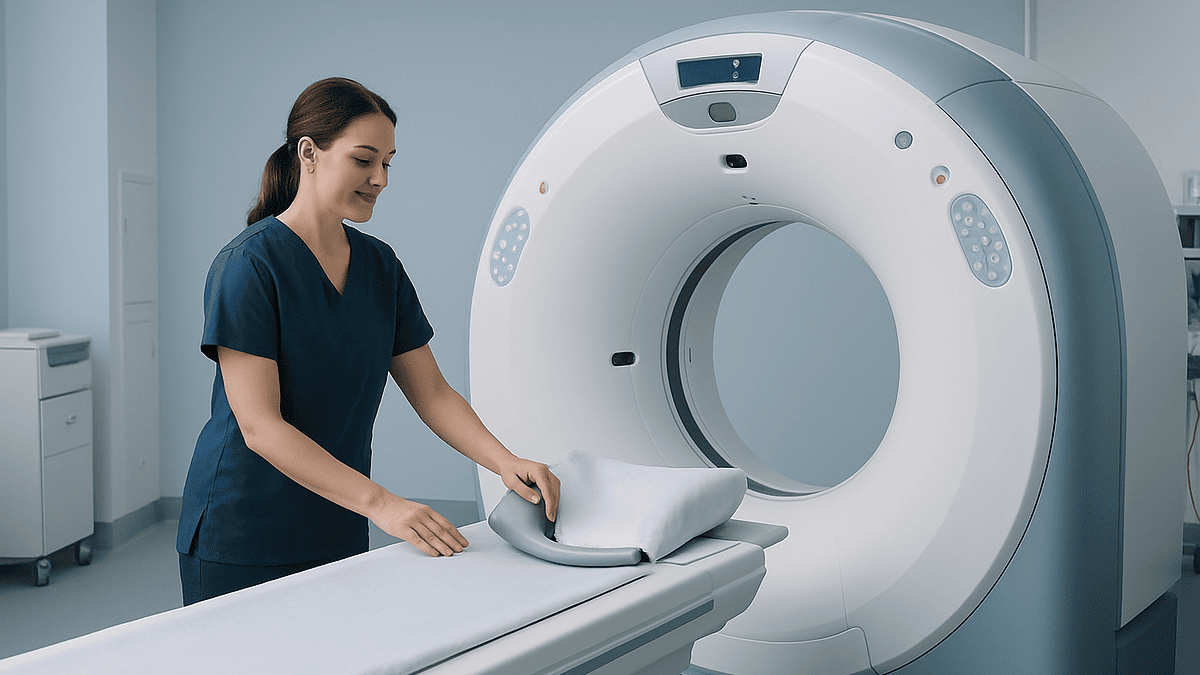
The radiation itself is external-beam radiotherapy, delivered by a machine that rotates around the chest. Before it starts, a planning scan maps the tumor, the lymph node stations at risk, and the organs to protect, chiefly the lungs, heart and spinal cord. Modern planning shapes the beam so that the target receives the full dose while the surrounding tissue receives as little as practical. Each session takes minutes; the positioning takes longer than the treatment.
What happens inside the tumor over the following weeks is gradual. Cells that have been fatally damaged die as they attempt to divide, so the shrinkage continues after the last session ends. That lag is one reason surgery is not scheduled the following week, a point we return to below.
The Mayo Clinic summarizes the sequence plainly: chemotherapy combined with radiation before surgery is a common approach for esophageal cancer that has not spread to distant organs. The intent is always the same, to leave the surgeon less cancer to remove and the body fewer stray cells to harbor.
What is the CROSS protocol for esophageal cancer?
CROSS stands for ChemoRadiotherapy for Oesophageal cancer followed by Surgery Study, a Dutch randomized trial published in the New England Journal of Medicine in 2012. It is the single piece of evidence most responsible for how esophageal cancer is treated today, and people hear its name in clinic without being told what it was.
The trial enrolled 368 people with cancer of the esophagus or the junction where the esophagus meets the stomach. Everyone had disease that was potentially removable with surgery but had grown into the wall or reached nearby nodes. Half were randomly assigned to surgery alone; half received about five weeks of weekday radiation together with weekly chemotherapy using a platinum agent and a taxane, followed by surgery.
The findings, as reported in that paper, shaped practice:
- A complete removal of the tumor with clear margins, which pathologists call an R0 resection, was achieved in 92% of people who had chemoradiation first, compared with 69% who went straight to surgery.
- In 29% of the chemoradiation group, the pathologist found no living cancer cells at all in the removed specimen, a pathological complete response. The rate was higher for squamous cell cancers than for adenocarcinomas.
- Overall survival was significantly longer in the chemoradiation group.
- Surgical complication rates and deaths in hospital after surgery were similar between the two groups, which addressed the fear that prior treatment makes the operation more dangerous.
Serious side effects from the chemoradiation itself were uncommon; fewer than one in ten people had severe drops in blood counts.
When a care team says someone is “on CROSS,” they mean this general pattern: concurrent chemoradiation over roughly five weeks, a recovery gap, then esophagectomy. The exact drugs, doses and radiation plan are decisions for the treating oncologists, who tailor them to the person in front of them.
Who is usually offered chemoradiation before esophagectomy, and who is asked to wait?
The route is designed for a specific middle ground: cancer that is too advanced to be removed by an endoscope but has not spread to distant organs. In staging language this is usually a tumor that has grown into the muscle layer of the esophagus or beyond, or one with cancer in nearby lymph nodes, with no metastases on PET-CT.
Within that group, a few things nudge the recommendation one way or another:
- Cell type. Squamous cell carcinoma, more common in the upper and middle esophagus, responds especially well to chemoradiation. Adenocarcinoma, more common near the stomach, also benefits, although some teams prefer chemotherapy before and after surgery for these tumors instead.
- Fitness. Esophagectomy is one of the larger operations in cancer surgery. People need enough heart, lung and nutritional reserve to tolerate both the treatment and the surgery that follows. Formal fitness testing is common.
- Tumor location. Cancers very high in the neck are often treated with chemoradiation alone, because surgery there is particularly demanding.
Who is asked to wait, or offered something else? Very early cancers confined to the inner lining may be removed endoscopically without any chemotherapy or radiation. People whose cancer has already spread to the liver, lungs or distant nodes are not usually offered esophagectomy, because removing the primary tumor would not address the disease elsewhere; treatment then focuses on control of symptoms and of the cancer as a whole. People with serious heart or lung disease may be steered toward definitive chemoradiation, meaning chemoradiation given as the main treatment rather than as preparation for surgery.
The NHS and Cleveland Clinic both describe the choice as a multidisciplinary one. Nobody makes it alone, and the plan can change if staging tests turn up something unexpected.
Chemoradiation, chemotherapy alone, or straight to surgery: how the options compare
Three broad sequences exist for cancer that is removable but locally advanced. The table lays them side by side using neutral, guideline-level descriptions; which one a given person is offered depends on tumor type, location, fitness and local expertise.
| Approach | What it involves | Typically considered for | Main trade-offs |
|---|---|---|---|
| Chemoradiation, then surgery | About five weeks of radiation with weekly chemotherapy, a recovery gap, then esophagectomy | Squamous cell and adenocarcinoma of the esophagus or junction, no distant spread | Higher complete-removal rate than surgery alone in the CROSS trial; esophagitis and fatigue during treatment; surgery timed after a recovery gap |
| Chemotherapy before and after surgery | Several cycles of combination chemotherapy, esophagectomy, then more chemotherapy | Mainly adenocarcinoma of the lower esophagus and junction | No radiation side effects; many people cannot complete the post-surgery cycles; evidence base is strongest for junctional tumors |
| Surgery first | Esophagectomy without prior treatment, with chemotherapy or radiation considered afterwards | Very early tumors not suitable for endoscopic removal; selected cases where delay is unsafe | Fastest route to the operating room; lower rate of clear margins for advanced tumors in CROSS; microscopic disease untreated until after recovery |
| Definitive chemoradiation | Chemoradiation as the main treatment, no planned surgery | Upper-esophagus squamous tumors; people unfit for or declining surgery | Avoids a major operation; higher chance the cancer persists or returns locally, so close surveillance is needed |
Two honest notes belong beside this table. Head-to-head trials comparing chemoradiation-then-surgery against chemotherapy-before-and-after-surgery for adenocarcinoma have produced results that specialists still debate, so a team choosing one over the other is usually weighing tumor biology and the person’s ability to tolerate each regimen rather than following a single winner. Secondly, newer approaches that add immunotherapy after surgery for people with residual cancer are being incorporated into guidelines, and their place keeps evolving. The National Cancer Institute’s treatment summary tracks these options as evidence matures.
How the plan is made: staging, the tumor board and the nutrition question
Before any treatment starts, a cluster of tests answers one question: how far has this gone? An endoscopy with biopsy confirms the diagnosis and cell type. An endoscopic ultrasound, a scope with a small ultrasound probe on its tip, estimates how deeply the tumor has invaded the wall and whether nearby nodes look abnormal. A PET-CT scan, which pairs a CT with a tracer that lights up metabolically active tissue, looks for spread elsewhere. Some centers add a diagnostic laparoscopy, a keyhole look inside the abdomen, for tumors near the stomach.
Those results go to a tumor board: a scheduled meeting where surgeons, medical oncologists, radiation oncologists, radiologists, pathologists and dietitians review each case together. The recommendation that comes out of that room is what the person hears in clinic. Asking which specialties were present is a reasonable question.
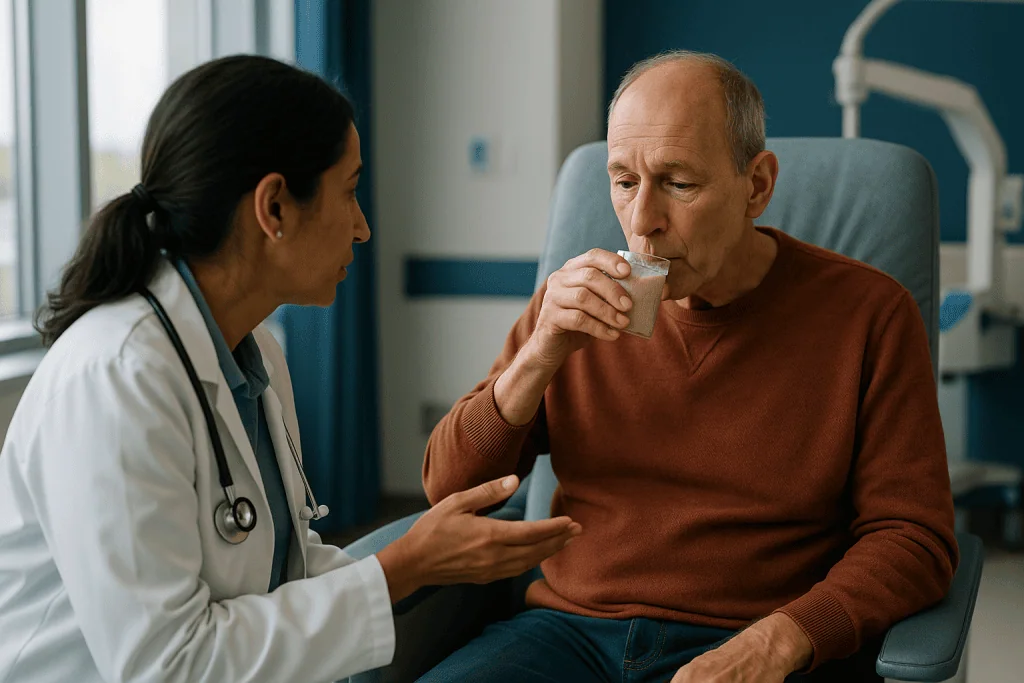
Nutrition gets its own planning because esophageal cancer and its treatment both attack eating. Many people have already lost weight by diagnosis. Radiation to the esophagus causes esophagitis, inflammation of the lining, which can make swallowing painful in the final weeks of treatment, right when the body needs fuel for the surgery ahead. Teams therefore decide early whether a feeding tube is likely to be needed, and if so, which kind: a thin tube through the nose, or a tube placed directly into the stomach or small bowel. Some surgeons prefer to place a jejunostomy tube, a tube into the small intestine, at the time of a staging laparoscopy so it is ready if swallowing deteriorates.
Dental review, smoking cessation support, and a baseline assessment of heart and lung function round out the preparation. The Mayo Clinic notes that a dietitian is usually part of the team from the start, not an afterthought once trouble begins.
What the weeks of treatment usually look like
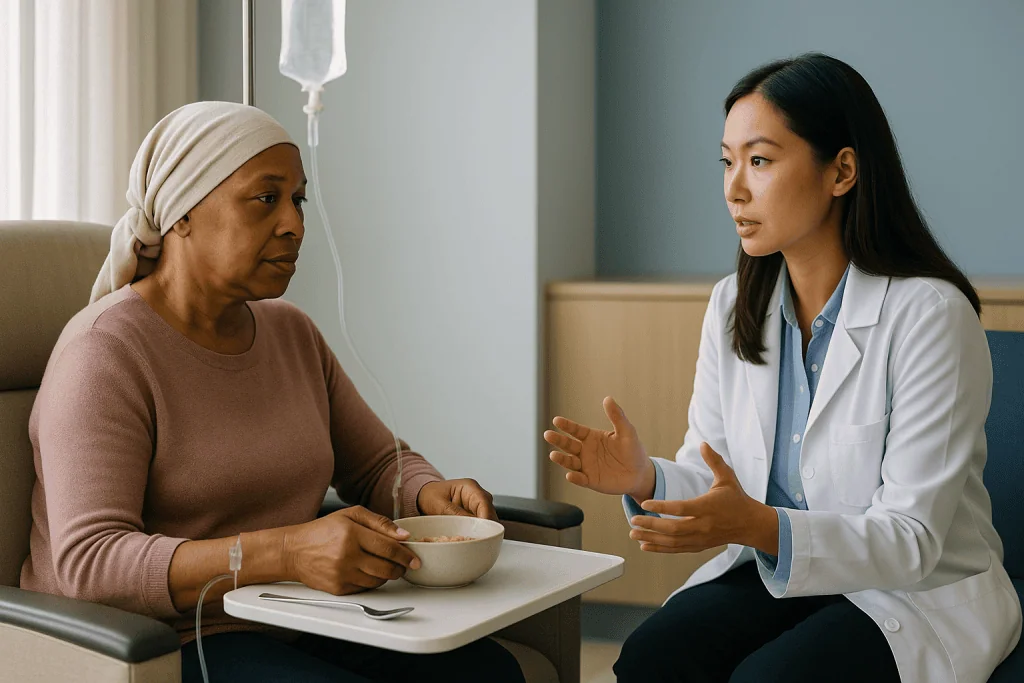
A typical course modeled on the CROSS approach runs about five weeks. Radiation is given each weekday, so most people make roughly twenty-odd short visits, and chemotherapy is infused once a week, often on the same day as one of the radiation sessions. Visits for blood tests and a review with the oncology nurse or doctor slot into the same weeks.
The first fortnight is often easier than people expect. Fatigue builds slowly. Nausea from the weekly chemotherapy is usually manageable with anti-sickness medicines prescribed by the team, and it tends to be worst in the two or three days after the infusion. Hair thinning varies with the drugs used.
The third and fourth weeks are when the esophagus itself starts to complain. Esophagitis typically arrives as a burning or a sensation of food sticking, then can progress to pain with each swallow. This is the stretch where the dietitian’s earlier planning pays off: soft, moist, high-calorie foods; liquid supplements; smaller, more frequent meals; and a feeding tube if intake drops. Skin over the treated area may redden. Blood counts are checked weekly because the chemotherapy can lower white cells, raising infection risk.
Week five and the fortnight after it are, paradoxically, often the hardest. Side effects peak after the final session because the tissue damage lags behind the treatment. Then, gradually, swallowing eases, energy returns, and the restaging scan is booked.
Serious side effects are uncommon but real. In the CROSS trial, fewer than one in ten people had severe drops in blood counts, and the most frequent serious non-blood problem was difficulty swallowing severe enough to need intervention. Lung inflammation from radiation, called pneumonitis, is rare with modern planning but is watched for. Every one of these figures describes a trial population; an individual’s experience may be milder or harder, and the treating team adjusts the plan as it goes.
Surgery after chemoradiation timing: why the wait of several weeks?
People finish their last radiation session and expect a date for the operation within days. Instead there is a gap, and the gap is deliberate.
Two things are happening during it. The cancer is still dying; cells fatally damaged by radiation often do not die until they next try to divide, so the tumor keeps shrinking for weeks. At the same time, the person is recovering: esophagitis settles, blood counts rebuild, weight stabilizes, and the body regains the reserve it will need for a long operation and a longer recovery.
The CROSS trial planned surgery roughly four to six weeks after the end of chemoradiation. Many centers now schedule it somewhat later, often around six to ten weeks, partly to let people recover more fully. Researchers have studied whether a longer gap increases the chance of a complete response or, conversely, allows the cancer to regrow or makes the operation technically harder because of scarring in the treated tissue. The honest summary is that the evidence is mixed. Several observational studies suggest a modestly longer wait does not harm outcomes and may slightly increase complete response rates, while others raise concern about higher surgical complication rates with long delays. No large randomized trial has settled the optimal interval.
What the gap contains matters as much as its length. Most teams repeat the PET-CT before surgery to check that nothing has spread in the meantime. A dietitian reviews weight and protein intake. Anesthetic fitness is reassessed. Some centers run a prehabilitation program, structured exercise and nutrition in the weeks before surgery, on the reasoning that a fitter body copes better with the operation.
If someone has had a rough time with treatment, the wait may be extended. That is a clinical judgment, not a sign of trouble, and the treating team should be able to explain the reasoning for their chosen window.
What an esophagectomy involves after chemoradiation
Esophagectomy is the surgical removal of part or most of the esophagus, with the stomach pulled up into the chest and reshaped into a tube to take its place. Nearby lymph nodes are removed along with the tumor so the pathologist can examine them. It is a major operation involving the abdomen and chest, and sometimes the neck, usually taking several hours.
Surgeons choose among several approaches. The transhiatal approach works through the abdomen and neck without opening the chest. The Ivor Lewis approach uses abdominal and right-chest incisions, with the join between stomach and remaining esophagus made inside the chest. The three-field, or McKeown, approach adds a neck incision and places the join there. Many centers now perform these through keyhole or robot-assisted incisions, which reduce wound size but not the scale of what happens inside. Which approach is best depends on where the tumor sits and on the surgeon’s experience, as the Mayo Clinic and Cleveland Clinic both describe.
Prior chemoradiation changes the operation in a few predictable ways. Treated tissue can be stiffer and more fibrous, which makes the dissection more demanding. The lungs may be a little less resilient, so anesthetic and physiotherapy planning takes that into account. Against this, the tumor is often smaller and the planes around it clearer. In the CROSS trial, these factors balanced out: complication rates and in-hospital deaths were no higher after chemoradiation than after surgery alone.
The pathology report that follows is where the earlier treatment shows its hand. It records whether the margins were clear, how many nodes contained cancer, and how much living tumor remained. A report describing extensive treatment effect with little or no viable cancer is reassuring. A report showing substantial residual disease may prompt discussion of further treatment after recovery, which is a conversation for the treating oncologists.
What happens if the scan looks clear after chemoradiation?
This is the question that catches people off guard. The restaging PET-CT shows no obvious cancer, the endoscopy biopsies come back negative, and a natural thought follows: why have the operation at all?
The difficulty is that scans and biopsies are imperfect at detecting what is left. Scar tissue and inflammation look much like residual tumor on imaging, and a biopsy samples only the surface of an area that may still harbor cancer deeper in the wall or in a lymph node. In the CROSS trial, 29% of people who had chemoradiation had no living cancer in their surgical specimen. Put the other way, roughly seven in ten did have some cancer remaining, and before surgery there was no reliable way to tell the two groups apart.
This is why standard practice remains surgery regardless of how good the restaging looks, when the person is fit for it. The operation is the only test that gives a definitive answer, and it removes whatever that answer turns out to be.
Researchers are actively studying an alternative called active surveillance: intensive monitoring with repeated scans, endoscopies and deep biopsies, with surgery held in reserve for people in whom cancer reappears. Trials of this approach have reported early results, and the balance of benefits and risks is still being worked out. For now, the National Cancer Institute’s summary lists surgery after chemoradiation as the established pathway; surveillance instead of surgery belongs in a clinical trial or in a carefully documented shared decision with a specialist team, not as a default.
For people who are not fit for surgery, or who decide against it, chemoradiation can serve as definitive treatment on its own, with close follow-up. That is a legitimate path. It carries a higher chance that the cancer persists or returns at the original site, and the person and team weigh that openly.
Foods to avoid with esophageal cancer during treatment
Eating is the daily battleground of this disease, and the foods that cause trouble change as treatment progresses. A dietitian experienced in esophageal cancer is the right person to personalize this; the general principles below reflect NHS and Cleveland Clinic patient guidance.
Early on, when the tumor itself narrows the passage, the foods most likely to stick are the dry, fibrous and dense ones:
- Tough meats, especially steak and chicken breast cooked dry
- Crusty or doughy bread, which swells and lodges
- Raw vegetables, nuts, seeds, popcorn and dried fruit
- Sticky foods such as peanut butter or soft cheeses eaten in large bites
Once radiation-induced esophagitis sets in, the problem shifts from blockage to pain. Foods that irritate an inflamed lining are the ones to set aside for a few weeks: very hot drinks, spicy dishes, acidic juices and tomatoes, carbonated drinks, alcohol, and anything sharp-edged such as chips or crackers.
What goes in matters as much as what stays out. Calorie and protein needs rise during treatment and before surgery, and losing muscle now makes recovery harder later. Moist, soft, energy-dense choices such as eggs, fish in sauce, stews, mashed vegetables with added butter or oil, smoothies, yogurt and prescribed liquid supplements tend to go down more easily. Small meals every two to three hours usually beat three large ones. Sitting upright during and after eating helps food pass.
Two cautions. Weight loss during treatment is not something to accept quietly; it is a reason to contact the team, because it may signal that a feeding tube or a change in approach is needed. And alcohol and tobacco, both established causes of esophageal cancer according to MedlinePlus, interfere with healing and are worth stopping before surgery, with support from the team if needed.
What people often get wrong about treatment before surgery
Several beliefs circulate in waiting rooms and online forums. Most are understandable; most are also wrong.
“Doing chemo first means they think surgery won’t work.” The opposite is closer to the truth. Chemoradiation before esophagectomy is offered precisely because the team intends to remove the cancer completely and wants the best chance of clear margins. People whose disease has spread too far for surgery are usually not offered this sequence at all.
“Every week of delay lets the cancer grow.” Weeks spent on chemoradiation are weeks of active treatment, not idle waiting. The tumor is under attack from the first session, and the restaging scan before surgery checks for any spread.
“Radiation makes the operation too dangerous.” The CROSS trial measured exactly this fear and found no increase in surgical complications or deaths in hospital compared with surgery alone.
“If the scan is clear, surgery is unnecessary.” As described above, roughly seven in ten people in that trial still had cancer in the specimen despite treatment, and imaging cannot reliably identify which seven. Surveillance instead of surgery remains under study.
“I won’t be able to eat during treatment.” Most people keep eating throughout, with changes in texture and timing. Feeding tubes are a safety net for the minority whose intake falls, not an inevitability.
“Chemotherapy and radiation together is twice the side effects.” The chemotherapy doses used during radiation are generally lower than in stand-alone chemotherapy. Side effects are real, but combination treatment is not simply additive.
“A complete response means it’s gone for good.” A pathological complete response is a strong and welcome finding, but follow-up continues for years because recurrence remains possible. Nobody can promise an individual outcome, and a careful team will say so.
Questions to ask your care team
Treatment conversations move fast and the vocabulary is unfamiliar. A written list helps. These questions are the ones that most often unlock a clearer picture; the answers belong to the treating team, who know the specific situation.
About the diagnosis and plan
- What is the cell type and stage of my cancer, and how confident are you in the staging?
- Was my case discussed at a tumor board, and which specialties were present?
- Why are you recommending chemoradiation before surgery rather than chemotherapy alone, surgery first, or chemoradiation without surgery?
- What would change the plan between now and the operation?
About the treatment weeks
- How many weeks of treatment, how many visits, and who do I call between visits?
- Which side effects should I expect, and which should prompt an urgent call?
- Should I expect to need a feeding tube, and if so, when would it be placed?
- Is there a prehabilitation or exercise program I can join before surgery?
About surgery and after
- How long after the last radiation session do you usually operate, and why that interval?
- Will I have a restaging scan before surgery?
- Which surgical approach do you plan, and how will prior treatment affect it?
- What will the pathology report tell us, and what happens if cancer remains?
- What follow-up schedule should I expect in the first two years?
One further question is worth asking early: whether a clinical trial is open for your situation. Trials are how the next version of the standard treatment gets built, and participation is always voluntary.
When to call your doctor
Oncology teams give out a direct number for a reason. During chemoradiation and in the weeks before surgery, some problems escalate quickly, and the right response is a same-day call rather than waiting for the next appointment.
Call urgently, or use emergency services where indicated, for any of the following:
- A temperature of 38°C (100.4°F) or higher, or chills and shaking, especially in the week after a chemotherapy infusion, when white cell counts are lowest. Infection during low counts is a medical emergency.
- Inability to swallow liquids or your own saliva, which can mean the esophagus has become blocked and risks aspiration into the lungs.
- Vomiting blood, or black, tarry stools, which can indicate bleeding from the tumor or the treated lining.
- New or worsening shortness of breath, chest pain, or coughing up blood.
- Severe or persistent vomiting, or signs of dehydration such as very dark urine, dizziness on standing, or confusion.
- Pain with swallowing that stops you eating or drinking for more than a day despite the medicines you have been given.
- Rapid weight loss, or a feeding tube that has become blocked, dislodged, or surrounded by redness and discharge.
- Sudden swelling or pain in one leg, which can signal a blood clot; cancer and reduced mobility both raise that risk.
After surgery, the same rules apply with a few additions: fever, a racing heartbeat, new chest or abdominal pain, difficulty breathing, or leakage from a wound can be early signs of a leak at the surgical join or of pneumonia, both of which are treated far more easily when caught early.
None of these signs means something has definitely gone wrong. They are the moments when a clinician needs to look, and the team would far rather receive a call that turns out to be nothing than hear about a problem a day late.
Frequently asked questions
What is neoadjuvant therapy for esophageal cancer?
Neoadjuvant therapy is treatment given before the main treatment, which for esophageal cancer usually means chemotherapy, radiation, or both before surgery. Its purpose is to shrink the tumor, treat microscopic cancer cells that scans cannot see, and improve the chance that the surgeon can remove the cancer completely. It is offered to people whose cancer has grown into the esophageal wall or nearby nodes but has not spread to distant organs.
What is the CROSS protocol for esophageal cancer?
The CROSS protocol comes from a Dutch randomized trial that compared surgery alone with about five weeks of radiation plus weekly chemotherapy followed by surgery. Published in 2012, it showed higher rates of complete tumor removal and longer survival with chemoradiation first, and no increase in surgical complications. The approach, concurrent chemoradiation, a recovery gap, then esophagectomy, became a standard pathway in many countries.
How long after chemoradiation is esophageal surgery usually done?
In the CROSS trial, surgery was planned roughly four to six weeks after the last radiation session, and many centers now operate around six to ten weeks later. The gap lets the tumor continue to shrink and allows esophagitis, fatigue and blood counts to recover. Studies of longer intervals have given mixed results, so the treating team sets the timing based on the individual’s recovery and a restaging scan.
Does chemoradiation before surgery make the operation riskier?
The CROSS trial found no increase in surgical complications or deaths in hospital among people who had chemoradiation before esophagectomy compared with surgery alone. Treated tissue can be stiffer, which makes the dissection more demanding, but the tumor is often smaller and the surgical planes clearer. Surgeons and anesthetists take prior treatment into account when planning the operation and the recovery.
What if my scan shows no cancer after chemoradiation?
A clear scan is encouraging but not definitive, because scar tissue and residual tumor look alike on imaging and biopsies sample only the surface. In the CROSS trial, about 29% of people had no living cancer in the surgical specimen, meaning most still did. Standard practice is therefore to proceed with surgery when the person is fit. Active surveillance instead of surgery is being studied in clinical trials.
What are the symptoms of end-stage esophageal cancer?
Advanced esophageal cancer can cause increasing difficulty swallowing even liquids, significant weight loss, persistent pain in the chest or back, hoarseness, coughing when eating, and profound fatigue, depending on where the cancer has spread. These symptoms do not diagnose a stage; only the treating team can assess that. Palliative care specialists can manage swallowing, pain and nutrition at any stage, including alongside active treatment.
What foods should I avoid if I have esophageal cancer?
Foods most likely to stick or irritate include tough meats, crusty bread, raw vegetables, nuts, seeds, popcorn, dried fruit and large bites of sticky foods. During radiation esophagitis, very hot drinks, spicy or acidic foods, carbonated drinks, alcohol and sharp-edged snacks tend to hurt. Soft, moist, high-calorie meals eaten in small portions usually go down more easily. A dietitian on the team can personalize this advice.
Will I need a feeding tube during chemoradiation?
Many people eat throughout treatment with changes in texture and meal size, but a minority need a feeding tube when swallowing becomes too painful or weight falls. Teams plan for this early, deciding whether a tube through the nose or one placed into the stomach or small bowel is most suitable. Some surgeons place a tube during staging surgery so it is ready if needed.
Is chemotherapy before and after surgery a reasonable alternative to chemoradiation?
For adenocarcinoma of the lower esophagus and the junction with the stomach, perioperative chemotherapy, given before and after surgery without radiation, is an established alternative. Head-to-head comparisons with chemoradiation have produced results that specialists still debate. The choice depends on tumor type, location, fitness and the ability to complete chemotherapy after a major operation, and it rests with the multidisciplinary team.
What side effects are most common during chemoradiation for esophageal cancer?
Fatigue, nausea in the days after each chemotherapy infusion, and painful swallowing from radiation esophagitis in the later weeks are the most frequent. Skin redness over the treated area and lowered blood counts also occur. Serious side effects were uncommon in the CROSS trial, with fewer than one in ten people having severe drops in blood counts. The team monitors weekly and adjusts treatment when needed.
References
This article is for general information only and is not a substitute for professional medical advice. Please consult a qualified doctor about your individual situation.

More from the Blog
Transfusions and Infection Precautions During Acute Myeloid Leukemia Treatment
During acute myeloid leukemia treatment, chemotherapy drives red cells, platelets and infection-fighting white cells to very low levels for weeks. Red cell and platelet…
Radiation Therapy Side Effects by Treated Area: What Is Expected and When to Call the Team
Radiation side effects are expected and follow the treated area: skin changes, fatigue, and local effects such as a sore mouth or loose stools.…

What Happens During Wilms Tumor Surgery? A Parent’s Guide to the Operation and Anesthesia
Wilms tumor surgery usually means a nephrectomy: the surgeon removes the affected kidney, the tumor inside it, and nearby lymph node samples through an…
What a Bone Marrow Test Shows Before Leukemia Treatment and How It Shapes the Plan
A bone marrow test before leukemia treatment samples the spongy tissue inside the hip bone to confirm the diagnosis, count immature cells called blasts,…
Active Surveillance for Prostate Cancer: When Watching Is the Plan and When It Changes
Active surveillance for prostate cancer means closely monitoring a low-risk, slow-growing tumor with regular PSA blood tests, MRI scans and periodic biopsies, and starting…
After Sarcoma Surgery: Physiotherapy Milestones From the First Days to Full Movement
Physiotherapy after sarcoma surgery usually begins within the first day or two with breathing, circulation and gentle assisted movement, then progresses through protected range-of-motion…