Sunburn
Learn about sunburn symptoms, common causes, how doctors assess it, sunburn treatment options at home and in clinic, and warning signs that need care.
Quick answer
Sunburn is skin inflammation caused by too much ultraviolet (UV) radiation from the sun or tanning beds. Symptoms such as redness, heat, pain, swelling and sometimes blisters appear within hours and usually settle within about a week. Treatment focuses on cooling the skin, moisturizing, hydration and pain relief, while severe or blistering burns may need medical care.
What is sunburn?
Sunburn is an inflammatory reaction of the skin caused by too much ultraviolet (UV) radiation. UV radiation is an invisible form of energy given off by the sun and by artificial sources such as tanning beds and sunlamps. When the skin receives more UV energy than it can handle, the outer layer becomes damaged, blood flow to the area increases, and the body releases chemicals that cause redness, heat, swelling and pain. In medical terms, sunburn is a type of radiation burn, and it is usually classified as a superficial (first-degree) burn or, when blisters form, a partial-thickness (second-degree) burn.
Sunburn can affect anyone. People with fair skin, light hair and light-colored eyes tend to burn more quickly, but people with darker skin can also be sunburned, even though the redness may be harder to see. Children and infants are especially vulnerable because their skin is thinner and they may not recognize the early signs. Outdoor workers, athletes, travelers to sunny or high-altitude places, and people taking certain medicines are also commonly affected.
Most sunburns are mild and heal on their own within about a week. However, severe sunburn can cause widespread blistering, dehydration and general illness, and repeated sunburns over a lifetime add to the risk of premature skin aging and skin cancer. Skin conditions of this kind are typically managed by a dermatology department; at Acibadem, dermatologists (doctors who specialize in skin) evaluate both acute sunburn and its longer-term effects on the skin.
Sunburn symptoms
Sunburn symptoms usually do not appear immediately. Redness and tenderness often begin a few hours after sun exposure, tend to peak between roughly 12 and 24 hours later, and then gradually ease over several days. This delay is one reason people often underestimate how much sun they have had until later in the day or the next morning.
Common sunburn symptoms include:
- Skin that looks pink or red (on darker skin, the color change may be subtle or appear more as a darkening)
- Skin that feels warm or hot to the touch
- Tenderness, stinging or pain, especially when the area is touched or rubbed by clothing
- Mild swelling of the affected area
- Itching, which may develop as the skin starts to heal
- Small fluid-filled blisters in more severe cases
- Peeling or flaking of the skin, usually starting a few days later
- Headache, fever, chills, nausea or tiredness when large areas are burned
Doctors often describe sunburn by depth, much like other burns. A first-degree sunburn involves only the top layer of skin (the epidermis). The skin is red, dry and sore, but there are no blisters, and it typically heals within a few days to a week, sometimes with peeling. A second-degree sunburn goes deeper into the next layer (the dermis). The skin is usually very red or deep pink, swollen and painful, and blisters form. These burns take longer to heal and carry a higher risk of infection and skin discoloration afterward. Very deep (third-degree) sunburn is extremely rare and would generally only be seen in unusual circumstances such as prolonged exposure by someone who is unconscious.
When sunburn covers a large area of the body, the person may develop whole-body symptoms. This is sometimes informally called sun poisoning, although it is not an actual poisoning. It refers to a severe sunburn accompanied by fever, chills, headache, dizziness, nausea, vomiting or signs of dehydration. Symptoms like these mean the body is under real stress and should not be ignored.
Causes and risk factors
The direct cause of sunburn is overexposure to UV radiation. Sunlight contains two main types that reach the ground: UVA and UVB. UVB is the main cause of the redness and burning of sunburn, while UVA penetrates deeper and contributes to skin aging and long-term damage. Both types can harm the cells of the skin. When the DNA (genetic material) inside skin cells is damaged, the cells send out inflammatory signals and some of them die off, which is why the skin later peels.
Common sunburn causes and situations that increase the chance of burning include:
- Spending time outdoors without protection, especially between late morning and mid-afternoon when UV levels are highest
- Using tanning beds or sunlamps, which deliver concentrated UV radiation
- Being near water, sand, snow or concrete, which reflect UV rays and increase exposure
- Being at high altitude, where the atmosphere filters out less UV
- Traveling to places closer to the equator, where the sun is more intense
- Assuming cloudy or cool weather is safe; a significant amount of UV passes through clouds
Several personal factors raise the risk of sunburn:
- Fair skin that burns easily and tans poorly, light or red hair, and blue or green eyes
- Young age, as children have more delicate skin
- A history of previous sunburns
- Medicines that make the skin more sensitive to light (a side effect called photosensitivity). Examples include some antibiotics such as tetracyclines, some diuretics (water tablets), certain acne treatments containing retinoids, and some anti-inflammatory painkillers. A pharmacist or doctor can advise whether a particular medicine carries this risk.
- Skin products containing alpha-hydroxy acids or retinol, which can thin the outer skin layer
- Certain medical conditions such as lupus or rare inherited light-sensitivity disorders
- Drinking alcohol outdoors, which may reduce awareness of exposure and contribute to dehydration
Sunburn diagnosis
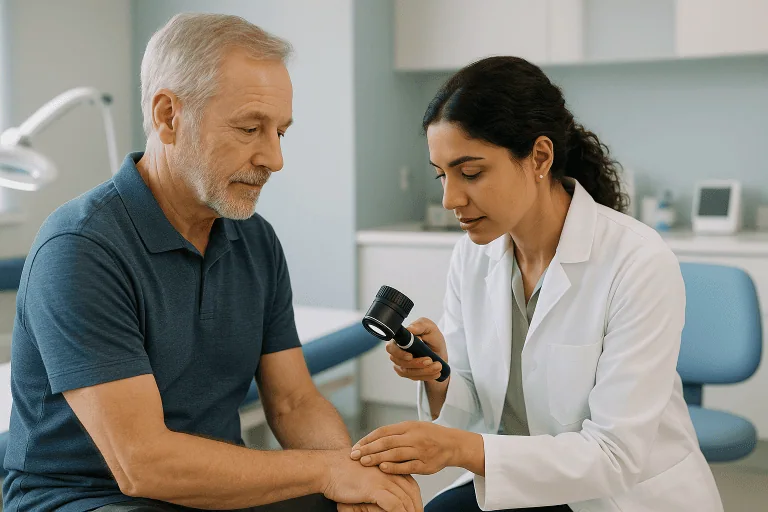
In most cases, sunburn diagnosis is straightforward and does not require any tests. A doctor or nurse will ask about recent sun or tanning-bed exposure, when the symptoms started, how much of the body is affected, and whether there are blisters, fever or other general symptoms. They will then examine the skin, looking at the color, warmth, swelling and the presence and size of any blisters. The pattern of the burn, which usually matches the areas that were uncovered and spares areas protected by clothing or straps, typically confirms the cause.
The clinician will also estimate how much of the body surface is burned and assess the depth of the burn using the same first- and second-degree categories described above. In people with severe sunburn, they may check for signs of dehydration, such as a fast heart rate, dry mouth, dizziness or reduced urination, and may look for signs of heat exhaustion or heatstroke, which can occur alongside sunburn.
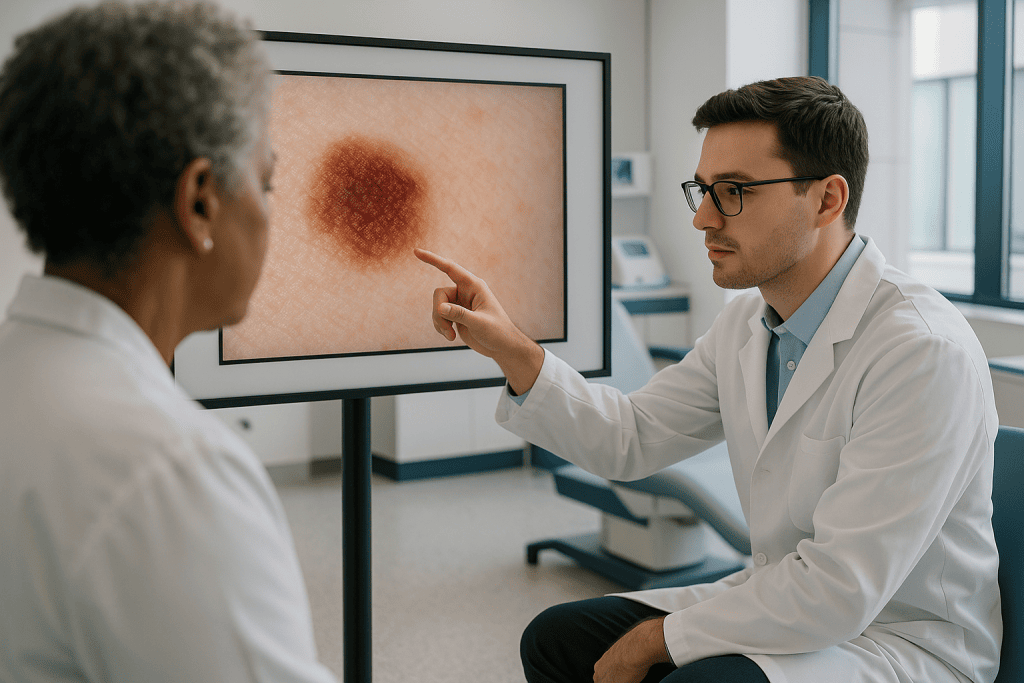
Laboratory tests and imaging are not needed for ordinary sunburn. Blood tests may occasionally be requested if a person is very unwell, appears dehydrated, or if there is a concern about infection. If someone develops a burn-like reaction after only brief sun exposure, or the reaction is unusual in appearance, a dermatologist may consider other conditions that can look similar. These include polymorphous light eruption (a common sun-triggered itchy rash often called sun allergy), a photosensitive drug reaction, contact dermatitis (a skin reaction to something that touched it), or, rarely, an underlying light-sensitivity disorder. In such situations the doctor may review the person’s medicines, ask about family history, and in selected cases arrange specialized tests such as phototesting, in which small areas of skin are exposed to controlled doses of UV light, or blood tests to look for autoimmune conditions.
Sunburn treatment options
There is no way to reverse a sunburn once it has happened; the skin has already been damaged. Sunburn treatment therefore focuses on relieving discomfort, keeping the skin moist, preventing further damage and avoiding complications while the skin heals itself. Most treatment takes place at home.
Self-care measures that are widely recommended include:
- Getting out of the sun as soon as you notice the skin turning pink, and staying out of it until the burn has healed
- Cooling the skin with a cool (not icy) shower or bath, or with a clean cloth soaked in cool water applied for several minutes at a time
- Applying a gentle, fragrance-free moisturizer or a product containing aloe vera to skin that is still slightly damp, to reduce dryness and tightness
- Drinking extra water, because sunburn draws fluid toward the skin surface and can contribute to dehydration
- Taking an over-the-counter pain reliever such as ibuprofen or acetaminophen (paracetamol) if it is suitable for you; ibuprofen may also help reduce inflammation. Always follow the package directions and check with a pharmacist if you take other medicines or have health conditions
- Wearing loose, soft clothing over the affected area
- Leaving blisters intact, since the skin covering them protects against infection
Some products are generally best avoided on sunburned skin. Petroleum-based ointments and thick oily creams can trap heat. Products containing benzocaine or lidocaine (numbing agents) may irritate the skin or cause allergic reactions in some people. Home remedies such as butter, toothpaste or vinegar are not recommended.
Medical treatment may be needed for more severe sunburn. Your doctor may suggest a short course of a low-strength topical corticosteroid cream (an anti-inflammatory cream) for areas of unbroken skin to help calm redness and discomfort, although evidence for a large benefit is limited. If blisters have burst, the area may be cleaned and covered with a non-stick dressing, and you will be advised on how to keep it clean. Antibiotics are only used if there are signs of a skin infection, such as increasing pain, spreading redness, pus or fever after the first day or two.
In severe cases, particularly when a large proportion of the body is burned, blisters are extensive, or the person is dehydrated, confused, or vomiting and unable to keep fluids down, hospital treatment may be required. This can include fluids given through a vein, stronger pain relief, and specialized wound care. Very rarely, a person with extensive deep burns may be cared for in a burn unit. Surgery is essentially never needed for sunburn. Once healed, dermatologists may later assess any areas of persistent discoloration or scarring and, over the long term, monitor the skin for changes related to UV damage.
Living with sunburn and outlook
For most people, the outlook after a single sunburn is good. Mild sunburn usually settles within three to five days, and peeling, if it occurs, finishes within a week or two. Blistering sunburn tends to take longer, often one to two weeks, and the new skin underneath may look pink, darker or lighter than the surrounding skin for some weeks or months before the color evens out. In some people, especially those with darker skin tones, patches of increased pigmentation can be slow to fade. During healing, the affected skin is more sensitive than usual and burns more easily, so careful protection is important.
The more significant concern with sunburn is cumulative. Each sunburn represents UV damage to the DNA of skin cells. Most of this damage is repaired by the body, but some is not, and over the years this adds up. Repeated sunburns are linked with premature aging of the skin (wrinkles, uneven pigmentation and loss of elasticity) and with a higher lifetime risk of skin cancers, including melanoma, the most serious form. Blistering sunburns during childhood and adolescence are considered a particularly important risk factor. This does not mean that one sunburn will cause cancer, but it does mean that preventing future burns is worthwhile at any age.
Practical prevention steps include seeking shade during the middle of the day, wearing clothing that covers the skin, a wide-brimmed hat and UV-blocking sunglasses, and applying a broad-spectrum sunscreen with a sun protection factor (SPF) of 30 or higher to exposed skin, reapplying it at least every two hours and after swimming or sweating. Sunscreen is intended to complement shade and clothing, not to extend the time spent in strong sun. Avoiding tanning beds entirely is recommended. People who have had many sunburns, or who notice new or changing moles or skin spots, may benefit from periodic skin checks with a dermatologist.
Frequently asked questions
How long do sunburn symptoms last?
Sunburn symptoms typically appear within a few hours of exposure, are at their worst around the first day, and then improve gradually. Mild redness and soreness often fade within three to five days, while peeling may continue for a week or so. Blistering sunburn can take one to two weeks to heal, and changes in skin color may persist for longer. If symptoms are getting worse after two days rather than better, it is sensible to seek medical advice.
What are the main sunburn causes on a cloudy or cool day?
Clouds block visible light and heat more effectively than they block UV radiation, so it is possible to be sunburned when the sky is overcast and the air feels cool. UV can also be reflected upward from water, sand and snow, which is why skiers and people on boats often burn in unexpected places such as under the chin. The time of day, season, altitude and how close you are to the equator all influence UV levels more than the temperature does.
Do I need a doctor for sunburn diagnosis?
Most sunburns can be recognized without seeing a doctor, because the link between sun exposure and the redness is usually clear. A medical assessment becomes useful when the burn is severe, blisters cover a large area, there is fever or vomiting, the person is very young or elderly, or the skin reaction seems out of proportion to the amount of sun. In these situations a clinician can confirm the diagnosis, rule out other skin reactions, and check for dehydration or infection.
What is the best sunburn treatment at home?
There is no single best sunburn treatment, but the combination that most guidelines recommend is to cool the skin with cool water, apply a gentle moisturizer or aloe vera gel, drink plenty of fluids, take a suitable over-the-counter pain reliever if needed, and keep the burned area out of the sun until it has healed. Avoid heavy oily ointments, numbing sprays and unproven home remedies. These measures ease discomfort but do not speed up the underlying healing, which happens at its own pace.
Should I pop sunburn blisters?
It is generally advised not to pop or pick at sunburn blisters. The fluid-filled blister acts as a natural sterile dressing that protects the raw skin beneath from bacteria and helps it heal. If a blister breaks on its own, gently clean the area with mild soap and water, apply a thin layer of plain moisturizer or a dressing recommended by a pharmacist, and cover it loosely. Watch for signs of infection such as increasing pain, spreading redness, warmth or pus.
Can sunburn cause skin cancer?
A single sunburn does not directly cause skin cancer, but sunburn is a visible sign that UV radiation has damaged the DNA in skin cells. Over many years, repeated damage of this kind increases the risk of skin cancers, including melanoma. Blistering sunburns in childhood are thought to be especially relevant. Reducing future sun exposure and checking the skin regularly for new or changing spots are the practical steps that follow from this.
Does sunburn look different on darker skin?
Yes, it can. On darker skin, the classic bright redness may be muted or appear as a deeper brown or purplish tone, so the burn is sometimes missed. Other sunburn symptoms, such as skin that feels hot, tight, tender or itchy, followed by peeling, are the same across skin tones. People with darker skin may also be more likely to notice patches of darker pigmentation after the burn has healed, which can take time to fade.
When to see a doctor
Most sunburns can be safely managed at home. However, some situations need prompt medical assessment. Seek medical care without delay if you or someone you are caring for has sunburn together with any of the following:
- Blisters covering a large area of the body, or blistering on the face, hands, feet or genitals
- Fever, chills, or feeling generally unwell
- Severe pain that is not controlled by simple pain relievers
- Signs of dehydration, such as intense thirst, very dry mouth, dizziness, passing little or no urine, or fainting
- Confusion, drowsiness or unusual behavior, which may indicate heatstroke, a medical emergency
- Repeated vomiting or inability to keep fluids down
- Rapid heartbeat or rapid breathing
- Signs of skin infection, including spreading redness, increasing swelling, warmth, pus, or red streaks leading away from the burn
- Sunburn in an infant or very young child, especially if the child is under one year old, seems unusually sleepy or irritable, or has blisters
- A severe reaction after brief exposure, or a burn that occurred while taking a new medicine, which may suggest photosensitivity
You should also consider arranging a routine appointment with a dermatologist if you have had many sunburns in the past, if you notice a mole or skin spot that is new, changing in size, shape or color, bleeding, or not healing, or if you have a personal or family history of skin cancer. Early evaluation of skin changes allows any problems to be addressed at the most manageable stage.
Medically reviewed by the Acıbadem International Medical Board September 13, 2026
See our medical review board →
Update history
- PublishedSeptember 13, 2026
- Medical review approvedSeptember 13, 2026
- Last content updateSeptember 13, 2026