Glioblastoma
Glioblastoma is an aggressive brain cancer. Learn about symptoms, causes, diagnosis, treatment options and when to seek specialist care.
Quick answer
Glioblastoma is an aggressive brain tumor that usually requires prompt, coordinated treatment to remove or reduce the tumor and control its growth. At Acibadem in Turkey, care typically combines advanced imaging and diagnosis with a personalized treatment plan that may include neurosurgery, radiotherapy, chemotherapy, and supportive follow-up by a multidisciplinary team.
What is glioblastoma?
Glioblastoma is a fast-growing cancer that starts in the brain. It develops from cells called astrocytes, which are star-shaped support cells that help nerve cells work properly. Because it begins in the brain itself, doctors call it a primary brain tumor, which sets it apart from cancers that spread to the brain from other parts of the body. In medical classifications, glioblastoma is graded as a grade 4 tumor, the highest grade, which means it tends to grow quickly and invade nearby brain tissue.
Many people first hear the term when searching “what is glioblastoma” after a diagnosis in the family. In plain terms, it is the most common malignant (cancerous) brain tumor that starts in the brain in adults. It can occur at any age, but it is diagnosed most often in older adults, and it appears somewhat more often in men than in women. Glioblastoma can develop in any part of the brain, though it most commonly arises in the cerebral hemispheres, the large upper portions of the brain that control movement, speech, thinking, and personality.
Glioblastoma is not the same as a benign (non-cancerous) brain tumor. It grows by sending microscopic finger-like extensions into surrounding healthy brain tissue, which is one of the main reasons it is difficult to remove completely with surgery. Understanding this behavior helps explain why treatment usually combines several approaches rather than relying on a single one.
Symptoms of glioblastoma
Glioblastoma symptoms depend largely on where the tumor is located, how large it is, and how quickly it grows. The brain controls different functions in different regions, so a tumor pressing on the speech area causes different problems than one in an area controlling movement or vision. Symptoms often develop over weeks to a few months, although in some cases they appear suddenly.
Common glioblastoma symptoms include:
- Headachesoften worse in the morning, or headaches that are new, persistent, or steadily worsening
- Seizuressudden episodes of abnormal electrical activity in the brain, which may cause convulsions, staring spells, or brief unusual sensations
- Nausea and vomitingespecially when related to increased pressure inside the skull
- Weakness or numbnessoften on one side of the body, in the face, arm, or leg
- Speech difficultiestrouble finding words, slurred speech, or difficulty understanding others
- Vision changesblurred vision, double vision, or loss of part of the visual field
- Memory problems and confusiondifficulty concentrating, forgetfulness, or disorientation
- Personality or mood changesirritability, apathy, or behavior that seems out of character
- Balance and coordination problemsunsteadiness when walking or clumsiness
- Drowsiness or fatigueincreasing sleepiness that is hard to explain
Unlike many other cancers, glioblastoma is not formally described in numbered “stages” that reflect spread through the body, because it almost never spreads outside the brain and spinal cord. Instead, doctors describe it by its grade and its molecular features. Early on, symptoms may be subtle: a mild headache, slight forgetfulness, or a single unexplained seizure. As the tumor grows and pressure inside the skull increases, symptoms usually become more noticeable and may include severe headaches, repeated vomiting, marked drowsiness, or worsening weakness. Tumors located in so-called “silent” areas of the brain may grow relatively large before causing obvious problems, while even a small tumor near a critical area, such as the speech center, can cause early and clear symptoms.
None of these symptoms is unique to glioblastoma. Headaches, fatigue, and memory lapses have many far more common and less serious causes. However, symptoms that are new, persistent, progressive, or combined, for example, a new headache together with weakness on one side, deserve prompt medical evaluation.
Causes and risk factors
In most people, the exact glioblastoma causes cannot be identified. The tumor develops when astrocytes acquire changes (mutations) in their DNA that make them multiply uncontrollably. In the great majority of cases, these genetic changes happen spontaneously during a person’s lifetime rather than being inherited from a parent.
Recognized risk factors include:
- Ageglioblastoma becomes more common with increasing age, most often appearing in middle-aged and older adults, although it can occur in younger people
- Prior radiation exposurepeople who received radiation therapy to the head, usually for another medical condition, have a somewhat higher risk of developing brain tumors later in life
- Sexglioblastoma is diagnosed slightly more often in men than in women
- Rare inherited syndromesa small number of genetic conditions, such as Li-Fraumeni syndrome and neurofibromatosis, increase the risk of brain tumors, but these account for only a small fraction of cases
It is equally important to know what has not been shown to cause glioblastoma. Extensive research has not established a proven link between glioblastoma and cell phone use, power lines, specific foods, or common everyday chemical exposures, although scientists continue to study these questions. There is no evidence that head injuries cause glioblastoma, and it is not contagious: it cannot be passed from one person to another.
Because clear preventable causes have not been identified, there is currently no known reliable way to prevent glioblastoma. Families sometimes worry that the disease will run in their bloodline; in the vast majority of cases, glioblastoma is not inherited, and relatives of a person with glioblastoma do not usually need special screening unless a rare genetic syndrome is suspected.
Diagnosis of glioblastoma
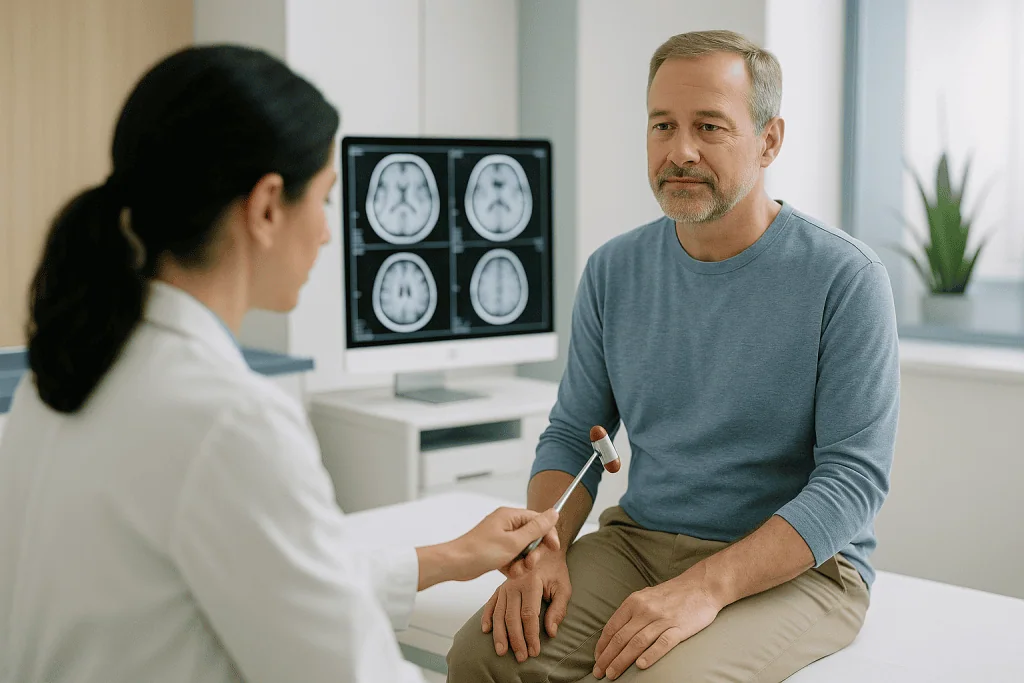
Glioblastoma diagnosis usually begins when a person sees a doctor for one of the symptoms described above. The doctor will take a detailed history and perform a neurological examination, which tests strength, sensation, reflexes, coordination, vision, and mental function to look for signs pointing to a problem in a specific brain region.
The key steps in confirming the diagnosis typically include:
- MRI scan (magnetic resonance imaging)this is the most important imaging test. MRI uses magnetic fields to create detailed pictures of the brain. A contrast dye is usually given through a vein to make the tumor easier to see. Glioblastomas often show a characteristic appearance on MRI, with an irregular enhancing rim and swelling in the surrounding brain.
- CT scan (computed tomography)a specialized X-ray scan that is sometimes performed first, particularly in emergency settings, because it is fast and widely available.
- Biopsy or surgical removalimaging alone cannot fully confirm glioblastoma. A definitive diagnosis requires examining tumor tissue under a microscope. Tissue is obtained either during an operation to remove the tumor or, when surgery is not possible, through a needle biopsy guided by imaging.
- Molecular and genetic testingmodern diagnosis includes laboratory tests on the tumor tissue. Doctors look at specific markers, such as the IDH gene status and MGMT promoter methylation, which help classify the tumor precisely and can influence treatment decisions. Under current international classification, glioblastoma is defined as an IDH-wildtype, grade 4 tumor.
Additional tests may include advanced MRI techniques (such as perfusion or spectroscopy imaging, which study blood flow and chemical composition of the tumor) and, in selected cases, functional imaging to map areas of the brain that control speech and movement before surgery. Blood tests cannot diagnose glioblastoma, but they are used to check overall health before treatment.
Once the diagnosis is confirmed, the case is usually reviewed by a multidisciplinary team, neurosurgeons, radiation oncologists, medical oncologists (cancer physicians who use drug treatments), pathologists, and radiologists, who together recommend a treatment plan tailored to the individual.
Treatment options for glioblastoma
Glioblastoma treatment aims to remove or destroy as much of the tumor as safely possible, slow its regrowth, control symptoms, and preserve quality of life. Because the tumor infiltrates surrounding brain tissue, no single treatment can eliminate every tumor cell, so care usually combines several approaches.
Surgery
Surgery is often the first step when the tumor’s location allows it. The goal is called maximal safe resection, removing as much of the tumor as possible without damaging areas of the brain that control essential functions such as speech and movement. Surgeons may use image guidance, intraoperative monitoring, and sometimes “awake” techniques, in which the patient is awake during part of the operation so critical functions can be tested in real time. When the tumor lies in an area too risky to operate on, a biopsy may be performed instead to confirm the diagnosis.
Radiation therapy
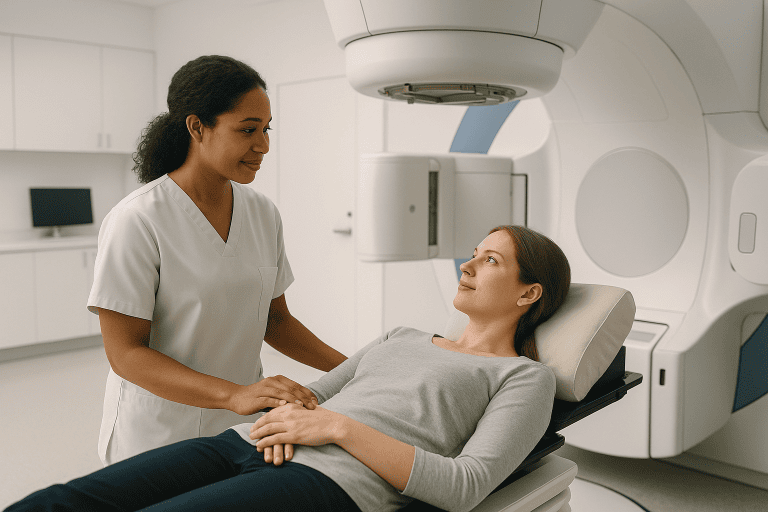
Radiation therapy uses precisely targeted high-energy beams to kill remaining tumor cells after surgery. It is typically delivered in daily sessions over several weeks. In older patients or those with other health problems, doctors may recommend a shorter course. Side effects can include fatigue, scalp irritation, hair loss in the treated area, and, over time, effects on memory and concentration; the care team monitors and manages these.
Chemotherapy and other medications
Chemotherapy means drugs that kill or slow rapidly dividing cells. The most commonly used drug for glioblastoma is temozolomide, an oral chemotherapy tablet usually given during and after radiation therapy. Tumor testing for MGMT methylation can help predict how likely the tumor is to respond to this drug. Other medications play supportive roles: corticosteroids (anti-inflammatory drugs such as dexamethasone) reduce brain swelling and relieve symptoms, and anticonvulsants (anti-seizure medicines) are prescribed for people who have had seizures. Systemic drug treatment for glioblastoma is generally planned and supervised within a Medical Oncology Department, working alongside neurosurgery and radiation oncology teams.
Tumor treating fields
Tumor treating fields (TTFields) is a treatment in which a wearable device delivers mild electrical fields through adhesive pads placed on the scalp. These fields are designed to interfere with the division of tumor cells. It may be offered in addition to chemotherapy in appropriate patients, and your doctor can discuss whether it is suitable and available in your situation.
Watchful waiting and supportive care
In some situations, for example, in frail patients or when the risks of aggressive treatment outweigh the likely benefits, doctors and families may choose a more limited approach focused on comfort. Supportive (palliative) care manages symptoms such as headache, seizures, and fatigue, and supports emotional well-being. Palliative care does not mean giving up; it can be provided alongside active treatment at any point and often improves quality of life.
Treatment at recurrence and clinical trials
Glioblastoma often returns after initial treatment. When it does, options may include repeat surgery, further radiation, different chemotherapy drugs, targeted therapies, or enrollment in a clinical trial. Clinical trials are carefully supervised research studies testing new treatments; they can offer access to approaches not yet widely available, and your care team can advise whether a trial may be appropriate. At institutions such as Acibadem, glioblastoma care is coordinated across neurosurgery, radiation oncology, and medical oncology specialties so that treatment decisions reflect input from the full team.
Living with glioblastoma and outlook
An honest conversation about outlook is an important part of glioblastoma care. Glioblastoma is a serious, life-limiting illness. With current standard treatment, most patients live months to a few years after diagnosis, and long-term survival, while documented in some individuals, is uncommon. Outlook varies with age, overall health, how much of the tumor could be removed, and molecular features of the tumor, so no statistic can predict what will happen for any one person. Your own medical team is the best source of information about your individual situation.
Day-to-day life with glioblastoma often involves managing symptoms and treatment side effects. Rehabilitation services, physical therapy for weakness or balance problems, speech therapy for language difficulties, and occupational therapy for daily activities, can help maintain independence. Seizure precautions, including guidance about driving, are usually discussed early, since many countries restrict driving after a seizure or brain tumor diagnosis.
The emotional weight of this diagnosis is significant for patients and families alike. Feelings of fear, anger, and grief are normal. Counseling, support groups, and palliative care teams can provide practical and emotional support. Many people find it helpful to discuss their goals and preferences for care early, while they feel well enough to take part fully in decisions. Caregivers also need support; caring for a loved one with a brain tumor can be physically and emotionally demanding, and asking for help is not a weakness.
Frequently asked questions
What is glioblastoma in simple terms?
Glioblastoma is an aggressive cancer that starts in the brain’s support cells, called astrocytes. It is classified as a grade 4 tumor, meaning it grows quickly and spreads into nearby brain tissue. It is the most common malignant brain tumor that begins in the brain in adults, and it is treated with a combination of surgery, radiation, and medication in most cases.
Can glioblastoma be cured?
At present, glioblastoma is generally considered treatable but not curable. Treatment can remove much of the tumor, slow its regrowth, relieve symptoms, and extend life, but microscopic tumor cells usually remain in the surrounding brain, and the tumor often returns. Research into new therapies is very active, and clinical trials continue to explore approaches that may improve outcomes.
How serious is glioblastoma?
Glioblastoma is among the most serious cancers because of its rapid growth and location within the brain. Most patients live months to a few years after diagnosis, though outcomes vary considerably from person to person depending on age, general health, tumor location, extent of surgery, and molecular features. Doctors avoid firm predictions because individual courses differ.
What are the first symptoms of glioblastoma?
Early glioblastoma symptoms often include persistent or worsening headaches, a first-time seizure, gradual weakness or numbness on one side, speech or vision changes, memory problems, or subtle personality changes. Symptoms depend on where in the brain the tumor is located, and each of these symptoms is far more often caused by other, less serious conditions. New or progressive neurological symptoms should always be evaluated by a doctor.
What causes glioblastoma, and can it be prevented?
In most cases, no specific cause can be identified. The tumor arises from spontaneous genetic changes in brain cells. Known risk factors include older age and prior radiation therapy to the head; rare inherited syndromes account for a small minority of cases. Because no clear preventable cause has been established, there is currently no proven way to prevent glioblastoma, and it has not been convincingly linked to cell phones, diet, or head injuries.
Is glioblastoma hereditary?
In the vast majority of cases, glioblastoma is not inherited. Only a small number of cases occur in people with rare genetic syndromes, such as Li-Fraumeni syndrome. Relatives of a person with glioblastoma generally do not need routine screening, but if there is a strong family history of cancer, a doctor may suggest genetic counseling.
What does recovery after glioblastoma surgery involve?
Recovery varies with the extent of surgery and the person’s condition beforehand. Many patients spend several days in the hospital, followed by a period of rest and, if needed, rehabilitation such as physical or speech therapy. Radiation and chemotherapy usually begin within a few weeks of surgery. Fatigue is common during treatment, and follow-up MRI scans are performed regularly to monitor the brain. Your care team will give you an individualized recovery plan.
When to see a doctor
See a doctor promptly if you or someone close to you experiences new, persistent, or worsening neurological symptoms, even if they seem mild. Early evaluation allows the cause, whether or not it turns out to be a brain tumor, to be identified and treated sooner.
Seek urgent or emergency medical care for any of the following red-flag warning signs:
- A first-time seizure, or a seizure lasting more than a few minutes
- A sudden, severe headache unlike any experienced before, or a headache with fever, stiff neck, or repeated vomiting
- Sudden weakness, numbness, or drooping of the face, arm, or leg, especially on one side of the body
- Sudden difficulty speaking, understanding speech, or finding words
- Sudden vision loss or double vision
- Increasing drowsiness, confusion, or difficulty waking someone up
- Rapidly worsening headaches that are most severe in the morning or wake a person from sleep
- Loss of balance or a sudden inability to walk safely
For people already diagnosed with glioblastoma, contact the treating team without delay if seizures increase, headaches worsen, new weakness or confusion appears, or a fever develops during chemotherapy, since these changes may need prompt assessment and adjustment of treatment. When in doubt, it is always safer to have symptoms checked by a medical professional than to wait.
From the Acibadem Blog
Is Glioblastoma Hereditary? Genetics, Family Risk and What It Means for You
Glioblastoma is rarely hereditary. Most cases arise from genetic changes that occur in brain cells during a person's lifetime and cannot be passed on.…
Stage 4 Glioblastoma: What It Means, What to Expect and When to See a Specialist
Stage 4 glioblastoma is the most aggressive primary brain tumor in adults. Doctors actually classify it by grade (WHO grade 4), not stage, because…
What Causes Glioblastoma: Risk Factors, Triggers and What You Can Change
In most cases, no single cause of glioblastoma can be identified. The tumor arises when glial cells in the brain acquire genetic changes that…

Glioblastoma Survival Rate: What the Statistics Mean, Stage by Stage, and What Changes Them
Glioblastoma survival rate statistics describe groups, not individuals. Across large cohorts, median survival after diagnosis is roughly 12 to 18 months, about a quarter…

Glioblastoma Prognosis: What Shapes the Outlook and What the Numbers Really Mean
Glioblastoma prognosis is serious: with surgery, radiation and chemotherapy, median survival is roughly 12 to 18 months, and about 5 to 7 percent of…
Medically reviewed by the Acıbadem International Medical Board September 2, 2026
See our medical review board →
Update history
- PublishedJune 8, 2026
- Medical review approvedSeptember 2, 2026
- Last content updateSeptember 2, 2026