Acromegaly Treatment
Acromegaly is a hormonal disorder usually caused by a pituitary adenoma producing excess growth hormone. Treatment may include surgery, medication, and radiotherapy to control hormone levels and symptoms.

Quick answer
Acromegaly is a hormonal disorder in which a benign pituitary tumour produces excess growth hormone in adulthood, gradually enlarging the hands, feet and facial features and affecting the heart, metabolism and breathing. Treatment usually starts with endoscopic surgery through the nose to remove the tumour; medication and, less often, radiotherapy are used when hormone levels stay high. Hormone monitoring continues long after treatment.
Acromegaly: Understanding the Diagnosis and the Decisions Ahead
Acromegaly is a hormonal disorder caused by too much growth hormone in adulthood. In nearly every case the source is a benign adenoma of the pituitary gland, pituitary gland tumors can secrete excess amounts of growth hormone, and when they do, the excess gradually reshapes bone and soft tissue and strains the heart, the metabolism and the airway. Acromegaly is treatable. The main tools are pituitary surgery, medication and radiotherapy, chosen and sequenced according to your tumour, your hormone levels and your overall health.
Few people arrive at this diagnosis quickly. Acromegaly develops slowly, often over many years, and its early signs are easy to attribute to age or weight. Many patients first notice that rings no longer fit, that shoe size has crept up, or that their face looks different in photographs. Others are diagnosed only after being investigated for something else entirely, high blood pressure, diabetes, sleep apnoea, joint pain, carpal tunnel syndrome or a change in vision. By the time acromegaly is named, most people have lived with unexplained symptoms for a long time. If that describes you, the delay is common, not a failure on your part.
The mechanism is worth understanding, because it explains both the symptoms and the treatment. The pituitary adenoma produces excess growth hormone. Growth hormone, in turn, drives the liver to produce insulin-like growth factor 1, known as IGF-1. In adults, sustained high IGF-1 thickens bone and soft tissue and alters glucose metabolism, cardiac muscle, the skin, the joints and the respiratory system. The changes are gradual, but the medical consequences accumulate for as long as hormone levels stay high.
Treatment matters because acromegaly is not mainly a cosmetic condition. Uncontrolled disease raises the risk of cardiovascular disease, diabetes, sleep-related breathing problems, colon polyps and progressive joint damage, and it erodes quality of life. With an accurate diagnosis, experienced pituitary care and a personalised plan, many patients achieve meaningful hormone control, relief of symptoms and protection from long-term complications. What treatment cannot do is reverse every change: a point covered honestly further down this page.
What is acromegaly?
A working acromegaly definition is this: a condition in which a pituitary adenoma produces excess growth hormone in adulthood, after the growth plates of the bones have closed. Because the long bones can no longer lengthen, the surplus hormone thickens bone and soft tissue instead. Hands and feet broaden, the jaw and brow become more prominent, the tongue and internal organs enlarge, and the skin becomes thicker and oilier. Blood tests show raised IGF-1, and imaging usually shows the responsible adenoma. Acromegaly is rare, which is one reason it is diagnosed late: most doctors see very few cases in a career.
How do you pronounce acromegaly?
Acromegaly is pronounced ak-roh-MEG-uh-lee, with the stress on the third syllable. The word comes from Greek: akron, meaning extremity, and megas, meaning large, literally “enlarged extremities”, which describes the most visible feature of the condition. Knowing the pronunciation is more useful than it sounds; many patients report that being able to say and spell the diagnosis confidently makes conversations with doctors, insurers and family easier.
What is the difference between acromegaly and gigantism?
Gigantism, sometimes written giantism, is the same growth hormone excess beginning in childhood or adolescence, before the growth plates close, so the person grows unusually tall. Acromegaly begins in adulthood, after growth has finished, so height does not change; tissues thicken and broaden instead. The underlying cause is usually the same kind of pituitary adenoma, and the treatment principles overlap, but the presentation and some management details differ. If hormone excess starts in childhood and continues into adult life, features of both conditions can coexist in one person. Acibadem covers the childhood condition separately on its gigantism page.
 Dr. Mohamed Al-QadiMDBoard Commentary
Controlling growth hormone is only one part of managing acromegaly. The disease may affect cardiovascular health, metabolism, sleep, joints and quality of life long before the pituitary tumor is diagnosed. Acıbadem-affiliated research has examined both the long-term endocrine presentation of somatotroph tumors and the broader systemic consequences of acromegaly, including cardiovascular changes and quality-of-life impairment. For this reason, treatment should combine precise pituitary assessment with long-term monitoring of IGF-1, residual tumor and the complications associated with prolonged growth hormone excess.
Acromegaly Symptoms
Acromegaly symptoms build slowly, which is exactly why they are so often missed. The condition rarely announces itself with a single dramatic event. Instead, small changes accumulate: a ring that needs resizing, a voice that has deepened, sweating that seems out of proportion, headaches that have become routine. Family members and old photographs often reveal the pattern before the patient sees it.
Common acromegaly symptoms include:
- Enlarged hands and feet, increased ring and shoe size is one of the most consistent early clues
- Changes in facial features: a heavier brow, broader nose, thicker lips, a more prominent jaw and widening gaps between the teeth
- Increased sweating and oily, thickened skin
- Headaches and persistent fatigue
- Snoring, disturbed sleep or diagnosed sleep apnoea
- Joint pain, back pain and reduced exercise tolerance
- Numbness or tingling in the hands, often from carpal tunnel syndrome
- A deepened voice and, in some people, an enlarged tongue
- High blood pressure, abnormal blood sugar or newly diagnosed diabetes
- Menstrual changes, reduced libido, erectile dysfunction or infertility
- Vision changes, particularly loss of peripheral vision, when the adenoma is large enough to press on the optic nerves
No single item on this list proves acromegaly, and most people with, say, snoring or carpal tunnel syndrome do not have it. It is the combination, soft-tissue growth plus metabolic change plus the characteristic facial evolution: that points towards the diagnosis and justifies a blood test.
What does acromegaly look like?
The classic appearance is one of big facial features developing gradually: a broadened nose, thickened lips, a heavier brow ridge and a jaw that grows forward and down, sometimes changing the bite and spacing the teeth apart. Hands become wide and fleshy, doctors sometimes describe a “doughy” handshake, and feet broaden as well as lengthen. Because the change unfolds over years, comparing photographs taken five, ten and fifteen years apart is often more revealing than looking in the mirror. It is common for a relative, a dentist noticing a changed bite, or a doctor seeing the patient for the first time to raise the possibility before the patient suspects anything. Two honest caveats: appearance varies widely between individuals, and some people with biochemically active acromegaly have only subtle physical changes. Blood testing, not appearance, makes the diagnosis.
What Causes Acromegaly?
What causes acromegaly?
In the great majority of cases, acromegaly is caused by a benign adenoma of the pituitary gland: a small hormone-producing gland at the base of the brain, roughly behind the bridge of the nose. These adenomas are not cancer. They do not spread to other parts of the body, and they behave very differently from malignant brain tumours. Their harm comes from two directions: the hormone they overproduce, and, when they grow large, the pressure they place on neighbouring structures such as the optic nerves. Very rarely, acromegaly is caused by a tumour elsewhere in the body that stimulates the pituitary to overproduce growth hormone; this possibility is considered when imaging of the pituitary does not match the hormonal picture.
Why pituitary gland tumors can secrete excess amounts of growth hormone
Pituitary gland tumors can secrete excess amounts of growth hormone because they arise from somatotroph cells: the pituitary cells whose normal job is to make it. In a healthy gland, growth hormone release is tightly regulated: the brain signals when more or less is needed, and rising IGF-1 feeds back to switch production down. An adenoma escapes this feedback. It produces growth hormone continuously, regardless of the body’s needs, and the liver responds with persistently high IGF-1. Adenomas are broadly grouped by size: a microadenoma is smaller than about one centimetre and usually confined to the gland; a macroadenoma is larger and may extend upwards towards the optic nerves or sideways into the cavernous sinus. Size and position shape every treatment decision, which is why detailed imaging matters so much. You can read more about these growths in general on the pituitary tumour page.
Is acromegaly genetic?
Usually not. Most cases are sporadic: the adenoma arises from an acquired change in a single pituitary cell, and there is no family history and nothing to pass on to children. A small minority of cases are hereditary, occurring in families with isolated pituitary adenomas (often linked to changes in the AIP gene) or as part of rare inherited syndromes such as multiple endocrine neoplasia type 1, Carney complex or McCune–Albright syndrome. Doctors think about a genetic contribution when acromegaly or gigantism appears at a young age, when the tumour is unusually large or aggressive, or when relatives have had pituitary disease. In those situations genetic counselling may be discussed; for the typical adult patient with no family history, routine genetic testing is not standard.
Did André the Giant have acromegaly?
Yes. The wrestler and actor André the Giant (André Roussimoff) is the most widely known person associated with the condition. His growth hormone excess began in childhood, producing gigantism and his extraordinary height, and continued into adult life as acromegaly, contributing to his broad features and to the health problems of his later years. The actor Richard Kiel, famous as “Jaws” in the James Bond films, is another public figure reported to have lived with the condition. These examples are memorable but misleading if taken as typical: because acromegaly begins after growth has finished, most people who develop it are of entirely ordinary height. The condition is usually visible in the hands, feet and face, not in stature.
What Acromegaly Treatment Involves
Acromegaly treatment is a structured medical plan with four aims: to bring growth hormone and IGF-1 down to safe levels, to remove or control the pituitary adenoma, to relieve any pressure-related symptoms, and to reduce the risk of long-term complications. Three main treatments serve those aims, pituitary surgery, medical therapy and radiotherapy, and the right sequence depends on the size and location of the tumour, your hormone levels, your symptoms, whether vision is threatened, any previous treatment, and your general health.
For many patients the first-line treatment is surgery to remove the adenoma, usually performed through the nose using an endoscopic transsphenoidal approach, with no external incision in most cases. Medication is used when surgery is not appropriate, when hormone levels remain elevated afterwards, or in selected cases before surgery to improve severe symptoms. Radiotherapy is reserved for tumours that cannot be adequately controlled by surgery and medication. Each option is described in detail further down this page.
In practical terms, acromegaly treatment is not a single appointment or one isolated procedure. It is a care pathway with recognisable stages:
- Step 1: Confirm the diagnosis. Blood tests establish that growth hormone and IGF-1 are genuinely and persistently elevated, not transiently raised for another reason.
- Step 2: Map the tumour. Dedicated pituitary MRI defines the adenoma’s size, position and relationship to the optic nerves, carotid arteries and cavernous sinus.
- Step 3: Assess the whole body. The team evaluates vision, heart, blood pressure, glucose metabolism, sleep, other pituitary hormones and anaesthetic risk.
- Step 4: Choose the first treatment. Surgery, medication or a combination is selected based on the anatomy, the biochemistry and your priorities.
- Step 5: Monitor the response. Hormone levels and imaging show whether the first treatment achieved control or whether disease persists.
- Step 6: Adjust over time. Medication is added or changed, radiotherapy considered, and associated conditions managed as the long-term picture becomes clear.
A good plan also looks beyond the pituitary itself. Sleep apnoea, blood pressure, glucose control, joint symptoms, colon health, fertility concerns and the balance of the other pituitary hormones all belong inside the treatment plan, not alongside it.
Who May Need Acromegaly Treatment
Evaluation for acromegaly is appropriate when you have symptoms suggestive of growth hormone excess, abnormal blood tests, or imaging that shows a pituitary lesion. Because the condition progresses slowly, the trigger for testing is often indirect: a doctor investigating resistant hypertension, new diabetes, sleep apnoea or bilateral carpal tunnel syndrome recognises the wider pattern, or a pituitary lesion turns up incidentally on a brain scan performed for headaches or after an accident.
Diagnosis begins with blood testing. IGF-1 is the most useful screening test because it reflects average growth hormone activity over time rather than the moment-to-moment fluctuations of growth hormone itself. If IGF-1 is elevated for your age and sex, an oral glucose tolerance test is often the next step. In people without acromegaly, growth hormone levels fall after drinking a glucose solution; in acromegaly, they fail to suppress appropriately. That failure of suppression, together with a raised IGF-1, confirms the biochemical diagnosis. Additional tests assess whether the tumour is affecting the other hormone systems the pituitary controls, cortisol, thyroid function, prolactin and the reproductive hormones.
Magnetic resonance imaging of the pituitary then locates the adenoma and defines its size, position and relationship to the optic apparatus, the cavernous sinus and the sphenoid sinus. This imaging determines whether surgery is likely to remove the tumour completely or whether additional treatment should be anticipated from the start. If the tumour lies near the optic nerves or the optic chiasm, a formal eye examination with visual field testing documents whether vision is already affected, information that shapes both the urgency and the goals of treatment.
Patients reach a pituitary centre by several routes. Some arrive newly diagnosed after years of unexplained symptoms. Some come because a routine laboratory result was abnormal. Others seek reassessment because hormone levels remained elevated after previous surgery or medication elsewhere. Each situation requires the same careful, first-principles review, because the right plan depends on both the tumour and your broader endocrine and medical profile, not on what was or was not done before.
Conditions and Indications Addressed by Acromegaly Treatment
The central indication is a growth hormone-producing pituitary adenoma. These tumours are usually benign, but they cause real medical harm through hormone overproduction and, when large, through pressure on nearby structures. Treating the adenoma treats the root of the disease.
Treatment is equally indicated for persistent or recurrent acromegaly after previous pituitary surgery. In some patients a remnant of tumour sits in an area that is difficult to reach surgically, most often the cavernous sinus, where the carotid artery and several cranial nerves run. In others, hormone levels improve after surgery but never normalise. Repeat surgery is considered in selected cases where residual tumour is visible and accessible; otherwise medication or radiotherapy takes over. This decision genuinely requires an experienced pituitary team reviewing the imaging and the operative history together: it is not a decision to make from a single scan report.
Medical therapy has its own indications. It is important for patients who are not surgical candidates because of anaesthetic risk, tumour anatomy, personal preference or prior treatment history, and for managing residual disease after surgery. In selected patients, medication is used before surgery to improve severe soft-tissue swelling, sleep apnoea, cardiac strain or metabolic control ahead of anaesthesia. Radiotherapy is indicated for progressive residual tumour, for hormone excess that persists despite surgery and medication, and for tumours that cannot be fully removed without unacceptable risk.
Acromegaly care also addresses the conditions that travel with the disease: hypertension, diabetes or insulin resistance, sleep apnoea, colon polyps, thyroid nodules, cardiomyopathy, arthritis, carpal tunnel syndrome and pituitary hormone deficiencies. Managing these is part of effective treatment, not an afterthought. Controlling hormone levels helps many of them, but some, established joint damage in particular, need their own targeted care regardless of how well the biochemistry responds.
The heart deserves specific mention. Acromegaly can cause structural cardiac changes. In an Acibadem-affiliated study involving 146 patients with acromegaly, increased left ventricular wall thickness and cardiac mass were observed: a finding that supports building cardiovascular assessment into long-term disease management rather than treating the pituitary in isolation.
How Acromegaly Treatment Is Performed
Preparation and Diagnostic Planning
The pathway begins with a detailed assessment: previous medical records, laboratory results, MRI images, medication history and current symptoms. Key documents from previous care can often be reviewed in advance so that the first in-person consultation starts from an informed position rather than from zero. Tests performed elsewhere may be repeated or supplemented, not out of distrust, but because hormone assays and imaging protocols vary between laboratories, and treatment decisions need results the treating team can interpret precisely.
Blood testing typically covers IGF-1, growth hormone response testing where needed, and the full pituitary panel: cortisol, thyroid function, prolactin, gonadal hormones and, when relevant, parameters related to water balance. The pituitary controls multiple endocrine systems, and the team must know whether the tumour is causing hormone excess, hormone deficiency, or both, before choosing a treatment.
High-resolution pituitary MRI is the anatomical foundation of planning. It shows the neurosurgeon the tumour’s boundaries and its relationship to the carotid arteries, the optic structures, the sphenoid sinus and the cavernous sinus. If there are visual concerns, ophthalmological assessment with formal visual field testing is performed. Depending on your history, preparation may also include cardiology testing, a sleep study, colonoscopy planning, glucose assessment and a review by the anaesthesiology team. Thorough preparation is unglamorous, but it is where avoidable surprises are prevented.
Pituitary Surgery
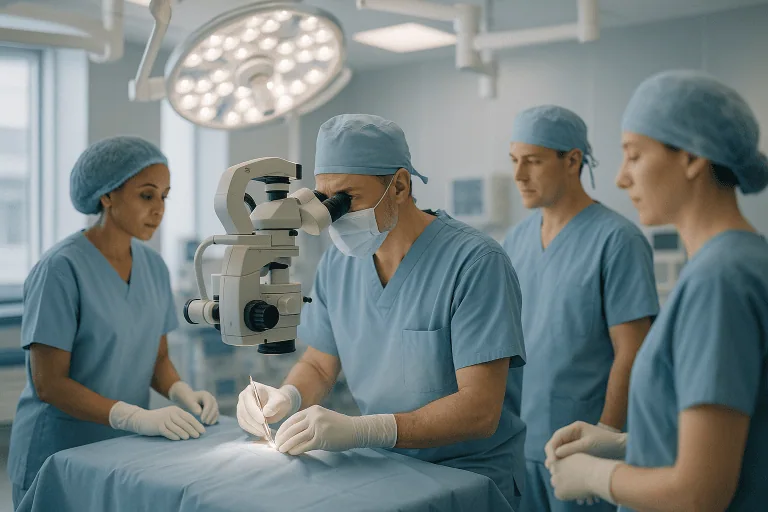
When surgery is recommended, the standard procedure is endoscopic transsphenoidal pituitary surgery. Under general anaesthesia, the neurosurgical team reaches the pituitary region through the nostril and the sphenoid sinus, the natural corridor behind the nose, so no external incision is needed in most cases. A thin endoscope provides a magnified, illuminated view of the surgical field, and specialised instruments remove the adenoma while preserving as much normal pituitary tissue as possible.
The goals are concrete: reduce or normalise growth hormone and IGF-1, relieve any pressure on the optic apparatus, obtain tissue for pathological confirmation, and preserve neurological and endocrine function. The operation typically takes a few hours, though duration varies with tumour size, anatomy, extension into surrounding areas and whether the pituitary has been operated on before. Some small, well-defined adenomas can be removed completely in one operation; larger or invasive tumours may need combined treatment afterwards, and an honest surgeon will say so before the operation, not after it.
Modern pituitary surgery depends on careful imaging, endoscopic visualisation, microsurgical technique, neuronavigation in selected cases, and close coordination with anaesthesia and endocrinology. Intraoperative judgement is highly individual: the surgeon continuously balances the value of removing more tumour against the need to protect the cavernous sinus, the carotid arteries, the optic pathways and the normal gland. Aggressive removal at any cost is not the goal; durable hormone control with preserved function is.
Medication-Based Treatment
Medication plays several roles in acromegaly, and this kind of hormone therapy is chosen and adjusted by the treating endocrinologist rather than following a fixed formula. Somatostatin receptor ligands reduce growth hormone secretion in many patients and can also help restrain tumour growth. Growth hormone receptor antagonists work differently: they block the action of growth hormone at the tissue level and lower IGF-1, without acting on the tumour itself. Dopamine agonists are useful in selected patients, particularly when hormone elevation is mild or the tumour has certain biochemical characteristics. The choice depends on hormone levels, tumour behaviour, prior response, side effects, personal preference and practical matters such as injection schedules and monitoring requirements.
Medical therapy is never fire-and-forget. The team monitors IGF-1 and growth hormone, tracks symptoms, reviews glucose metabolism and liver function where relevant, and repeats MRI at intervals. Doses are adjusted gradually by the treating doctor based on those results. Some patients use medication for a limited period before or after surgery; others need long-term therapy to maintain biochemical control. Both patterns are normal and neither represents failure.
Radiotherapy
Radiotherapy is considered when residual tumour or hormone activity persists despite surgery and medication, or when the tumour’s anatomy makes complete surgical removal impossible without unacceptable risk. Focused techniques deliver radiation to the tumour region while limiting the dose to surrounding brain structures. In some cases a highly focused single-session or few-session approach is appropriate; in others, fractionated radiotherapy over multiple sessions is the safer choice, particularly when the tumour sits close to the optic pathways.
One limitation must be stated plainly: the hormonal effect of radiotherapy is gradual. It can take months or years for the full endocrine benefit to appear, so patients usually continue medication and regular blood testing in the interval. Long-term follow-up is essential afterwards, both to confirm tumour control and to detect pituitary hormone deficiencies, which can develop years later and are treatable with replacement therapy once identified.
Hospital Stay and Early Recovery
After pituitary surgery, most patients spend a short period in hospital for observation. The team monitors neurological status, vision where relevant, fluid balance, sodium levels, urine output and early pituitary hormone function: the pituitary controls water balance, and temporary disturbances in the first days are a known, manageable phenomenon. Temporary nasal congestion, mild headache, fatigue and a reduced sense of smell are common and usually settle. Before discharge you receive specific instructions about nasal care, activity restrictions, medications, warning signs and the schedule of follow-up blood tests.
Recovery time varies. Many patients resume light daily activities within a couple of weeks after uncomplicated endoscopic surgery, while a complete return to your usual routine can take longer, depending on fatigue, hormone changes, tumour complexity and other medical conditions. Patients treated with medication alone have no surgical recovery, but they do need time for dose adjustment and symptom monitoring. After radiotherapy, most people continue their normal activities, with fatigue and long-term endocrine surveillance as the main considerations.
Why Acting Early Matters
Acromegaly develops quietly, but untreated hormone excess keeps working on the body for as long as it lasts. Early evaluation and treatment shorten the exposure to high growth hormone and IGF-1, and exposure time matters for the heart, the metabolism, the joints, the airway and overall health. The sooner hormone levels are controlled, the better the opportunity to halt the progression of complications rather than manage them after they are established.
Delay carries specific anatomical risks too. A growing adenoma can enlarge towards the optic nerves, threatening vision, or extend into the cavernous sinus, where complete surgical removal becomes difficult. Tumours that could once have been removed in a single operation may, after years of growth, require surgery plus medication plus radiotherapy to achieve the same control. Earlier treatment can also limit the development or worsening of diabetes, hypertension, sleep apnoea and cardiomyopathy.
It is important to be honest about what improves and what does not. Soft-tissue swelling, sweating, headaches and many metabolic abnormalities frequently improve after successful treatment. Established joint degeneration and bony enlargement, the changed jaw, the broadened hands, are far less reversible. That asymmetry is the strongest argument for prompt diagnosis: acting early protects function you cannot get back later.
What is the life expectancy of someone with acromegaly?
Long-standing, untreated acromegaly is associated with reduced life expectancy, driven mainly by cardiovascular and respiratory disease. When growth hormone and IGF-1 are brought under sustained control, research indicates that this excess risk falls and life expectancy moves close to that of the general population. Two conclusions follow. First, the diagnosis is serious and deserves proper treatment, not watchful drift. Second, it is not a sentence: well-controlled acromegaly is compatible with a long and active life, provided follow-up continues and associated conditions such as blood pressure, glucose and sleep apnoea are managed alongside the hormone levels.
Benefits of Acromegaly Treatment
Benefits vary with the tumour, the treatment chosen and the degree of hormone control achieved, but the goals are consistent: safer hormone levels, symptom relief, tumour control and reduced long-term risk.
| Benefit | What It Means for You |
|---|---|
| Hormone control | Lower growth hormone and IGF-1 levels reduce the ongoing effects of acromegaly on tissues, metabolism and organs. |
| Relief of pressure symptoms | If the tumour is pressing on the optic pathways or nearby structures, treatment may improve or stabilise vision, headaches and related symptoms. |
| Reduced long-term health risks | Effective control may help reduce the risks linked with heart disease, diabetes, sleep apnoea and other complications of active acromegaly. |
| Improved daily function | Less sweating, soft-tissue swelling, fatigue, snoring, hand numbness and discomfort, depending on the severity and duration of disease before treatment. |
| Personalised long-term monitoring | Regular follow-up allows the team to detect residual disease, adjust medication and manage pituitary hormone changes or associated conditions early. |
Recovery Timeline After Acromegaly Treatment
Recovery depends on whether the main treatment is surgery, medication, radiotherapy or a combination, but most patients follow a recognisable pattern: close early monitoring, a gradual return to activity, and long-term endocrine follow-up that never fully ends.
| Time Period | What Patients Can Expect |
|---|---|
| Day 1 | After pituitary surgery, close monitoring of neurological status, vision, urine output, sodium balance and early pituitary hormone function. Medication-only treatment begins with education about dosing and side effects. |
| First Week | Fatigue, nasal congestion, mild headache and activity restrictions are common after surgery. Blood tests assess the early hormone response and detect fluid or electrolyte changes. |
| First Month | Gradual return to routine activities. Follow-up visits review symptoms, pathology results and hormone levels, and decide whether additional medication or imaging is needed. |
| Three to Six Months | IGF-1 and growth hormone are reassessed, and MRI may be scheduled depending on the plan. Medication doses are adjusted if hormone levels remain elevated. |
| Longer Term | Periodic endocrine follow-up, imaging when appropriate, screening for associated conditions, and monitoring for recurrence or pituitary hormone deficiencies. |
What Influences Outcomes and a Good Result
Tumour size is one of the most important factors. Small microadenomas that are well defined and confined to the gland are generally more amenable to complete surgical removal than large macroadenomas extending into surrounding structures. Invasion of the cavernous sinus is the classic obstacle: the carotid artery and several cranial nerves run through it, and tumour tissue there often cannot be removed safely, which is precisely why medication and radiotherapy exist as second lines.
Baseline hormone levels matter as well. Very high growth hormone and IGF-1 can indicate a more active tumour and influence the likelihood of biochemical remission after surgery alone. The tumour’s receptor profile, established from the pathology specimen, helps predict which medications are most likely to work. This is why the tissue removed at surgery is not merely confirmation: it actively refines the long-term plan.
The experience of the surgical team is another decisive factor. Pituitary operations demand detailed knowledge of skull base anatomy, endocrine disease and the constant trade-off between removing tumour and preserving function. An experienced, coordinated team also recognises and manages complications early, cerebrospinal fluid leak, diabetes insipidus, low cortisol, sodium imbalance, changes in vision. These are uncommon, but they are clinically important, and how quickly they are identified shapes how well they resolve.
Follow-up quality shapes the result as much as the operation does. Acromegaly can persist even when symptoms improve, and it can recur after an initially good response. Regular IGF-1 testing, growth hormone assessment when needed, MRI surveillance and screening for associated conditions allow the team to adjust treatment before complications progress. Coordinated management of sleep apnoea, cardiovascular risk, glucose, colon screening, thyroid nodules and musculoskeletal problems belongs in the same plan.
A good result, then, is not a single scan or one reassuring blood test. It is biochemical control, stable or reduced tumour size, preserved pituitary function wherever possible, improved symptoms, reduced long-term risk, and a follow-up plan you can realistically sustain. It also means clear communication, accessible records, and a monitoring schedule that your own physician can continue between visits.
How Acromegaly Care Is Organised at Acibadem
Pituitary disease sits at the intersection of several specialties, and acromegaly care at Acibadem is built around that fact. Cases are planned through collaboration among endocrinology, neurosurgery, neuroradiology, radiation oncology, ophthalmology and cardiology, with pulmonology, gastroenterology, reproductive medicine and rehabilitation involved when symptoms require it. This matters because successful care depends not only on removing or controlling a pituitary tumour, but on managing the whole-body effects of hormone excess.
Diagnostic pathways include dedicated pituitary MRI protocols, comprehensive endocrine laboratory assessment, visual field testing where needed and careful evaluation of medical risk before anaesthesia. Surgical planning may incorporate endoscopic visualisation, image-guided navigation in selected cases and microsurgical techniques suited to a small and anatomically sensitive field. When medication or radiotherapy is part of the plan, treatment follows established evidence-based protocols, adjusted to the behaviour of your particular disease rather than applied as a template.
Acromegaly is a long-term condition, and care continues well after any single procedure. Clear discharge summaries, laboratory recommendations, medication plans and structured follow-up schedules keep the pathway intact wherever ongoing monitoring takes place, and they allow the treating team and your regular physician to work from the same information over the years of surveillance the condition requires.
One limit is worth stating plainly: no centre can promise complete tumour removal or biochemical remission in every case, and any page that implies otherwise should be read with suspicion. What an experienced pituitary team can offer is an accurate assessment of what is achievable in your specific anatomy, a realistic sequence of treatments, and honest follow-up that catches persistence or recurrence early.
Getting a Second Opinion on Acromegaly
Second opinions play a legitimate and common role in this disease, because not every pituitary adenoma should be treated the same way. Some patients need prompt surgery because vision is threatened. Some benefit from medication before or instead of an operation. Some have residual disease after previous treatment and face a genuinely finely balanced choice between repeat surgery, adjusted medication and radiotherapy. A careful independent review can clarify the diagnosis, reassess the tumour’s anatomy and set out realistic options with their trade-offs.
A second opinion is only as good as the material it reviews. The most useful package includes the actual MRI images rather than written reports alone, laboratory results with their reference ranges, operation notes and pathology reports from any previous surgery, and a complete medication history with responses and side effects. With those in hand, a pituitary team can usually answer the questions that matter most: whether the diagnosis is secure, whether the tumour is surgically accessible, how urgent treatment is, what each option would realistically achieve, and what long-term monitoring will look like.
Acromegaly is a complex condition, but it is one where careful, well-sequenced treatment makes a measurable difference to daily life and long-term health. Understanding the disease, what it is, why it happened, what each treatment can and cannot do, is the first genuinely useful step, and it is one you have already taken by reading this far.
Preparation
- Patients usually need blood tests for growth hormone and IGF-1 levels, pituitary MRI, and assessment of heart, metabolic, and sleep-related risks. An endocrinologist and neurosurgeon review the best treatment plan, which may include medication before or after surgery. Patients should share all medicines, prior imaging, and medical history before treatment.
Aftercare
- Follow-up includes repeat hormone testing, pituitary imaging, and monitoring for diabetes, blood pressure, sleep apnea, and joint symptoms. If surgery is performed, patients need wound and nasal care instructions, activity restrictions, and endocrinology follow-up. Long-term surveillance is important because hormone levels can recur or require ongoing medication.
Frequently Asked Questions
What affects the cost of acromegaly treatment?
Cost depends on the treatment plan, tumor characteristics, required imaging and hormone tests, surgeon and hospital factors, medication needs, radiotherapy requirements, length of stay, and follow-up arrangements. A personalised quote is only possible after specialist review of medical records.
How can I get a personalised quote from Acibadem?
You can request a complimentary consultation by sharing recent MRI reports, hormone test results, visual field results if available, previous treatment details, and a summary of current symptoms. The international patient team can help coordinate review by the relevant specialists.
Is surgery always included in the treatment package?
Not always. Some patients are best managed with surgery, while others may need medication, radiotherapy, or a combined plan. The final recommendation is made by a pituitary specialist team after reviewing imaging, hormone levels, general health, and treatment goals.
What is typically included in an international patient package?
Packages may include specialist consultations, selected diagnostic tests, hospital stay, the planned procedure if needed, standard nursing care, translation support, and care coordination. Medication, extended stay, additional tests, radiotherapy, and hotel or travel services may be included or billed separately depending on the plan.
Will I need follow-up after returning home?
Yes. Acromegaly usually requires long-term hormone monitoring, imaging review, and assessment of related health issues. Acibadem can advise on follow-up timing and can coordinate with your local endocrinologist where appropriate.
Medically reviewed by the Acıbadem International Medical Board August 31, 2026
See our medical review board →
Update history
- PublishedJune 8, 2026
- Medical review approvedAugust 31, 2026
- Board commentary addedAugust 26, 2026
- Last content updateSeptember 8, 2026
Trusted care for international patients
From the Acibadem Blog

How Does Acromegaly Develop From a Pituitary Adenoma, and Why Does Early Treatment Matter?
Acromegaly develops when a benign pituitary adenoma releases too much growth hormone, which drives the liver to make excess IGF-1; over years this thickens…

Recovery After Acromegaly Surgery: Nasal Care, Activity Limits and the First Hormone Checks
Acromegaly surgery recovery usually means a hospital stay of a few days, several weeks of protecting the nose (no blowing, no bending, saline rinses…