

What Causes Glioblastoma: Risk Factors, Triggers and What You Can Change
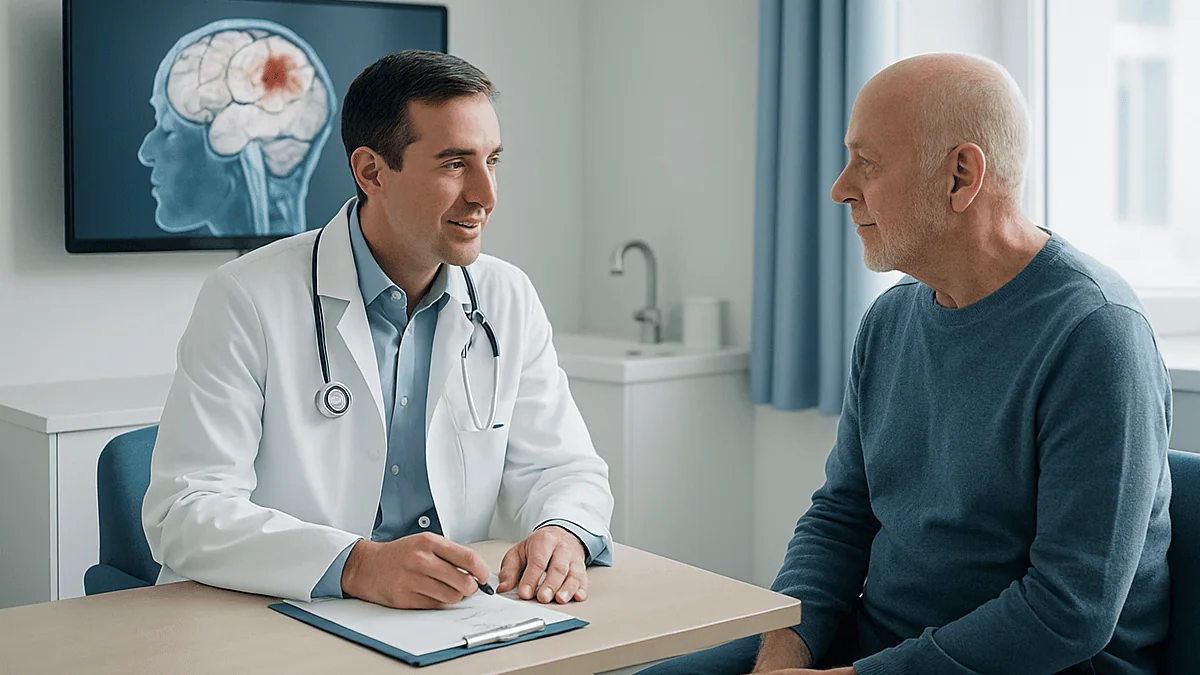
Key Takeaways
- Glioblastoma occurs in roughly 3 per 100,000 people a year, and in most cases no identifiable cause is ever found.
- Prior ionizing radiation to the head is the only established environmental risk factor, with tumors typically appearing 10 to 20 or more years after exposure.
- Inherited syndromes such as Li-Fraumeni, neurofibromatosis type 1 and Lynch syndrome explain only a small minority of cases, but a striking family cancer pattern justifies genetic counseling.
- Mobile phones emit non-ionizing radiation that cannot break DNA, and glioma rates have stayed flat despite decades of near-universal use.
- People with a history of allergies or asthma consistently show lower glioma rates in population studies, a clue that has shaped immune-based research.
- A new seizure in an adult, or a headache pattern that is worse on waking and accompanied by morning vomiting, warrants prompt medical evaluation.
In most cases, no single cause of glioblastoma can be identified. The tumor arises when glial cells in the brain acquire genetic changes that let them grow unchecked, and these changes usually happen by chance rather than because of anything a person did. The only firmly established risk factors are prior exposure to ionizing radiation to the head, a small number of inherited genetic syndromes, and older age.
The question arrives in the clinic the same way almost every time. A family has just heard the word glioblastoma, and somewhere between the scan and the door, someone asks: what did we do? Was it the phone he kept in his shirt pocket? The hair dye? The years of shift work? The silence that follows is not because doctors are hiding an answer. It is because, for this particular tumor, the honest answer is smaller and stranger than people expect.
Glioblastoma is rare, roughly 3 new cases per 100,000 people each year in the United States, and it remains one of the least explained cancers in medicine. Decades of population studies have tested dozens of suspects. Nearly all of them have been cleared.
What follows is an attempt to separate what is actually known about glioblastoma causes from what circulates online, to explain the biology in plain language, and to be candid about the few things that genuinely matter.
What is glioblastoma, and why is 'cause' a tricky word here?
Glioblastoma begins in glial cells, the support network that feeds, insulates and protects neurons. Astrocytes, the star-shaped members of that network, are the usual starting point, which is why glioblastoma is classified as a grade 4 astrocytoma, the highest grade on the World Health Organization’s scale for brain tumors. Grade 4 means the cells divide rapidly, build their own abnormal blood supply and spread finger-like into surrounding brain tissue rather than forming a neat, removable ball.
That growth pattern explains why the word ’cause’ is awkward. In lung cancer, the trail often leads back to decades of smoke. In cervical cancer, a virus. Glioblastoma leaves no such trail for most people. Cleveland Clinic and other major centers describe it plainly: in the vast majority of cases the reason a particular person develops the tumor is unknown.
Two other facts shape everything below. First, glioblastoma is a primary brain tumor, meaning it starts in the brain. It is not cancer that spread from elsewhere, and it almost never spreads outside the brain and spinal cord. Second, since 2021 the WHO has reserved the name glioblastoma for tumors without a mutation in a gene called IDH. Tumors that do carry IDH mutations, once called ‘secondary glioblastoma’, now sit in a separate category with a different outlook. That reclassification matters when you read older statistics.
What causes glioblastoma? The one-paragraph honest answer
Every cancer starts with damaged DNA in a single cell. Cells copy their genetic code billions of times over a lifetime, and each copy carries a tiny risk of error. Most errors are harmless or get repaired. A few land in genes that control growth, death or repair. When enough of the wrong errors accumulate in one glial cell, it stops responding to the body’s stop signals. That cell becomes the seed of a glioblastoma.
Where do the errors come from? Three broad sources exist for any cancer: inherited faults present from birth, environmental exposures that damage DNA, and plain copying mistakes that happen every time a cell divides. For glioblastoma, the third source dominates. This is why the tumor can appear in a marathon runner who never smoked, ate well and had no family history. It is also why guilt, though understandable, is misplaced.
Only two environmental or inherited contributors are considered established by mainstream bodies including the NHS and Mayo Clinic: earlier ionizing radiation to the head, and a handful of rare inherited syndromes. Age is the third confirmed risk factor, simply because more years mean more cell divisions and more chances for error. Everything else, from mobile phones to diet, sits in the categories of ‘studied and not supported’ or ‘studied and unclear’.
Ionizing radiation: the only proven environmental trigger
The clearest evidence for a glioblastoma cause comes, uncomfortably, from medicine itself. Children treated decades ago with radiation to the scalp for ringworm, or to the head and neck for other conditions, later developed brain tumors at higher rates than expected. Survivors of childhood leukemia who received cranial radiation show the same pattern. The tumors typically surface many years, often 10 to 20 or more, after the exposure.
Ionizing radiation, the kind delivered by radiotherapy machines, CT scanners and X-rays, carries enough energy to knock electrons off atoms and snap DNA strands directly. That mechanism is what separates it from the non-ionizing radiation of phones, Wi-Fi and microwaves, which lacks the energy to break chemical bonds.
Three things keep this risk in perspective. The dose matters enormously; therapeutic radiation to the brain delivers thousands of times more energy to that tissue than a single diagnostic scan. The absolute risk remains small even after high-dose treatment, and radiation is used only when the disease it treats poses a far larger threat. And modern radiotherapy shapes beams far more precisely than the techniques of the 1950s and 60s that generated much of the historical data.
Should you refuse a head CT your doctor recommends? No. Should you ask whether an ultrasound or MRI could answer the same question, especially for a child? That is a fair conversation, and clinicians expect it.
Does glioblastoma run in families? Inherited syndromes explained
A parent with glioblastoma does not mean a child is destined for it. Family clustering is uncommon, and when it happens, the explanation is usually one of a small number of inherited conditions that raise the risk of many cancers, not just brain tumors. Johns Hopkins and Cleveland Clinic list the main ones:
- Li-Fraumeni syndrome, caused by an inherited fault in TP53, a gene that normally halts cells with damaged DNA. Affected families see cancers of the breast, bone, soft tissue, adrenal gland and brain, often at young ages.
- Neurofibromatosis type 1, which produces skin changes and nerve-sheath tumors and modestly raises the risk of gliomas, particularly of the optic pathway.
- Lynch syndrome and Turcot syndrome, in which faulty DNA mismatch-repair genes lead to bowel cancer and, in some families, glioblastoma.
- Tuberous sclerosis, associated with a distinct, slower-growing brain tumor type but relevant to the wider glioma picture.
These syndromes explain only a small minority of glioblastomas. For the rest, a first-degree relative with the tumor does raise statistical risk slightly, but the baseline is so low that the practical change is minimal.
When would genetic counseling make sense? Patterns matter more than a single case: several relatives with cancer before 50, one person with multiple separate cancers, or brain tumors alongside bowel or sarcoma diagnoses. A genetics service can review the family tree and decide whether testing adds anything.
Age, sex and biology: the risk factors nobody chooses
Glioblastoma is overwhelmingly a disease of later adulthood. The median age at diagnosis is around 64, and incidence climbs steadily from midlife onward. Men are affected more often than women, by a ratio of roughly 1.6 to 1, a gap that appears across countries and has not been fully explained. Hormonal differences, sex-linked genes and immune variation are all under study. Incidence is also somewhat higher in white populations than in Black, Asian or Hispanic populations in US registry data, for reasons that remain unclear.
| Factor | Strength of evidence | What it means for you |
|---|---|---|
| Prior ionizing radiation to the head | Established | Relevant mainly to people treated with cranial radiotherapy, often in childhood |
| Inherited syndromes (Li-Fraumeni, NF1, Lynch/Turcot) | Established | Rare; consider genetic counseling if family cancer patterns are striking |
| Older age | Established | Most cases occur after 55; not modifiable |
| Male sex | Established association | Modestly higher incidence; mechanism unknown |
| History of allergies or asthma | Consistent inverse association | Appears protective in studies; not a preventive strategy |
| Mobile phone use | Not supported | Large studies show no rise in incidence |
| Diet, smoking, alcohol, head injury | Not supported or inconclusive | No consistent link found |
Notice what the table does not contain: anything most people can act on. That is the frustrating truth of this tumor and also, in its own way, a release from blame.
Do cell phones cause glioblastoma?
This is the question families ask most, and the answer has become clearer, not murkier, over the past 15 years. Mobile phones emit radiofrequency energy, a form of non-ionizing radiation. It can warm tissue very slightly; it cannot break DNA. That mechanistic point is the first strike against a causal link.
The second comes from population data. Mobile phone use exploded from near zero in the early 1990s to near-universal today. If phones caused brain tumors, national cancer registries in the US, UK and Nordic countries should have registered a rise in glioma incidence, particularly in the temporal lobe nearest the ear, with a delay of a decade or so. They have not. Rates have stayed essentially flat, with small shifts largely explained by better imaging and aging populations.
Why does the worry persist? In 2011 the WHO’s cancer research agency classified radiofrequency fields as ‘possibly carcinogenic’, its Group 2B. That sounds alarming until you learn the same group includes pickled vegetables and aloe vera extract. The classification reflects limited and inconsistent evidence, not demonstrated harm. The WHO’s own fact sheet states that no adverse health effects have been established from mobile phone use.
If you want to reduce exposure anyway, using speaker mode or wired headphones cuts the energy reaching the head dramatically. That is a personal choice, not a medical recommendation, and it should not be sold as prevention.
Can diet, smoking, alcohol or stress trigger glioblastoma?
Lifestyle explains a large share of many common cancers. For glioblastoma, the search has come up almost empty, and it is worth saying so directly.
Smoking, the most studied carcinogen in history, shows no consistent association with glioma in large cohort studies. Alcohol, likewise, has not been convincingly linked. Diet has been examined from many angles: cured meats containing nitrites, which can form nitrosamines that damage DNA in laboratory settings, drew early interest in the 1990s, but follow-up studies produced weak and contradictory results. Artificial sweeteners, coffee and tea have all been tested with no reliable signal.
Stress deserves a separate word because it is so often blamed. Chronic stress affects sleep, blood pressure and mood, and those matter for overall health. No credible evidence shows that stress causes brain tumors. The same is true for hair dye, a rumor that traces back to small older studies that later, larger ones did not confirm.
Occupational exposures are the one lifestyle-adjacent area with lingering questions. Some studies have hinted at slightly elevated glioma rates in people with long-term exposure to certain industrial chemicals, including vinyl chloride and some pesticides, but results are inconsistent and the absolute risks small. Regulatory limits on these substances exist for many reasons; glioblastoma prevention is not clearly among them.
The practical upshot: eating well, moving daily and not smoking are excellent ideas for your heart, lungs and dozens of other cancers. They are not a shield against this one.
Head injuries, infections and other rumored triggers
Someone develops a brain tumor a year after a car crash, and the mind draws a line between the two. The line is understandable but not supported. Multiple large studies have compared people with and without documented head injuries and found no meaningful increase in glioma. What does happen is that the injury prompts a scan, and the scan finds a tumor that was already there. Detection is not causation.
Viruses have been a more serious scientific question. Cytomegalovirus, a common herpesvirus most adults carry silently, has been found inside glioblastoma tissue in some laboratory studies but not others, and researchers still disagree about whether it plays any role in growth or is simply a bystander. No virus is currently accepted as a cause of glioblastoma, unlike the clear viral links behind cervical or liver cancer.
Power lines and household electromagnetic fields belong to the same category as mobile phones: non-ionizing, extensively studied, no established connection to brain tumors in adults.
Then there are the things that were never plausible but travel fast online: aspartame, fluoride, aluminum cookware, vaping. None has evidence linking it to glioblastoma. The Cleveland Clinic and Mayo Clinic pages on this tumor list the established risk factors in a few short lines. The brevity is the message.
The unexpected allergy connection
Buried in the epidemiology of glioma is one finding that reappears study after study, and it points the opposite direction from everything else. People with a history of allergies, asthma, eczema or hay fever appear less likely to develop glioma, including glioblastoma, than people without them. The reduction is modest, and observational research cannot prove cause and effect, but the consistency across populations makes it hard to dismiss.
The leading explanation involves immune surveillance. An allergic immune system is, in a sense, overactive, quick to respond to harmless proteins. The hypothesis is that this heightened vigilance also makes the immune system more likely to detect and destroy abnormal glial cells early, before they organize into a tumor. Some studies have found that people with higher levels of IgE, the antibody behind allergic reactions, have lower glioma rates.
A competing idea flips the arrow. Glioblastoma is known to suppress immune activity in its surroundings, and some researchers suspect a developing tumor may quiet allergic symptoms years before diagnosis, making it look as though allergies protect when in fact the tumor is erasing them.
What should a reader do with this? Nothing, in terms of behavior. Nobody should seek out allergies or avoid treating them. The finding matters because it is one of the few real clues about what drives this tumor, and it has fed directly into research on immune-based approaches, an area where progress has been slow but continues.
What goes wrong inside the cell: the mutations that drive glioblastoma
If environmental causes are mostly absent, the story shifts inward, to the genome of the tumor itself. Sequencing thousands of glioblastomas has revealed a recognizable set of broken parts.
Think of a cell as a car. Some genes are the accelerator; others are the brakes. In glioblastoma, the accelerator gene EGFR is frequently amplified or altered, telling the cell to grow even when no growth signal arrives. The brakes fail too: TP53, PTEN and CDKN2A, genes that normally pause division or trigger cell death when DNA is damaged, are commonly deleted or mutated. Most glioblastomas also reactivate telomerase, an enzyme that rebuilds the protective caps on chromosomes, allowing cells to divide indefinitely instead of aging out.
The tumor’s blood supply is part of the picture. Glioblastoma cells release signals that recruit new vessels, which is why the tumor’s center often outgrows its supply and dies, leaving the dead core that gives the tumor its historical name, ‘multiforme’.
Two features complicate things. Glioblastoma is genetically diverse within a single tumor; cells on one side may carry different mutations from cells on the other, which is one reason it resists therapies aimed at a single target. And a fraction of tumors show a chemical marker on a repair gene called MGMT; its presence influences how tumors respond to certain treatments and is tested routinely, though decisions about what that means for an individual belong with the treating team.
None of these mutations is inherited in typical cases. They are acquired, in one cell, over time.
Can glioblastoma be prevented?
Not in any reliable way, and anyone selling a prevention program for this tumor is selling something the evidence does not support. Cancer prevention works when a cause is known and avoidable: quit smoking, get vaccinated against certain viruses, use sunscreen. Glioblastoma has no equivalent lever for the general population.
The closest thing to prevention applies to a narrow group. Avoiding unnecessary ionizing radiation to the head, especially in childhood, is sensible, and modern imaging guidelines already push clinicians toward the lowest useful dose and toward MRI or ultrasound when they can answer the question. Radiation oncologists shape treatment fields to spare healthy brain as much as possible. These are professional standards rather than personal choices, but patients and parents can ask about them.
For families with a known inherited syndrome such as Li-Fraumeni, surveillance imaging is sometimes offered. Its aim is earlier detection, not prevention, and the schedule is decided case by case by a genetics or oncology team.
There is no screening test for brain tumors in people without symptoms, and none is recommended. The tumor is too rare, and the harms of scanning millions of healthy people, including false alarms and incidental findings, would outweigh the benefit.
What remains is general health, which is worth pursuing for its own sake. A body that is well nourished, active and not smoking handles surgery, radiotherapy and recovery better. That is not prevention, but it is not nothing.
What is the first symptom of glioblastoma?
There is no single first symptom, because the brain is not a single organ. Where the tumor sits determines what fails first. That said, a few patterns recur often enough that clinicians recognize them.
Headache is the most common opening complaint, present in roughly half of people at diagnosis according to descriptions from the NHS and major US centers. It tends to differ from ordinary tension or migraine headaches: worse in the morning or on waking, aggravated by coughing, bending or straining, and gradually more frequent over weeks. It often comes with nausea or vomiting that has no stomach explanation.
A seizure in an adult with no history of epilepsy is the other classic presentation, and it is the symptom most likely to bring someone to emergency care quickly. Seizures may be dramatic, with loss of consciousness and shaking, or subtle: a brief episode of confusion, an odd smell, a twitching hand.
The remaining symptoms map to location. A tumor in the frontal lobe may first show as personality change, apathy or poor judgment noticed by family before the person notices anything. Temporal lobe tumors can affect memory and language. Parietal tumors produce numbness or clumsiness on one side. Occipital tumors blur or narrow vision.
Because glioblastoma grows fast, symptoms usually develop over weeks to a few months rather than years. Slow, stable symptoms present for a decade point elsewhere.
When to see a doctor: red-flag signs that need same-day attention
Most headaches are not brain tumors. Most forgetfulness is not either. The goal here is not to send every reader for a scan but to describe the specific combinations that warrant prompt evaluation.
Seek urgent or emergency care the same day for any of the following: a first-ever seizure; sudden weakness, numbness or drooping on one side of the face or body; sudden difficulty speaking or understanding speech; sudden loss or doubling of vision; a severe headache that arrives like a thunderclap; or new confusion or drowsiness that is hard to rouse. Several of these overlap with stroke, which is another reason not to wait.
Book a prompt appointment, within days rather than weeks, for a new or changed headache pattern lasting more than a couple of weeks, especially one that wakes you, worsens with straining, or comes with morning vomiting; progressive clumsiness or a change in handwriting or gait; a personality or behavior shift that others have commented on; or memory or language problems that are clearly getting worse over weeks.
A primary care clinician will examine reflexes, eye movements, coordination and the back of the eye, where raised pressure inside the skull can sometimes be seen. If anything concerns them, brain imaging follows. In the UK, guidelines direct urgent referral for suspected brain tumor within two weeks. Most of these referrals turn out to be something else. The system is built to tolerate that.
Is glioblastoma the deadliest cancer, and has anyone survived it?
Both questions deserve straight answers.
Glioblastoma is among the most aggressive cancers known, but ‘deadliest’ depends on how you measure. By number of deaths, lung cancer kills far more people simply because it is far more common. By outlook for the individual diagnosed, glioblastoma sits near the bottom alongside pancreatic cancer and a few others. Median survival with standard treatment is around 15 months, and fewer than 1 in 10 people are alive five years after diagnosis, figures reported by Cleveland Clinic and consistent with US registry data. Those numbers are averages across everyone, including people who were very elderly or too unwell for full treatment at diagnosis.
Has anyone survived? Yes. A small but real group of people live five, ten and occasionally more years. They tend to be younger, to have tumors that could be extensively removed, to be fit enough to complete radiotherapy and chemotherapy, and to have certain molecular features in their tumor. Researchers study these long-term survivors closely because their biology may hold clues.
Two cautions matter. Survival statistics describe populations, not people, and are always a few years out of date by the time they are published. And no clinician can promise an individual outcome; anyone who does should be viewed skeptically. What can be said honestly is that treatment has extended life meaningfully compared with a generation ago, that quality of life during treatment is a central goal, and that clinical trials are open to many patients.
What you can actually change, and what you can let go of
A reader who has made it this far may feel the article has taken more away than it gave. So here is the ledger, honestly kept.
You can question unnecessary head imaging, particularly for children, and ask whether a non-radiation alternative would work. You can take a striking family cancer history to a genetics service rather than guessing. You can learn the handful of red-flag symptoms above and act on them without embarrassment, knowing that most will turn out benign and that early evaluation matters for the few that do not. You can maintain the general fitness that makes any treatment easier to withstand.
You can also let go of a longer list. The phone. The diet. The stress of a hard year. The fall from a bicycle. The hair dye, the sweetener, the microwave, the Wi-Fi router. None of these caused a glioblastoma, and carrying them adds weight to an already heavy diagnosis.
The most useful thing to change may be the question itself. ‘What did we do?’ has no answer. ‘What do we do now?’ has several: a specialist team, a clear explanation of the tumor’s molecular profile, an honest conversation about goals, and a look at whether a clinical trial fits. Those are the levers that exist. For a disease this poorly understood, knowing which levers are real is its own form of care.
Frequently asked questions
Can glioblastoma be prevented?
No reliable way to prevent glioblastoma exists. The tumor usually arises from random genetic errors in glial cells rather than from anything a person did or was exposed to. Avoiding unnecessary ionizing radiation to the head, especially in childhood, is the only modifiable factor with real evidence behind it. Healthy habits benefit overall health and treatment tolerance but have not been shown to lower glioblastoma risk.
Has anyone ever survived stage 4 glioblastoma?
Yes, a small proportion of people live five, ten or more years after a glioblastoma diagnosis. Long-term survivors tend to be younger, to have had most of the tumor removed surgically, to have completed radiotherapy and chemotherapy, and to have favorable molecular features in the tumor. Median survival is around 15 months, so these cases are the exception, but they are real and closely studied.
What is the first symptom of glioblastoma?
There is no single first symptom because it depends on where the tumor grows. Headache is the most common initial complaint, often worse on waking, aggravated by straining, and accompanied by nausea. A first seizure in an adult is another frequent presentation. Other early signs include personality change, one-sided weakness or numbness, speech difficulty and vision changes, typically developing over weeks to a few months.
Is glioblastoma the deadliest cancer?
It is among the most aggressive, but not the biggest killer. Lung cancer causes far more deaths because it is far more common. Measured by outlook for the individual, glioblastoma ranks near the bottom alongside pancreatic cancer, with fewer than 1 in 10 people alive five years after diagnosis. Those figures are averages across all ages and health states and cannot predict any single person’s course.
Do cell phones cause glioblastoma?
Current evidence does not support a link. Phones emit non-ionizing radiofrequency energy that lacks the power to break DNA, and national cancer registries have shown no rise in glioma incidence during decades of widespread mobile phone use. The WHO’s 2011 ‘possibly carcinogenic’ label reflected limited, inconsistent data rather than proven harm, and the WHO states no adverse health effects from mobile phone use have been established.
Is glioblastoma hereditary?
Rarely. Most glioblastomas arise from acquired mutations in a single cell and are not passed down. A small minority occur in families with inherited syndromes such as Li-Fraumeni, neurofibromatosis type 1, Lynch or Turcot syndrome, which raise the risk of several cancers. A single relative with glioblastoma increases risk only slightly; multiple early cancers across a family are the pattern that merits genetic counseling.
Can a head injury cause glioblastoma?
No consistent evidence links head injury to glioblastoma. Large studies comparing people with and without documented head trauma have found no meaningful increase in glioma. When a tumor is discovered after an injury, it is almost always because the injury prompted a brain scan that revealed a tumor already present. The timing creates an illusion of cause that the data do not support.
Does radiation from CT scans cause glioblastoma?
Ionizing radiation is the only established environmental risk factor, but the evidence comes mainly from high-dose therapeutic radiation to the head, not from diagnostic scans. A single CT delivers a tiny fraction of that dose, and the absolute added risk is very small. It is still reasonable to ask whether an MRI or ultrasound could answer the same clinical question, particularly for children.
What is the difference between glioblastoma and other gliomas?
Glioblastoma is the highest-grade glioma, grade 4 on the WHO scale, meaning it grows fastest and spreads most diffusely into surrounding brain. Lower-grade gliomas grow more slowly and often carry a mutation in the IDH gene. Since 2021, the WHO reserves the name glioblastoma for grade 4 astrocytomas without IDH mutation; IDH-mutant tumors are classified separately because their behavior and outlook differ.
How quickly does glioblastoma develop?
Glioblastoma is fast-growing, and symptoms typically emerge over weeks to a few months rather than years. This rapid course is why a new, progressive headache pattern, a first adult seizure, or worsening neurological changes over a short period warrant prompt evaluation. Symptoms that have been stable for many years point to other explanations. The exact speed varies between tumors and cannot be predicted for an individual.
References
This article is for general information only and is not a substitute for professional medical advice. Please consult a qualified doctor about your individual situation.

More from the Blog

AI in Healthcare: What It Already Does in Hospitals, and Where It Falls Short
AI in healthcare currently helps hospitals read medical images, flag patients at risk of deterioration such as sepsis, draft clinical notes from recorded visits,…
Home Blood Pressure Monitors: Wrist vs Arm and How to Take a Reading That Counts
For most adults, the best home blood pressure monitor is an automatic upper-arm cuff that has passed independent validation testing and fits your arm…

Telehealth: What Can Be Diagnosed on a Video Call and What Cannot
Telehealth can reliably assess conditions a clinician diagnoses mostly by history and by looking: many rashes, mental health concerns, medication follow-ups, chronic disease check-ins…
Recovering from Radiotherapy: How Long Until You Feel Better
Most people start to feel noticeably better within a few weeks of their last radiotherapy session, although side effects such as fatigue and skin…

Patient Portals: How to Read Your Own Lab Results Without Panicking
A patient portal is the secure website or app your health system uses to show you appointments, messages, and test results, and since 2021…
Over-the-Counter CGMs: What Glucose Data Means for People Without Diabetes
Over-the-counter continuous glucose monitors such as Stelo and Lingo show adults without diabetes how blood sugar rises and falls through the day. For most…