Squatting: What Patients Need to Know

Squatting is a normal movement pattern, but comfort and depth vary from person to person. Pain while squatting often relates to the knees, hips, ankles, lower back, or surrounding muscles.
Key Takeaways
- Squatting is a normal movement pattern, but comfort and depth vary from person to person.
- Pain while squatting often relates to the knees, hips, ankles, lower back, or surrounding muscles.
- Good mobility, strength, balance, and technique all affect how easily a person can squat.
- Sudden pain, swelling, locking, or inability to bear weight should be assessed by a doctor.
- Treatment depends on the cause and may include exercise therapy, activity changes, medication, or specialist care.
Squatting is a common body position used for sitting, lifting, exercise, and daily tasks. For many people it is normal, but pain, stiffness, instability, or inability to squat comfortably may suggest a muscle, joint, or mobility problem that deserves medical attention.
Overview: what squatting means in health
Squatting is the movement of bending the hips, knees, and ankles to lower the body toward the ground. It is part of many everyday activities, such as picking up an object, using the toilet, gardening, playing with children, or exercising. In health discussions, squatting may refer either to a normal movement pattern or to symptoms a person notices while trying to perform that movement.
For many people, squatting is safe and natural. However, not everyone can squat deeply or comfortably. Age, flexibility, strength, body proportions, past injuries, joint disease, and balance all influence how a person squats. A limited squat does not always mean there is a disease, but pain or loss of function should not be ignored.
Patients often ask whether squatting itself is harmful to the knees or hips. In most cases, normal squatting with appropriate form is not harmful. Problems are more likely when there is an underlying condition, poor movement mechanics, overuse, a recent injury, or weakness in the muscles that support the joints.
What is normal and what is not
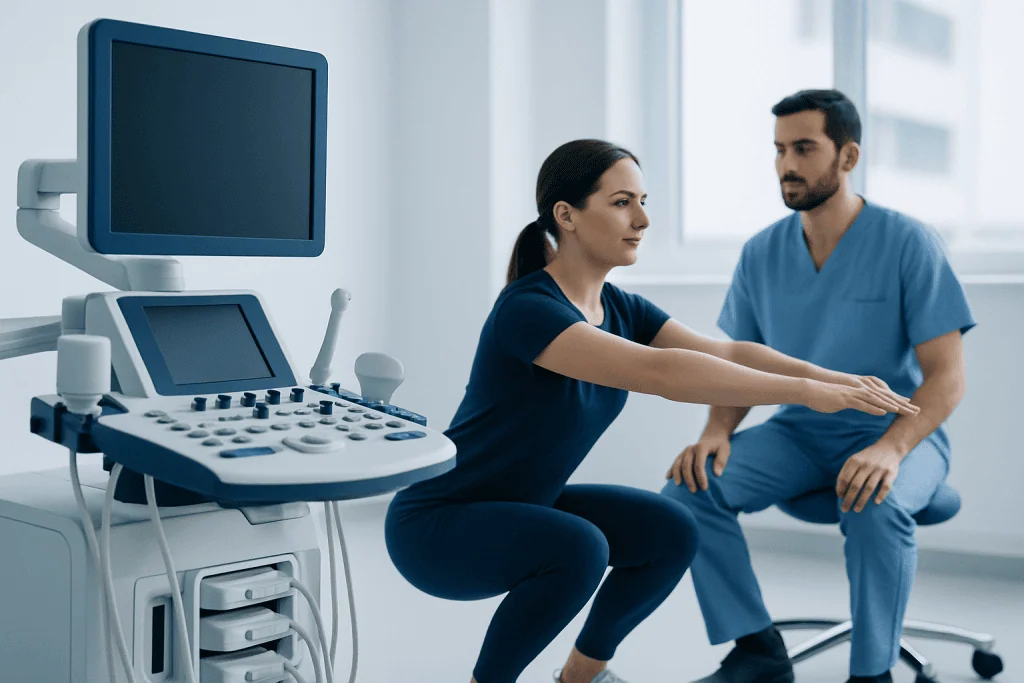
There is a wide range of normal when it comes to squatting. Some people can perform a deep squat with their heels flat on the floor, while others naturally stop higher because of ankle mobility, hip structure, muscle tightness, or balance. A comfortable, controlled squat without pain is usually a reassuring sign, even if the squat is not very deep.
Symptoms that may suggest a problem include pain during or after squatting, stiffness that limits movement, clicking with discomfort, the feeling that the knee may give way, or swelling after activity. Trouble getting up from a squat can also suggest weakness, joint pain, or reduced coordination.
It can help to notice where the symptom is felt. Pain at the front of the knee may suggest irritation around the kneecap, while pain in the groin or outer hip may come from the hip joint or nearby tendons. Tightness in the ankle or calf can make the movement feel restricted. Lower back discomfort during squatting may point to posture, core weakness, or spinal strain rather than a problem in the legs alone.
- Usually normal: mild effort, muscle fatigue after exercise, slight differences between sides
- Less typical: sharp pain, swelling, locking, buckling, numbness, or sudden loss of movement
- Worth discussing with a doctor: pain that lasts, worsens, or interferes with daily activities
Common causes of pain or difficulty while squatting
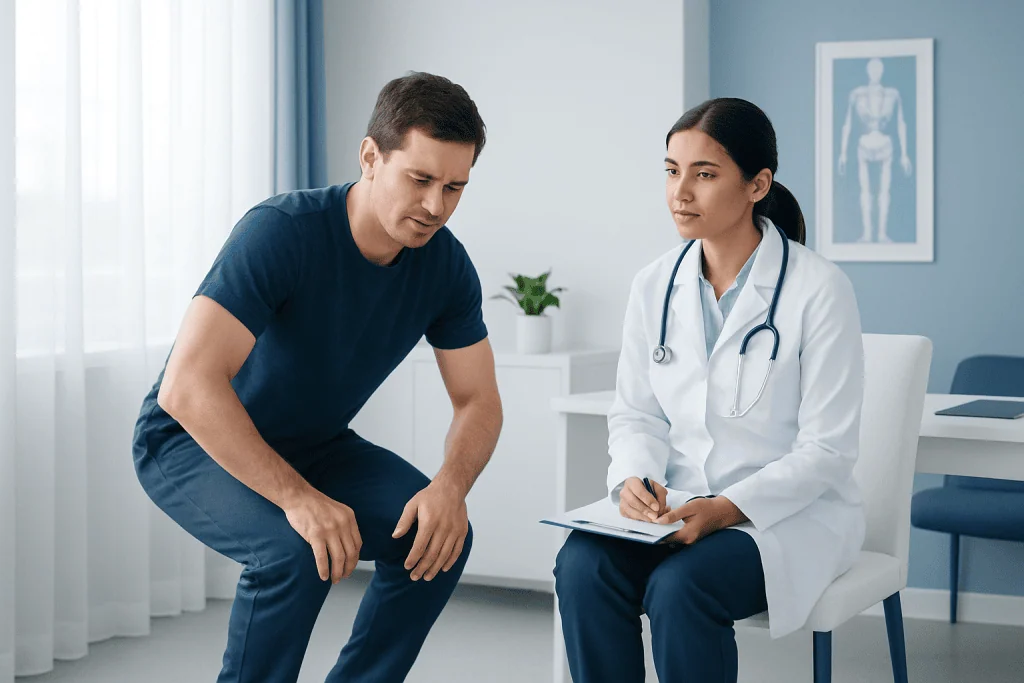
Several structures work together during a squat, so symptoms can come from different areas. The knees are a common source. Pain may be related to overuse around the kneecap, cartilage wear, tendon irritation, meniscus injury, or knee osteoarthritis. The hips can also contribute, especially if there is arthritis, impingement, muscle strain, or reduced joint mobility.
The ankles play an important role because they must bend enough to allow the body to lower smoothly. Limited ankle motion can shift stress upward to the knees or lower back. Tight calf muscles, previous ankle sprains, or arthritis can all reduce ankle mobility. Weakness in the hips, thighs, or core may also make squatting feel unstable or awkward.
Sometimes the problem is related to training load rather than a structural disease. Repetitive deep squats, poor lifting technique, sudden increases in exercise intensity, or returning to activity too quickly after injury can strain tissues. In other cases, a more general condition such as obesity, deconditioning, inflammatory joint disease, or a nerve problem may be involved.
Children can present differently. In some congenital heart conditions, the term “squatting” may describe a child who instinctively squats during a cyanotic spell to improve circulation temporarily. This is a very different medical context from exercise or mobility-related squatting and needs prompt pediatric cardiac assessment.
How doctors evaluate squatting problems
Assessment begins with a careful history. A doctor will usually ask when the symptom started, whether there was an injury, where the pain is located, what movements trigger it, and whether there is swelling, locking, or weakness. They may also ask about exercise habits, work demands, footwear, prior joint problems, and general health conditions such as arthritis or diabetes.
The physical examination often includes watching the person squat, checking joint range of motion, testing muscle strength, and feeling for tenderness or swelling. Balance, gait, posture, and leg alignment may also be reviewed. This can help identify whether the main issue is in the knee, hip, ankle, lower back, or surrounding soft tissues.
Imaging is not always necessary. If symptoms are persistent, severe, or related to trauma, a doctor may recommend tests such as X-rays to look at bones and arthritis changes, or MRI to assess cartilage, ligaments, tendons, or the meniscus. In selected situations, blood tests may be used if inflammatory or metabolic causes are suspected.
When symptoms appear linked to a specific joint problem, specialist evaluation may be helpful. For example, persistent knee symptoms may need knee replacement assessment in advanced arthritis, while significant hip joint disease may lead to consideration of hip replacement in carefully selected patients.
Treatment options depend on the cause
Treatment is guided by the reason for the problem rather than by squatting itself. Many people improve with simple measures such as reducing aggravating activity for a short time, applying ice after strain, and using doctor-recommended pain relief. Rest does not usually mean complete inactivity; instead, it means avoiding movements that worsen symptoms while staying gently active.
Exercise therapy is often central to recovery. A physical therapist may work on hip, thigh, and core strengthening, ankle mobility, balance, and squat mechanics. Small changes in foot position, squat depth, stance width, or trunk posture can reduce strain and improve control. When tissues are irritated, a gradual return to squatting is usually safer than pushing through pain.
If there is an underlying joint disorder, treatment may include weight management, supportive footwear, braces in selected cases, anti-inflammatory treatment, or injections recommended by a specialist. People with persistent pain from arthritis, meniscus damage, or other structural conditions may benefit from orthopedic review, including options such as robotic knee replacement when clinically appropriate.
Surgery is not the first step for most patients, but it may be needed if there is advanced joint damage, major ligament injury, severe meniscal tearing, or symptoms that do not improve with non-surgical care. The best approach depends on the diagnosis, age, activity goals, and overall health.
Prevention and self-care for healthier squatting
Protecting comfort during squatting usually starts with basic movement habits. Warming up before exercise, increasing training gradually, and avoiding sudden heavy loads can reduce strain. People who sit for long periods may benefit from regular mobility work for the hips, calves, and ankles, because stiffness in these areas commonly affects squat form.
Strength matters as much as flexibility. Strong thigh, hip, and core muscles help control the motion and reduce excess stress on the knees and back. It is also helpful to wear stable, supportive shoes for activities that involve repeated squatting or lifting. In some cases, a doctor or physical therapist may suggest temporary modifications such as shallower squats or using support while symptoms settle.
For daily life, patients should aim for smooth, controlled movement rather than forcing depth. If a person feels pinching, sharp pain, or repeated instability, stopping the activity is sensible. Ongoing symptoms may point to conditions such as hip arthritis or other musculoskeletal issues that deserve proper evaluation rather than repeated self-testing.
- Warm up before sports or gym training
- Build strength gradually
- Work on ankle and hip mobility
- Use good lifting and exercise technique
- Do not ignore swelling or persistent pain
When to seek medical care
Medical care is recommended if squatting causes ongoing pain, swelling, stiffness, or reduced function that lasts more than a few days or keeps returning. A patient should also seek advice if symptoms make it hard to work, exercise, climb stairs, stand up from a chair, or carry out normal daily activities.
Prompt medical assessment is especially important after a fall, twist, or sports injury if there is marked swelling, bruising, a popping sensation, or inability to bear weight. Locking of the knee, sudden instability, deformity, fever with joint pain, or numbness should also be checked without delay.
International patients who need assessment for persistent joint or mobility problems may benefit from coordinated specialist care. Acibadem International’s multidisciplinary teams in JCI-accredited hospitals evaluate and treat musculoskeletal conditions for patients traveling from abroad.
Frequently asked questions
Is squatting bad for the knees?
For most people, squatting is not inherently bad for the knees. It becomes a concern when there is poor technique, excessive load, overuse, or an underlying joint problem such as arthritis or a meniscus injury.
Why do my knees hurt when I squat?
Knee pain while squatting can come from the kneecap joint, tendons, cartilage wear, meniscus problems, or weakness in the muscles that support the knee. The exact cause depends on where the pain is felt, how long it lasts, and whether there are other symptoms like swelling or instability.
Can everyone do a deep squat?
No. Deep squatting ability varies based on ankle mobility, hip structure, balance, muscle strength, prior injuries, and overall flexibility. Some people can squat deeply with ease, while others are more comfortable at a partial depth without this meaning something is wrong.
Should a person keep squatting through pain?
In general, sharp or worsening pain should not be pushed through. Mild muscle effort is expected during exercise, but joint pain, swelling, or instability suggests the movement should be modified and, if symptoms persist, assessed by a clinician.
What doctor should evaluate pain while squatting?
A primary care doctor, sports medicine physician, orthopedic specialist, or physical therapist may evaluate this problem depending on the symptoms. If there was a recent injury, marked swelling, or inability to bear weight, more urgent assessment may be needed.
Can squatting improve health?
Yes, when done safely and appropriately, squatting can help build leg strength, support mobility, and improve function in daily life. The movement should be adapted to the person’s body, fitness level, and any medical conditions.
References
- American Academy of Orthopaedic Surgeons
- National Institute of Arthritis and Musculoskeletal and Skin Diseases
- MedlinePlus
- National Health Service
- World Health Organization
This article is for general information only and is not a substitute for professional medical advice. Please consult a qualified doctor about your individual situation.
Joint and spine care in Turkey — expert assessment & treatment
JCI-accredited · board-certified surgeons · reply within 24h

More from the Health Library


Related Specialists

Dr. Aytan Seydalıyeva
Infectious Diseases and Clinical Microbiology
Ceren Keser
Physical Medicine & Rehabilitation
Dr. Firat Beğde
Pediatrics
Dr. Ali Recai Bitkay
Emergency Service