

Muscle Testing: A Complete Medical Overview

Muscle testing is a structured medical exam that evaluates strength and movement, not a standalone diagnosis. It is often used alongside history-taking, neurological examination, and imaging or nerve studies when needed.
Key Takeaways
- Muscle testing is a structured medical exam that evaluates strength and movement, not a standalone diagnosis.
- It is often used alongside history-taking, neurological examination, and imaging or nerve studies when needed.
- Results can help identify injury, nerve problems, muscle disease, pain-related weakness, or deconditioning.
- Manual muscle testing is common, but some people may also need electromyography or imaging for a clearer diagnosis.
- Persistent weakness, worsening pain, numbness, or sudden loss of function should be assessed by a doctor.
Muscle testing is a medical assessment used to check muscle strength, balance between muscle groups, and how well nerves and joints support movement. It helps clinicians understand the cause of weakness, pain, fatigue, or reduced function and can be part of a broader neurological or orthopedic evaluation.
Overview: what muscle testing means in medicine
Muscle testing is a clinical method used to evaluate how well a muscle or muscle group works during movement or against resistance. In everyday medical practice, it usually refers to a structured physical examination in which a doctor or physiotherapist asks a person to move a body part and then gently applies resistance to assess strength. The goal is to understand whether weakness is present, how severe it is, and whether it may be related to pain, injury, nerve dysfunction, joint disease, or a muscle disorder.
This type of testing is commonly used in neurology, orthopedics, rehabilitation, sports medicine, and general physical examinations. It can help distinguish between true loss of strength and difficulty moving because of pain, stiffness, poor endurance, or limited joint motion. On its own, muscle testing does not provide a complete diagnosis, but it often gives important clues that guide the next steps.
Muscle testing may be performed during an assessment for back pain, shoulder problems, gait changes, falls, numbness, suspected nerve compression, or general fatigue. It can also be part of follow-up care after surgery, injury, or prolonged illness. When symptoms suggest a more complex condition, clinicians may combine the examination with tests such as electromyography (EMG), imaging, or laboratory studies.
How muscle testing is done
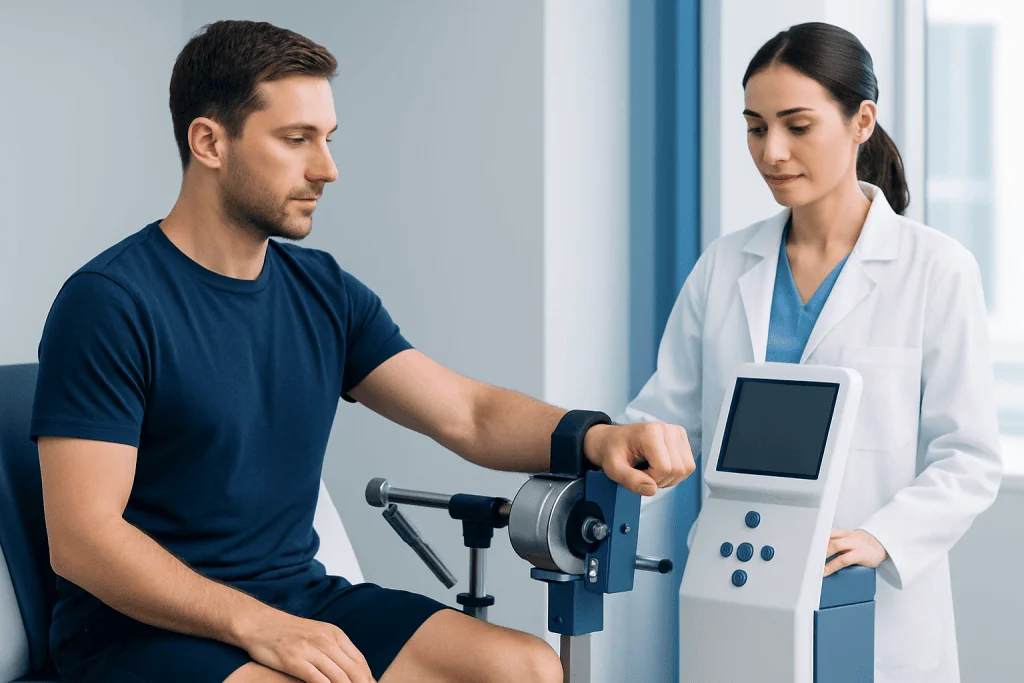
The most familiar form is manual muscle testing. During this exam, the clinician asks the patient to move a specific body part, such as lifting the arm, straightening the knee, or pushing the foot upward. The examiner then applies measured resistance and compares the effort on both sides of the body. This helps show whether a muscle can move fully, whether it can resist pressure, and whether weakness is mild or more pronounced.
Muscle strength is often graded on a standard scale, commonly from 0 to 5. A lower grade may indicate no movement, movement without the ability to resist gravity, or movement with only limited resistance. A normal grade generally means the muscle can complete the motion and hold against full resistance in that clinical setting. The score is interpreted together with symptoms, reflexes, sensation, posture, and range of motion.
In some situations, more detailed testing is needed. Handheld dynamometers can provide objective strength measurements, especially during rehabilitation or sports recovery. If the concern is not just strength but also how muscles and nerves communicate, doctors may recommend a neurological evaluation and electrodiagnostic testing. This is especially helpful when weakness is unexplained, progressive, or associated with numbness, muscle wasting, or abnormal reflexes.
What muscle testing can help evaluate
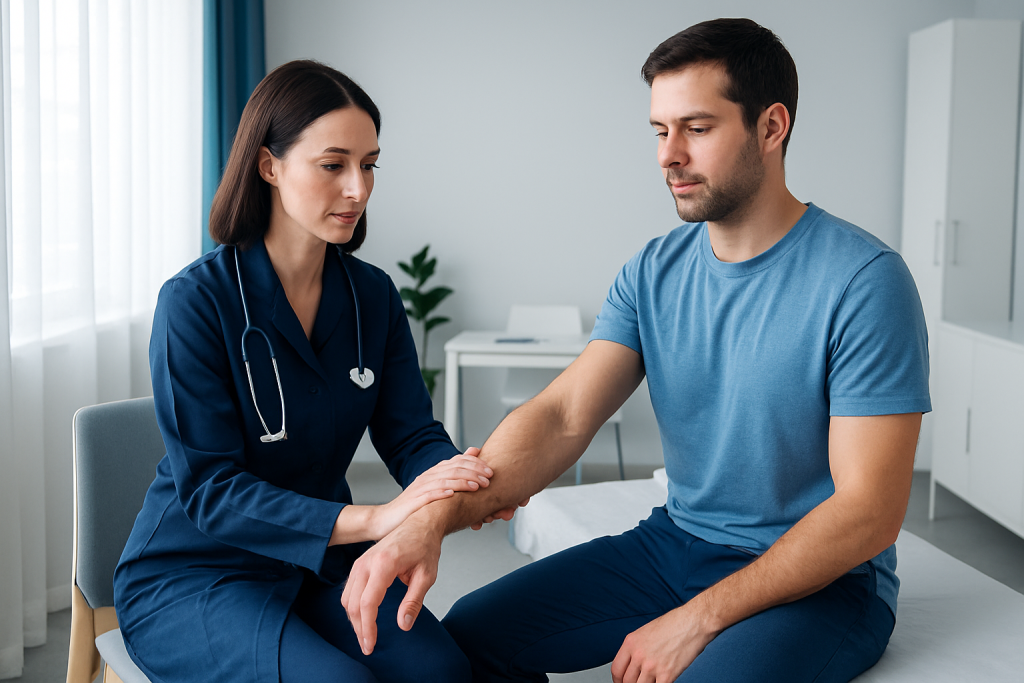
Muscle testing is useful because many different health problems can affect strength. A person may notice difficulty climbing stairs, opening jars, raising the arms, standing from a chair, or walking normally. Testing can help localize the problem by showing whether weakness is widespread or limited to a particular muscle group, side of the body, or pattern linked to a nerve root or peripheral nerve.
Clinicians often use the findings to look for signs of musculoskeletal injury, tendon damage, nerve compression, stroke-related weakness, or a primary muscle condition. For example, weakness around the shoulder may be related to rotator cuff injury or pain inhibition, while weakness in a hand pattern may suggest nerve entrapment. Weakness in the legs combined with changes in sensation or reflexes may point toward spine or nerve involvement, including conditions such as a herniated disc.
The test can also support rehabilitation planning. By identifying which movements are weak or imbalanced, the care team can tailor exercise, physical therapy, and monitoring. In this way, muscle testing is not only about diagnosis but also about tracking recovery, function, and response to treatment over time.
Causes of abnormal muscle testing results
An abnormal result does not always mean there is a disease of the muscle itself. Weakness may occur because of pain, inflammation, joint instability, or limited motion that prevents full effort. It can also result from inactivity after bed rest, aging-related loss of muscle mass, recent surgery, or poor conditioning. In these cases, the pattern of weakness often improves with treatment of the underlying issue and a guided rehabilitation plan.
Nerve-related causes are also important. Problems affecting the brain, spinal cord, nerve roots, or peripheral nerves can reduce the signals that activate muscle contraction. Examples include nerve compression, neuropathy, motor neuron disorders, and recovery after stroke or spinal injury. When the examination suggests a nerve problem, additional assessment may include spine care or surgical evaluation if there is concern about structural compression, especially when weakness is progressive.
Less commonly, a primary muscle disease may be involved. Inflammatory myopathies, inherited muscular disorders, metabolic muscle conditions, and certain medication effects can all alter strength. Fatigue syndromes, electrolyte imbalance, thyroid disease, and other systemic illnesses may contribute as well. Because so many factors can affect muscle performance, interpretation is always strongest when muscle testing is viewed as one part of a complete medical assessment.
Diagnosis: what happens after muscle testing
After the physical examination, the doctor interprets the findings in context. They usually review where the weakness occurs, whether it is symmetrical, whether pain is limiting effort, and whether there are associated symptoms such as numbness, cramps, twitching, balance problems, speech changes, or shortness of breath. This broader picture helps determine whether the issue is more likely muscular, neurological, orthopedic, or systemic.
Further tests are chosen based on the pattern of symptoms. Blood tests may help detect inflammation, thyroid problems, vitamin deficiencies, or muscle breakdown. Imaging such as X-ray, ultrasound, or MRI may be used when tendon injury, joint disease, or spinal compression is suspected. Electrodiagnostic tests can show whether muscles are receiving proper nerve signals and are often valuable when symptoms suggest peripheral neuropathy or another neuromuscular problem.
Not every person with muscle weakness needs advanced testing. Mild weakness related to pain, temporary strain, or deconditioning may be managed conservatively while symptoms are monitored. However, sudden weakness, asymmetry, muscle wasting, difficulty swallowing, breathing problems, or symptoms that continue to worsen should always be assessed more urgently.
Treatment options and rehabilitation
Treatment depends on the cause identified through the examination and any follow-up tests. If pain or joint inflammation is reducing strength, care may focus on rest, activity modification, anti-inflammatory strategies, and physiotherapy. If a tendon, ligament, or joint problem is found, treatment may include targeted exercises, bracing, injections in selected cases, or orthopedic management.
When muscle testing suggests a nerve-related problem, treatment may aim to relieve compression, control the underlying disease, or support nerve recovery. Physical and occupational therapy are often central parts of care, helping patients improve balance, coordination, endurance, and safe movement patterns. In some cases, rehabilitation also includes gait training, assistive devices, or home exercise programs.
For chronic or progressive conditions, regular follow-up can be especially helpful. Repeat muscle testing allows the care team to monitor whether strength is stable, improving, or declining. Near the end of the diagnostic journey or treatment planning, patients may be seen by multidisciplinary specialists; Acibadem International’s JCI-accredited hospitals provide coordinated assessment and treatment for international patients when neuromuscular, orthopedic, or spinal causes are being considered.
Self-care, prevention, and when to seek medical care
Good muscle health is supported by regular physical activity, balanced nutrition, adequate sleep, and management of chronic conditions such as diabetes or thyroid disease. Strength training, flexibility work, and posture-focused exercise can help preserve muscle function and reduce the risk of injury. People recovering from illness or surgery should increase activity gradually and follow professional advice rather than pushing through significant pain or fatigue.
It is also useful to pay attention to early changes in daily function. Repeated tripping, dropping objects, difficulty rising from a chair, new asymmetry between sides, or unusual fatigue during normal tasks may be reasons to arrange a medical evaluation. Early assessment can help identify treatable causes before weakness starts to interfere more significantly with mobility or independence.
Medical care should be sought promptly if weakness appears suddenly, especially if it affects one side of the body or is accompanied by facial drooping, severe back or neck pain, loss of bladder or bowel control, numbness, breathing difficulty, or trouble swallowing. Ongoing muscle pain, cramps, or weakness that lasts more than a short time also deserves professional review. A qualified doctor can determine whether simple rehabilitation is appropriate or whether further testing is needed.
Frequently asked questions
What is muscle testing used for?
Muscle testing is used to assess muscle strength and how well the nerves, joints, and muscles work together during movement. Doctors use it to investigate weakness, pain, imbalance, reduced function, and recovery after injury or illness.
Is muscle testing the same as applied kinesiology?
No. In mainstream medicine, muscle testing usually refers to a structured physical examination such as manual muscle testing. It is different from alternative practices that use muscle responses to make broader claims not supported by standard medical evidence.
Can muscle testing diagnose a condition by itself?
Usually not. It provides valuable clues, but the results need to be interpreted along with symptoms, medical history, and sometimes imaging, blood tests, or nerve studies. A diagnosis is based on the full clinical picture.
Does muscle weakness always mean a nerve problem?
No. Weakness can be caused by pain, joint problems, deconditioning, fatigue, medication effects, or a muscle disorder as well as nerve disease. That is why clinicians often examine reflexes, sensation, and movement patterns in addition to strength.
Is muscle testing painful?
It is usually not painful, although it may cause temporary discomfort if a joint or muscle is already injured or inflamed. The examiner generally applies controlled resistance and can stop or modify the test if pain increases.
When should someone see a doctor for muscle weakness?
A doctor should be seen if weakness is persistent, worsening, unexplained, or interfering with daily activities. Urgent care is important if weakness starts suddenly or occurs with numbness, facial drooping, severe pain, trouble breathing, or difficulty swallowing.
References
- National Institute of Neurological Disorders and Stroke
- National Institute of Arthritis and Musculoskeletal and Skin Diseases
- American Academy of Orthopaedic Surgeons
- American Academy of Neurology
- Mayo Clinic
This article is for general information only and is not a substitute for professional medical advice. Please consult a qualified doctor about your individual situation.
Joint and spine care in Turkey — expert assessment & treatment
JCI-accredited · board-certified surgeons · reply within 24h

More from the Health Library



Related Specialists

Dt. Nadin Gemrekoğlu
Oral & Dental Health
Prof. Dr. Haluk Esgin
Ophthalmology
Asst. Prof. Dr. Yiğit Umur Cirdi
Orthopedic Surgery & Traumatology
Dt. Cansu Emeksiz Arar
Dentistry