Low Back Pain: Common Causes and Treatment Approaches

Most low back pain is mechanical, meaning it relates to muscles, ligaments, discs, joints, or posture rather than a serious disease. Staying gently active is usually better than prolonged bed rest, unless a doctor advises otherwise.
Key Takeaways
- Most low back pain is mechanical, meaning it relates to muscles, ligaments, discs, joints, or posture rather than a serious disease.
- Staying gently active is usually better than prolonged bed rest, unless a doctor advises otherwise.
- Medical evaluation is important if pain follows trauma, spreads down the leg with weakness, or is accompanied by fever, unexplained weight loss, or bladder or bowel changes.
- Treatment may include education, physiotherapy, medications, injections, or surgery in selected cases.
- Prevention focuses on regular exercise, healthy weight, ergonomic habits, safe lifting, and avoiding smoking.
Medically reviewed by the Acıbadem International Medical Board — June 20, 2026
Low back pain is one of the most common reasons people seek medical care, and in many cases it improves with time, movement, and appropriate treatment. Understanding the possible causes, warning signs, and treatment approaches can help patients make safer decisions and recover with confidence.
Overview
Low back pain refers to discomfort in the area between the lower ribs and the buttocks. It may feel like a dull ache, stiffness, sharp pain, muscle spasm, or pain that worsens with certain movements. Some people feel pain only in the lower back, while others also notice symptoms in the buttock, hip, thigh, or leg.
The lower back, also called the lumbar spine, carries much of the body’s weight and allows bending, twisting, and lifting. It includes bones, discs, joints, ligaments, muscles, nerves, and the spinal canal. Because many structures work together in this area, pain can arise from more than one source.
Most episodes of low back pain are not dangerous and improve with conservative care, especially when the person remains gently active and avoids repeated strain. However, some symptoms need medical assessment to identify nerve compression, inflammatory disease, fracture, infection, or other less common causes.
Common Symptoms
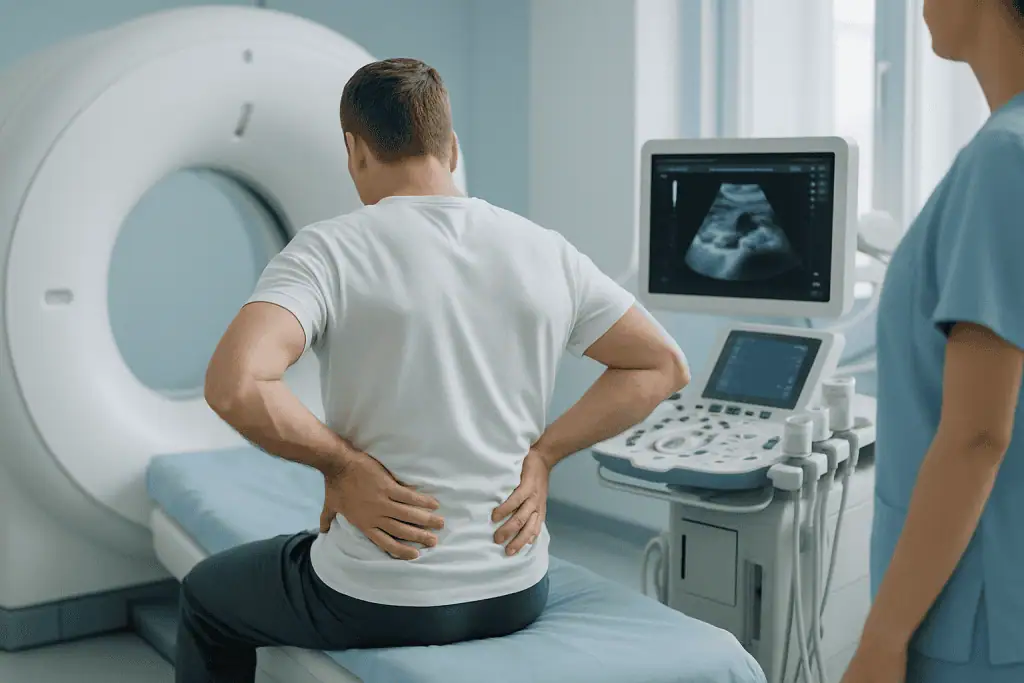
Symptoms vary depending on the cause and the tissues involved. Mechanical low back pain often feels worse after lifting, prolonged sitting, bending, or sudden twisting. It may improve with walking, position changes, heat, or gentle stretching.
Pain can also travel from the lower back into the buttock or leg. When irritation of a spinal nerve is present, the pain may be sharp, burning, or electric-like. This pattern is sometimes called sciatica, although the exact nerve involved may differ from person to person.
Common symptoms may include:
- Stiffness or reduced range of motion in the lower back
- Muscle tightness or spasms
- Pain that increases with sitting, standing, lifting, or bending
- Pain radiating to the buttock, thigh, calf, or foot
- Numbness, tingling, or weakness in the leg or foot
- Difficulty walking normally during a painful episode
Causes and Risk Factors
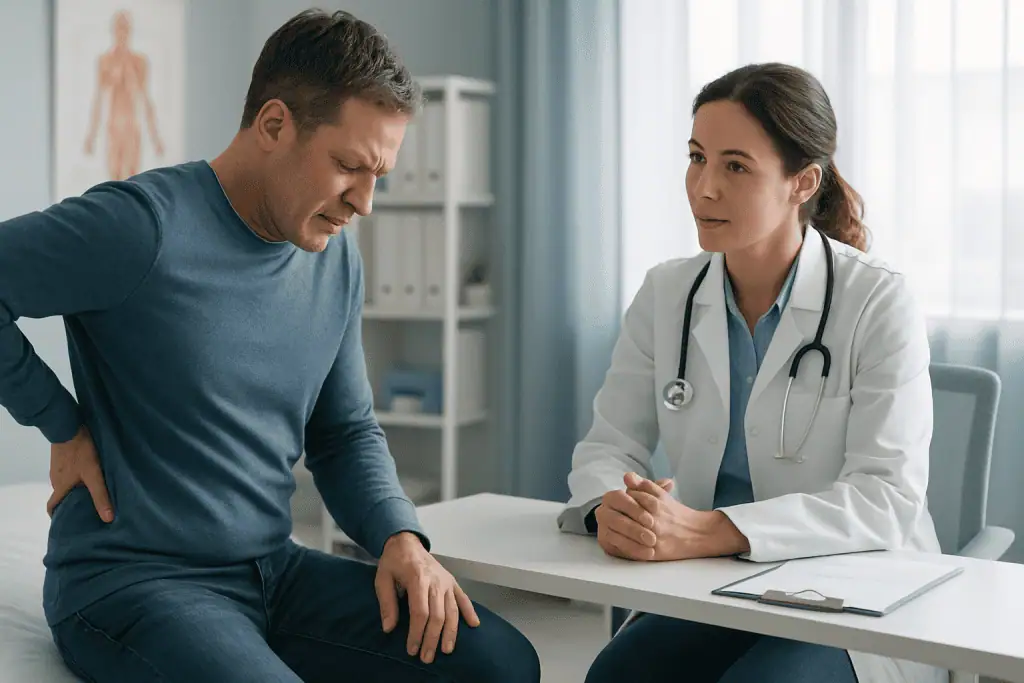
The most common causes of low back pain are mechanical. These include muscle or ligament strain, irritation of small spinal joints, disc-related pain, and age-related changes in the spine. A strain may occur after lifting something heavy, exercising without preparation, sitting in an awkward position, or making an unexpected movement.
Intervertebral discs act as cushions between the spinal bones. With time, discs may lose water content or develop small tears. In some people, a disc can bulge or herniate and press on a nerve root, causing pain that travels down the leg. Degenerative changes, spinal arthritis, and narrowing of the spinal canal, known as spinal stenosis, can also contribute to symptoms.
Risk factors include poor physical conditioning, long periods of sitting, repetitive bending or lifting, excess body weight, smoking, stress, poor sleep, and previous back injury. Pregnancy may also place extra strain on the lower back. Less commonly, low back pain may be related to inflammatory arthritis, osteoporosis-related fractures, infection, kidney conditions, or tumors, which is why persistent or unusual symptoms should be assessed by a healthcare professional.
Diagnosis
Diagnosis begins with a medical history and physical examination. The doctor may ask when the pain started, what makes it better or worse, whether it travels into the leg, and whether there are symptoms such as numbness, weakness, fever, weight loss, or bladder and bowel changes. The examination may include checking posture, movement, reflexes, muscle strength, sensation, and nerve tension signs.
Imaging is not always needed in the first weeks of uncomplicated low back pain. Many people improve without X-rays or scans, and imaging may show age-related changes that are not the main cause of symptoms. A doctor may recommend imaging if pain is severe, follows trauma, persists despite treatment, or is associated with neurological signs or other warning features.
Tests may include X-rays to look at bone alignment or fracture, magnetic resonance imaging to evaluate discs, nerves, and soft tissues, or computed tomography in specific situations. Blood tests may be ordered when infection, inflammatory disease, or another medical condition is suspected. The goal is to match test findings with the person’s symptoms, not to treat an image alone.
Treatment Options
Treatment depends on the cause, duration, severity, and effect on daily life. For many people with new low back pain, education, reassurance, gentle activity, and short-term symptom control are enough. Complete bed rest is usually not recommended because it can lead to stiffness, muscle weakness, and slower recovery. Instead, patients are often advised to continue light activities as tolerated and avoid movements that sharply increase pain.
Conservative treatment may include physiotherapy, supervised exercise, manual therapy in selected cases, heat or cold application, and guidance on posture and lifting. A physiotherapist may teach exercises to improve mobility, strengthen the core and hip muscles, and gradually restore confidence in movement. Medications such as pain relievers, anti-inflammatory medicines, or muscle relaxants may be considered by a doctor when appropriate, taking into account other health conditions and medication safety.
If pain is related to nerve irritation and does not improve with initial care, additional treatments may be discussed. These may include targeted injections to reduce inflammation around an irritated nerve or joint. Surgery is not needed for most cases of low back pain, but it may be considered when there is significant nerve compression, progressive weakness, spinal instability, or symptoms that remain disabling despite well-planned non-surgical treatment.
Prevention and Self-care
Prevention focuses on building a stronger, more resilient back and reducing repeated strain. Regular physical activity is one of the most helpful strategies. Walking, swimming, cycling, Pilates-based exercises, resistance training, and stretching may all be useful when performed safely and consistently. The best exercise plan is one that matches the person’s fitness level, medical history, and goals.
Good everyday habits also matter. People who sit for long periods may benefit from changing position regularly, using a supportive chair, placing screens at eye level, and taking short movement breaks. When lifting, it is safer to keep the object close to the body, bend at the hips and knees, avoid twisting while carrying, and ask for help with heavy loads.
Self-care during a flare may include gentle walking, temporary modification of activities, heat for muscle tightness, and relaxation techniques. Sleep, stress management, and smoking cessation can support recovery because pain is influenced by the whole nervous system, not only the spine. If exercises increase leg pain, numbness, or weakness, they should be stopped and reviewed by a healthcare professional.
When to See a Doctor
A medical visit is recommended if low back pain is severe, lasts longer than a few weeks, keeps returning, or interferes with work, sleep, or daily activities. Early evaluation can help identify the cause, guide safe treatment, and prevent unnecessary fear or inactivity.
Urgent medical attention is needed if back pain occurs after a significant fall or accident, or if it is accompanied by new leg weakness, numbness around the groin or saddle area, loss of bladder or bowel control, fever, unexplained weight loss, cancer history, or pain that is constant and not relieved by rest. These symptoms do not always mean a serious condition is present, but they should be assessed promptly.
Patients with complex or persistent low back pain may benefit from a multidisciplinary approach involving orthopedics, neurosurgery, physical medicine and rehabilitation, physiotherapy, pain medicine, and imaging specialists. Acibadem International’s JCI-accredited hospitals provide diagnosis and treatment for international patients with spine and musculoskeletal conditions, with care planned according to individual clinical findings.
Frequently asked questions
Is low back pain usually serious?
Most low back pain is not caused by a dangerous condition and improves with conservative care. However, symptoms such as leg weakness, bladder or bowel changes, fever, unexplained weight loss, or pain after major trauma should be assessed urgently.
Should a person rest in bed when low back pain starts?
Short periods of rest may be helpful when pain is intense, but prolonged bed rest is usually not recommended. Gentle movement, such as walking and normal light activities as tolerated, often supports recovery.
When is an MRI needed for low back pain?
An MRI is not always needed for a first episode of uncomplicated low back pain. A doctor may recommend it when symptoms persist, when leg pain suggests nerve compression, or when warning signs such as weakness, infection, fracture, or another serious condition are suspected.
Can exercise make low back pain worse?
The right exercises usually help by improving mobility, strength, and confidence in movement. Exercises should be gentle and progressive; if they cause increasing leg pain, numbness, or weakness, they should be stopped and reviewed by a clinician.
What is sciatica?
Sciatica describes pain that travels from the lower back or buttock down the leg, often due to irritation of a spinal nerve. It may be associated with tingling, numbness, or weakness, and treatment depends on the severity and cause.
Does low back pain always require surgery?
No. Most people improve with non-surgical treatments such as education, activity modification, physiotherapy, exercise, and appropriate medication. Surgery is considered only in selected cases, such as significant nerve compression, progressive weakness, or persistent disabling symptoms despite conservative care.
References
- World Health Organization
- National Institute for Health and Care Excellence
- American Academy of Orthopaedic Surgeons
- North American Spine Society
- American College of Physicians
This article is for general information only and is not a substitute for professional medical advice. Please consult a qualified doctor about your individual situation.
Explore treatments in Turkey — costs, top hospitals & a free quote
JCI-accredited · board-certified surgeons · reply within 24h

More from the Health Library

Related Specialists

Dt. Beril Karakaya Gökçimen
Oral & Dental Health
Prof. Dr. Fatih Dikici
Orthopedic Surgery & Traumatology
Assoc. Prof. Dr. Selma Aktaş
Pediatrics
Prof. Dr. Haldun Akgöz
Cardiology