Lower Back — Explained by Medical Evidence, Not Myths

Lower back pain is often mechanical, meaning it relates to muscles, joints, discs, or ligaments rather than a dangerous illness. Staying gently active is usually more helpful than prolonged bed rest for most uncomplicated lower back pain.
Key Takeaways
- Lower back pain is often mechanical, meaning it relates to muscles, joints, discs, or ligaments rather than a dangerous illness.
- Staying gently active is usually more helpful than prolonged bed rest for most uncomplicated lower back pain.
- Red-flag symptoms such as weakness, fever, major trauma, or bladder and bowel changes need urgent medical attention.
- Diagnosis is based mainly on symptoms and examination; imaging is not needed for every person.
- Treatment may include exercise, physical therapy, pain relief, posture changes, and targeted procedures when needed.
The lower back supports body weight, movement, and posture, so pain in this area is common and not always a sign of serious disease. Most episodes improve with time, activity modification, and conservative care, but persistent pain or warning signs deserve medical evaluation.
What the lower back is and why it hurts
The lower back, also called the lumbar region, is the part of the spine between the rib cage and the pelvis. It carries much of the body’s weight and helps with bending, lifting, twisting, walking, and standing. Because it works hard every day, the lower back is a very common source of pain, stiffness, and reduced mobility.
Medical evidence shows that most lower back pain is not caused by a severe disease. Instead, it usually comes from strain or irritation involving muscles, ligaments, joints, discs, or nearby nerves. Pain can appear suddenly after lifting or awkward movement, or it can build gradually from repetitive stress, inactivity, poor conditioning, or age-related wear.
Many people worry that back pain automatically means a “slipped disc” or permanent damage. In reality, symptoms and scan findings do not always match. A person can have notable changes on imaging with little pain, while another person may have severe pain from muscle spasm or joint irritation that does not show dramatically on a scan.
This evidence-based view matters because it helps guide treatment. The goal is not only to reduce pain, but also to restore safe movement, confidence, sleep, and daily function while looking carefully for the smaller number of cases that need urgent or specialized care.
Common symptoms and how lower back pain can feel
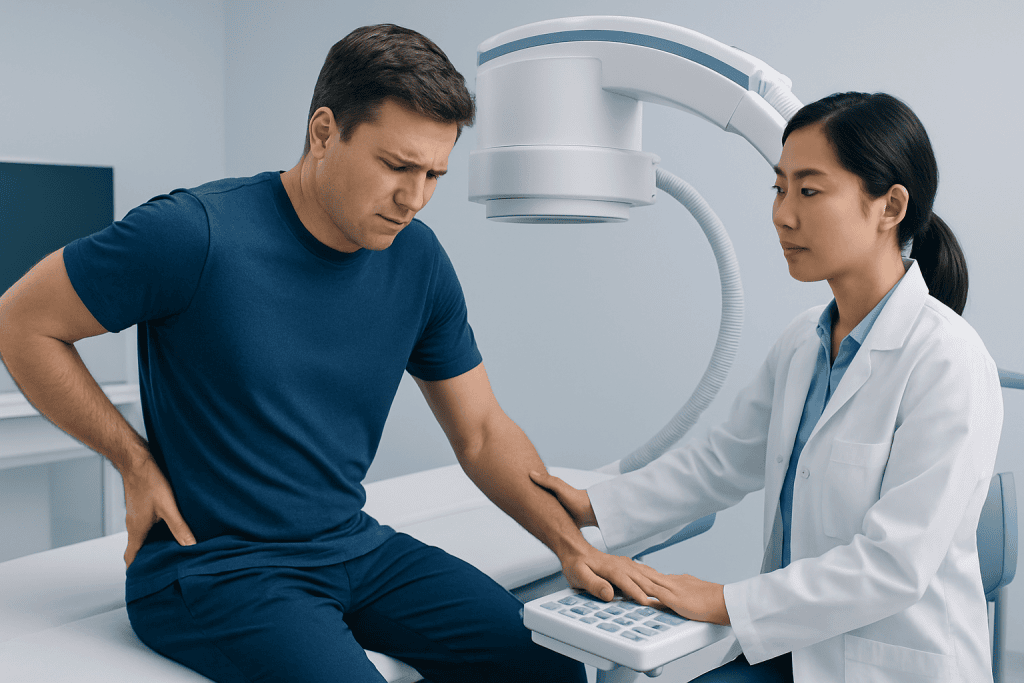
Lower back pain can feel dull, aching, tight, burning, or sharp. Some people notice stiffness first thing in the morning or after sitting for a long time. Others feel pain after exercise, lifting, coughing, twisting, or standing for extended periods. Symptoms may stay centered in the lower back or spread into the buttocks, hips, or upper legs.
Mechanical pain often changes with position and activity. It may improve with walking, gentle stretching, or changing posture, and worsen with bending, sudden movements, or prolonged sitting. Muscle-related pain can feel cramp-like or tender to touch, while joint-related pain may feel localized and worse with certain movements.
If a nerve is irritated, the pain may travel down one leg and be accompanied by tingling, numbness, or weakness. This pattern is commonly called sciatica and can happen when a disc or another structure presses on a nerve root. Related information can be found on sciatica.
Symptoms vary in duration as well. Acute pain usually lasts less than a few weeks, subacute pain lasts longer, and chronic pain continues for several months or more. Longer-lasting pain can affect sleep, mood, work, and confidence in movement, which is why a broad treatment plan is often more useful than focusing on pain alone.
Causes and risk factors: what medical evidence supports
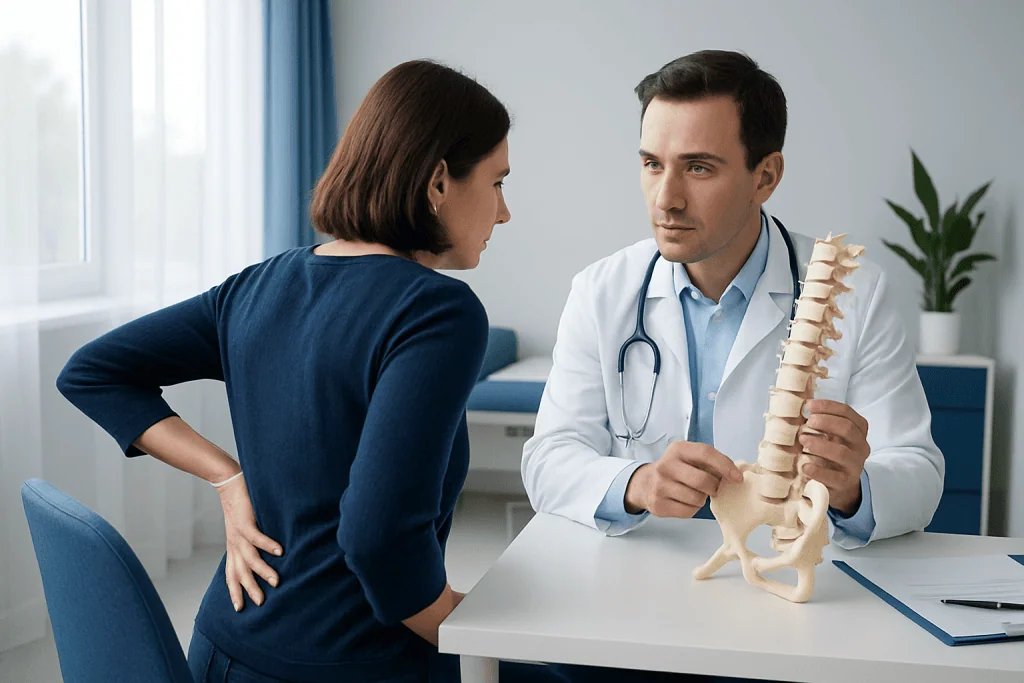
The most common causes of lower back pain are mechanical. These include muscle or ligament strain, irritation of the small spinal joints, disc-related pain, and age-related changes in the spine. These problems are often triggered by repeated bending, sudden lifting, deconditioning, prolonged sitting, physically demanding work, or a return to exercise after a period of inactivity.
Discs act as cushions between the spinal bones. Over time they can lose water content or develop small tears, which may contribute to pain or nerve irritation. In some people, a disc herniation can press on a nerve and cause leg pain. Degenerative changes may also involve the joints and surrounding tissues, a pattern often described under degenerative disc disease.
Risk factors include older age, low fitness, smoking, excess body weight, poor sleep, stress, and jobs that involve vibration, repetitive lifting, or long periods of sitting. Pregnancy can also place extra strain on the lower back. Emotional stress does not mean pain is “imagined,” but it can increase muscle tension, pain sensitivity, and the likelihood that symptoms last longer.
Less common but important causes include fractures, inflammatory arthritis, infection, kidney conditions, and cancer involving the spine. In older adults, spinal narrowing can cause lower back and leg symptoms with walking, a condition known as spinal stenosis. A clinician considers these possibilities when symptoms, age, medical history, or examination findings suggest something beyond routine mechanical pain.
How doctors diagnose lower back problems
Diagnosis begins with a careful history and physical examination. A doctor asks when the pain started, where it is felt, whether it travels into the leg, what makes it better or worse, and whether there are warning signs such as fever, weight loss, cancer history, recent infection, significant trauma, or bowel and bladder changes. The examination usually checks posture, movement, strength, reflexes, sensation, and areas of tenderness.
Imaging is not necessary for every person with lower back pain. In many cases, especially during the first weeks of uncomplicated pain, scans do not improve outcomes and may identify age-related changes that are not actually causing symptoms. This is why evidence-based care often starts with clinical assessment and conservative treatment unless red flags are present.
When imaging is needed, doctors may use X-rays to look for fractures or alignment problems, MRI to assess discs, nerves, and soft tissues, and CT in selected cases. Blood tests may be ordered if infection, inflammation, or another medical condition is suspected. If pain is severe, long-lasting, or linked to nerve symptoms, more specialized assessment may be recommended.
Some patients benefit from consultation in orthopedics, neurology, rehabilitation, or pain management. In more complex cases, doctors may combine imaging findings with functional assessment to determine whether treatment should focus on physical therapy, medication, injections, or surgery. A balanced diagnosis aims to explain symptoms clearly without overstating scan findings that may be common with aging.
Treatment options: from self-care to specialist procedures
For most people, treatment starts conservatively. Short-term activity modification, heat, gentle stretching, walking, and nonprescription pain relief may help, if appropriate for the individual’s health status. Current evidence generally supports staying as active as possible rather than resting in bed for long periods, because prolonged inactivity can increase stiffness and delay recovery.
Structured physical therapy is often one of the most effective tools for lower back pain. A therapist may guide exercises to improve flexibility, core strength, hip mobility, posture, and movement patterns. Education is also important: learning how to lift, sit, and return to exercise safely can reduce fear and improve daily function. In some cases, comprehensive physical therapy and rehabilitation is useful for both recent and chronic pain.
If symptoms suggest nerve irritation or if pain does not improve, doctors may consider additional treatments. These can include prescription medicines, supervised exercise programs, or targeted injections for carefully selected patients, such as epidural steroid injection when inflammation around a nerve root is contributing to leg pain. Treatment choices depend on the exact cause, overall health, and how much the symptoms interfere with life.
Surgery is not needed for most lower back pain, but it may be appropriate when there is progressive nerve weakness, certain structural problems, or persistent pain that has not responded to well-guided conservative care. Depending on the problem, options may include spine surgery or other specialist procedures. Near the end of the care pathway, multidisciplinary evaluation is valuable; Acibadem International’s specialists in JCI-accredited hospitals diagnose and treat lower back conditions for international patients when advanced assessment or treatment is required.
Prevention and self-care that can support recovery
Not all lower back pain can be prevented, but daily habits can lower the risk and support recovery. Regular movement is one of the strongest protective factors. Walking, swimming, cycling, or a clinician-guided exercise plan can improve endurance and reduce stiffness. Core and hip strengthening may help the spine handle everyday loads more efficiently.
Posture matters, but perfect posture is not required. It is usually more helpful to vary positions often than to try to hold one “ideal” position all day. During desk work, changing sitting posture, standing up regularly, and setting up the screen and chair comfortably may reduce strain. When lifting, keeping objects close to the body and avoiding sudden twisting can help.
General health also affects the lower back. Healthy body weight, good sleep, stress management, and not smoking can all support better outcomes. Smoking is linked with poorer disc health and slower healing, while chronic stress can increase muscle tension and pain sensitivity.
For flare-ups, many people do best with a calm, measured response: relative rest for a short time, gentle movement, heat if soothing, and a gradual return to normal activity. If pain keeps recurring, a clinician can help identify patterns such as weak muscles, reduced flexibility, poor sleep, or work-related strain that may be contributing to repeat episodes.
When to seek medical care
Most lower back pain improves, but some symptoms need prompt medical attention. A person should seek urgent care if back pain follows major trauma, is accompanied by fever, develops with unexplained weight loss, or occurs together with a history of cancer, immune suppression, or recent serious infection. Severe or worsening weakness in the leg should also be assessed quickly.
Emergency evaluation is especially important if there is new loss of bladder or bowel control, numbness around the groin or saddle area, or rapidly progressing weakness. These symptoms can signal serious nerve compression and should not be ignored.
Non-urgent medical review is appropriate when pain lasts more than a few weeks, repeatedly returns, interferes with sleep or daily life, or radiates below the knee with tingling or numbness. A doctor can review the likely cause, identify whether imaging is needed, and build a treatment plan that fits the person’s symptoms, goals, and medical history.
It is also reasonable to seek care sooner if there is uncertainty about the diagnosis, concern about exercise, or difficulty returning to work, sport, or caregiving. Early guidance can prevent unnecessary fear, reduce unhelpful rest, and support a safe recovery plan.
Frequently asked questions
Is lower back pain usually serious?
Most lower back pain is not serious and often improves with time, movement, and conservative care. However, certain symptoms such as fever, major injury, weakness, or bladder and bowel changes need urgent medical assessment.
Should a person rest in bed for lower back pain?
Prolonged bed rest is usually not recommended for uncomplicated lower back pain. Gentle activity, short walks, and gradual return to normal movement generally support recovery better than staying still for long periods.
When is imaging needed for lower back pain?
Imaging is often not needed in the early stage of common lower back pain if there are no warning signs. Doctors usually recommend scans when pain is persistent, severe, associated with nerve symptoms, or linked to possible fracture, infection, cancer, or other specific conditions.
What is the difference between lower back pain and sciatica?
Lower back pain may stay in the back or nearby buttock area. Sciatica usually means irritation of a nerve root, causing pain that travels down the leg and may come with numbness, tingling, or weakness.
Can exercise make lower back pain worse?
The right kind of exercise is often helpful, though some movements may temporarily increase discomfort. A gradual, guided approach that focuses on mobility, strength, and function is usually safer and more effective than avoiding activity altogether.
How long does lower back pain usually last?
Many episodes improve within a few days to a few weeks, especially when the cause is mechanical strain. If symptoms continue beyond several weeks or keep returning, medical review can help identify contributing factors and the best next steps.
References
- World Health Organization
- National Institute of Neurological Disorders and Stroke
- American Academy of Orthopaedic Surgeons
- National Institute for Health and Care Excellence
- American College of Physicians
This article is for general information only and is not a substitute for professional medical advice. Please consult a qualified doctor about your individual situation.
Joint and spine care in Turkey — expert assessment & treatment
JCI-accredited · board-certified surgeons · reply within 24h

More from the Health Library

Related Specialists

Dr. Rafiga Gasimova
Gynecology & Obstetrics
Assoc. Prof. Dr. Rıza Gürhan Işıl
General Surgery
Dr. Handan Bilgin
Neurology
Dr. Hamdi Karakulak
Emergency Service