Hordeolum Externum: What Patients Need to Know

A hordeolum externum is an external stye that develops at the eyelid margin, usually near an eyelash follicle. Common signs include redness, tenderness, swelling, and a small pimple-like bump on the eyelid.
Key Takeaways
- A hordeolum externum is an external stye that develops at the eyelid margin, usually near an eyelash follicle.
- Common signs include redness, tenderness, swelling, and a small pimple-like bump on the eyelid.
- Warm compresses are often the first step and may help the blockage drain naturally.
- Patients should avoid squeezing the bump or wearing eye makeup and contact lenses until the eye improves.
- Medical assessment is important if swelling worsens, vision changes, the whole eyelid becomes very inflamed, or the problem keeps returning.
Hordeolum externum is the medical term for an external stye: a small, tender, red bump that forms near the base of an eyelash. It is usually uncomfortable rather than serious, and many cases improve with simple home care such as warm compresses, though some need medical treatment.
Overview: what hordeolum externum means
Hordeolum externum is the medical name for an external stye, a localized infection or inflammation that appears along the outer edge of the eyelid. It usually forms when a hair follicle of an eyelash or a nearby oil-producing gland becomes blocked and irritated, allowing bacteria to multiply. The result is a small, painful swelling that may look like a pimple.
This condition is very common and is usually short-lived. Although it can be uncomfortable, hordeolum externum does not usually threaten eyesight. Many people notice improvement within days when they keep the eyelid clean and apply warm compresses regularly.
Patients often confuse a hordeolum externum with other eyelid lumps. One of the most common look-alikes is a chalazion, which tends to be less painful and is caused more by gland blockage than active infection. Understanding the difference can help guide the right self-care and the right time to seek professional advice.
How it differs from other eyelid bumps
Not every eyelid lump is a stye. A hordeolum externum typically develops at the lash line, becomes tender quickly, and may produce a small yellow or white point as it comes to a head. It often feels warm, sore, and swollen over a short period of time.
By contrast, a chalazion is often deeper in the eyelid and may start as painless swelling or a firm lump. Some styes can evolve into a chalazion if the acute infection settles but the gland remains blocked. Patients who have repeated eyelid lumps may be evaluated for chronic eyelid inflammation or other conditions such as blepharitis.
Other possible causes of eyelid swelling include allergic irritation, cysts, skin infections, and in rare cases more serious eyelid disease. If a bump persists, changes shape, or repeatedly occurs in the same place, an eye specialist may recommend a closer examination to confirm the diagnosis.
Symptoms patients may notice

The most typical symptom of hordeolum externum is a small, painful bump along the eyelid margin. The area may look red and swollen, and the eyelid can feel tender to the touch. Some patients notice a sensation as if something is in the eye, especially when blinking.
Watering, mild crusting, and sensitivity around the eyelid are also common. If the swelling becomes more pronounced, the entire lid can appear puffy. The eye itself is usually normal, but the nearby tissues may become irritated because the eyelid is inflamed.
Possible symptoms include:
- A red bump near an eyelash
- Pain or soreness of the eyelid
- Localized swelling
- Tearing or watery eye
- Crusting along the lashes
- A small pus point at the edge of the lid
Severe eye pain, marked sensitivity to light, reduced vision, or swelling spreading beyond the eyelid are not typical features of a simple external stye. These symptoms deserve prompt medical attention because they may suggest a different or more extensive problem.
Causes and risk factors
Most cases of hordeolum externum occur when bacteria, commonly those that normally live on the skin, enter a blocked eyelash follicle or gland at the eyelid edge. Friction from rubbing the eyes, poor eyelid hygiene, or buildup of oils and debris can increase the chance of blockage and irritation.
Several everyday factors may make a stye more likely. These include sleeping in eye makeup, using old or contaminated cosmetics, wearing contact lenses without careful hand and lens hygiene, and touching the eyes frequently. People with oily skin or recurring eyelid inflammation may also be more prone to repeated episodes.
Risk may be higher in people who have chronic skin or eye-surface conditions such as rosacea, seborrheic dermatitis, or conjunctivitis when irritation affects the eye area. Recurrent styes can sometimes reflect underlying meibomian gland dysfunction, in which the eyelid oil glands do not drain properly. In those cases, treatment may focus not only on the current lump but also on long-term eyelid care.
Diagnosis and what to expect at an eye exam
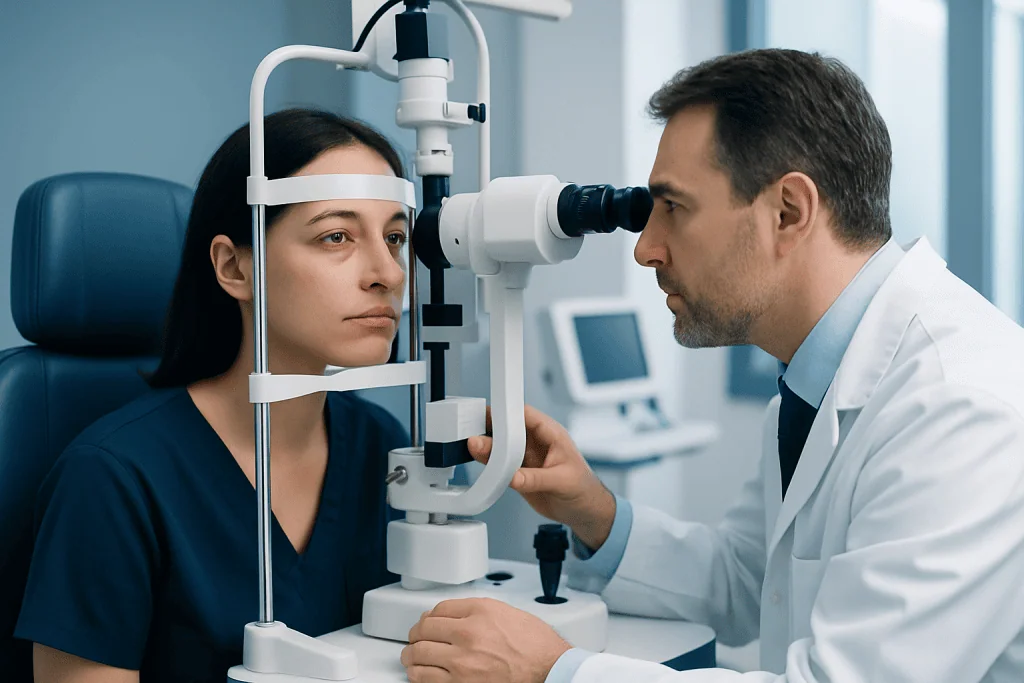
Doctors usually diagnose hordeolum externum by examining the eyelid. In many cases, no laboratory tests or imaging are needed. The appearance, location, tenderness, and timing of the swelling are often enough to distinguish an external stye from other causes of an eyelid lump.
During the visit, the clinician may ask when the bump started, whether the patient has had similar problems before, and whether there are symptoms such as discharge, fever, vision changes, or spreading redness. The eyelid margin, eyelashes, and nearby eye surface are checked for crusting, blocked glands, or signs of associated inflammation.
If a lesion is persistent, repeatedly returns in the same location, or does not behave like a typical stye, further evaluation may be recommended. This helps rule out a chalazion, chronic lid disease, or less common conditions that can resemble a simple hordeolum. For persistent or complicated cases, assessment in an ophthalmology setting may be useful, sometimes alongside tests available through a comprehensive eye examination.
Treatment options and safe home care
The first-line treatment for hordeolum externum is usually conservative care. Warm compresses placed over the closed eyelid for several minutes, several times a day, can soften the blockage and encourage natural drainage. Gentle eyelid cleansing may also help remove debris from the lash line.
Patients should avoid squeezing, popping, or trying to drain the stye themselves. This can worsen inflammation, spread infection, or injure the delicate eyelid tissues. It is also wise to pause eye makeup and contact lens use until the area has healed, and to replace old eye cosmetics afterward if contamination is a concern.
When symptoms are more pronounced, a doctor may recommend prescription treatment, such as antibiotic ointment in selected cases, especially if there is drainage, associated blepharitis, or concern for bacterial spread. If the bump is large, persistent, or not improving, a specialist may consider minor drainage in a clinical setting. Depending on the broader eyelid problem, doctors may also evaluate whether related care such as ophthalmology services or treatment of an associated eye infection is needed.
Most external styes improve without procedures, but recurrence can happen. When repeated episodes occur, long-term lid hygiene, treatment of eyelid inflammation, and management of underlying skin conditions often become part of the overall plan.
Prevention and daily self-care
Good eyelid hygiene can lower the chance of future styes, especially for people who get them more than once. Washing the hands before touching the eyes, removing makeup fully before sleep, and cleaning the eyelid margins gently when advised by a clinician are simple but effective habits.
Contact lens users should follow careful lens care routines and avoid wearing lenses while the eyelid is inflamed. Eye makeup should not be shared, and products that are old, irritated, or contaminated should be discarded. If a person notices styes after using a specific cosmetic, stopping that product may help.
Patients with recurring eyelid irritation may benefit from regular warm compresses even when no lump is present, because this can support gland drainage. If there is chronic redness, flaking, or gritty eye discomfort, a doctor may assess for underlying conditions such as dry eye or eyelid margin inflammation that can contribute to repeated episodes.
When to seek medical care
Many cases of hordeolum externum can be managed at home at first, but medical review is appropriate if the swelling becomes severe, the redness spreads, or the patient develops fever or increasing pain. Care is also important if the eye itself becomes very red, vision changes, or it hurts to move the eye, as these signs are not typical of a simple external stye.
A doctor should also assess a bump that does not begin to improve within about one to two weeks, keeps coming back, or leaves a firm painless lump behind. Recurrent or non-resolving eyelid lesions may need treatment for an underlying condition or closer examination to confirm the diagnosis.
People with diabetes, weakened immunity, or recent eye surgery should be especially cautious and seek advice earlier if eyelid swelling develops. Near the end of the care journey, some patients may benefit from specialist assessment; Acibadem International’s multidisciplinary specialists and JCI-accredited hospitals evaluate and treat eye conditions for international patients when further investigation or treatment is needed.
Frequently asked questions
Is hordeolum externum the same as a stye?
Yes. Hordeolum externum is the medical term for an external stye, which forms along the outside edge of the eyelid near an eyelash. It is usually a small, tender, red bump caused by inflammation or infection of a lash follicle or nearby gland.
How long does a hordeolum externum usually last?
Many external styes begin to improve within a few days and settle within one to two weeks. Recovery can vary depending on the size of the lesion and whether there is underlying eyelid inflammation. If it is not improving, a doctor should evaluate it.
Can a hordeolum externum go away without antibiotics?
Yes, many cases improve with warm compresses and gentle eyelid care alone. Antibiotics are not always necessary, but a clinician may prescribe them in selected situations, such as associated eyelid infection, drainage, or recurrent inflammation.
Should a patient pop or squeeze a stye?
No. Squeezing a stye can worsen swelling, spread infection, and damage the eyelid. It is safer to use warm compresses and let the area drain naturally or have it treated by a qualified clinician if needed.
Can contact lenses or makeup be used during a stye?
It is usually best to avoid contact lenses and eye makeup until the eyelid has healed. These can irritate the area, slow recovery, or introduce more bacteria. Replacing old eye makeup afterward may help reduce the risk of recurrence.
What is the difference between a hordeolum externum and a chalazion?
A hordeolum externum is typically tender, red, and located at the eyelid margin near an eyelash. A chalazion is usually deeper in the lid and may be less painful or painless. Sometimes an initial stye can later leave behind a chalazion if the gland remains blocked.
References
- American Academy of Ophthalmology
- National Eye Institute
- Mayo Clinic
- Merck Manual Consumer Version
This article is for general information only and is not a substitute for professional medical advice. Please consult a qualified doctor about your individual situation.
Hair transplant in Turkey — costs, graft counts & a free assessment
JCI-accredited · board-certified surgeons · reply within 24h