Nerve Flossing: An Evidence-Based Guide for Patients

Nerve flossing, also called nerve gliding or neural mobilization, aims to improve a nerve’s movement rather than stretch it aggressively. It may help some people with nerve irritation, such as certain cases of sciatica or carpal tunnel syndrome, especially as part of a rehabilitation plan.
Key Takeaways
- Nerve flossing, also called nerve gliding or neural mobilization, aims to improve a nerve’s movement rather than stretch it aggressively.
- It may help some people with nerve irritation, such as certain cases of sciatica or carpal tunnel syndrome, especially as part of a rehabilitation plan.
- Exercises should be gentle and should not cause strong pain, worsening numbness, or increasing weakness.
- Persistent, severe, or progressive nerve symptoms need medical assessment to confirm the cause before starting exercises.
- A clinician or physical therapist can select the correct nerve glide and technique for the affected area.
Nerve flossing is a set of gentle movements designed to help a nerve move more freely through surrounding tissues. When prescribed for the right problem and done carefully, it may reduce tingling, radiating pain, or tightness, but it is not appropriate for every cause of nerve symptoms.
What nerve flossing is and what it is not
Nerve flossing is a gentle exercise approach used to help a nerve move or “glide” more smoothly through the tissues around it. It is also called nerve gliding, neural mobilization, or neural flossing. The goal is not to force a stretch, but to reduce mechanical sensitivity and support comfortable movement when a nerve is irritated or restricted.
People often search for nerve flossing when they have symptoms such as tingling, burning, numbness, or pain that travels along an arm or leg. In some cases, carefully guided nerve glides can be helpful. However, these exercises do not treat every cause of nerve pain, and they are not a substitute for a medical diagnosis when symptoms are new, severe, or worsening.
Nerves need to move slightly as the body bends, reaches, walks, and turns. After inflammation, repetitive strain, postural stress, or injury, that movement can become more sensitive. Nerve flossing uses coordinated motions at one end of the limb and then the other, so the nerve slides rather than being strongly tensioned throughout its length.
This matters because many people assume more stretch is better. With nerve symptoms, that approach can be unhelpful. A well-chosen glide is usually gentle, controlled, and symptom-aware. If symptoms increase and stay worse afterward, the exercise may be too intense, done incorrectly, or not suitable for that condition.
How nerve flossing may help
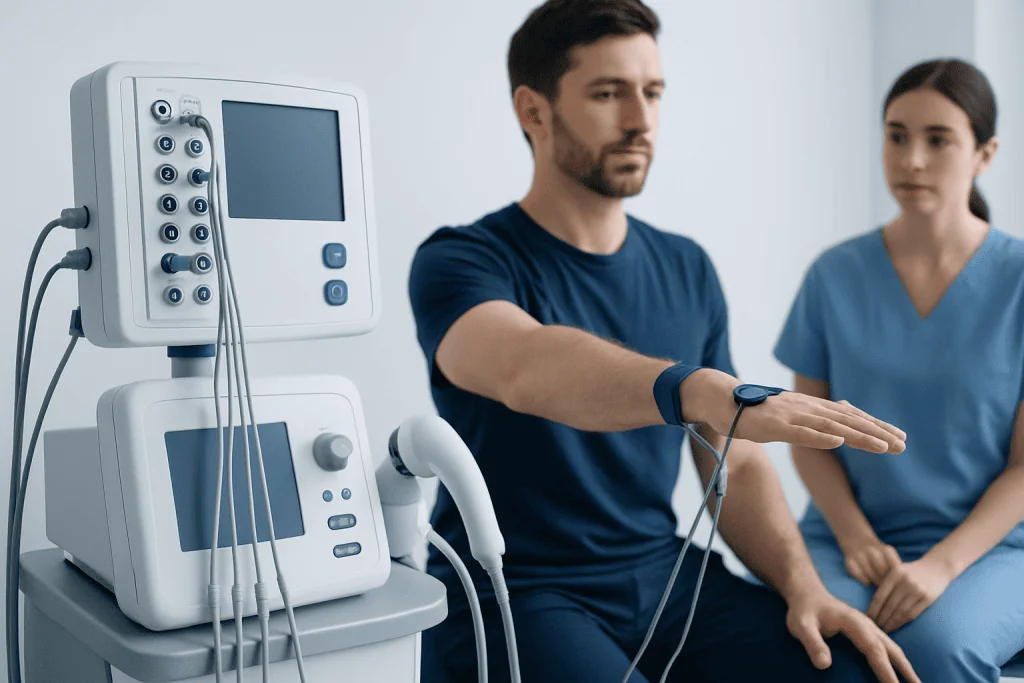
The proposed benefit of nerve flossing is improved tolerance to movement in tissues that are mechanically sensitive. In rehabilitation settings, clinicians may use it to reduce symptoms linked to nerve irritation and to restore normal movement patterns. Some studies suggest neural mobilization may help certain people with conditions such as nerve entrapment or radiating limb pain, especially when combined with education, activity modification, and strengthening.
Research in this area is promising but not uniform. Outcomes can vary depending on the diagnosis, how long symptoms have been present, the exact technique used, and whether exercises are supervised. For that reason, nerve flossing is best understood as one tool within a broader treatment plan, not a universal cure.
When it works well, a person may notice less pulling, less tingling during movement, or improved range of motion with daily tasks. Benefits may be gradual rather than immediate. Improvement should feel mild and steady, not dramatic and painful.
Nerve gliding is commonly discussed alongside conditions such as sciatica and hand numbness related to median nerve irritation. In those settings, clinicians usually pair exercise with posture advice, pacing, and treatment of the underlying cause.
Who might benefit and who should be cautious

Nerve flossing may be considered for people whose symptoms suggest a sensitive but not severely damaged nerve. Examples can include some cases of sciatic-type leg pain, symptoms related to neck or back movement, or mild nerve compression around the wrist or elbow. A physical therapist or physician usually decides this after taking a history and examining strength, sensation, reflexes, and movement.
It may be less appropriate, or inappropriate, when there is significant nerve injury, rapidly progressive weakness, major numbness, severe pain, recent trauma, infection, uncontrolled inflammatory disease, or symptoms caused by conditions outside the musculoskeletal system. In those situations, exercises can delay proper care if used without evaluation.
People should also be cautious if they have diabetes-related neuropathy, balance problems, spinal cord symptoms, or a history of surgery in the affected area. These circumstances do not automatically rule out exercise, but they do make professional guidance more important.
In practical terms, nerve flossing is usually most helpful when symptoms are reproducible with movement and when the source has been reasonably identified. If a person is unsure whether symptoms come from a nerve, a joint, a muscle, or a circulation problem, medical assessment should come first.
Common examples of nerve gliding exercises
Different nerves require different movement patterns. For example, sciatic nerve glides often coordinate ankle, knee, and neck movement, while a median nerve glide for arm symptoms may involve the wrist, elbow, shoulder, and neck. Because the correct pattern depends on the diagnosis, patients should avoid copying random online routines if they have not been assessed.
A clinician may describe two broad styles: a “slider” and a “tensioner.” A slider moves the nerve from one end while easing it from the other end, producing a sliding effect that is usually gentler. A tensioner increases load more directly along the nerve and is often used more cautiously, if at all, in sensitive cases.
People frequently ask whether sciatica exercises and nerve flossing are the same. They are not exactly the same. Some sciatica programs include general mobility, strengthening, or physical therapy and rehabilitation techniques, while nerve flossing refers specifically to movements intended to mobilize the nerve.
For upper-limb symptoms, a clinician may also evaluate whether wrist splinting, workstation changes, or treatment for carpal tunnel syndrome is more important than exercise alone. The right program depends on the source of nerve irritation, not only on where symptoms are felt.
How to do nerve flossing safely
Safe nerve flossing starts with the right level of intensity. Movements should generally be slow, controlled, and mild. A person may feel a brief, familiar pull or light tingling during the exercise, but symptoms should settle quickly when the movement stops. Strong pain, spreading numbness, cramping, or lingering symptoms afterward are signs to stop and seek advice.
It is usually better to begin with a small number of repetitions and reassess symptoms later the same day. The ideal amount varies between individuals and diagnoses. More is not necessarily better, especially early on, because irritated nerves can become more sensitive if overloaded.
Posture and breathing also matter. Many people compensate by tensing the shoulders, holding the breath, or forcing end-range motion. A therapist may correct those patterns and adjust the exercise to make it easier, such as reducing the range or changing body position.
Nerve flossing is often combined with treatment that addresses the broader problem, such as spine care, strengthening, ergonomic adjustments, or pain management strategies. If symptoms are linked to a spinal source, evaluation by a specialist may include rehabilitation planning and, in selected cases, further workup related to spine surgery if there are structural issues that do not respond to conservative care.
When nerve flossing may not be enough
If symptoms are caused by ongoing nerve compression, inflammation, or significant structural problems, exercise alone may not provide lasting relief. Examples can include a lumbar disc problem causing marked leg weakness, severe entrapment neuropathy, or cervical spine disease with persistent arm symptoms. In these cases, nerve glides may still have a role, but they should not distract from treating the underlying condition.
Medical assessment may involve a physical examination, imaging in selected situations, or nerve conduction studies and electromyography when the diagnosis is unclear. The purpose is to confirm where the nerve is affected and to rule out other causes of similar symptoms, such as vascular conditions, joint disorders, or systemic disease.
Treatment may then include activity modification, anti-inflammatory strategies when appropriate, splinting, targeted exercise, manual therapy, injections in selected cases, or referral to specialists. Some patients benefit most from supervised rehabilitation rather than home exercise alone.
Near the end of the care pathway, some people may need multidisciplinary evaluation. Acibadem International’s multidisciplinary specialists in JCI-accredited hospitals assess and treat nerve-related musculoskeletal conditions for international patients when more detailed diagnosis or coordinated rehabilitation is needed.
When to seek medical care
A person should seek medical care promptly if nerve symptoms begin after a fall, accident, or other injury, or if there is marked weakness, dropping objects, foot drop, or difficulty walking. Urgent evaluation is also important for numbness in the groin area, loss of bladder or bowel control, fever with severe back or neck pain, or rapidly worsening symptoms.
Medical advice is also appropriate when pain, tingling, or numbness lasts more than a short period, keeps returning, disturbs sleep, or limits work and daily life. Even mild symptoms deserve assessment if they are persistent, because long-standing compression or irritation can be harder to treat later.
People should stop home exercises and ask a clinician for guidance if nerve flossing makes symptoms clearly worse during the session or leaves them more painful, numb, or weak afterward. This does not always mean something serious is happening, but it is a sign the exercise choice or dose may be wrong.
In general, the safest approach is diagnosis first, then a tailored program. A physician, neurologist, rehabilitation specialist, or physical therapist can decide whether nerve flossing is suitable and which movements fit the individual’s condition.
Frequently asked questions
Does nerve flossing really work?
Nerve flossing may help some people, especially when symptoms are related to a sensitive or mildly compressed nerve. The best results usually occur when the exercise matches the diagnosis and is part of a broader rehabilitation plan. It is less likely to help if the cause has not been identified or if there is significant nerve damage.
Is nerve flossing the same as stretching?
No. Traditional stretching mainly targets muscles and soft tissues, while nerve flossing is designed to help a nerve glide more comfortably through surrounding structures. The movements are usually gentler and should not feel like a forceful stretch.
Can nerve flossing make symptoms worse?
Yes, it can if the exercise is too aggressive, too frequent, or not appropriate for the condition. Worsening tingling, pain, numbness, or weakness after an exercise session means it should be stopped and reviewed by a clinician. Proper technique and dosage are important.
How often should a person do nerve gliding exercises?
There is no single schedule that suits everyone. The right frequency depends on the nerve involved, symptom irritability, and the person’s overall treatment plan. A clinician typically starts with a gentle amount and adjusts based on how symptoms respond.
Can nerve flossing help sciatica?
It can help some cases of sciatica, particularly when a clinician determines that neural mobility is part of the problem. However, sciatica has several possible causes, including disc-related and spinal conditions, so the same exercise will not suit everyone. Persistent or severe leg symptoms should be medically evaluated.
Should someone try nerve flossing without a diagnosis?
It is better to have persistent nerve-like symptoms assessed first. Tingling, numbness, or radiating pain can come from different causes, and the wrong exercise may delay effective treatment. Brief, mild symptoms may settle on their own, but ongoing symptoms deserve professional advice.
References
- National Institute of Neurological Disorders and Stroke
- American Academy of Orthopaedic Surgeons
- American Physical Therapy Association
- National Institute for Health and Care Excellence
- Mayo Clinic
This article is for general information only and is not a substitute for professional medical advice. Please consult a qualified doctor about your individual situation.
Explore treatments in Turkey — costs, top hospitals & a free quote
JCI-accredited · board-certified surgeons · reply within 24h

More from the Health Library



Related Specialists

Dr. İlkar Aydın
Radiology
Prof. Dr. Evrim Kadriye Tezcanlı
Radiation Oncology
Dr. Zühre Esra Kıvanç
Inpatient Clinic Physicians Clinical Service
Dt. Serkan Güleç
Dentistry