Playtime Therapy: Early Signs, Risk Factors, and How It Is Treated

Playtime therapy is a therapeutic approach, not simply unstructured play. It can help children who show anxiety, behavioral changes, social difficulties, or distress after stressful events.
Key Takeaways
- Playtime therapy is a therapeutic approach, not simply unstructured play.
- It can help children who show anxiety, behavioral changes, social difficulties, or distress after stressful events.
- Assessment usually includes the child, caregivers, and the child’s developmental and medical history.
- Treatment may involve individual sessions, parent guidance, and school-based support when needed.
- Early support can improve emotional regulation, relationships, and day-to-day functioning.
Playtime therapy is a structured form of child psychotherapy that uses play to help children express emotions, improve behavior, and develop coping skills. It is often used when a child shows ongoing emotional, social, or behavioral difficulties that are hard to explain through words alone.
What is playtime therapy?
Playtime therapy is a child-focused mental health treatment that uses play as a way for children to communicate, process emotions, and practice healthier responses. Because young children may not yet have the language to fully describe worries, fears, or confusing experiences, toys, drawing, role play, storytelling, and games can become a natural way to express what they are feeling.
In clinical practice, this approach is more commonly called play therapy. A trained mental health professional observes the child’s play patterns, emotional themes, reactions, and interaction style, then uses those observations to guide treatment. Sessions may be non-directive, where the child leads, or more structured, where the therapist introduces activities aimed at specific goals such as emotional regulation, social skills, or trauma processing.
Playtime therapy is not a single diagnosis or a one-size-fits-all method. It is a treatment approach used for a range of concerns, including anxiety, adjustment difficulties, grief, behavior problems, family stress, and developmental or emotional challenges. It may also be part of broader care for children with autism or attention and behavior concerns.
Early signs a child may benefit from playtime therapy

Children show stress in different ways. Some become withdrawn, fearful, or unusually clingy, while others become irritable, aggressive, or hard to settle. A short-lived reaction to a change in routine can be normal, but ongoing changes that affect home life, school, sleep, or relationships may suggest that more support is needed.
Adults may notice that a child has trouble naming feelings, managing frustration, following routines, or recovering from disappointments. Some children repeat themes of fear, loss, or conflict in their play. Others complain of stomachaches or headaches without a clear physical cause, avoid social situations, or show a drop in school engagement.
Signs that may point to a need for assessment include:
- Persistent sadness, worry, or frequent tearfulness
- Strong separation anxiety or refusal to attend school
- Repeated angry outbursts, defiance, or aggression
- Regression, such as bedwetting, baby talk, or loss of previously learned skills
- Sleep problems, nightmares, or changes in appetite
- Social withdrawal or difficulty making and keeping friends
- Distress after bullying, family conflict, loss, illness, or other stressful events
These signs do not always mean a child has a mental health disorder, but they do suggest that careful evaluation may be helpful. In some cases, a pediatrician or child psychologist may also assess for related conditions such as ADHD if attention, impulsivity, or hyperactivity are a major concern.
Why children need it: causes and risk factors
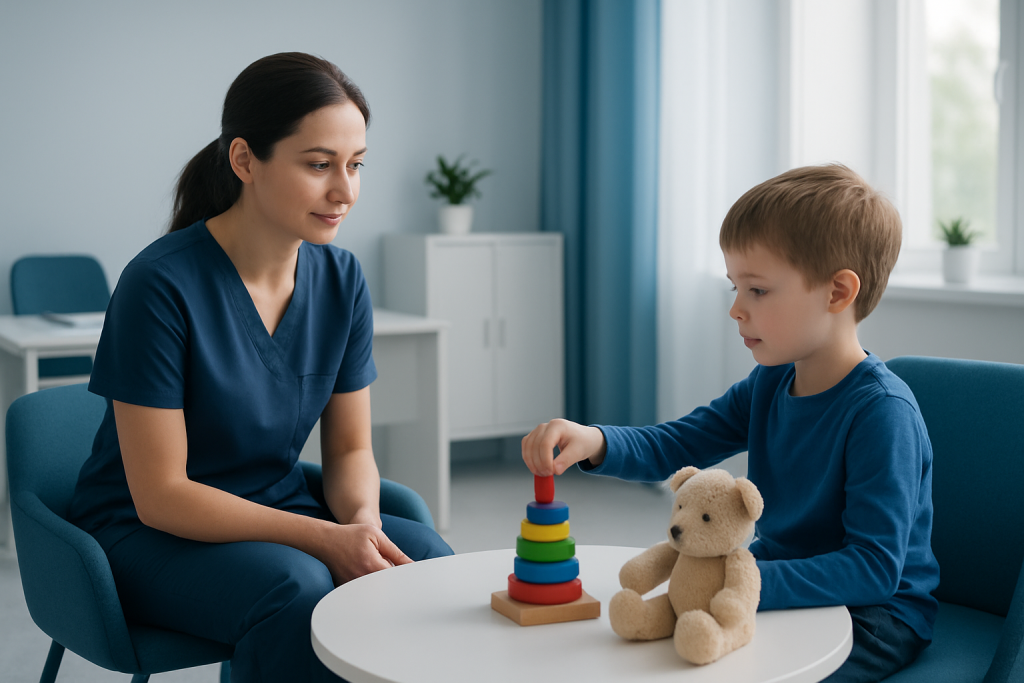
There is no single reason a child may need playtime therapy. Emotional and behavioral difficulties usually develop from a combination of temperament, developmental stage, family circumstances, school demands, life events, and sometimes underlying neurodevelopmental or mental health conditions. A child’s behavior is often a signal that something feels overwhelming, confusing, or unsafe from the child’s perspective.
Common triggers include parental separation, bereavement, moving home or school, bullying, chronic illness, academic stress, family conflict, and exposure to frightening experiences. Children who have gone through trauma, medical procedures, or long periods of uncertainty may especially benefit from a safe, predictable therapeutic setting where they can process experiences gradually.
Risk factors that may increase the likelihood of needing support include:
- A family history of anxiety, depression, or other mental health conditions
- Developmental differences affecting communication or social skills
- Stressful life changes or unstable caregiving environments
- Exposure to violence, neglect, or traumatic events
- Chronic sleep difficulties or sensory sensitivities
- Learning challenges or ongoing school-related stress
Importantly, needing therapy does not mean a child or parent has failed. Early support can help children and caregivers understand patterns, reduce stress, and build practical tools before difficulties become more entrenched.
How playtime therapy is assessed and diagnosed
Playtime therapy itself is not a diagnosis. Instead, clinicians use an assessment process to understand what the child is experiencing and whether therapeutic play is the right approach. This usually begins with a detailed conversation with parents or caregivers about the child’s development, behavior, relationships, school functioning, medical history, and any recent life changes.
The therapist may observe the child in a session, sometimes across several visits, to see how the child uses toys, handles frustration, approaches limits, and expresses emotions. Standard questionnaires from parents and teachers may be used to look at anxiety, attention, mood, behavior, or trauma-related symptoms. If there are concerns about language, learning, hearing, sleep, or physical health, referral to other specialists may also be recommended.
Assessment aims to answer several questions: what the main difficulties are, how severe they are, what may be contributing to them, and what type of treatment is most likely to help. In some situations, a child may benefit from a broader mental health evaluation and options such as child and adolescent psychiatry alongside psychotherapy.
A careful assessment is important because emotional symptoms can overlap. For example, irritability may reflect anxiety, trauma, sleep problems, developmental stress, or family strain rather than one single issue. Understanding the whole picture helps create a treatment plan that is realistic and tailored to the child.
How playtime therapy is treated and what sessions involve
During playtime therapy, the therapist creates a safe and predictable environment where the child can explore thoughts and feelings through age-appropriate activities. Depending on the child’s needs, sessions may include dolls, action figures, puppets, art materials, sand trays, board games, pretend play, or storytelling. These activities are chosen not just for comfort, but because they help children symbolically work through experiences and practice new coping strategies.
Treatment goals may include improving emotional expression, reducing anxiety, strengthening problem-solving, increasing frustration tolerance, and supporting healthier relationships with parents, siblings, and peers. Some children benefit most from weekly individual sessions, while others do well with a combination of child sessions and parent guidance. Parent involvement is often a key part of care because children make better progress when the adults around them understand how to respond consistently.
Depending on the child’s difficulties, related therapies may be recommended. These can include psychology support for emotional and behavioral assessment, family-based interventions, school coordination, or developmental therapies. If speech, sensory processing, or social communication are concerns, multidisciplinary input may be useful, including speech and language therapy when communication difficulties affect emotional expression.
Progress is often gradual rather than immediate. A child may first become more comfortable in sessions, then begin to show better emotional regulation, fewer meltdowns, improved sleep, or more flexible behavior at home and school. The length of treatment depends on the child’s age, the nature of the concern, and how long symptoms have been present.
Supporting a child at home
Home support can make playtime therapy more effective. Children usually benefit from a calm routine, predictable expectations, and warm but clear boundaries. Simple daily habits such as regular sleep, balanced meals, physical activity, and protected one-to-one time with a caregiver can strengthen emotional resilience.
Parents and caregivers can help by naming emotions in everyday language, validating feelings without immediately trying to fix them, and praising specific positive behaviors. For example, instead of saying only “good job,” it may help to say, “You took a deep breath when you were upset,” or “You asked for help calmly.” This teaches children what coping skills look like in real life.
It may also help to:
- Limit overstimulating media, especially close to bedtime
- Use visual routines or countdowns for transitions
- Set aside short periods for child-led play at home
- Communicate with teachers if behavior changes appear at school
- Follow the therapist’s guidance consistently between sessions
Adults should avoid viewing every difficult behavior as intentional misbehavior. While boundaries still matter, many challenging behaviors are signals of stress, tiredness, fear, or unmet developmental needs. A thoughtful, consistent response often helps more than punishment alone.
When to seek medical care
Medical or mental health advice should be sought if a child’s emotional or behavioral changes last for several weeks, interfere with daily life, or seem out of proportion to the situation. Early evaluation is especially important if school attendance, sleep, eating, safety, or family functioning are being affected.
Urgent assessment is needed if a child talks about self-harm, shows severe aggression, appears persistently hopeless, has sudden major regression, or there are concerns about abuse, neglect, or trauma. Caregivers should also contact a doctor if physical symptoms such as headaches, abdominal pain, or sleep disruption are frequent and unexplained.
A pediatrician, child psychologist, or child psychiatrist can help decide whether symptoms are part of a temporary adjustment or whether formal treatment is needed. Near the end of the care pathway, some families may seek coordinated assessment in specialist centers; Acibadem International’s multidisciplinary specialists and JCI-accredited hospitals diagnose and treat child emotional and behavioral conditions for international patients.
Frequently asked questions
Is playtime therapy the same as ordinary play?
No. Playtime therapy uses play in a structured therapeutic setting led by a trained professional. The therapist uses the child’s play to understand emotions, behavior, relationships, and coping patterns, then guides treatment toward specific goals.
What age is best for playtime therapy?
It is commonly used for preschool and school-age children, but the exact age range varies by the child’s needs and development. Younger children often benefit most because play is their natural way of communicating, though older children may also respond well when therapy includes creative or interactive methods.
How long does playtime therapy take to work?
There is no fixed timeline. Some children show early improvements in emotional regulation or behavior within weeks, while others need longer-term support, especially if symptoms are complex or linked to trauma, developmental differences, or family stress.
Do parents take part in playtime therapy?
Often, yes. Even when the child meets alone with the therapist, parents usually receive guidance on routines, responses to behavior, and ways to support progress at home. Parent involvement can make therapy more consistent and effective.
Can playtime therapy help after trauma or family changes?
Yes, it is often used to help children process stressful or upsetting experiences such as grief, divorce, bullying, illness, or frightening events. Therapy gives children a safe way to express emotions that may be too difficult to explain directly.
Does needing playtime therapy mean a child has a serious mental illness?
Not necessarily. Many children benefit from temporary therapeutic support during periods of stress, transition, or developmental challenge. Assessment helps determine whether the issue is situational, developmental, or part of a broader condition that may need ongoing care.
References
- American Academy of Pediatrics
- American Academy of Child and Adolescent Psychiatry
- National Institute of Mental Health
- Centers for Disease Control and Prevention
- World Health Organization
This article is for general information only and is not a substitute for professional medical advice. Please consult a qualified doctor about your individual situation.
Explore treatments in Turkey — costs, top hospitals & a free quote
JCI-accredited · board-certified surgeons · reply within 24h