Early Mrsa — Explained by Medical Evidence, Not Myths

Early MRSA most often begins as a red, tender, warm skin infection that may drain pus. MRSA is a type of Staphylococcus aureus bacteria that is resistant to several antibiotics.
Key Takeaways
- Early MRSA most often begins as a red, tender, warm skin infection that may drain pus.
- MRSA is a type of Staphylococcus aureus bacteria that is resistant to several antibiotics.
- A skin lesion cannot be confirmed as MRSA by appearance alone; testing may be needed.
- Many MRSA skin infections are treated with drainage, wound care, and sometimes antibiotics.
- Good hand hygiene, not sharing personal items, and keeping wounds covered help reduce spread.
Early MRSA usually appears as a skin infection that may look like a pimple, boil, or spider bite, but it can become more painful, swollen, warm, or pus-filled over time. Medical evidence shows that prompt evaluation matters because MRSA is caused by a strain of staph bacteria that resists some common antibiotics, not because every minor skin spot is dangerous.
What early MRSA means
Early MRSA refers to the first signs of infection caused by methicillin-resistant Staphylococcus aureus, often shortened to MRSA. In many people, it begins in the skin and soft tissues. The area may look like a small bump, pimple, ingrown hair, or boil, but the key clues are increasing pain, redness, warmth, swelling, or drainage.
MRSA is not a separate disease from staph infection; it is a form of staph bacteria that does not respond to some commonly used antibiotics. That resistance is why a timely diagnosis matters. The concern is not based on myths about “flesh-eating” infections or every rash being severe, but on the fact that untreated bacterial infections can spread or deepen.
MRSA can develop in the community or in healthcare settings. Community-associated MRSA often affects otherwise healthy people and commonly causes skin infections. Healthcare-associated MRSA may occur in people with recent surgery, hospital stays, invasive devices, or chronic medical conditions.
How early MRSA can look and feel
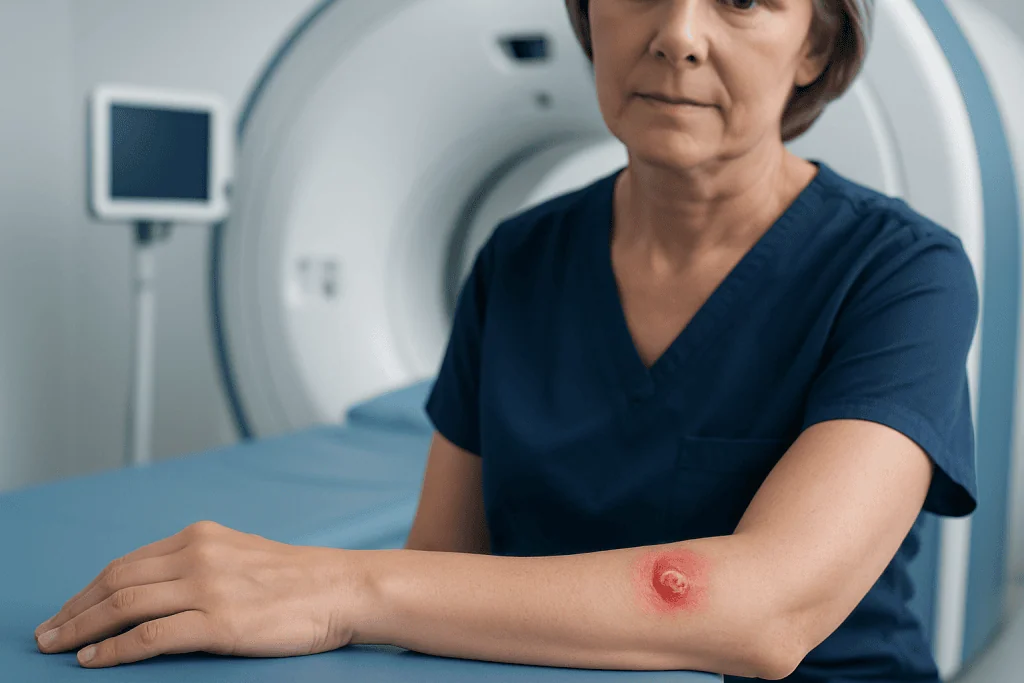
Early MRSA is most commonly noticed on the skin. At first, it may resemble a minor irritated spot, but it tends to become more uncomfortable rather than settling quickly. A lesion may feel tender to the touch and seem more inflamed over hours to days.
Common features include:
- Redness that expands or becomes more intense
- Warmth in the affected area
- Swelling or a firm lump under the skin
- Pain or throbbing
- Pus, drainage, or a visible white or yellow center
- Fever or feeling unwell in some cases
Not every MRSA infection looks dramatic. Some cases begin as a small area of irritated skin and are mistaken for acne, an insect bite, or folliculitis. A painful, worsening skin lesion deserves more attention than one that simply looks unusual.
MRSA can also infect deeper tissues, surgical wounds, the bloodstream, lungs, or other body sites, though these are less common than skin infections in the general community. If symptoms involve worsening fever, shortness of breath, confusion, or rapid spread of redness, urgent medical assessment is important.
Causes, spread, and risk factors

MRSA is caused by a strain of staph bacteria that can live on the skin or in the nose without causing illness in some people. Infection happens when the bacteria enter through a break in the skin, such as a cut, abrasion, shaving nick, insect bite, or surgical wound. Close skin contact and contaminated surfaces or items can also contribute to spread.
It is possible to carry MRSA without symptoms, a state called colonization. Colonization does not always require treatment, but it can raise the chance of future infection in certain situations. A clinician may discuss this if someone has recurrent infections or is preparing for surgery.
Risk factors for developing or spreading MRSA include:
- Skin-to-skin contact in crowded settings
- Shared towels, razors, clothing, or sports equipment
- Participation in contact sports
- Recent hospitalization, surgery, or long-term care residence
- Use of catheters or other medical devices
- Chronic skin conditions or open wounds
- Weakened immune defenses or certain chronic illnesses
- Recent antibiotic use
Because MRSA is part of the broader group of Staphylococcus aureus infections, prevention focuses on both limiting exposure and protecting the skin barrier. Clean, covered wounds and careful hygiene remain central to reducing transmission.
Why early MRSA is often confused with other skin problems
One reason early MRSA is so widely misunderstood is that it does not have a single unique appearance. A sore can look similar to a simple boil, an inflamed hair follicle, cellulitis, or an irritated insect bite. This overlap explains why photographs on the internet are not a reliable way to diagnose it.
Cellulitis, abscesses, and non-MRSA staph infections can all cause redness, pain, and swelling. Fungal rashes, eczema, and allergic reactions may also be mistaken for infection, especially if the skin is scratched or broken. A doctor considers the lesion’s appearance, the speed of change, pain level, drainage, and any fever or risk factors.
Another myth is that MRSA always begins in hospitals. In reality, community-associated infections are well recognized, especially in athletes, families sharing personal items, military settings, dormitories, and anyone with repeated skin trauma. That said, healthcare exposure remains an important risk factor for more complicated infections.
When a painful skin infection is worsening, a professional assessment is more useful than guessing whether it is a bite, acne, or MRSA. If a pocket of pus is present, abscess drainage may be an important part of treatment because some infections improve only after the collection is drained.
How doctors diagnose MRSA
Doctors diagnose MRSA by combining an examination with laboratory testing when needed. The skin lesion itself may suggest a bacterial infection, but appearance alone cannot confirm MRSA. If there is drainage or an abscess, a sample may be sent for culture to identify the bacteria and show which antibiotics are likely to work.
In some situations, blood tests or imaging may be used. Imaging can help if a deeper infection is suspected, and blood cultures may be considered if someone appears significantly unwell or has signs the infection could be spreading beyond the skin. These decisions depend on symptoms, medical history, and exam findings.
Testing also helps distinguish between a localized skin abscess and more diffuse cellulitis, which may require a different treatment approach. If recurrent infections are a problem, a clinician may discuss whether nasal or skin colonization is contributing and whether decolonization measures are appropriate.
Treatment options for early MRSA
Treatment depends on where the infection is, how severe it is, and whether pus has collected under the skin. For a small abscess, drainage by a trained clinician may be the main treatment. For more extensive infection, surrounding cellulitis, fever, or higher-risk patients, antibiotics that are active against MRSA may also be recommended.
It is important not to squeeze, pop, or cut a suspected MRSA lesion at home. This can push infection deeper, delay proper care, and increase spread to other people or body areas. Keeping the area clean and covered until medical review is safer.
Supportive care often includes wound care, dressings, and pain relief guidance from a clinician. In more serious cases, especially if infection spreads or involves other organs, hospital-based care and infectious diseases care may be needed. If there is concern that infection is affecting deeper tissues or another source, microbiology laboratory testing helps guide targeted therapy.
Near the end of care, prevention of recurrence also matters. In selected patients with repeated infections, doctors may recommend hygiene measures or decolonization strategies. Acibadem International’s multidisciplinary specialists and JCI-accredited hospitals diagnose and treat MRSA and other complex infections for international patients when specialist care is needed.
Prevention and self-care at home
Self-care for suspected early MRSA should focus on reducing irritation and limiting spread until a doctor can assess it. The area should be washed gently, covered with a clean bandage, and observed for changes in size, pain, or drainage. Handwashing before and after touching the bandage is especially important.
Helpful prevention steps include:
- Wash hands regularly with soap and water
- Keep cuts, scrapes, and wounds clean and covered
- Avoid sharing razors, towels, clothing, or sports gear
- Shower after sports or gym activities
- Clean frequently touched surfaces and personal equipment
- Follow wound care instructions exactly if treatment has started
- Finish prescribed antibiotics as directed unless a doctor advises otherwise
At home, warm compresses may sometimes be suggested for comfort, but they should not replace a medical assessment if the area is painful, enlarging, or draining. People should also avoid close contact between the infected skin and others until the lesion is covered and a clinician has advised on next steps.
Anyone with a history of recurrent boils or skin abscesses should mention that pattern to a healthcare professional. Sometimes repeated infections prompt evaluation for colonization, skin conditions, diabetes, or other factors that make recurrence more likely.
When to seek medical care
Medical care is recommended if a skin lesion is becoming more painful, red, swollen, warm, or pus-filled, especially if it does not improve within a short time or seems to worsen quickly. A doctor should also assess any suspected infection in a person with diabetes, immune suppression, a recent operation, or an implanted medical device.
Prompt assessment is especially important if there is fever, spreading redness, red streaks, severe pain, a lesion on the face, or multiple affected areas. Urgent care is also appropriate if the person feels faint, confused, short of breath, or generally very unwell.
People should not attempt to diagnose early MRSA by photos alone or start leftover antibiotics without medical advice. A clinician can decide whether drainage, culture, dressings, or targeted antibiotics are needed and can help reduce the risk of complications and transmission.
Frequently asked questions
What does early MRSA look like at first?
Early MRSA often starts as a red, tender bump or patch of skin that may resemble a pimple, boil, ingrown hair, or insect bite. It often becomes more painful, warm, swollen, or pus-filled over time, which is more suggestive of bacterial infection than a simple irritation.
Can early MRSA go away on its own?
Some minor skin infections may improve, but MRSA should not be assumed to resolve without assessment, especially if it is painful, enlarging, or draining pus. Because MRSA is resistant to some antibiotics and can sometimes spread, a clinician should decide whether drainage, wound care, or medication is needed.
Is MRSA always caught in a hospital?
No. MRSA can be acquired in healthcare settings, but community-associated MRSA also occurs in otherwise healthy people. It can spread through skin contact, shared personal items, or bacteria entering through a break in the skin.
How is MRSA confirmed?
Doctors may suspect MRSA based on the appearance of a skin infection, but confirmation usually requires a culture from pus, drainage, or another sample. The laboratory can identify the bacteria and test which antibiotics are likely to work.
Should a suspected MRSA boil be popped at home?
No. Squeezing or cutting a lesion at home can worsen the infection and increase the risk of spreading bacteria. If pus is present, drainage should be done by a trained healthcare professional under appropriate conditions.
How can someone avoid spreading MRSA to family members?
Keeping the wound covered, washing hands carefully, and not sharing towels, razors, clothing, or bedding are key steps. Surfaces and frequently used items should be cleaned regularly, and used dressings should be disposed of safely.
References
- Centers for Disease Control and Prevention
- World Health Organization
- National Health Service
- Infectious Diseases Society of America
- Mayo Clinic
This article is for general information only and is not a substitute for professional medical advice. Please consult a qualified doctor about your individual situation.
Hair transplant in Turkey — costs, graft counts & a free assessment
JCI-accredited · board-certified surgeons · reply within 24h