

Does Kimchi Go Bad? Here Is What the Evidence Says

Kimchi naturally becomes more sour over time, and that alone does not usually mean it is unsafe. Visible mold, a rotten or putrid smell, sliminess beyond the usual brine, or contamination are stronger signs to discard it.
Key Takeaways
- Kimchi naturally becomes more sour over time, and that alone does not usually mean it is unsafe.
- Visible mold, a rotten or putrid smell, sliminess beyond the usual brine, or contamination are stronger signs to discard it.
- Proper refrigeration and clean utensils help kimchi stay safe longer after opening.
- Most mild stomach upset settles on its own, but severe vomiting, dehydration, fever, bloody diarrhea, or symptoms in high-risk people need medical advice.
- If a doctor suspects foodborne illness, evaluation may include a history, physical examination, and sometimes stool tests or blood tests.
Yes, kimchi can go bad, but in many cases a stronger sour smell, fizz, or softer texture simply reflects normal fermentation rather than danger. The key is to distinguish expected aging from true spoilage signs such as visible mold, a foul odor, contamination, or illness after eating it.
Overview: Does Kimchi Go Bad?
Yes, kimchi can go bad. However, this is often less dramatic than people expect because kimchi is a fermented food, and fermentation naturally changes its smell, taste, and texture over time. A more sour flavor, bubbling, and softening vegetables can be part of normal aging rather than a sign of danger.
What matters most is whether the changes fit normal fermentation or suggest true spoilage. Kimchi is typically made with salt, acidity, and beneficial bacteria that help preserve it, especially when refrigerated. Even so, poor storage, contamination from dirty utensils, temperature abuse, or damaged packaging can allow unsafe organisms to grow.
For most healthy adults, eating kimchi that is simply older and more sour is harmless, though the flavor may be unpleasant. The red flags that deserve more caution are visible mold, a clearly rotten smell, unusual discoloration, or symptoms such as vomiting or severe diarrhea after eating it.
Normal Fermentation vs. Spoilage

Kimchi is expected to keep fermenting after it is made, especially early on and even more slowly in the refrigerator. As this happens, acids build up, the cabbage or radish may soften, and the taste usually becomes tangier. Some gas or fizz when opening the jar can also be normal.
These expected changes can make people think the food has spoiled when it has not. A sour aroma, cloudy brine, and a stronger flavor are common in mature kimchi. Some people prefer fresher kimchi for eating on its own and older kimchi for cooking in soups, rice dishes, or stews.
True spoilage is different. Warning signs include fuzzy growth on the surface, colors that look clearly abnormal for the ingredients, a foul or putrid smell rather than a fermented sour smell, or signs that the jar has been contaminated. If the kimchi was left unrefrigerated for too long after opening, that also raises concern.
- Usually normal: increasing sourness, mild fizz, softer texture, cloudy brine
- Concerning: visible mold, rotten odor, contamination, damaged container, unexplained illness after eating
Signs Kimchi May Be Unsafe to Eat
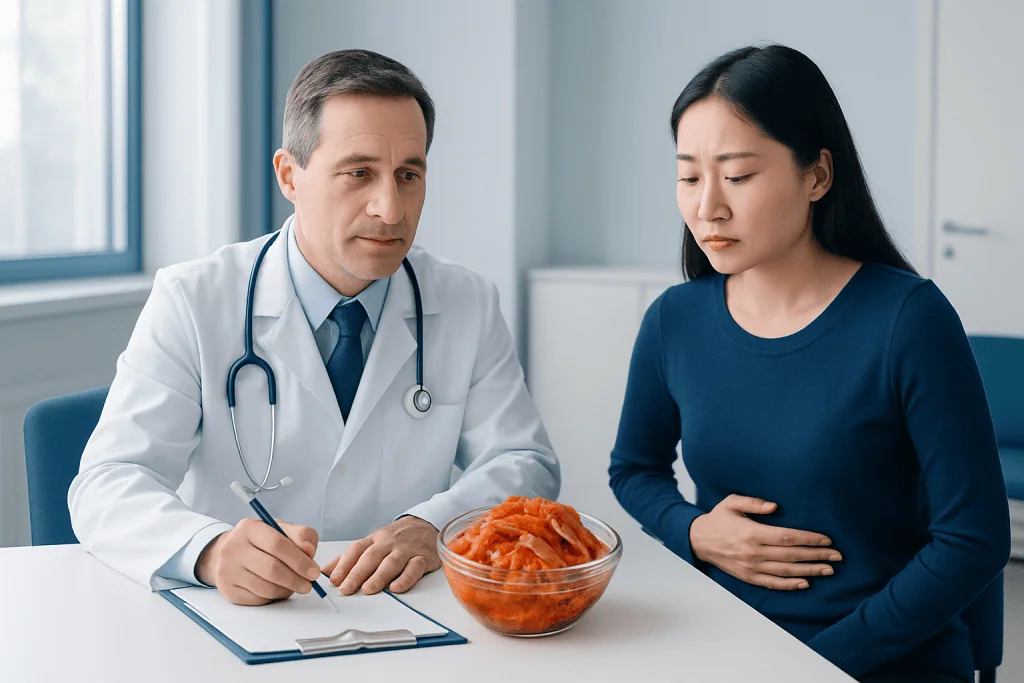
The clearest reason to throw kimchi away is visible mold. Mold may appear fuzzy, hairy, or powdery and can be white, green, blue, black, or another color. Skimming it off is not considered a safe approach for a moist, mixed food like kimchi because contamination may extend beyond what is visible.
Odor is another important clue. Kimchi should smell fermented, tangy, garlicky, and sometimes pungent, but it should not smell rotten, rancid, or like decay. A smell that is sharply unpleasant in a non-fermented way is a warning sign.
Texture and appearance can help too. While softening is common with age, excessive sliminess, an unusual film, or major color changes not explained by ingredients may point to spoilage. If someone ate the kimchi and then developed severe gastrointestinal symptoms, the food should no longer be eaten and a clinician may evaluate for gastroenteritis.
People with weakened immune systems, those who are pregnant, older adults, and very young children should be especially cautious with any food that seems questionable. When in doubt, it is safer not to eat it.
Why Kimchi Goes Bad: Common Causes and Risk Factors
Kimchi usually keeps best when stored cold and handled cleanly. The most common reasons it becomes unsafe are poor refrigeration, repeated warming and cooling, and contamination from utensils or hands. Once other bacteria or molds are introduced, the balance that supports safe fermentation can be disrupted.
Storage conditions matter. An opened jar left at room temperature for extended periods is more likely to spoil quickly. A container that is not sealed well can also expose kimchi to air, off-flavors, and contamination. Using a clean utensil each time helps reduce the transfer of saliva or food particles into the jar.
Homemade kimchi may carry additional uncertainty if the salt level, sanitation, or fermentation conditions were inconsistent. While many homemade batches are prepared safely, food preservation methods need care. If ingredients were not fresh, the jar was not clean, or the product was not refrigerated promptly, the risk of spoilage rises.
If Someone Feels Unwell After Eating Kimchi
Most mild symptoms after eating a food that seems a little too fermented are short-lived. Temporary bloating, gas, heartburn, or mild stomach discomfort can happen even when the kimchi is not spoiled, especially in people who are sensitive to spicy, acidic, or fermented foods.
Symptoms more suggestive of foodborne illness include nausea, repeated vomiting, watery diarrhea, abdominal cramps, fever, or feeling faint from dehydration. These symptoms can have several causes, so kimchi is not always the reason, but the timing after a meal can offer useful clues.
A doctor will usually start with the story of what was eaten, when symptoms began, whether anyone else became ill, and how severe the symptoms are. They may ask about medical conditions, pregnancy, recent travel, or immune suppression. Depending on the situation, testing may include stool studies, blood tests, or assessment for dehydration; in some cases, imaging or colonoscopy may be considered if symptoms suggest another digestive cause rather than simple food poisoning.
How Doctors Evaluate Possible Foodborne Illness
Medical evaluation focuses first on severity and safety. A clinician checks for dehydration, ongoing vomiting, signs of infection, and whether symptoms match a common self-limited stomach illness or something that needs targeted treatment. They may also consider other diagnoses, especially if symptoms are prolonged or there is blood in the stool.
Physical examination often includes temperature, heart rate, blood pressure, and an abdominal exam. If symptoms are severe, last more than a few days, or affect someone at higher risk, a clinician may request laboratory tests. Stool tests can help identify some infections, while blood tests may show dehydration or inflammation.
If symptoms are persistent, recurrent, or not explained by infection, doctors may look for other digestive conditions. Evaluation can include consultation with specialists in gastroenterology and, when needed, endoscopic assessment such as endoscopy. This is not routine for most brief cases of food-related stomach upset, but it can be appropriate when red flags are present.
Storage, Prevention, and Safe Use at Home
The simplest way to reduce risk is to refrigerate kimchi promptly and keep it cold after opening. Use clean utensils every time, keep the vegetables submerged in brine as much as possible, and close the lid securely. These steps help preserve the acidic environment that supports safer fermentation.
It also helps to watch the container itself. If the jar is cracked, leaking, bulging in an unusual way, or the lid appears damaged, the product is less trustworthy. Check package guidance when available, but remember that shelf life can vary depending on ingredients, fermentation stage, and storage conditions.
People who do not enjoy very sour kimchi may use older kimchi in cooked dishes rather than eating it raw. Cooking does not reverse spoilage, so this is only suitable if the kimchi appears otherwise normal and simply tastes mature. If there is visible mold or a rotten smell, it should be discarded rather than tasted.
For people with frequent digestive sensitivity after fermented or spicy foods, it may help to try smaller portions or discuss symptoms with a clinician. Sometimes the issue is food intolerance, reflux, or another digestive problem such as irritable bowel syndrome rather than spoiled food.
When to Seek Medical Care
Medical care is advisable if symptoms are severe or do not improve. Concerning signs include repeated vomiting, inability to keep fluids down, signs of dehydration, high fever, severe abdominal pain, bloody diarrhea, confusion, or weakness. These symptoms deserve prompt professional assessment rather than home monitoring alone.
People who are pregnant, immunocompromised, older, or caring for an infant or small child should contact a clinician sooner if there is concern about possible foodborne illness. Even symptoms that seem moderate can become more serious in these groups.
If digestive symptoms keep returning after fermented foods, or if there is unexplained weight loss, nighttime symptoms, persistent diarrhea, or blood in stool, a broader evaluation may be needed. At Acibadem International, multidisciplinary specialists in JCI-accredited hospitals assess digestive symptoms and possible food-related illness for international patients in a coordinated way.
Frequently asked questions
Can kimchi be too sour but still safe?
Yes. Extra sourness is often a normal result of ongoing fermentation, especially in older kimchi. If there is no mold, rotten smell, or other concerning change, sour kimchi is often still safe, though some people may prefer it cooked rather than eaten fresh.
Is bubbling in kimchi a sign that it has gone bad?
Not necessarily. Bubbling or slight fizz can be part of active fermentation, particularly if the kimchi is relatively fresh or has warmed slightly before opening. It becomes more concerning if bubbling appears alongside a foul odor, mold, or obvious contamination.
Should kimchi always be refrigerated?
After opening, refrigeration is the safest approach and helps slow fermentation. Even before opening, following label storage instructions is important because products vary. Cold storage helps preserve quality and reduces the chance of unsafe microbial growth.
Can someone get food poisoning from kimchi?
Yes, it is possible, although many cases of older kimchi are simply harmless over-fermentation rather than true food poisoning. Risk rises if the kimchi was contaminated, stored improperly, or shows signs of spoilage. Severe symptoms after eating any suspect food should be discussed with a doctor.
What does bad kimchi smell like?
Bad kimchi may smell rotten, putrid, rancid, or otherwise decayed rather than tangy and fermented. Kimchi naturally has a strong smell, so the question is whether it smells like normal sour fermentation or like spoilage. If the odor seems clearly wrong, it is safer to discard it.
Can mold be removed and the rest of the kimchi eaten?
No, that is not recommended. In a moist, mixed food like kimchi, mold and contamination may spread beyond the visible area. If mold is present, the safest choice is to throw the whole batch away.
References
- U.S. Food and Drug Administration
- Centers for Disease Control and Prevention
- World Health Organization
- U.S. Department of Agriculture
- National Institute of Diabetes and Digestive and Kidney Diseases
This article is for general information only and is not a substitute for professional medical advice. Please consult a qualified doctor about your individual situation.
Explore treatments in Turkey — costs, top hospitals & a free quote
JCI-accredited · board-certified surgeons · reply within 24h
Add us as a Preferred Source to see more of our trusted health content across Google Search, AI Overviews and Discover.

More from the Health Library



Related Specialists

Dyt. Zübeyde Demet Cerit
Nutrition & Diet
Dr. Ezgi Gülüm
Oral Dental and Maxillofacial Surgery
Prof. Dr. Yavuz Atar
Otorhinolaryngology
Assoc. Prof. Dr. Zeynep Selen Aslan
Pediatric Neurology