Red Hair Blue Eyes: A Complete Medical Overview
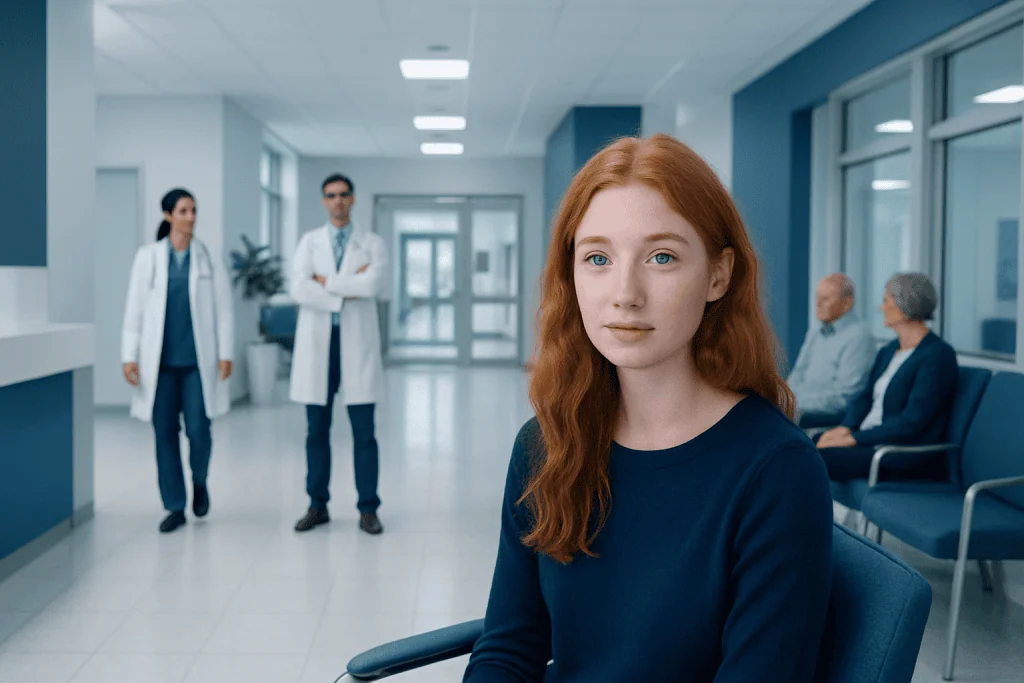
Red hair and blue eyes usually result from inherited gene variants that affect melanin. This trait combination is not an illness, but it often comes with fair skin and increased sun sensitivity.
Key Takeaways
- Red hair and blue eyes usually result from inherited gene variants that affect melanin.
- This trait combination is not an illness, but it often comes with fair skin and increased sun sensitivity.
- People with red hair blue eyes may benefit from careful skin protection and regular skin checks.
- Blue eyes can be more sensitive to bright light, although eye color alone does not determine vision quality.
- Medical care is important if there are changing moles, unusual skin spots, persistent eye symptoms, or a strong family history of skin cancer.
Red hair blue eyes is an uncommon combination of inherited traits, usually related to variants affecting melanin production. It is not a disease by itself, but it can be associated with fair skin, sun sensitivity, and some practical skin and eye health considerations.
Overview: what red hair blue eyes means medically
Red hair blue eyes is a naturally occurring combination of inherited traits. In most cases, it reflects lower amounts or altered patterns of melanin, the pigment that influences hair, skin, and eye color. The combination itself is not a medical condition and does not mean a person is unwell.
From a health perspective, the most relevant issue is not the trait itself but the features that often accompany it, especially fair skin, freckling, and sensitivity to ultraviolet (UV) light. Blue eyes may also be more uncomfortable in very bright environments because they contain less pigment than darker eyes.
A medical overview is helpful because pigment-related traits can affect everyday health habits. For many people, the main concerns involve sun protection, skin cancer awareness, and recognizing when eye or skin symptoms need professional assessment.
How genetics influences red hair and blue eyes
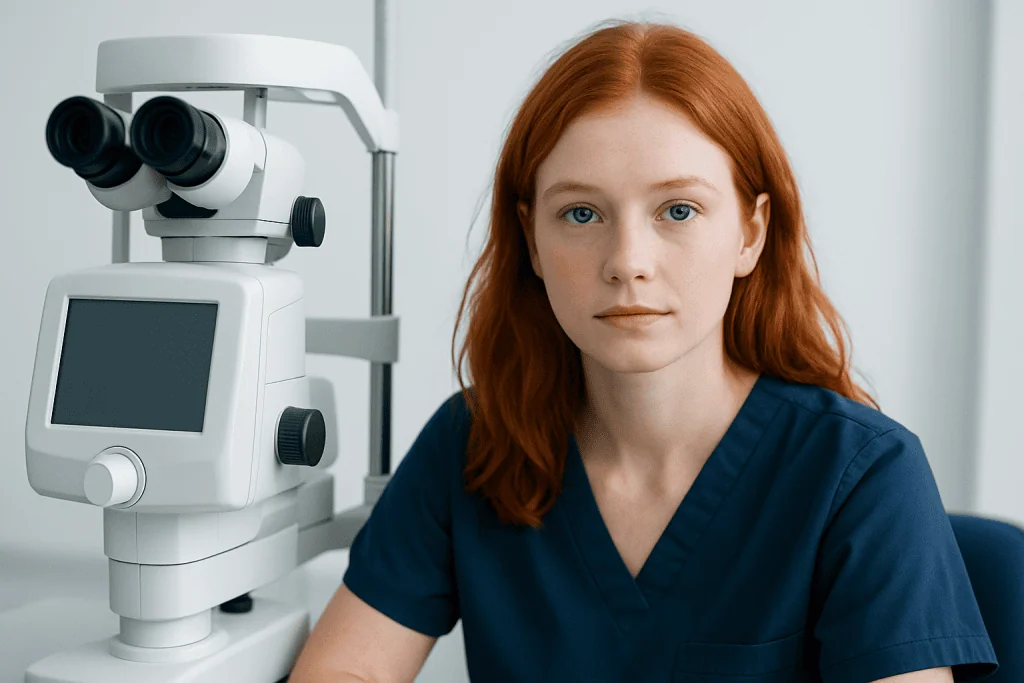
Hair and eye color are shaped by multiple genes, not just one. Red hair is most strongly linked to variants in the MC1R gene, which affect the balance between two forms of melanin: eumelanin, which is darker, and pheomelanin, which is lighter and more reddish. People with red hair often produce relatively more pheomelanin.
Blue eyes usually develop when there is less melanin in the front layers of the iris. The eye does not contain blue pigment in the same way a blue object does. Instead, lower pigment levels change the way light is scattered, making the iris appear blue.
These traits can occur together when a person inherits a combination of gene variants from both sides of the family. Because several genes influence pigmentation, the exact appearance can vary widely, even among siblings. A person may have bright copper hair and pale blue eyes, or darker auburn hair with gray-blue or green-blue eyes.
Genetics can also help explain why this combination tends to be seen more often in people of Northern or Northwestern European ancestry, although it can appear in many populations. In a few cases, unusual hair or eye color may be part of a broader inherited syndrome, but that is uncommon and usually comes with other clear signs.
Typical features and day-to-day health considerations
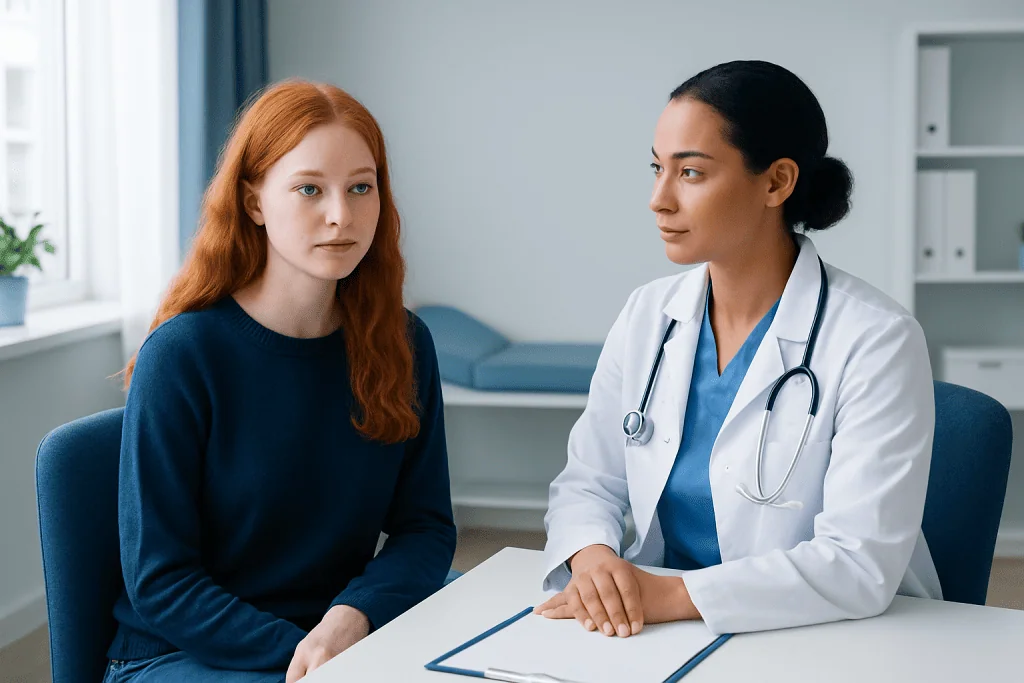
People with red hair blue eyes often share certain visible features, though not everyone will have all of them. Common traits include fair or very fair skin, freckles, easy sunburn, light-colored eyelashes or eyebrows, and greater sensitivity to strong sunlight. These are normal variations in pigmentation, not symptoms of disease.
Lower skin pigment can reduce some natural protection against UV radiation. This means sun exposure may cause skin damage more quickly, especially during midday or in places with intense sunlight. Repeated UV damage can raise the risk of premature skin aging and certain skin cancers over time.
Blue eyes may also feel more sensitive in glare or bright outdoor conditions. Some people notice squinting, discomfort in snow, water, or high-reflection environments, or needing sunglasses more often. Light sensitivity can be normal, but persistent pain, redness, or changes in vision should not be ignored.
- Frequent sunburn or skin redness after short sun exposure
- Freckling or fair skin that tans poorly
- Discomfort in bright sunlight
- Need for regular sun and eye protection
Possible health risks and related medical questions
The main evidence-based concern linked with red hair blue eyes is greater sensitivity to UV light, especially when fair skin is present. This can increase the likelihood of sunburn and can contribute to skin cancers such as basal cell carcinoma, squamous cell carcinoma, and melanoma. The trait itself does not cause cancer, but reduced pigmentation may increase vulnerability to UV-related damage.
Some research has also explored whether people with red hair respond differently to pain, anesthesia, or temperature, possibly because of MC1R-related biology. These findings are still being studied and do not apply in the same way to every individual. They should not be used to make assumptions about medical treatment without a doctor’s judgment.
In everyday practice, doctors focus more on practical risk assessment than on appearance alone. If a patient has multiple atypical moles, a personal or family history of skin cancer, or repeated severe sunburns, a dermatologist may recommend more regular skin surveillance. This may include evaluation for skin cancer if suspicious lesions are present.
Rarely, very light hair, eyes, and skin can appear as part of inherited pigment disorders rather than simple family traits. When there are additional features such as hearing problems, patchy pigment loss, unusual eye development, or symptoms beginning in infancy, a genetics or specialist evaluation may be appropriate.
How doctors assess skin and eye concerns
No medical test is needed to diagnose red hair blue eyes as a trait. However, doctors may assess related concerns if there are symptoms, strong family history, or visible skin changes. The clinical approach usually depends on the person’s age, skin type, sun exposure history, and any warning signs.
For skin health, a clinician may examine moles, freckles, or changing spots using a visual exam and sometimes dermoscopy. If a lesion looks suspicious, further evaluation may be needed, and some patients may benefit from specialist dermatology care for skin mapping, biopsy decisions, and long-term monitoring.
For eye concerns, assessment may include visual acuity testing, examination of the iris and retina, and discussion of light sensitivity, dryness, or vision changes. Persistent photophobia, eye pain, flashing lights, or sudden changes in sight should be evaluated promptly by an eye specialist. In some cases, general eye symptoms may overlap with conditions reviewed in eye diseases.
If there is concern about inherited syndromes, a doctor may take a detailed family history and ask about developmental, hearing, or other pigment-related findings. Genetic counseling may be considered when multiple family members are affected by unusual inherited features.
Prevention and self-care for skin and eye protection
Most health advice for people with red hair blue eyes centers on prevention. Daily sun safety can reduce cumulative UV damage and lower the chance of sunburn. This is especially important in childhood and adolescence, when repeated UV exposure can have long-term effects.
Helpful skin-protection habits include using broad-spectrum sunscreen, wearing protective clothing, seeking shade in peak sun hours, and avoiding tanning beds. Sunscreen should be reapplied as directed on the product label, especially after swimming or sweating. Parents should be especially careful with children who have very fair skin.
Eye comfort can often be improved with high-quality sunglasses that block UV rays and with hats that reduce glare. If dryness or irritation is a problem, a clinician may recommend simple supportive care. Ongoing vision concerns may need formal eye treatments or specialist assessment depending on the cause.
Skin self-checks are also useful. People should learn the appearance of their own moles and freckles and watch for changes in size, shape, color, or symptoms such as bleeding or itching. If there is a strong personal or family risk pattern, a doctor may advise periodic specialist review, and selected patients may need more advanced skin cancer treatment pathways if cancer is confirmed.
When to seek medical care
Medical care is recommended if there is a new or changing mole, a sore that does not heal, unusual skin bleeding, or a patch that becomes darker, irregular, or raised. These changes do not always mean cancer, but they should be checked promptly.
An eye doctor should evaluate persistent light sensitivity, blurred vision, eye pain, redness, double vision, or sudden changes in sight. Although bright-light discomfort can be common in blue eyes, ongoing symptoms need proper assessment to rule out inflammation, surface disease, or other eye problems.
It is also sensible to seek advice if there is a strong family history of melanoma or other skin cancers, repeated severe sunburns, or concern that very light coloring may be part of a broader inherited disorder. Acibadem International’s multidisciplinary specialists in JCI-accredited hospitals diagnose and treat skin and eye conditions for international patients when further assessment is needed.
Frequently asked questions
Is red hair blue eyes a medical condition?
No. Red hair and blue eyes are inherited physical traits, not a disease. The main medical relevance is that this combination often occurs with fair skin and lower pigment, which can increase sun sensitivity.
Why do some people have red hair and blue eyes together?
This happens because a person inherits gene variants that influence both hair and eye pigmentation. Red hair is commonly associated with MC1R-related pigment changes, while blue eyes are linked to lower melanin in the iris and other genetic factors.
Does having red hair and blue eyes increase skin cancer risk?
The trait combination itself does not directly cause skin cancer. However, many people with red hair and blue eyes also have fair skin that burns easily, and repeated UV damage can raise the risk of skin cancers over time.
Are blue eyes more sensitive to sunlight?
They can be. Blue eyes usually contain less pigment than darker eyes, so some people notice more discomfort in bright light or glare. If light sensitivity is severe or comes with pain or blurred vision, it should be checked by an eye doctor.
Should people with red hair blue eyes see a dermatologist regularly?
Regular skin checks can be helpful, especially for those with very fair skin, many moles, a history of severe sunburns, or a family history of skin cancer. A doctor can advise how often examinations are needed based on personal risk.
Can this trait be linked to a genetic syndrome?
Usually it is simply a normal inherited variation. Rarely, unusual pigmentation may be part of a broader genetic condition, especially if there are other signs such as hearing problems, developmental concerns, or distinct pigment changes present from early life.
References
- American Academy of Dermatology
- National Cancer Institute
- MedlinePlus
- National Eye Institute
- DermNet
This article is for general information only and is not a substitute for professional medical advice. Please consult a qualified doctor about your individual situation.
Hair transplant in Turkey — costs, graft counts & a free assessment
JCI-accredited · board-certified surgeons · reply within 24h
Add us as a Preferred Source to see more of our trusted health content across Google Search, AI Overviews and Discover.