

Photosensitive Epilepsy: What Patients Need to Know

Photosensitive epilepsy is triggered by specific visual stimuli, not by all bright lights. Common triggers include flashing lights, rapidly changing images, and high-contrast patterns.
Key Takeaways
- Photosensitive epilepsy is triggered by specific visual stimuli, not by all bright lights.
- Common triggers include flashing lights, rapidly changing images, and high-contrast patterns.
- Diagnosis usually involves a detailed history and tests such as an EEG, sometimes with controlled light stimulation.
- Treatment may include anti-seizure medication, practical trigger avoidance, and lifestyle measures.
- Anyone with a first seizure, injury during a seizure, or prolonged symptoms should seek prompt medical care.
Photosensitive epilepsy is a form of epilepsy in which flashing lights, certain visual patterns, or rapidly changing images can trigger seizures in people who are sensitive to them. Many people can reduce risk with a combination of medical evaluation, trigger awareness, and an individualized treatment plan.
Overview: what photosensitive epilepsy means
Photosensitive epilepsy is a type of epilepsy in which seizures are provoked by certain visual stimuli. These may include flashing or flickering lights, rapidly changing images on screens, or bold, repetitive patterns such as stripes or geometric designs. It does not mean that every light exposure is dangerous, and not everyone with epilepsy has photosensitivity.
This condition is most often identified during childhood or adolescence, although it can affect adults as well. Some people only have seizures when exposed to a trigger, while others may also have seizures at other times. The visual trigger acts as a provocation in a brain that is already susceptible to seizures.
Understanding photosensitive epilepsy can help patients and families make sense of symptoms that may otherwise seem unpredictable. In many cases, seizures can be reduced with the right diagnosis, treatment, and practical steps to avoid known triggers. A neurology evaluation is important because other seizure types and other causes of fainting or altered awareness may look similar.
Symptoms and what a trigger-related seizure can look like
The symptoms of photosensitive epilepsy depend on the type of seizure a person has. Some people experience generalized tonic-clonic seizures, which may involve loss of consciousness, body stiffening, and rhythmic jerking movements. Others may have brief episodes of staring, eyelid fluttering, muscle jerks, or a short pause in awareness that can easily be missed.
Symptoms may begin during or shortly after exposure to a trigger. A person may notice warning signs such as visual discomfort, blinking, dizziness, headache, eye strain, or a strange feeling before a seizure, although many seizures happen without a clear warning. In some individuals, the seizure itself is the first sign that a trigger has had an effect.
Possible seizure features include:
- Staring spells or brief unresponsiveness
- Sudden jerking of the arms or body
- Loss of awareness or confusion
- Eyelid twitching or repeated blinking
- Falling, stiffening, or shaking movements
- Tiredness or headache after the episode
Because seizures can vary, it helps to record what happened, how long it lasted, and whether a screen, game, flashing light, or patterned environment was present. This information can support diagnosis of epilepsy and help a specialist identify whether light sensitivity is part of the picture.
Common triggers, causes, and risk factors
Photosensitive seizures are usually triggered by visual stimulation with a particular frequency, contrast, or pattern. Classic examples include strobe lights, rapidly flickering images, emergency vehicle lights, some video games, or sunlight flashing through trees or blinds while traveling in a car. In some people, black-and-white striped patterns or repeated geometric shapes are more provocative than bright light itself.
The exact cause relates to how the brain processes visual input. In photosensitive individuals, certain visual signals can overstimulate networks in the brain and trigger abnormal electrical activity. This susceptibility may be linked to genetic factors, and photosensitivity can occur in several epilepsy syndromes rather than existing as a completely separate disease in every case.
Risk factors can include younger age, a personal or family history of epilepsy, sleep deprivation, stress, missed anti-seizure medication, alcohol use in some individuals, and illness with fever. These factors do not directly cause photosensitive epilepsy, but they may lower seizure threshold and make a visual trigger more likely to provoke an event.
Importantly, many people with epilepsy are not photosensitive, and many people who are uncomfortable around bright or flickering light do not have epilepsy. A careful medical assessment is needed to distinguish photosensitive epilepsy from migraine, fainting, movement disorders, or non-epileptic events.
How doctors diagnose photosensitive epilepsy
Diagnosis starts with a detailed medical history. The clinician will ask what happened before, during, and after the event; whether there was loss of awareness or body movements; how long symptoms lasted; and whether any visual trigger was present. Videos recorded by family members can be very useful when it is safe and possible to obtain them.
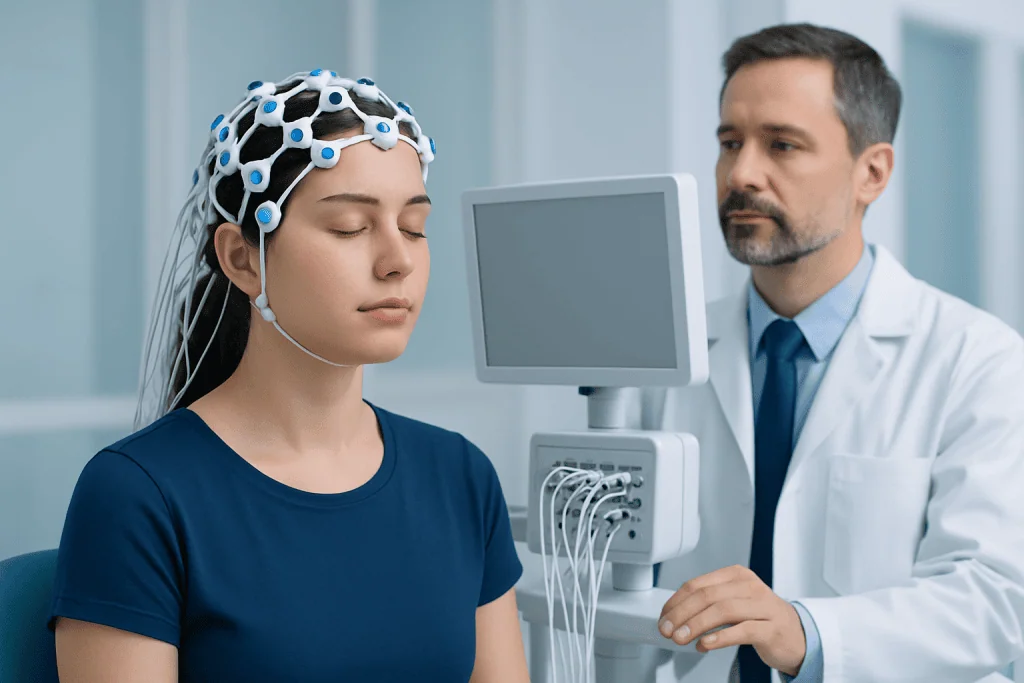
A neurological examination is usually followed by tests such as an electroencephalogram, or EEG, which records the brain’s electrical activity. During some EEG studies, doctors use controlled flashing lights to see whether the brain shows a photosensitive response. This is done in a monitored medical setting, with safety precautions in place, and can provide important evidence for diagnosis.
Additional tests may be recommended to look for underlying causes or to classify the seizure type more accurately. Brain imaging may be used in selected cases, especially when the history is atypical or there are focal neurological findings. Depending on the symptoms, specialists may also assess for related conditions such as migraine if visual symptoms or headaches are prominent.
Accurate diagnosis matters because treatment and safety advice differ according to seizure type, age, and overall health. If a person has repeated events or an uncertain diagnosis, referral to a neurology team with access to neurology care and neurophysiology testing can help guide the next steps.
Treatment options and everyday management
Treatment is individualized. Many patients benefit from anti-seizure medication, especially if they have recurrent seizures or a high risk of further episodes. The choice of medicine depends on the seizure type, age, medical history, and whether photosensitivity occurs alone or as part of a broader epilepsy syndrome.
Practical trigger management is also a key part of care. Patients may be advised to avoid obvious flashing lights, take breaks from screens, reduce screen brightness, increase viewing distance, and use devices in well-lit rooms to lower contrast. In some situations, covering one eye briefly and looking away from a trigger may help interrupt exposure, though this does not replace medical treatment.
Helpful measures can include:
- Taking medication exactly as prescribed
- Getting enough sleep and keeping a regular sleep schedule
- Limiting exposure to known triggers when possible
- Using screen settings that reduce flicker or contrast
- Avoiding driving or hazardous activities until medically advised
- Keeping a seizure diary to track patterns and triggers
For people with difficult-to-control seizures, specialist assessment may be needed to review the diagnosis and treatment plan. In selected cases, broader epilepsy surgery evaluation or advanced testing may be considered, although this is not necessary for most patients with photosensitive epilepsy.
Prevention, self-care, and living well with light sensitivity
Prevention focuses on reducing exposure to personal triggers and supporting overall brain health. Because trigger thresholds vary from person to person, patients often benefit from learning exactly which environments or screen conditions are most problematic. Seizure diaries, smartphone notes, or simple checklists can make patterns easier to recognize over time.
Small environmental changes may help. Examples include sitting farther from large screens, avoiding screen use when very tired, choosing television and gaming settings that reduce flicker, and being cautious in clubs, concerts, or other settings with strobe lighting. Polarized or tinted lenses may help some people with visual discomfort, but they should be discussed with a doctor because they are not a substitute for seizure treatment.
Family members, friends, teachers, or coworkers may also need basic guidance. They should know what the person’s seizures look like, how to keep the area safe during an episode, and when to call for emergency help. This can make day-to-day life feel more manageable and reduce anxiety around activities such as school, work, travel, and digital device use.
Near the end of the care pathway, some patients seek multidisciplinary support for diagnosis review, EEG testing, imaging, and treatment planning. Acibadem International’s multidisciplinary specialists in JCI-accredited hospitals evaluate and treat epilepsy-related conditions for international patients, including cases that may need brain MRI or specialist neurological follow-up.
When to seek medical care
Medical review is important after any first suspected seizure, even if the episode was brief or the person seems fully recovered. Evaluation is also needed if episodes are becoming more frequent, are happening without a clear trigger, or are interfering with school, work, sleep, or daily safety.
Urgent medical care is needed if a seizure lasts more than a few minutes, if repeated seizures occur without full recovery between them, or if the person is injured, has trouble breathing, or remains confused for an unusually long time afterward. Emergency assessment is also appropriate if a seizure happens in water, during pregnancy, or in someone with diabetes or another serious medical condition.
Families should seek specialist advice if they suspect that video games, online content, or environmental flashing patterns are triggering symptoms. Proper diagnosis helps prevent unnecessary restrictions while making sure genuine seizure risk is taken seriously and managed safely.
Frequently asked questions
What is photosensitive epilepsy?
Photosensitive epilepsy is a type of epilepsy in which certain visual stimuli can trigger seizures. These triggers may include flashing lights, flickering screens, or high-contrast patterns. It is a recognized neurological condition and should be evaluated by a qualified doctor.
Do all people with epilepsy have photosensitive seizures?
No. Only some people with epilepsy are sensitive to visual triggers. Many people with epilepsy never have seizures related to flashing lights or patterns.
Can phones, TVs, or video games cause seizures in photosensitive epilepsy?
They can trigger seizures in some susceptible people, especially if there is flicker, rapid image changes, or high contrast. However, not every screen is a problem for every person. Individual trigger patterns vary, so a doctor may recommend practical adjustments rather than complete avoidance.
How is photosensitive epilepsy tested?
Doctors usually begin with a medical history and description of the events. An EEG is often used, and controlled flashing light may be included during the test to check for a photosensitive response. Additional tests may be recommended depending on the person's symptoms and overall health.
Can photosensitive epilepsy be treated?
Yes. Treatment may include anti-seizure medication, trigger reduction, and lifestyle measures such as regular sleep and avoiding missed medication. Many patients achieve good control with an individualized plan developed by a neurology specialist.
What should someone do if they think flashing lights triggered a seizure?
They should arrange a medical evaluation, especially if this was a first seizure or if episodes are recurring. It helps to note the circumstances, duration, symptoms, and possible trigger. If the seizure is prolonged, causes injury, or breathing is affected, urgent medical care is needed.
References
- World Health Organization
- International League Against Epilepsy
- National Institute of Neurological Disorders and Stroke
- Epilepsy Foundation
- National Health Service
This article is for general information only and is not a substitute for professional medical advice. Please consult a qualified doctor about your individual situation.
Epilepsy in Turkey — costs, top hospitals & a free quote
JCI-accredited · board-certified surgeons · reply within 24h
Add us as a Preferred Source to see more of our trusted health content across Google Search, AI Overviews and Discover.

Neurosurgery
Surgical treatment of the brain, spine and nervous system, including minimally invasive and functional procedures.
72 specialists in this unitMore from the Health Library



Related Specialists
Prof. Dr. Bülent Değertekin
Gastroenterology
Assoc. Prof. Dr. Mehmet Ferdi Kıncı
Gynecology & Obstetrics
Assoc. Prof. Dr. Caner Baran
Urology
Prof. Dr. Ayhan Çevik
Pediatric Cardiology