Kcal Avocado: An Evidence-Based Guide for Patients

Half an average avocado often provides about 120–160 calories, while a whole medium avocado may contain around 240–320 calories. Most avocado calories come from heart-healthy unsaturated fats rather than sugar.
Key Takeaways
- Half an average avocado often provides about 120–160 calories, while a whole medium avocado may contain around 240–320 calories.
- Most avocado calories come from heart-healthy unsaturated fats rather than sugar.
- Avocados also provide fiber, potassium, folate, and vitamin K, which can support a balanced diet.
- Portion size matters, especially for people managing weight, digestive symptoms, or calorie intake.
- Preparation affects total calories; spreads, oils, chips, and creamy toppings can raise the energy content quickly.
- People with kidney disease, allergies, or special medical diets may need individualized advice from a clinician or dietitian.
kcal avocado is a common nutrition question, and the short answer is that avocado calories depend mainly on portion size. Half an average avocado often contains about 120–160 calories, while a whole medium fruit may provide roughly 240–320 calories, together with fiber, unsaturated fats, vitamins, and minerals.
Overview: how many kcal does avocado have?
When patients search for kcal avocado, they usually want a simple answer they can use right away. In everyday terms, half an average avocado often contains about 120 to 160 calories, while a whole medium avocado may provide roughly 240 to 320 calories. Exact numbers vary because avocados differ in size, variety, and edible portion.
Avocado is more calorie-dense than many fruits because it is rich in fat. However, this does not automatically make it unhealthy. Most of its fat is unsaturated fat, the type commonly included in balanced eating patterns. Avocado also contains fiber and micronutrients, which can make meals more satisfying and nutritionally useful.
For patients, the most practical point is that avocado calories are best judged by portion rather than by the fruit alone. A few slices added to a salad contribute far fewer calories than a whole mashed avocado on toast with oil and toppings. Reading labels on prepared products such as guacamole cups or avocado spreads can also help.
Why avocado calories vary

Not every avocado contains the same number of calories. Size is the main reason for variation. A small avocado has less edible flesh than a large one, and a large avocado can contain substantially more calories than patients expect. The pit and peel do not count, so the calorie estimate refers only to the flesh that is eaten.
Variety matters too. Different types of avocado have slightly different fat and water content, which can change the calorie value. Ripeness may alter texture and flavor, but it usually has less effect on calories than the amount eaten. In most real-life situations, measuring the portion gives a more reliable estimate than trying to identify the exact variety.
Helpful ways to estimate kcal avocado include:
- By fraction of the fruit: one-quarter, one-half, or one whole avocado
- By weight: using grams on a kitchen scale for greater accuracy
- By serving size: about 2 tablespoons of mashed avocado is a modest portion
- By meal context: avocado alone versus avocado with bread, oil, cheese, or sauces
This approach is especially useful for people following a nutrition plan for weight management, diabetes, digestive symptoms, or heart health.
Nutrition beyond calories
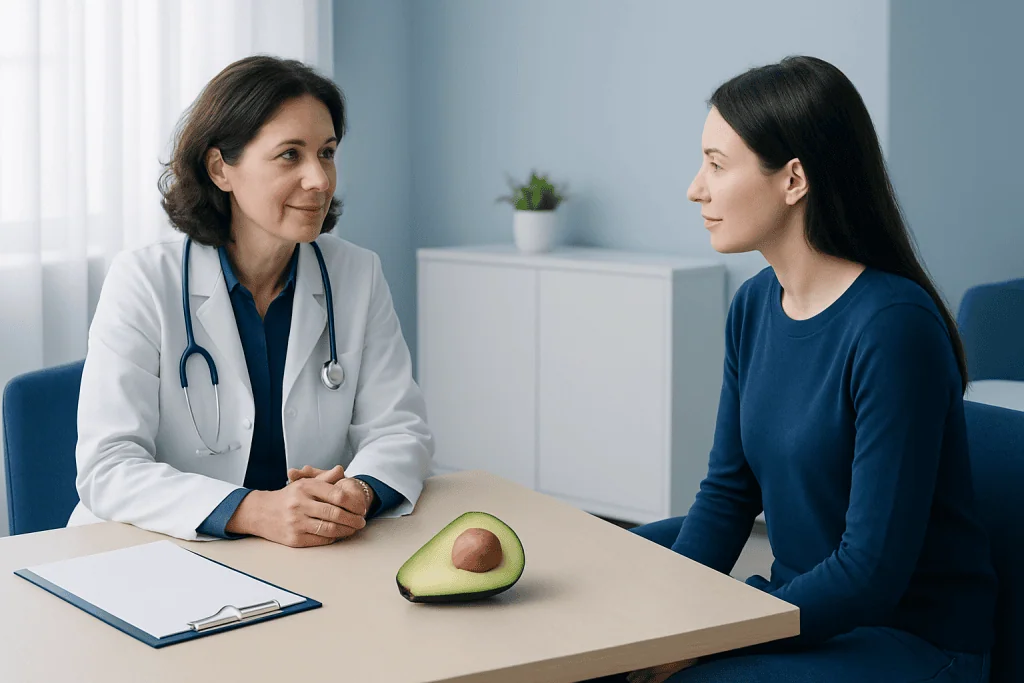
Although the calorie content often gets the most attention, avocado offers more than energy. It is known for its unsaturated fats, including monounsaturated fat, which is commonly associated with heart-conscious dietary patterns. These fats can help make food more satisfying and may support overall diet quality when they replace less healthy fat sources.
Avocado also provides dietary fiber. Fiber can support digestive health, help promote fullness after meals, and contribute to stable eating habits. In addition, avocado contains potassium, folate, vitamin K, vitamin E, and smaller amounts of other vitamins and plant compounds.
Because avocado is naturally low in sugar and contains fiber and fat, it can fit well into many balanced meal plans. For some patients, this makes it a practical option at breakfast, in salads, or as part of snacks. People who are learning about diabetes sometimes ask whether avocado is appropriate; in many cases it can be, but the total meal pattern still matters.
Nutrition choices are rarely about one food in isolation. Avocado can be a helpful ingredient, but it is most beneficial when included as part of a varied eating pattern built around vegetables, fruits, whole grains, legumes, and appropriate protein sources.
Is avocado good for weight management and heart health?
Avocado can fit into a weight-management plan, but portion size remains important. Because it is relatively calorie-dense, eating large amounts regularly can increase daily energy intake. At the same time, its fiber and fat may improve fullness, which can help some people feel satisfied with smaller meals or fewer snacks later in the day.
For heart health, avocado is often viewed favorably because of its unsaturated fat profile. Replacing foods high in saturated fat with avocado in sensible portions may support a heart-conscious eating pattern. This does not mean unlimited intake is helpful; it means avocado can be one nutritious fat source among others, such as nuts, seeds, olive oil, and oily fish.
Patients with high cholesterol, overweight, or obesity often benefit more from overall dietary habits than from focusing on one ingredient. If a person is pursuing structured support for weight-related health concerns, a clinician may discuss nutrition planning together with broader care strategies such as obesity surgery in selected cases.
Avocado is not a treatment for cardiovascular disease, but it may have a place in preventive nutrition. Anyone with established heart disease, severe lipid disorders, or multiple risk factors should seek personalized medical advice rather than relying on general dietary trends.
Best portion sizes and practical ways to eat avocado
For many adults, a sensible serving is around one-quarter to one-half of a medium avocado at a time, depending on total calorie needs and the rest of the meal. This amount can add creaminess, flavor, and nutrients without making the meal unexpectedly high in calories. Athletes or people with higher energy needs may choose larger portions, while others may prefer smaller amounts.
Simple meal ideas include sliced avocado with eggs, avocado added to a bean salad, or a spoonful of mashed avocado spread thinly on whole-grain toast. Using avocado in place of butter, mayonnaise, or creamy dressings may improve the overall fat quality of a meal. Portion awareness still matters, especially when multiple high-calorie ingredients are used together.
Common ways calories rise quickly include:
- Large café-style avocado toast with added oil, cheese, or processed meats
- Restaurant guacamole eaten with fried chips
- Smoothies that combine avocado with sweetened ingredients
- Repeated tasting while preparing dips and spreads
Patients who need a more tailored food plan may benefit from dietitian and nutrition support, particularly if they are managing weight, chronic disease, or recovery after treatment.
Who may need extra caution with avocado?
Avocado is suitable for many people, but some groups may need individualized guidance. Patients with advanced kidney disease are sometimes advised to monitor potassium intake, and avocado contains a meaningful amount of potassium. This does not mean it must always be avoided, but portion advice should come from the treating clinician or renal dietitian.
People with irritable bowel symptoms or sensitive digestion may notice bloating or discomfort if they eat large amounts. Tolerance varies from person to person, and preparation, meal size, and the rest of the diet can all influence symptoms. If digestive issues are frequent, a medical review may help rule out conditions such as Crohn's disease or other gastrointestinal disorders when symptoms suggest more than simple food sensitivity.
Avocado allergy is uncommon but possible. Some people with latex sensitivity may also react to certain fruits, including avocado. Symptoms such as mouth itching, hives, swelling, vomiting, wheezing, or difficulty breathing need prompt medical assessment.
Patients recovering from surgery, living with chronic disease, or following medically supervised diets should ask whether avocado fits their plan. In some situations, broader nutritional support may be part of care alongside services such as gastroenterology evaluation when symptoms involve digestion.
When to seek medical care
Most questions about kcal avocado do not require urgent medical attention. However, medical advice is appropriate if a person has unexplained weight loss, ongoing digestive symptoms, difficulty swallowing, severe abdominal pain, persistent diarrhea, blood in the stool, or repeated vomiting. These symptoms should not be explained away by one food alone.
Urgent care is needed for signs of an allergic reaction after eating avocado, especially swelling of the lips or tongue, trouble breathing, faintness, or widespread hives. People with kidney disease, diabetes, eating disorders, or complex nutrition needs should also ask a clinician before making major diet changes.
If an individual wants structured, evidence-based support, Acibadem International’s multidisciplinary specialists and JCI-accredited hospitals evaluate nutrition-related concerns and the health conditions that may influence them, especially for international patients seeking coordinated care.
Frequently asked questions
How many calories are in half an avocado?
Half an average avocado often contains about 120 to 160 calories. The exact amount depends mainly on the size of the fruit and how much flesh is actually eaten.
How many calories are in one whole avocado?
A whole medium avocado commonly provides around 240 to 320 calories. Larger avocados may contain more, so patients who track calories may find it helpful to weigh the edible portion.
Why does avocado have more calories than many fruits?
Avocado is naturally rich in fat, which contains more calories per gram than carbohydrates or protein. Most of this fat is unsaturated fat, which is generally considered a healthier type of dietary fat.
Can avocado be part of a weight-loss diet?
Yes, avocado can fit into a weight-loss plan when portion sizes are managed. Its fiber and fat may help with fullness, but eating large amounts can still raise total daily calorie intake.
Is avocado suitable for people with diabetes?
In many cases, yes. Avocado is relatively low in sugar and contains fiber and fat, which can fit well into a balanced meal plan, but the entire meal and overall diet still matter.
What is a healthy portion of avocado?
For many adults, one-quarter to one-half of a medium avocado is a reasonable serving. The best portion depends on calorie needs, health goals, and what else is included in the meal.
Should anyone avoid avocado?
Some people may need caution, including those with avocado allergy, latex-related food sensitivity, certain digestive problems, or advanced kidney disease that requires potassium monitoring. A doctor or dietitian can advise whether avocado is appropriate in these situations.
References
- U.S. Department of Agriculture
- Academy of Nutrition and Dietetics
- American Heart Association
- National Institute of Diabetes and Digestive and Kidney Diseases
- World Health Organization
This article is for general information only and is not a substitute for professional medical advice. Please consult a qualified doctor about your individual situation.
Medical weight-loss options in Turkey — costs & eligibility
JCI-accredited · board-certified surgeons · reply within 24h
Add us as a Preferred Source to see more of our trusted health content across Google Search, AI Overviews and Discover.
Check your numbers in seconds
BMI, calories, due date, blood pressure and 30+ more clinical calculators — free, instant, doctor-reviewed ranges.