Do Derma Rollers Work? A Doctor-Reviewed Answer

Home derma rollers may provide mild improvement in texture and shallow acne scars, but they are less effective than professional microneedling. Most redness after use is temporary, but persistent irritation, swelling, infection, or darkening of the skin should be medically reviewed.
Key Takeaways
- Home derma rollers may provide mild improvement in texture and shallow acne scars, but they are less effective than professional microneedling.
- Most redness after use is temporary, but persistent irritation, swelling, infection, or darkening of the skin should be medically reviewed.
- People with active acne, eczema, psoriasis, rosacea, keloid tendency, or skin infections should avoid derma rollers unless a doctor advises otherwise.
- Doctors assess the skin concern first, because issues such as pigmentation, scarring, or hair loss may need different treatments.
- Safe technique and device hygiene are essential to reduce the risk of irritation, infection, and post-inflammatory hyperpigmentation.
Yes, derma rollers can work for some people, especially for mild acne scarring, uneven texture, and supporting skincare penetration. However, results are usually modest with home devices, and safety, needle length, skin type, and proper diagnosis all matter.
Do derma rollers work? The short answer
In many cases, yes, derma rollers can work, but expectations should stay realistic. For people with mild skin texture concerns or shallow acne scarring, a home derma roller may support small improvements over time by creating tiny, controlled injuries in the upper skin layers that trigger repair.
That said, most home devices do not produce the same results as in-clinic microneedling. Professional treatment uses medical-grade equipment, better control of needle depth, and a doctor’s assessment of whether microneedling is appropriate in the first place. This matters because some skin concerns that seem harmless at home can worsen with rolling, especially active acne, sensitive inflammatory skin conditions, or darker marks left after irritation.
For many people, mild redness for a day or two is the most common short-term effect and settles without treatment. Medical review becomes more important if there is significant pain, persistent swelling, discharge, worsening acne, signs of infection, or new brown or dark patches after use. Before recommending treatment, a doctor would usually identify the exact problem being treated, assess skin type and healing tendency, and review products, medications, and any history of scarring or pigmentation problems.
How derma rollers are supposed to work
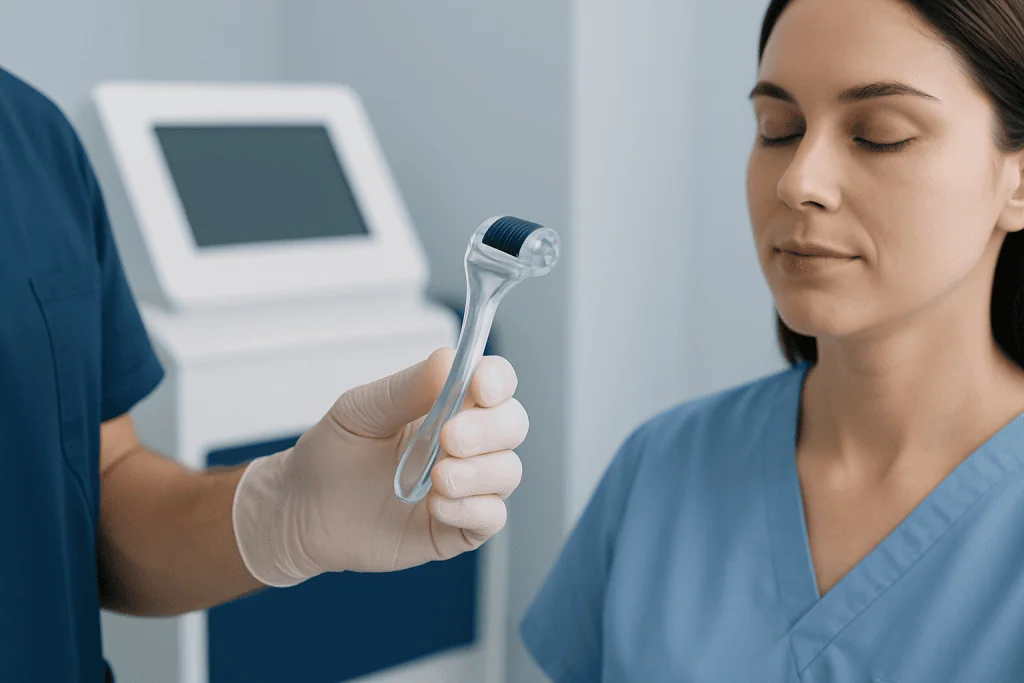
A derma roller is a handheld device covered with very small needles. When rolled across the skin, it creates micro-injuries that may stimulate the skin’s repair response. In theory, this process can encourage collagen remodeling, which is why derma rolling is often discussed for acne scars, uneven texture, and fine lines.
Another reason people use derma rollers is to improve absorption of topical skincare products. Because the skin barrier is temporarily disrupted, certain ingredients may penetrate more easily. However, this can be helpful or harmful depending on the product used. Active ingredients that are normally tolerated, such as exfoliating acids or retinoids, may sting intensely or cause irritation if applied too soon after rolling.
It is also important to distinguish a home derma roller from professional microneedling. Clinic devices are designed to treat the skin more precisely and may be combined with other dermatology treatments when suitable. Someone looking for more significant improvement in scarring, resurfacing, or texture concerns may benefit from discussing options such as professional microneedling rather than relying only on a home device.
What results are realistic

The most realistic benefit of home derma rollers is modest improvement, not dramatic change. Some users notice smoother skin feel, slightly brighter tone, and subtle softening of superficial acne marks after repeated careful use. Results, when they occur, usually take weeks to months and depend on consistency, device quality, skin type, and aftercare.
They tend to be less effective for deep acne scars, loose skin, significant wrinkles, or long-standing pigmentation. These concerns often need a more tailored plan. A doctor may recommend a different approach based on the main issue, such as laser treatment for certain textural or pigment concerns, or a medical skincare program rather than mechanical rolling.
Hair growth is another common reason people ask whether derma rollers work. Some early evidence suggests microneedling may support selected hair-loss treatment plans, especially when combined with doctor-guided therapy. But hair loss has many causes, including hormone changes, iron deficiency, stress, autoimmune disease, and genetics, so self-treatment should not replace evaluation for persistent shedding or thinning.
Who may benefit and who should avoid them
Home derma rollers may be most suitable for adults with generally healthy skin who want to address mild texture irregularity or shallow post-acne marks and who can follow careful hygiene steps. Even in these cases, it helps to start conservatively and avoid overuse, since more pressure or more frequent sessions do not necessarily mean better results.
They are usually not a good choice for people with active acne, inflamed pimples, cold sores, warts, open cuts, or any current skin infection. Rolling over these areas can spread irritation or infection and delay healing. People with eczema, psoriasis, rosacea, or very sensitive skin may also flare with microneedling-type devices.
Caution is especially important for anyone who develops keloid or raised scars easily, has a history of post-inflammatory hyperpigmentation, or uses medications that affect healing. If acne scarring is a main concern, a doctor can also determine whether the marks are truly scars or mainly discoloration from previous breakouts, which may be approached differently than acne.
- More likely to benefit: mild uneven texture, shallow post-acne marks, healthy skin barrier
- Use caution or avoid: active acne, skin infection, eczema, psoriasis, rosacea, keloid tendency
- Seek advice first: darker skin tones with pigment concerns, persistent hair loss, use of prescription retinoids or blood-thinning medicines
Risks, side effects, and common mistakes
The most common side effects are temporary redness, dryness, tightness, and mild tenderness. These often improve within a short time if the skin is left alone and protected. Problems are more likely when the device is not cleaned well, the needles are too long, the skin is rolled too aggressively, or harsh products are applied immediately afterward.
Infection is an important but preventable risk. Because the skin barrier is disrupted, bacteria can enter if the roller is contaminated or shared. Another concern is post-inflammatory hyperpigmentation, where irritation leaves darker patches after healing. This can be particularly frustrating and may last longer than the original issue being treated.
Other common mistakes include rolling over active breakouts, using a damaged roller, applying fragranced or acidic products right after treatment, and expecting the device to treat every skin problem. For example, if facial redness is caused by rosacea, repeated irritation from a derma roller may worsen symptoms rather than improve them.
How doctors evaluate skin concerns linked to derma rolling
If someone seeks medical advice after using a derma roller, the first step is usually a focused skin examination. The doctor looks at where the problem is, whether there are signs of infection or allergic reaction, and whether the underlying concern is scarring, pigmentation, inflammatory acne, sensitivity, or another skin disorder. In many cases, this assessment is enough to guide treatment.
The doctor will also ask about the device used, needle length if known, frequency of use, cleaning method, pressure applied, and what products were put on the skin before and after rolling. They may review medications, previous reactions to skincare, tendency to scar, and any history of cold sores, eczema, or pigment changes. This helps distinguish simple irritation from more specific complications.
When hair loss is the reason for derma rolling, evaluation may include scalp examination and, if needed, blood tests or other workup depending on the pattern of shedding. If a stronger office-based procedure is being considered, the doctor may discuss whether dermatology care or another specialist service is more suitable. Near the end of the care journey, some patients choose centers such as Acibadem International, where multidisciplinary specialists in JCI-accredited hospitals evaluate and treat skin and scalp concerns for international patients.
Safer self-care and when to seek medical care
For those who still plan to use a home derma roller, safer self-care means starting gently, keeping the device clean, never sharing it, and avoiding use on broken, inflamed, or infected skin. Sun protection matters because freshly irritated skin can darken more easily with ultraviolet exposure. A simple moisturizer and a pause from strong active ingredients may help the skin recover after treatment.
It is wise to stop using the device and seek medical advice if redness lasts more than a few days, the skin becomes increasingly painful, or there is crusting, pus, spreading rash, fever, or significant swelling. Medical review is also sensible if new dark patches appear, acne worsens noticeably, or the intended problem is not improving despite repeated use. Persistent hair shedding, patchy hair loss, or scalp soreness should also be assessed rather than managed only at home.
People should seek prompt medical care for signs of infection, severe allergic reaction, facial swelling around the eyes, or intense pain. In general, the safest approach is to treat derma rollers as limited tools rather than universal solutions. When the exact skin issue is identified early, treatment is more likely to be both effective and safe.
Frequently asked questions
Do derma rollers work better than professional microneedling?
Usually no. Home derma rollers may offer mild results, but professional microneedling is generally more precise, deeper when appropriate, and performed after a skin assessment. That often makes clinic treatment more effective for scars and texture concerns.
Can a derma roller help acne scars?
It may help mild, shallow acne scars over time, but it is less likely to improve deeper scars. A doctor can tell whether marks are true scars, leftover discoloration, or ongoing acne, because each may need a different treatment.
Is redness after using a derma roller normal?
Mild short-term redness and sensitivity can be normal after use. However, worsening pain, discharge, increasing swelling, or redness that lasts several days should be checked by a doctor.
Who should not use a derma roller?
People with active acne, skin infections, eczema, psoriasis, rosacea flares, or a history of keloid scarring should generally avoid it unless a clinician advises otherwise. Those prone to dark marks after irritation should also be cautious.
Can derma rollers make skin worse?
Yes, they can if used incorrectly or on the wrong skin condition. Common problems include irritation, infection, worsening inflammation, and post-inflammatory hyperpigmentation.
Do derma rollers help hair growth?
They may play a supporting role in some hair-loss treatment plans, but they are not a stand-alone answer for unexplained shedding or thinning. Because hair loss can have medical causes, persistent or patchy loss should be evaluated.
References
- American Academy of Dermatology
- National Health Service
- Mayo Clinic
- British Association of Dermatologists
- U.S. Food and Drug Administration
This article is for general information only and is not a substitute for professional medical advice. Please consult a qualified doctor about your individual situation.
Explore treatments in Turkey — costs, top hospitals & a free quote
JCI-accredited · board-certified surgeons · reply within 24h
Add us as a Preferred Source to see more of our trusted health content across Google Search, AI Overviews and Discover.