Shockwave Therapy for Ed: How It Works, Results and What to Expect

Low-intensity shockwave therapy is a noninvasive approach intended to support penile blood flow. It may be most suitable for selected men with mild to moderate vasculogenic erectile dysfunction.
Key Takeaways
- Low-intensity shockwave therapy is a noninvasive approach intended to support penile blood flow.
- It may be most suitable for selected men with mild to moderate vasculogenic erectile dysfunction.
- Treatment is usually delivered over several outpatient sessions, with no anesthesia or downtime in most cases.
- Improvement, when it occurs, may develop gradually over weeks to months rather than immediately.
- A urology assessment is important because ED can be linked with cardiovascular disease, diabetes, hormonal conditions, medication effects, or emotional factors.
Shockwave therapy for ED uses low-intensity sound waves to stimulate changes in penile blood vessels and tissue. It may help some men with mild to moderate vascular erectile dysfunction, but results vary and it is not appropriate for every cause of ED.
Overview: What Is Shockwave Therapy for ED?
Shockwave therapy for ED, also called low-intensity extracorporeal shockwave therapy (Li-ESWT), is a noninvasive procedure that delivers low-energy acoustic waves to areas of the penis. The aim is to encourage biological processes involved in blood-vessel repair and new small-vessel formation, which may improve penile blood flow and support erections in some men.
Erectile dysfunction (ED) is the ongoing difficulty getting or keeping an erection firm enough for satisfying sexual activity. It is common and can have physical, psychological, relationship-related, or mixed causes. Because erections depend on healthy nerves, hormones, blood vessels, and emotional wellbeing, the most appropriate treatment depends on an individual assessment.
Shockwave therapy is most often considered for vasculogenic ED, meaning ED related mainly to reduced penile blood flow. It is not a replacement for a full medical evaluation, and its benefits are variable. Some professional organizations consider the treatment investigational or recommend its use only with careful counseling because study protocols, devices, and long-term evidence are not fully standardized.
How Shockwave Therapy for ED Works
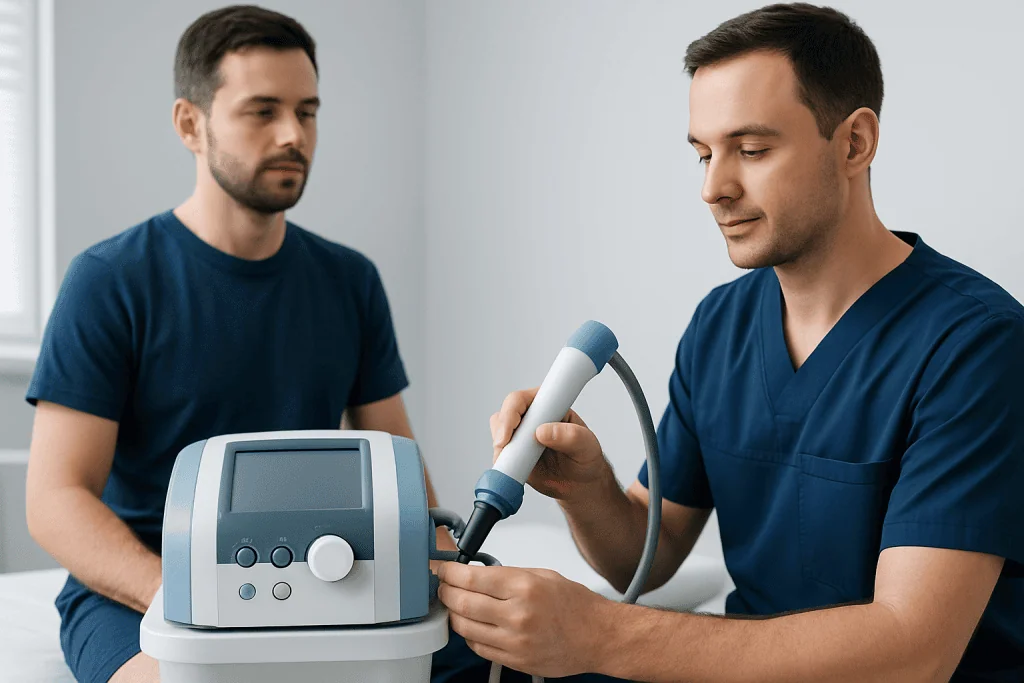
During low-intensity shockwave treatment, a clinician places a handheld applicator against several areas of the penis. The device generates acoustic pulses that pass through the skin. These are different from the high-energy shockwaves used to break up kidney stones; treatment for ED is delivered at much lower energy and is generally intended to be comfortable.
The precise mechanisms are still being studied. Laboratory and clinical research suggests that low-intensity acoustic waves may stimulate signaling pathways linked to tissue repair, nitric oxide activity, circulation, and the growth of small blood vessels. Better local circulation may help some men respond more effectively to natural sexual stimulation or to other ED treatments.
Shockwave therapy does not create an erection during the appointment and does not address every contributor to ED. For example, treatment may be less helpful when ED is primarily caused by severe nerve injury, advanced diabetes-related complications, major hormonal deficiency, significant penile scarring, or untreated depression or anxiety. A clinician may also discuss established options such as lifestyle measures, oral medicines, vacuum devices, injections, or penile implants.
Who May Be a Candidate for Shockwave Therapy?

A urologist or sexual-medicine clinician usually begins by confirming the nature of the erection problem and looking for contributing health conditions. Men who may be considered for shockwave therapy often have mild to moderate ED associated with blood-vessel risk factors, such as high blood pressure, high cholesterol, smoking, obesity, or diabetes, particularly if they retain some natural erectile function.
Assessment commonly includes a medical and sexual history, review of medicines, physical examination, and, when indicated, blood tests for diabetes, cholesterol, testosterone, or other conditions. A clinician may use a validated erectile-function questionnaire and may recommend penile Doppler ultrasound in selected cases to assess blood flow. ED can be an early sign of cardiovascular disease, so broader vascular health should not be overlooked.
Shockwave therapy may not be the best first option for everyone. Men with unstable cardiovascular disease, active genital infection or skin injury, a bleeding disorder, use of certain blood-thinning medicines, untreated prostate or bladder symptoms, or a suspected penile condition should discuss safety and timing with a specialist. A clinician should also assess for Peyronie’s disease, which can cause curvature, pain, or shortening; this is distinct from ED, although both may occur together.
- Best-supported potential use: selected men with vasculogenic ED.
- Important alternatives: oral ED medicines, vacuum erection devices, penile injections, counseling, and treatment of underlying health conditions.
- Key principle: the cause of ED should guide treatment rather than choosing a procedure based on symptoms alone.
What Happens During the Procedure and Recovery?
Shockwave therapy is usually performed as an outpatient procedure. Before the session, the clinician reviews the plan, confirms there are no new safety concerns, and explains what sensations to expect. The patient is positioned comfortably, and gel is applied to help transmit the acoustic waves through the skin.
The applicator is moved over predetermined treatment areas. A session commonly lasts around 15 to 30 minutes, although exact timing varies with the device and protocol. Most people describe the pulses as tapping or tingling rather than painful. Anesthesia, sedation, needles, and incisions are generally not required.
There is usually no formal recovery period. Most men can return to work, driving, exercise, and sexual activity the same day unless their clinician advises otherwise. Mild temporary tenderness, tingling, or redness can occur. Following the care team’s instructions, managing blood pressure and blood sugar, avoiding tobacco, staying physically active, and addressing stress can all support overall vascular and sexual health.
How Long Does It Take for Shockwave Therapy for ED to Work?
When shockwave therapy helps, improvement is usually gradual rather than immediate. Some men notice changes during the course of treatment or within several weeks, while others may need one to three months after completing sessions to judge the effect. This timing reflects the proposed tissue and blood-vessel changes, which are not expected to occur overnight.
The response depends on factors such as the underlying cause and severity of ED, age, diabetes or cardiovascular health, smoking status, medication use, and whether erectile tissue and nerve function are preserved. A clinician may schedule follow-up after treatment to review erection quality, satisfaction, and whether other therapies are still needed.
It is reasonable to keep expectations measured. A lack of immediate change does not necessarily mean the treatment has failed, but persistent difficulty should be discussed with the treating clinician rather than leading to unregulated devices or unproven supplements.
How Successful Is Shockwave Therapy for Erectile Dysfunction?
Research suggests that low-intensity shockwave therapy may improve erectile-function scores for some men, particularly those with mild to moderate vasculogenic ED. However, reported success rates differ substantially between studies because devices, energy settings, treatment schedules, patient selection, and definitions of improvement are not the same. This makes it difficult to predict an individual result precisely.
Some men experience firmer erections, improved response to oral ED medication, or greater sexual confidence. Others have little or no meaningful change. Benefits may not last indefinitely, and the durability of response beyond the short and medium term remains an area of ongoing research. Repeat treatment may be discussed in selected circumstances, but it should be based on clinical review rather than a routine promise.
For this reason, shockwave therapy is best approached as one possible component of individualized ED care. Established medical treatments may be more appropriate for certain patients, and combining treatment with management of diabetes, blood pressure, lipids, weight, physical activity, sleep, and mental health can be important for both sexual and cardiovascular wellbeing.
How to Tell If Shockwave Therapy Is Working and How Many Sessions Are Needed
Signs that treatment may be helping include more reliable erections with sexual stimulation, improved morning or spontaneous erections, better firmness, or a stronger response to a prescribed oral ED medicine. The most meaningful outcome is whether erections are sufficiently reliable and satisfactory for the individual and their partner. Clinicians may track changes with a structured questionnaire before and after treatment.
There is no single universally accepted schedule for how many shockwave sessions for ED are needed. Many research and clinical protocols use multiple sessions spread across several weeks, often totaling approximately six to twelve treatments. The number, spacing, treatment sites, and energy settings depend on the device, the clinician’s protocol, and the patient’s condition.
A reputable provider should explain the proposed schedule, the uncertainty in expected benefit, alternatives, and follow-up plan before treatment begins. Men should be cautious of claims that a single session, home device, or guaranteed outcome can permanently cure ED. If symptoms persist, a urologist can review other evidence-based options, including treatment options for erectile dysfunction.
Risks, Benefits, and When to Seek Medical Care
Low-intensity shockwave therapy is generally reported to be well tolerated in clinical studies. Possible short-term effects include mild discomfort during treatment, temporary redness, bruising, skin sensitivity, or tingling. Serious complications appear uncommon when properly selected patients are treated by qualified clinicians, but long-term safety evidence and device standards continue to evolve.
The potential benefit is improved erectile function without surgery, injections, or daily medication. However, it cannot be expected to work for every person, and it does not treat the underlying medical drivers of ED by itself. A clinician can help weigh potential benefits against uncertainty, cost considerations, other treatments, and personal goals.
Medical care should be sought promptly for chest pain, shortness of breath, fainting, sudden neurological symptoms, severe penile pain, major swelling, bleeding, a painful erection lasting more than four hours, or an erection problem that begins suddenly after pelvic injury. A routine medical appointment is also advisable for new or persistent ED, especially when accompanied by reduced exercise tolerance, diabetes symptoms, low libido, penile curvature, or urinary changes.
Acibadem International’s multidisciplinary specialists in urology, cardiology, endocrinology, and mental health can assess contributing factors and discuss individualized ED care for international patients in its JCI-accredited hospitals.
Frequently asked questions
Is shockwave therapy for ED painful?
Most men describe low-intensity shockwave therapy as a tapping, tingling, or mild vibrating sensation rather than pain. No anesthesia is usually needed. If treatment is uncomfortable, the clinician can assess the device settings and technique.
Can shockwave therapy cure erectile dysfunction permanently?
Shockwave therapy should not be described as a guaranteed or permanent cure for ED. Some men may have improvement, while others may not respond, and the duration of benefit varies. Managing underlying vascular, metabolic, hormonal, and psychological factors remains important.
Can shockwave therapy be used with ED medication?
In some cases, clinicians may use shockwave therapy alongside prescribed oral ED medication, particularly when a patient has an incomplete response to medicine alone. The combination and timing should be decided by a qualified clinician. Men should not stop or change prescribed medicines without medical advice.
Who should avoid shockwave therapy for ED?
Suitability depends on the person’s medical history and the cause of ED. People with certain bleeding risks, active infection or injury in the treatment area, unstable medical conditions, or unexplained genital symptoms may need evaluation or alternative care first. A urologist can determine whether treatment is appropriate.
Does shockwave therapy help ED caused by diabetes?
It may help some men with diabetes-related ED when reduced blood flow is a major contributor, but responses can be less predictable when nerve damage or advanced vascular disease is present. Good diabetes management is an essential part of treatment. A clinician can assess whether shockwave therapy is reasonable alongside other options.
What should a person ask before starting shockwave therapy for ED?
Helpful questions include whether the ED is likely vasculogenic, what device and treatment protocol will be used, how outcomes will be assessed, and what alternatives are suitable. It is also important to ask about likely limitations, possible side effects, and follow-up. Clear counseling helps a person make an informed decision.
References
- American Urological Association
- European Association of Urology
- Sexual Medicine Society of North America
- National Institute of Diabetes and Digestive and Kidney Diseases
- Mayo Clinic
This article is for general information only and is not a substitute for professional medical advice. Please consult a qualified doctor about your individual situation.
Explore treatments in Turkey — costs, top hospitals & a free quote
JCI-accredited · board-certified surgeons · reply within 24h
Check your numbers in seconds
BMI, calories, due date, blood pressure and 30+ more clinical calculators — free, instant, doctor-reviewed ranges.