Physical Therapy for Sports Hernia Rehabilitation: How It Works, Results and What to Expect
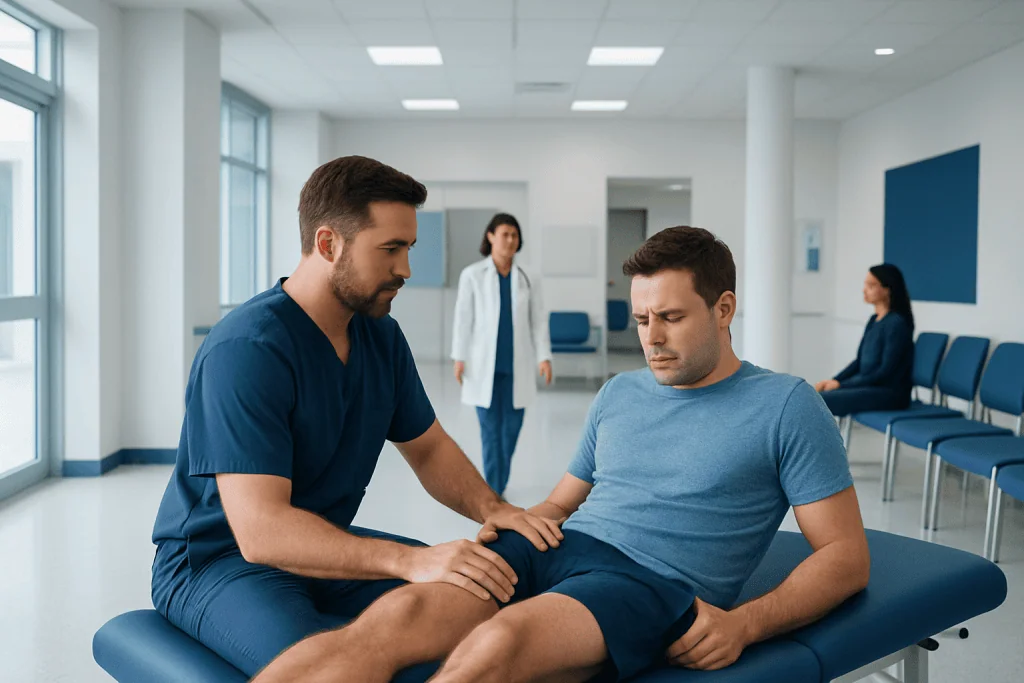
A sports hernia is usually a painful injury of the lower abdominal, groin, and pelvic soft tissues rather than a typical visible hernia. Rehabilitation commonly begins with reducing aggravating activity and restoring comfortable movement before progressing to strength and sport drills.
Key Takeaways
- A sports hernia is usually a painful injury of the lower abdominal, groin, and pelvic soft tissues rather than a typical visible hernia.
- Rehabilitation commonly begins with reducing aggravating activity and restoring comfortable movement before progressing to strength and sport drills.
- Recovery time varies with symptom severity, the person’s sport, and whether surgery is needed; a gradual return is safer than rushing back.
- Persistent groin pain should be assessed because hip, urinary, nerve, testicular, and abdominal conditions can cause similar symptoms.
- Surgery may be considered when a well-directed rehabilitation program does not relieve symptoms or when structural injury requires repair.
Physical therapy for sports hernia rehabilitation is a structured, progressive program that addresses pain, core and hip muscle control, flexibility, and sport-specific movement. Many people improve with non-surgical care, while rehabilitation also plays an important role before and after surgery when symptoms persist.
Overview: How Physical Therapy for Sports Hernia Rehabilitation Works
Physical therapy for sports hernia rehabilitation helps people with persistent activity-related groin or lower abdominal pain regain comfortable movement, strength, and confidence in sport. The term “sports hernia” is commonly used for athletic pubalgia or core muscle injury. Despite its name, it often does not involve a visible bulge or the same type of opening seen in an inguinal hernia.
The rehabilitation approach is individualized. A physiotherapist identifies painful movements and contributing factors such as reduced hip mobility, weak or poorly coordinated trunk muscles, overload in the adductors (inner-thigh muscles), or training errors. Treatment then progresses from symptom calming and movement control to strength, running, twisting, kicking, and other demands of the person’s sport.
Physical therapy is often the first treatment approach when symptoms are stable and there is no urgent concern for another condition. It can also prepare a person for surgery if it becomes necessary and supports recovery after a repair. The goal is not simply to eliminate pain at rest, but to restore the ability to tolerate sport-specific load without symptoms returning.
How Painful Is a Sports Hernia?
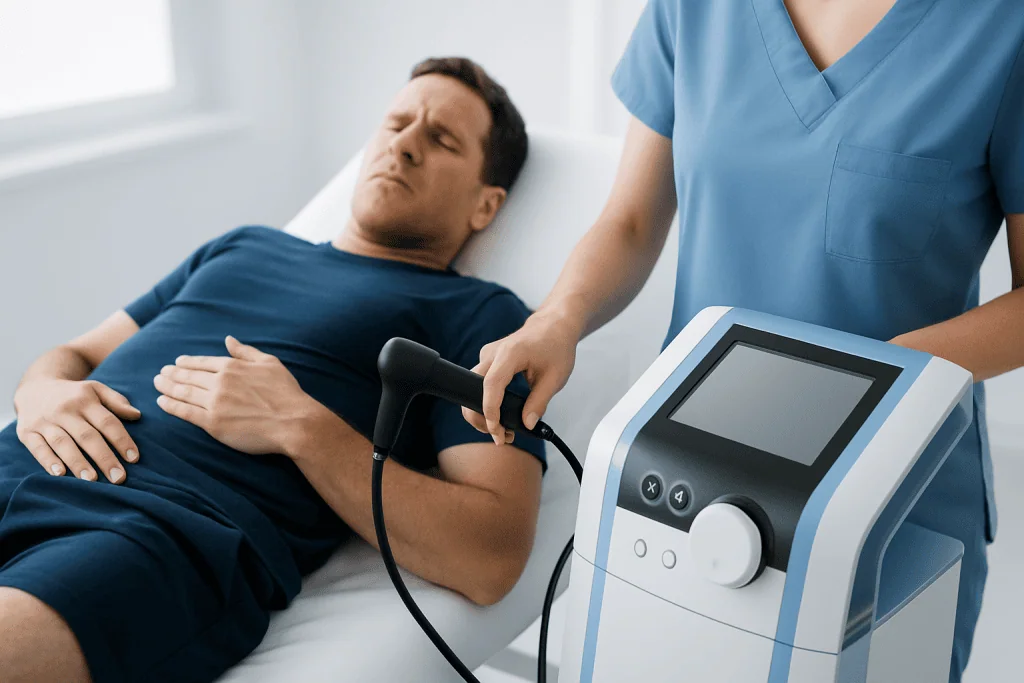
A sports hernia can cause a sharp, pulling, burning, or aching pain in the lower abdomen, pubic region, or groin. Pain is commonly felt during sprinting, cutting, kicking, twisting, sit-ups, coughing, or forceful changes of direction. It may improve with rest and return quickly when training resumes.
The intensity varies widely. Some athletes feel only a mild, recurring discomfort that limits performance, while others have pain that makes running or turning difficult. Pain may radiate toward the inner thigh, genital area, or hip, but these symptoms are not specific to a sports hernia and should be assessed in context.
Unlike a typical groin hernia, athletic pubalgia may not produce a visible or palpable lump. A clinician should evaluate ongoing groin pain rather than assuming that it is caused by a muscle strain, especially if pain is severe, worsening, or accompanied by swelling, fever, nausea, urinary symptoms, or testicular pain.
Causes, Risk Factors and Candidacy for Rehabilitation
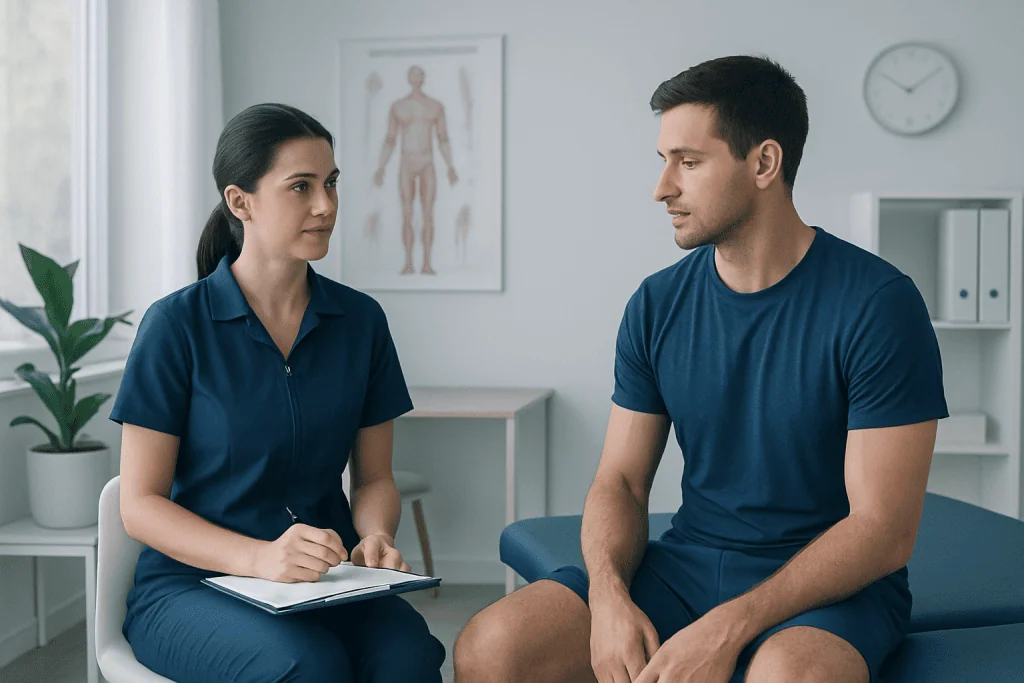
Sports hernia symptoms are often related to repetitive high-force loading across the lower abdomen, pelvis, and groin. They are seen in sports involving acceleration, rapid deceleration, pivoting, kicking, and rotational movements, including football, soccer, hockey, rugby, tennis, and track activities. Symptoms may begin suddenly after a forceful movement or develop gradually during a season.
Possible contributing factors include a previous groin injury, limited hip range of motion, reduced trunk or pelvic control, adductor weakness, and a rapid increase in training volume or intensity. Hip conditions, including femoroacetabular impingement, can coexist and may affect rehabilitation planning. Other causes of groin pain, such as inguinal hernia, should also be considered during assessment.
People are generally good candidates for a trial of physical therapy when symptoms are linked to activity, examination findings are consistent with a core muscle or groin-related injury, and there are no red-flag symptoms. Rehabilitation may be less likely to succeed on its own when there is a significant structural injury, ongoing severe limitation despite appropriate therapy, or another diagnosis requiring different treatment.
- Assessment of posture, walking, hip movement, and abdominal and adductor muscle function
- Review of training load, recent changes in activity, and sport-specific triggers
- Consideration of hip, spine, urinary, reproductive, and nerve-related sources of pain when appropriate
Step by Step: What Happens During Physical Therapy?
The first visit usually includes a detailed history and physical examination. The physiotherapist may assess pain with coughing, resisted abdominal movements, squeezing the thighs together, hip motion, balance, and single-leg tasks. Diagnostic imaging is not always needed, but a doctor may request ultrasound or MRI when symptoms are unclear, persistent, or suggest another injury.
Early treatment focuses on reducing irritation while maintaining safe activity. This may involve temporarily modifying sprinting, kicking, heavy lifting, or repeated twisting. Gentle hip and trunk exercises, breathing and bracing strategies, manual techniques where appropriate, and gradual restoration of pain-free movement may be used. Complete inactivity is not always necessary, but painful loading is usually reduced.
As symptoms settle, therapy typically advances to controlled abdominal, gluteal, hip, and adductor strengthening. The emphasis is on coordination as well as strength: the trunk and pelvis need to remain stable while the legs generate force. Exercises are progressed according to symptoms and function, rather than following an identical schedule for every person.
Later sessions introduce running, acceleration, deceleration, lateral movement, jumping, kicking, rotational tasks, and practice drills. The final return-to-sport phase should reflect the person’s actual sport and position. A suitable plan may include communication among the physiotherapist, sports medicine physician, surgeon when involved, and coaching team.
How Long Does It Take to Rehab a Sports Hernia?
The time needed to rehab a sports hernia depends on the diagnosis, duration of symptoms, training demands, and response to progressive exercise. Some people with mild, recent symptoms improve over several weeks of activity modification and supervised rehabilitation. Long-standing symptoms or pain that recurs with high-level sport may take longer and require reassessment.
Return to full sport should be based on function rather than a calendar date alone. Before progressing, the person should be able to walk, jog, sprint, change direction, twist, and perform sport-specific movements with minimal or no pain and without a next-day symptom flare. Comparable strength, control, and confidence on both sides are also useful markers.
If surgery is performed, rehabilitation usually begins with protected movement and gradual return to daily activity, followed by progressive core, hip, and adductor strengthening. The timeline for running and competitive sport is decided by the surgical technique, healing, symptoms, and clinical review. Following the surgical team’s instructions is essential.
How Does Physical Therapy Help a Sports Hernia?
Physical therapy helps a sports hernia by reducing excessive strain on sensitive groin and lower abdominal tissues while building the capacity needed for sport. It does this through targeted load management, improved hip and pelvic movement, progressive strengthening, and retraining of movements such as cutting, landing, and kicking.
A key part of treatment is addressing the relationship between the abdominal muscles and adductors, which attach around the pubic region. Rather than relying on rest alone, a graded program carefully reintroduces force. This can improve tolerance to activity and may reduce the chance of symptoms recurring when training intensity increases.
Education is also important. A physiotherapist can help a person recognize which activities are currently tolerable, plan sensible progressions, and avoid abrupt changes in workload. Persistent pain is not a reason to push through intense drills; it is a reason to adjust the plan and seek reassessment if progress stalls.
Benefits, Limitations and the Role of Surgery
Potential benefits of rehabilitation include improved pain control, stronger and better coordinated core and hip muscles, improved movement efficiency, and a gradual return to training without immediate surgery. A non-surgical program also provides useful information: improvement with targeted exercise supports continued rehabilitation, while limited progress may help guide further investigation.
Rehabilitation has limitations. Symptoms can temporarily increase if activities progress too quickly, and some people may continue to have pain despite careful treatment. This does not mean the person has failed therapy; it may indicate that the diagnosis needs review, that a coexisting hip or groin condition is present, or that surgical repair should be discussed.
Sports hernia surgery commonly aims to repair or reinforce injured tissue in the lower abdominal or groin region, sometimes with treatment of related nerve irritation or coexisting pathology. A surgeon determines the appropriate technique after clinical evaluation. When an operation is recommended, hernia surgery is followed by a staged rehabilitation program rather than an immediate return to high-intensity sport.
For international patients, Acibadem International’s multidisciplinary specialists and JCI-accredited hospitals can assess groin pain and coordinate surgical and rehabilitation care when indicated.
What Is the Success Rate of Sports Hernia Surgery?
Sports hernia surgery can relieve symptoms and allow many appropriately selected athletes to return to sport, but a single success rate does not apply to everyone. Reported outcomes vary because studies use different definitions of sports hernia, surgical methods, follow-up periods, and measures of recovery. Individual results also depend on whether hip problems, adductor injuries, nerve pain, or other causes of groin pain are present.
A surgeon should discuss the expected benefits, alternatives, and uncertainties based on the person’s examination and imaging findings. In general, surgery is considered after an adequate period of targeted non-surgical care has not restored function, or when a repairable structural problem is identified. Postoperative rehabilitation remains an important part of achieving the best possible functional outcome.
Possible surgical risks include infection, bleeding, fluid collection, scarring, ongoing or recurrent pain, nerve-related symptoms, and risks associated with anesthesia. These complications are not inevitable, but they are part of informed decision-making. Promptly reporting increasing pain, redness, fever, wound drainage, or new swelling after surgery is important.
When to Seek Medical Care
Medical assessment is appropriate for groin or lower abdominal pain that lasts more than a few days, repeatedly returns with sport, limits walking or exercise, or does not improve with sensible rest and load modification. A sports medicine doctor, orthopedic specialist, general surgeon, or physiotherapist can help distinguish athletic pubalgia from other conditions that may require different care.
Urgent medical care is needed for sudden severe groin or abdominal pain, a tender or non-reducible groin bulge, fever, vomiting, fainting, marked testicular pain or swelling, blood in the urine, or inability to pass urine or stool. These symptoms may indicate a condition other than a sports hernia and should not be managed with exercise alone.
Until assessment, avoiding activities that clearly reproduce significant pain is sensible. Maintaining general fitness through comfortable low-impact exercise may be possible for some people, but any program should be adapted to symptoms and guided by a qualified clinician.
Frequently asked questions
Can a sports hernia heal without surgery?
Some people improve with activity modification and a structured rehabilitation program focused on the core, hips, adductors, and return-to-sport movements. The likelihood of improvement depends on the underlying injury and how long symptoms have been present. Persistent or recurrent pain should be reassessed by a qualified clinician.
What exercises should be avoided with a sports hernia?
Activities that clearly reproduce groin or lower abdominal pain are usually reduced early in recovery. These often include sprinting, sudden direction changes, kicking, heavy lifting, forceful twisting, and intense abdominal exercises. A physiotherapist can identify tolerable alternatives and guide gradual reintroduction.
Is a sports hernia the same as an inguinal hernia?
No. A sports hernia usually describes a soft-tissue injury or weakness around the lower abdomen and groin without a typical visible bulge. An inguinal hernia involves tissue protruding through a weak area of the abdominal wall and may require a different assessment and treatment plan.
Can I keep exercising during sports hernia rehabilitation?
Often, yes, but the exercise plan needs modification. Comfortable low-impact activities may be used to maintain fitness while painful sport-specific movements are temporarily reduced. Continuing through significant pain can delay recovery, so progression should be based on symptoms and professional guidance.
When is surgery considered for a sports hernia?
Surgery may be considered when an appropriate course of targeted rehabilitation does not relieve symptoms or restore the ability to participate in desired activities. It may also be recommended when examination and imaging identify a structural problem suited to repair. The decision should be made with a surgeon after discussing alternatives, benefits, and risks.
Can sports hernia pain come back after returning to sport?
It can return, particularly if training load increases too quickly or if underlying hip, core, or adductor impairments remain. A gradual return-to-sport plan and continued conditioning can help reduce this risk. New or recurring symptoms should be reviewed early rather than ignored.
References
- American Academy of Orthopaedic Surgeons
- American Physical Therapy Association
- European Hernia Society
- Hospital for Special Surgery
- National Institute of Arthritis and Musculoskeletal and Skin Diseases
This article is for general information only and is not a substitute for professional medical advice. Please consult a qualified doctor about your individual situation.
Explore treatments in Turkey — costs, top hospitals & a free quote
JCI-accredited · board-certified surgeons · reply within 24h