Prostate Cancer Surgery vs Radiation: Differences Explained

Surgery removes the prostate, while radiation uses targeted energy to destroy cancer cells without removing the gland. For many localized cancers, neither treatment is universally better; shared decision-making is important.
Key Takeaways
- Surgery removes the prostate, while radiation uses targeted energy to destroy cancer cells without removing the gland.
- For many localized cancers, neither treatment is universally better; shared decision-making is important.
- Surgery usually causes more immediate urinary leakage and erectile-function changes, while radiation side effects may develop gradually.
- Radiation can affect the bowel and bladder and may make later prostate surgery more complex.
- Treatment planning should consider cancer risk category, life expectancy, existing urinary symptoms, sexual function, and personal preferences.
For localized prostate cancer, surgery and radiation are both established treatments that can offer similar chances of cancer control for many men. The most suitable approach depends on the cancer’s features, a person’s age and health, urinary and sexual function, personal priorities, and whether additional treatment may be needed.
Overview: prostate cancer surgery vs radiation
Prostate cancer surgery vs radiation is a common decision for men with cancer that appears confined to the prostate or nearby tissues. In many cases, both treatments can provide strong long-term cancer control. The decision is not simply about choosing the “stronger” treatment; it is about matching an effective treatment to the individual’s cancer characteristics, general health, and priorities for recovery and quality of life.
Surgery, usually called radical prostatectomy, removes the prostate gland and typically the seminal vesicles. Radiation therapy treats the prostate with carefully planned high-energy beams or, in selected cases, radioactive sources placed within or near the prostate. Some people may also be candidates for active surveillance, hormone therapy, or combined treatments depending on their risk group.
A urologist, radiation oncologist, medical oncologist, radiologist, pathologist, and specialist nurse may all contribute to treatment planning. Prostate cancer is assessed using PSA results, biopsy findings, imaging, clinical stage, and the cancer’s grade group.
How surgery and radiation work
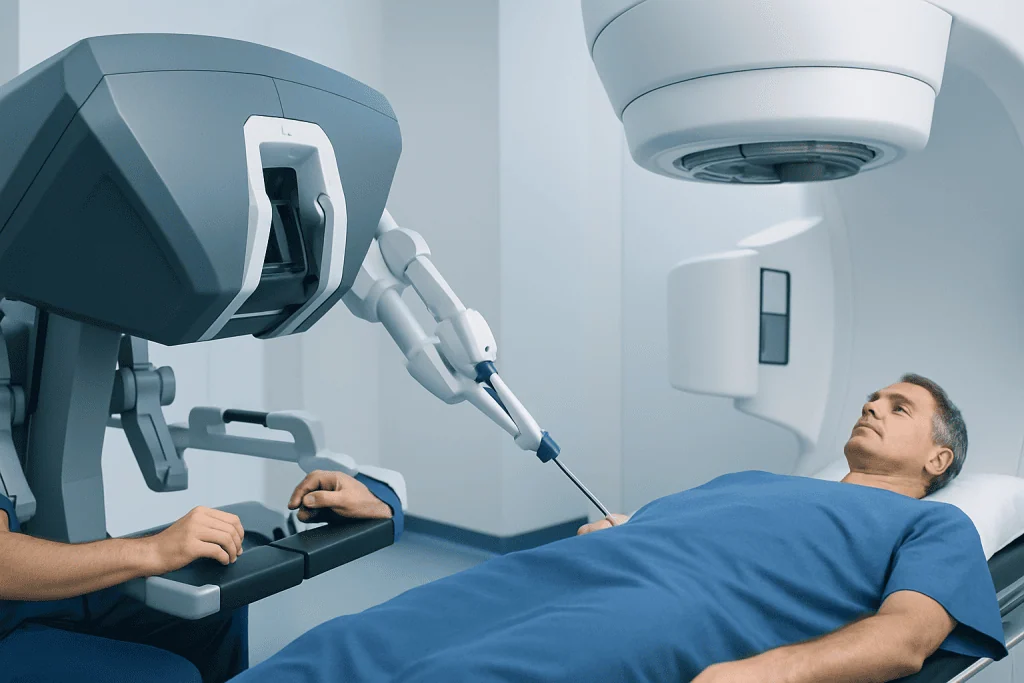
Radical prostatectomy is an operation intended to remove all visible prostate cancer. It may be performed through open surgery or minimally invasive techniques, including robotic-assisted surgery. The surgeon may remove nearby lymph nodes when there is a meaningful risk that cancer has spread beyond the prostate. The removed tissue is examined by a pathologist, which provides detailed information about the cancer and surgical margins.
External beam radiation therapy delivers radiation from a machine outside the body. Treatment is carefully mapped with imaging so that radiation is focused on the prostate while limiting exposure to the bladder, rectum, and surrounding structures. It is commonly given in a series of outpatient sessions over several weeks, although shorter schedules may be appropriate for some patients.
Another option for selected patients is brachytherapy, in which radioactive material is placed in or close to the prostate. Radiation may also be combined with androgen-deprivation therapy, often called hormone therapy, for some unfavorable intermediate-risk or high-risk cancers. Radiotherapy is planned individually to reflect the tumor’s risk level and the person’s anatomy.
Is it better to treat prostate cancer with surgery or radiation?

Neither surgery nor radiation is automatically better for every person with prostate cancer. For many men with localized disease, modern surgery and radiation have comparable potential to control the cancer. However, the expected side effects, treatment schedule, medical fitness for an operation, and likelihood of requiring additional therapy can differ.
Surgery may be especially attractive for people who prefer removal of the prostate and the detailed pathology information it provides. PSA levels usually become very low after successful surgery, which can make follow-up straightforward. If PSA rises afterward, salvage radiation may be considered. Surgery is generally best suited to people who are medically fit for anesthesia and have a life expectancy long enough to benefit from curative treatment.
Radiation may be preferable for people who wish to avoid surgery, have medical conditions that increase operative risk, or are concerned about an operation and hospital recovery. It can also treat some locally advanced cancers in combination with hormone therapy. A consultation with both a urologic surgeon and a radiation oncologist helps ensure that the pros and cons of surgery vs radiation for prostate cancer are reviewed fairly.
- Surgery: one main procedure, immediate removal of the gland, but an operative recovery and a higher likelihood of early urinary incontinence.
- Radiation: non-surgical and usually outpatient, but treatment takes place over time and bowel or urinary irritation can occur during or after therapy.
- Both: may affect erections, fertility, and ejaculation; rehabilitation and supportive care can help manage these effects.
Candidacy and the treatment journey
Before choosing treatment, clinicians consider PSA level, MRI findings, biopsy grade group, number and location of positive biopsy samples, clinical stage, and any evidence of spread. They also discuss age, heart and lung health, other medical conditions, previous pelvic surgery or radiation, urinary symptoms, bowel conditions, sexual function, and personal goals.
For surgery, preparation may include preoperative blood tests, anesthesia assessment, imaging when indicated, and discussion of pelvic-floor exercises. During the operation, the surgeon removes the prostate and reconnects the bladder to the urethra. A urinary catheter is left temporarily while the connection heals. Nerve-sparing techniques may be possible when it is safe from a cancer-control perspective.
For external beam radiation, the process starts with a planning appointment, often including a CT scan and sometimes MRI. The team creates an individualized treatment plan and may use small positioning marks, image guidance, or devices that help stabilize the prostate. Each daily session is usually brief and painless, although the full course involves repeated visits. Robotic prostatectomy may be an option for appropriately selected surgical candidates.
Recovery timeline, benefits, and possible risks
After prostatectomy, hospital stay and return to everyday activity vary by technique, health status, and the extent of surgery. Many people need several weeks before resuming more strenuous activities. The catheter is usually removed after the surgical connection has healed. Urinary control often improves gradually over weeks to months, and pelvic-floor rehabilitation may be recommended.
Erectile function may take months or longer to recover after surgery, particularly if nerve-sparing was not possible or erections were reduced before treatment. Other surgical risks include bleeding, infection, blood clots, narrowing at the bladder-urethra connection, and injury to nearby structures, although these are uncommon. Surgery also causes infertility and dry orgasm because semen is no longer produced in the usual way.
Radiation does not require an incision or a catheter after treatment, so daily activities can often continue during therapy. Short-term effects can include tiredness, more frequent urination, burning with urination, urgency, looser bowel movements, rectal irritation, or skin changes in the treatment area. Longer-term effects may include persistent urinary or bowel symptoms, bleeding from the bladder or rectum, urethral narrowing, erectile dysfunction that develops gradually, and rarely fistula formation. Individual risks should be reviewed with the radiation team.
What is the downside of radiation for prostate cancer?
The main downside of radiation is that side effects can be less immediate but may appear during treatment or gradually over months to years. The bladder and rectum sit close to the prostate, so some men experience urinary frequency, urgency, burning, bowel urgency, loose stools, or rectal irritation. Modern planning and image-guided techniques are designed to reduce these risks, but they cannot remove them entirely.
Erectile dysfunction can develop progressively after radiation because blood vessels and nerves involved in erections may be affected over time. Hormone therapy, when added to radiation for higher-risk disease, can also temporarily or sometimes persistently affect libido, erections, energy, mood, muscle mass, and bone health. The care team can discuss ways to monitor and manage these concerns.
A further practical consideration is that surgery after prior prostate radiation is more technically challenging and may carry higher complication risks. This does not mean radiation prevents future treatment; recurrence can still be assessed and managed with carefully selected salvage options. It does mean that treatment sequencing should be discussed before the initial decision.
What percentage of men choose surgery over radiation for prostate cancer?
There is no single reliable percentage that applies to all men, countries, hospitals, or cancer-risk groups. Treatment choices vary considerably according to age, access to specialist services, physician recommendations, local practice patterns, insurance and health-system factors, and whether active surveillance is appropriate. Published patterns have also changed over time as imaging, surgery, and radiation techniques have evolved.
In general, younger and medically fit men with localized cancer may be more likely to choose surgery, while older men or those with significant medical conditions may be more likely to receive radiation or observation. However, these are broad trends rather than rules. A person’s values—such as avoiding an operation, minimizing treatment visits, or prioritizing particular side-effect profiles—can be just as important as age.
Questions framed around “prostate cancer radiation vs surgery 2022” may refer to older comparisons or treatment trends. Current decisions should be based on up-to-date pathology, imaging, guideline-informed discussions, and the technologies available at the treating center rather than on a historical preference statistic.
What I wish I knew before radiation?
Before radiation, it can be helpful to know that planning is a major part of treatment. Several appointments may be needed before the first radiation session, and preparation instructions—such as arriving with a comfortably full bladder or an empty rectum—may need to be followed consistently to help position the prostate accurately. The radiation team explains the exact schedule and preparation requirements.
People may also wish to discuss baseline urinary, bowel, and sexual health before treatment begins, because these factors affect side-effect expectations and follow-up. Asking about the possible need for hormone therapy, expected fatigue, work and travel arrangements, fertility preservation, and available support for erectile or urinary symptoms can make planning easier.
It is also important to understand that PSA does not usually become undetectable immediately after radiation. It falls gradually, and small PSA fluctuations can occur. Follow-up interpretation should be led by the treating clinician rather than by one isolated PSA result.
When to seek medical care
A person should arrange medical assessment for blood in the urine or semen, new trouble passing urine, persistent pelvic or bone pain, unexplained weight loss, or urinary symptoms that are worsening. These symptoms are often caused by conditions other than prostate cancer, but they deserve appropriate evaluation. Sudden inability to urinate, heavy bleeding, fever with urinary symptoms, or severe uncontrolled pain requires urgent medical attention.
Men already diagnosed with prostate cancer should contact their care team if they develop new symptoms, have concerns about treatment side effects, or need help deciding between options. Seeking a second opinion from a urologist or radiation oncologist is reasonable and can support an informed decision.
Acibadem International’s multidisciplinary specialists at JCI-accredited hospitals evaluate and treat prostate cancer for international patients, including surgical and radiation-based approaches when appropriate. The most effective plan is one made with a qualified team and aligned with the patient’s cancer features and treatment priorities.
Frequently asked questions
Can prostate cancer come back after surgery or radiation?
Yes. Cancer can recur after either treatment, although many men are successfully treated and never develop recurrence. PSA monitoring is used after treatment, and further options may include radiation, hormone therapy, systemic treatment, or selected local treatments depending on the situation.
Which treatment causes more urinary incontinence?
Urinary leakage is generally more common soon after prostatectomy, especially in the early recovery period. Control often improves over time, and pelvic-floor exercises or specialist rehabilitation may help. Radiation more commonly causes urinary urgency, frequency, or irritation, though incontinence can also occur.
Does radiation treatment for prostate cancer hurt?
External beam radiation is painless while it is being delivered. Some people develop bladder or bowel irritation during the course of treatment, which can cause discomfort. The radiation team can recommend measures to relieve side effects.
Can a person have radiation after prostate surgery?
Yes. Radiation may be used after surgery if pathology findings suggest a higher risk of recurrence or if PSA rises during follow-up. This is often called adjuvant or salvage radiation, depending on the timing and reason for treatment.
Can a person have surgery after radiation for prostate cancer?
Surgery after radiation is possible in selected circumstances, but it is more complex because radiation can cause scarring and tissue changes. It may carry a higher risk of urinary and other complications. Specialist assessment is essential when considering salvage surgery.
Will treatment affect sexual function?
Both surgery and radiation can affect erections, orgasm, and fertility. Surgery may cause earlier changes in erectile function, while radiation-related erectile changes may occur more gradually. Age, baseline erectile function, cancer extent, hormone therapy, and the treatment technique all influence recovery and available management options.
References
- National Cancer Institute
- American Cancer Society
- European Association of Urology
- National Comprehensive Cancer Network
- American Urological Association
This article is for general information only and is not a substitute for professional medical advice. Please consult a qualified doctor about your individual situation.
Prostate Cancer in Turkey — costs, top hospitals & a free quote
JCI-accredited · board-certified surgeons · reply within 24h

More from the Health Library



Related Specialists

Prof. Dr. Muzaffer Çetingüç
Psychiatry
Dr. Zühre Esra Kıvanç
Inpatient Clinic Physicians Clinical Service
Dr. Maşallah Candemir
Pediatrics
Assoc. Prof. Dr. Pelin Doğan
Pediatrics