Robotic Prostate Surgery
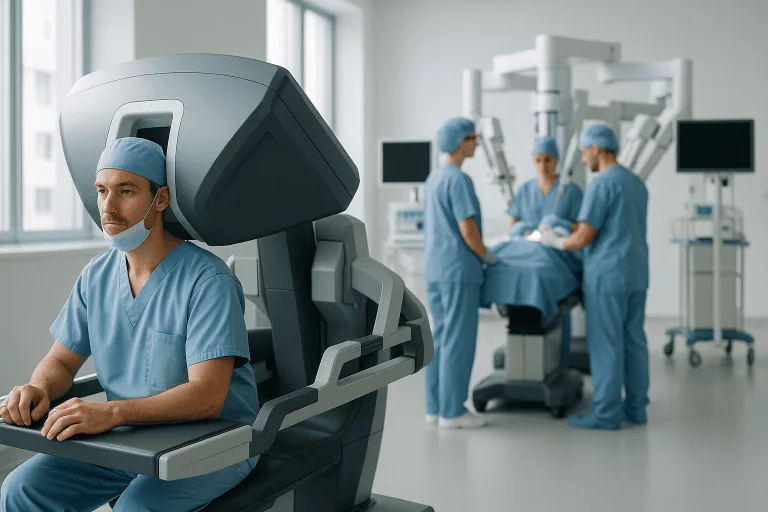
Robotic prostate surgery uses the da Vinci system to operate on the prostate through small incisions. It may support surgical precision, nerve preservation and faster recovery in suitable patients.
Quick answer
Robotic prostate surgery is a minimally invasive operation that removes the prostate through small incisions using a surgeon-controlled robotic system. At Acibadem in Turkey, it is performed with the da Vinci platform for suitable patients, with treatment planning focused on accurate tumor removal, nerve-sparing when possible, and recovery support after surgery.
Choosing Robotic Prostate Surgery With Confidence
A diagnosis involving the prostate can bring difficult questions very quickly. For some men, the concern is prostate cancer and whether surgery can remove it while preserving urinary control and sexual function as much as possible. For others, severe urinary symptoms from an enlarged prostate have begun to affect sleep, work, travel and quality of life. In both situations, the decision to have prostate surgery is personal, and it deserves careful explanation, precise diagnosis and a treatment plan built around the individual patient.
Robotic prostate surgery is one of the most commonly discussed options for men who need surgical treatment of the prostate, especially for localized prostate cancer. It allows the surgeon to operate through small incisions using a robotic surgical system that translates hand movements into highly controlled surgical actions inside the body. For suitable patients, this approach may support surgical precision, careful tissue handling, nerve-sparing techniques and a more comfortable recovery when compared with traditional open surgery.
Many international patients considering robotic prostate surgery are weighing not only the medical facts, but also the logistics and emotional impact of receiving care abroad. They want to know whether their diagnosis has been fully assessed, whether surgery is truly necessary, what recovery will feel like, how continence and sexual function may be affected, and how quickly they can return home. These are appropriate concerns. A well-planned prostate surgery pathway should answer them clearly before any operation is scheduled.
At Acibadem, robotic prostate surgery is approached as part of a comprehensive urology and oncology program. The procedure itself is important, but so are the decisions made before surgery: accurate staging, imaging review, pathology assessment, discussion of alternatives and careful planning for recovery. For international patients, this also includes coordinated appointments, language support and communication with the care team before and after travel.
What Robotic Prostate Surgery Is
Robotic prostate surgery is a minimally invasive surgical technique used to remove part or all of the prostate gland, depending on the condition being treated. The best-known form is robotic radical prostatectomy, in which the prostate gland and usually the seminal vesicles are removed to treat prostate cancer that is confined to the prostate or selected cancers that are locally advanced. In certain cases, nearby lymph nodes may also be removed for staging and disease control.
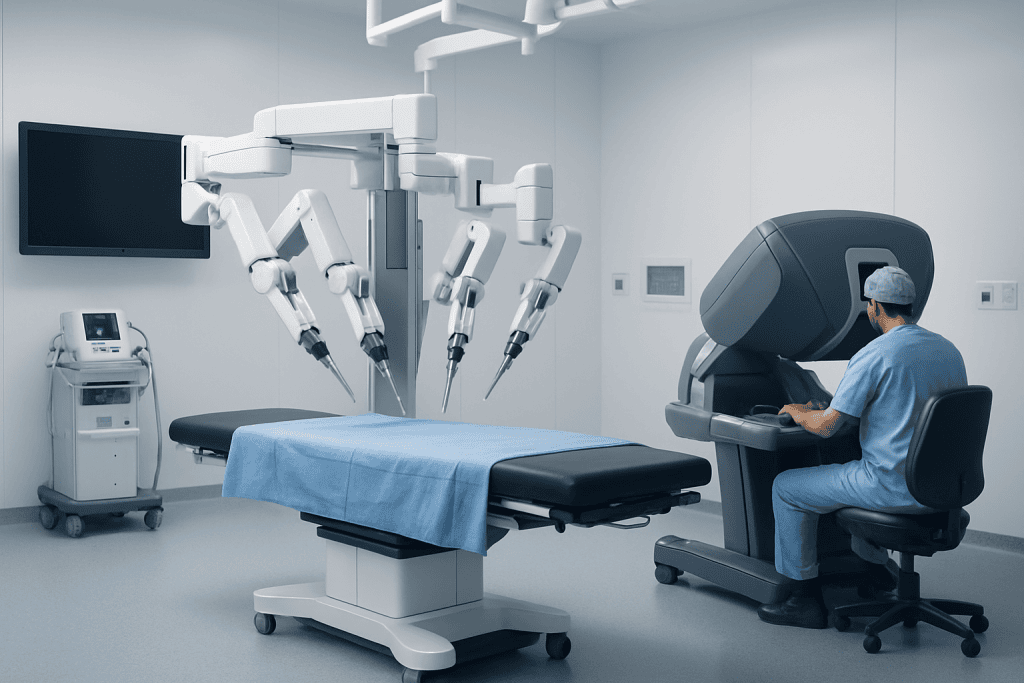
The operation is performed through several small incisions in the abdomen. Through these openings, the surgeon places a camera and fine surgical instruments attached to a robotic system, commonly the da Vinci surgical platform. The surgeon sits at a console near the patient and controls every movement. The system does not operate independently. It is a surgical tool that allows the surgeon’s movements to be translated into precise, scaled motions with a magnified three-dimensional view of the operating field.
In prostate cancer surgery, the prostate lies deep in the pelvis, close to the bladder, rectum, urinary sphincter and nerves involved in erections. The anatomy is compact and delicate. Robotic visualization and instrument control can help the surgeon identify important structures, separate tissues carefully and perform fine suturing when reconnecting the bladder to the urethra after the prostate is removed.
Robotic surgery may also be used in selected operations for benign prostate enlargement, depending on prostate size, anatomy, previous treatments and the patient’s overall health. However, for benign prostatic hyperplasia, there are several different surgical techniques, including endoscopic procedures through the urinary channel. The most appropriate option depends on detailed evaluation by a urologist.
It is important to understand that robotic technology is not the treatment by itself. The quality of the result depends on proper patient selection, cancer stage or prostate condition, surgical expertise, anatomical factors, nerve preservation when appropriate, and careful follow-up. For this reason, robotic prostate surgery should be considered within a broader evidence-based treatment plan rather than as an isolated technology choice.
Who May Need Robotic Prostate Surgery
Men may be referred for robotic prostate surgery after evaluation for prostate cancer, severe urinary symptoms or abnormalities found during prostate screening. The most common pathway begins with an elevated prostate-specific antigen test, known as PSA, an abnormal prostate examination, urinary problems or imaging findings that require further assessment.
For prostate cancer, diagnosis usually involves PSA testing, digital rectal examination, prostate MRI and prostate biopsy. Modern MRI helps identify suspicious areas and can guide targeted biopsy in many patients. The biopsy confirms whether cancer is present and provides information about grade, which reflects how aggressive the cancer appears under the microscope. Additional imaging may be recommended if there is concern that cancer has spread beyond the prostate.
Not every man with prostate cancer needs surgery. Some men with low-risk disease may be candidates for active surveillance, in which the cancer is monitored carefully with PSA tests, imaging and repeat biopsy when needed. Others may be better suited for radiation therapy, hormone therapy or combined treatment. Robotic radical prostatectomy is often considered for men with localized or selected locally advanced prostate cancer who are healthy enough for surgery and who prefer or are advised to have the prostate removed.
Typical situations that may lead to discussion of robotic prostate surgery include prostate cancer that appears confined to the gland, cancer in a younger or healthier patient where long-term disease control is a key goal, prostate cancer with features suggesting a need for active treatment, or a patient preference for surgical removal after reviewing the benefits and trade-offs of different options.
For benign prostate enlargement, men may seek care because of slow urine flow, frequent urination, waking at night to urinate, urgency, incomplete bladder emptying, urinary retention, recurrent urinary tract infections, bladder stones or kidney effects from long-term obstruction. In these cases, evaluation may include urine tests, blood tests, ultrasound, urinary flow measurement, cystoscopy and imaging to measure prostate size and bladder function. Robotic surgery may be considered only in selected benign cases, particularly when the prostate is very large or when other approaches are less suitable.
International patients often request a second opinion when they have been told they need prostate surgery but are unsure about timing, approach or alternatives. A second opinion can be valuable because prostate treatment is highly individualized. Reviewing pathology, MRI images, PSA history and overall health can clarify whether robotic surgery is appropriate and what the expected recovery and functional outcomes may be.
Conditions and Indications Robotic Prostate Surgery Addresses
Robotic prostate surgery is most often associated with treatment of prostate cancer. In robotic radical prostatectomy, the goal is to remove the entire prostate gland containing the cancer, along with tissues that may be involved according to the surgical plan. The operation may be recommended when cancer is clinically localized, meaning there is no clear evidence that it has spread to distant organs, or in selected cases where disease extends just beyond the prostate but remains potentially manageable with surgery as part of a broader treatment plan.
In prostate cancer care, the surgical indication depends on multiple factors. These include PSA level and trend, biopsy grade group, number and location of positive biopsy cores, MRI findings, prostate size, suspected extracapsular extension, lymph node risk, age, life expectancy, existing urinary function, sexual function, medical conditions and patient preference. A multidisciplinary discussion may be appropriate for intermediate-risk and high-risk cancers, where surgery, radiation therapy and systemic treatment may all need to be considered.
Robotic radical prostatectomy may address several treatment goals. It can remove the primary tumor, provide detailed pathological staging of the cancer, help determine whether additional therapy is needed and, in suitable patients, offer long-term disease control. After the prostate is removed, PSA should fall to very low levels, making follow-up PSA testing a sensitive tool for monitoring recurrence.
For benign conditions, robotic approaches may be used in selected patients with very large benign prostatic hyperplasia or complex prostate anatomy. The purpose is not cancer treatment but relief of obstruction and improvement of urinary function. However, many men with benign enlargement can be treated with medications, endoscopic procedures or other minimally invasive approaches. A urologist will recommend the most appropriate treatment after assessing prostate size, bladder function, symptom severity and patient goals.
Robotic surgery may not be the best option for every patient. Men with major untreated medical problems, extensive metastatic disease, certain prior surgeries, severe anesthesia risk or cancers better treated with other modalities may be advised toward non-surgical options. A careful preoperative assessment protects patients from unnecessary procedures and helps align the treatment plan with realistic goals.
How Robotic Prostate Surgery Is Performed
The process begins before the operating room. A comprehensive review is essential because the surgical plan depends on anatomy, diagnosis and risk category. Patients are usually asked to provide PSA records, prostate MRI images, biopsy pathology reports, previous treatment information, medication lists and details of other medical conditions. When needed, pathology slides may be reviewed, and imaging may be repeated or supplemented to clarify the extent of disease.
Before surgery, the patient meets with the urology team to discuss the diagnosis, treatment options and expected outcomes. This consultation includes a discussion of urinary continence, erectile function, fertility, ejaculation, catheter use, possible lymph node removal and the possibility of additional treatment after surgery if final pathology shows higher-risk features. Men who wish to preserve fertility should raise this before treatment, because radical prostatectomy removes the prostate and seminal vesicles and results in loss of ejaculation.
Preoperative preparation may include blood tests, urine testing, electrocardiogram, chest assessment if required, anesthesia evaluation and review of medications such as blood thinners. Patients are advised when to stop eating and drinking before anesthesia. Some may receive bowel preparation depending on the surgeon’s protocol. The care team also explains breathing exercises, early walking, pain control and catheter care.
On the day of surgery, robotic prostate surgery is performed under general anesthesia. Once the patient is asleep, the surgical team positions the body to allow safe access to the pelvis. Small incisions are made in the abdomen, and ports are placed for the camera and instruments. Carbon dioxide gas is used to gently create working space inside the abdomen.
The surgeon controls the robotic instruments from a console. A high-definition, magnified three-dimensional view helps the surgeon see the prostate, bladder, urethra, blood vessels and surrounding tissues. The prostate is separated from nearby structures in a planned sequence. If cancer surgery is being performed, the seminal vesicles are removed with the prostate. Lymph nodes may be removed if the cancer risk profile suggests this is useful for staging or treatment planning.
Nerve-sparing surgery may be considered when oncologically safe. The nerves involved in erections run close to the prostate and can be affected by cancer location, inflammation, prior treatment and individual anatomy. If imaging and biopsy findings suggest that cancer is not close to the nerve bundles, the surgeon may attempt to preserve one or both sides. If cancer control requires wider tissue removal, nerve preservation may be limited. This decision is made carefully because the first priority is to treat the disease appropriately while preserving function whenever feasible.
After the prostate is removed, the bladder is reconnected to the urethra with fine sutures. A urinary catheter is placed to drain urine while this connection heals. The prostate and any lymph nodes are sent to pathology for detailed examination. Incisions are closed, and the patient is moved to recovery for monitoring.
The duration of robotic prostate surgery varies depending on prostate size, anatomy, previous abdominal or pelvic procedures, need for lymph node dissection and complexity of the case. Many operations take several hours, with additional time for anesthesia, positioning and recovery room care. Patients should avoid comparing operative time alone, because safe preparation and careful dissection are part of good surgical practice.
The technologies used in robotic prostate surgery are designed to improve visualization, control and planning. Three-dimensional magnified imaging helps the surgeon work in the deep pelvis. Wristed instruments allow refined movement in narrow spaces. Modern imaging pathways, including prostate MRI and, when appropriate, advanced whole-body imaging, help determine cancer stage before surgery. Laboratory and pathology analysis guide risk assessment before and after the operation. In selected cases, imaging may help identify lymph node risk or support surgical mapping.
After surgery, most patients stay in the hospital briefly while pain control, walking, diet and catheter function are monitored. The care team encourages early movement to reduce the risk of blood clots and support bowel recovery. Pain is usually managed with medication and tends to improve steadily. The urinary catheter remains in place for a short period after discharge and is removed when the surgeon determines the bladder-urethra connection has healed adequately.
Recovery continues at home or in accommodation near the hospital if the patient has traveled from abroad. Patients receive instructions about wound care, showering, walking, diet, medication, catheter management and warning signs such as fever, increasing pain, leg swelling or catheter blockage. International patients should also receive guidance on when it is safe to fly, which depends on recovery, mobility, catheter status and the surgeon’s assessment.
Final pathology results are reviewed after surgery. These results provide important details, including cancer grade, tumor extent, surgical margins and lymph node findings if nodes were removed. Based on this information and the postoperative PSA level, the care team determines whether observation is appropriate or whether additional treatment should be discussed.
Why Acting Early Matters
Prostate conditions often progress slowly, but delaying evaluation can still have consequences. In prostate cancer, early and accurate assessment helps determine whether the disease is low-risk and suitable for active surveillance or whether active treatment is needed. Waiting without a structured monitoring plan may allow higher-risk cancer to progress beyond the stage where local treatment alone is most effective.
For men who already have a prostate cancer diagnosis, delay can increase anxiety and make decision-making more difficult. A timely expert review of MRI, biopsy and PSA results can clarify the risk category and reduce uncertainty. In some cases, it may confirm that immediate surgery is not necessary. In others, it may show that treatment should not be postponed.
For severe benign prostate enlargement, delaying treatment can allow bladder dysfunction to worsen. Long-term obstruction may lead to urinary retention, recurrent infections, bladder stones, bleeding, kidney strain or persistent bladder weakness even after the obstruction is relieved. Men who repeatedly need catheters, develop infections or cannot empty the bladder adequately should be evaluated promptly.
Acting early does not mean rushing into surgery. It means obtaining the right diagnosis, understanding all appropriate treatment options and making a decision within a medically sensible timeframe. For international patients, early coordination is particularly useful because medical record review, travel planning, preoperative testing and recovery arrangements all require time.
Benefits of Robotic Prostate Surgery
For suitable patients, robotic prostate surgery may offer several practical and clinical advantages when performed as part of a carefully planned treatment pathway.
| Benefit | What It Means for You |
|---|---|
| Small-incision approach | Smaller abdominal incisions may reduce postoperative discomfort, support earlier walking and make recovery more comfortable than traditional open surgery for many patients. |
| Enhanced visualization | A magnified three-dimensional view helps the surgeon identify delicate structures in the pelvis, including the bladder neck, urethra, blood vessels and nerve areas. |
| Precise tissue handling | Fine instrument control can support careful dissection, suturing and reconstruction, which are important in prostate cancer surgery. |
| Potential for nerve-sparing surgery | When cancer location and anatomy allow, the surgeon may attempt to preserve nerves involved in erections while maintaining appropriate cancer control. |
| Detailed cancer staging | Removing the prostate allows full pathological examination, which helps guide follow-up and determine whether additional treatment is needed. |
| Structured PSA follow-up | After radical prostatectomy, PSA monitoring becomes a sensitive way to track for possible recurrence over time. |
Recovery Timeline After Robotic Prostate Surgery
Recovery varies by age, fitness, cancer extent, surgical complexity and baseline urinary and sexual function, but many patients follow a general pattern after robotic prostate surgery.
| Time Period | What Patients Can Expect |
|---|---|
| Day 1 | Patients are monitored after anesthesia, begin drinking and eating as advised, and are encouraged to walk with assistance. A urinary catheter remains in place. |
| First Week | Discomfort usually improves. Patients focus on walking, catheter care, avoiding heavy lifting and watching for fever, worsening pain or catheter problems. |
| Catheter Removal Period | The catheter is removed when healing is adequate according to the surgeon’s protocol. Temporary urine leakage is common, and pelvic floor exercises may be started or continued. |
| First Month | Energy and mobility improve gradually. Many men return to light activities, while strenuous exercise, heavy lifting and sexual activity are resumed only when cleared by the surgeon. |
| Longer Term | Urinary control often improves over weeks to months. Erectile recovery, when possible, may take longer and may involve medications or rehabilitation strategies. PSA follow-up continues regularly. |
Factors That Influence Outcomes and a Good Result
The outcome of robotic prostate surgery is shaped by a combination of cancer biology, anatomy, surgical planning, technical execution and recovery support. No single factor determines the result, and patients should be cautious of any simple promise about continence, potency or cure. A responsible care team explains expected outcomes in relation to the individual patient’s condition.
For prostate cancer, the stage and grade of disease are central. A small, organ-confined tumor has different implications than a high-grade tumor close to the capsule or nerves. Surgical margins, lymph node status and postoperative PSA results also influence the need for further treatment. Some patients may require radiation therapy, hormone therapy or close observation after surgery, depending on final pathology.
Baseline urinary function matters. Men who already have leakage, bladder overactivity or obstruction may recover differently from men with strong urinary control before surgery. Pelvic floor muscle training can be helpful, especially when started before or soon after surgery under professional guidance. Age, body weight, diabetes, smoking history and general physical condition can also influence continence recovery.
Sexual function after prostate surgery depends on preoperative erectile function, age, vascular health, nerve-sparing feasibility, cancer location and recovery biology. Even when nerves are preserved, they can be temporarily stunned, and erectile recovery may take months or longer. Some men need medications, vacuum devices, injections or other rehabilitation approaches. Open discussion before surgery helps set realistic expectations and allows early support after surgery.
Surgical experience is also important. Robotic prostatectomy requires understanding of pelvic anatomy, cancer behavior, nerve-sparing judgment and reconstructive technique. The robotic platform enhances the surgeon’s ability to see and move precisely, but the surgeon’s training and decision-making remain central. Good outcomes also depend on anesthesia care, nursing support, infection prevention, pathology accuracy and follow-up planning.
Patient engagement contributes to recovery. Following instructions about walking, hydration, catheter care, wound care, medications and activity restrictions can reduce complications. Reporting symptoms early is important. Patients should not ignore fever, worsening abdominal pain, calf swelling, shortness of breath, inability of the catheter to drain, or heavy bleeding. International patients should be particularly attentive to follow-up instructions before traveling home.
A good result is not limited to removing the prostate. It includes accurate diagnosis, appropriate treatment selection, safe surgery, clear pathology review, structured PSA monitoring, functional recovery support and a plan for any additional therapy if needed. This broader view is especially important in prostate cancer, where the best treatment pathway may evolve as more information becomes available.
Why International Patients Choose Acibadem for Robotic Prostate Surgery
International patients considering robotic prostate surgery often look for more than a surgical appointment. They need confidence that their diagnosis has been interpreted correctly, that the treatment recommendation is evidence-based, and that their care can be coordinated safely across borders. Acibadem Hospitals provide this type of structured medical environment through experienced urology teams, modern diagnostic pathways and coordinated international patient services.
Within Acibadem, prostate cancer cases may be reviewed through multidisciplinary tumor boards or specialist consultations when appropriate. Urologists, radiation oncologists, medical oncologists, radiologists, pathologists, nuclear medicine physicians and other specialists can contribute to treatment planning, particularly for intermediate-risk, high-risk or complex cases. This collaborative model helps ensure that surgery is recommended when it is medically appropriate and that alternatives such as active surveillance or radiation therapy are considered when relevant.
Acibadem’s JCI-accredited hospitals follow internationally recognized standards for patient safety, infection control, anesthesia care, surgical processes and quality improvement. For a patient traveling from the United States, Europe, the Middle East or elsewhere, these standards can be an important part of evaluating a hospital abroad. Accreditation does not replace the need for individual medical judgment, but it reflects a systematic approach to safety and hospital operations.
Diagnostic accuracy is a major part of prostate surgery planning. Acibadem uses contemporary imaging, laboratory and pathology services to support diagnosis and staging. Prostate MRI, biopsy review, PSA interpretation and additional imaging when clinically indicated help the team understand whether cancer appears confined to the prostate, whether lymph nodes should be assessed, and whether nerve-sparing surgery may be considered. The goal is to avoid both undertreatment and overtreatment.
Robotic surgical systems, including da Vinci technology where used for prostate surgery, allow urologic surgeons to perform minimally invasive procedures with enhanced visualization and fine instrument control. At Acibadem, technology is integrated into a broader clinical pathway rather than presented as a stand-alone solution. The surgeon’s evaluation, the patient’s anatomy, the cancer characteristics and the recovery plan all remain essential.
For international patients, communication and logistics can strongly affect the care experience. Acibadem International provides support in more than 20 languages, helping patients share medical records, schedule consultations, understand treatment plans and coordinate hospital appointments. Depending on the patient’s needs, assistance may include interpretation, travel-related guidance, accommodation coordination and communication between the patient and clinical departments. These services are especially valuable when a patient is anxious, traveling with family or trying to make decisions quickly after a new diagnosis.
Personalized treatment planning is central. A man with low-risk prostate cancer, a man with high-risk localized disease and a man with a very large benign prostate do not need the same pathway. Similarly, two men with the same cancer stage may have different priorities regarding urinary function, sexual function, travel timing or recovery support. The care plan should reflect medical evidence while respecting the patient’s values and circumstances.
Second opinions are also a common reason international patients contact Acibadem. Some patients want confirmation that robotic surgery is appropriate. Others want to know whether they can safely choose active surveillance, whether radiation therapy might be preferable, or whether previous biopsy and MRI findings need review. A thorough second opinion can help patients make a more informed decision before committing to treatment at home or abroad.
After surgery, the relationship does not end at discharge. Patients need clear instructions for catheter care, activity, follow-up PSA testing and communication with local physicians after returning home. For cancer patients, long-term monitoring is essential. Acibadem’s teams can provide postoperative reports and follow-up recommendations so patients and their physicians in their home country understand the next steps.
Moving Forward With a Clear Plan
Robotic prostate surgery can be an important treatment option for men with localized prostate cancer and for selected patients with other prostate conditions. It offers a minimally invasive approach to a complex operation in a delicate anatomical area, with potential advantages for recovery, visualization and tissue preservation when the patient is an appropriate candidate. The most important step is not simply choosing a technology, but choosing a carefully planned pathway based on accurate diagnosis and expert surgical judgment.
If you are considering robotic prostate surgery, or if you have received conflicting recommendations, a consultation or second opinion can help clarify your options. Bringing together PSA history, MRI images, biopsy results and your personal priorities allows the medical team to explain whether surgery is advisable, what alternatives exist, what recovery may involve and what follow-up will be needed after treatment.
For international patients, Acibadem offers coordinated evaluation, experienced prostate care teams, multidisciplinary decision-making when needed, advanced diagnostic and robotic surgical capabilities, and dedicated support throughout the treatment journey. The aim is to help you make a decision that is medically sound, personally informed and clearly understood before you travel for care.
This information is general and is not a substitute for professional medical advice. Diagnosis and treatment recommendations should always be made by a qualified physician after reviewing your individual medical condition.
Preparation
- Before robotic prostate surgery, patients usually have blood tests, urine tests, imaging, anesthesia evaluation and a urology consultation. Blood-thinning medicines may need to be paused as directed, and fasting is required before anesthesia. The surgical plan depends on diagnosis, prostate size, cancer stage when relevant, and overall health.
Aftercare
- After surgery, patients are monitored for pain control, urine drainage and early walking. A urinary catheter is typically kept for a short period and removed during follow-up. Patients should avoid heavy lifting and strenuous activity until cleared, and attend scheduled urology visits for recovery and pathology review when applicable.
Frequently Asked Questions
What affects the cost of robotic prostate surgery?
The cost is influenced by the diagnosis, cancer stage and risk profile, required imaging and tests, surgeon and hospital factors, robotic system use, length of stay, pathology needs and any additional treatment or follow-up. Travel, accommodation and translation support can also affect the total patient budget.
How can I get a personalised quote?
A personalised quote usually requires review of medical records, biopsy and imaging reports, blood tests and general health information. You can request a free consultation so the urology team can assess suitability and provide a care plan with the expected inclusions.
What is usually included in an international patient package?
Inclusions vary by hospital and medical need, but a package may include specialist assessment, standard pre-operative checks, surgery, anaesthesia, hospital stay, nursing care, pathology handling and international patient coordination. Always confirm what is included and what may be billed separately.
Can the final cost change after the initial quote?
Yes. The plan may change if additional tests are needed, if medical conditions require extra clearance, if surgery is more complex than expected, or if post-operative care needs are different. A hospital coordinator can explain potential variables before travel.
Is robotic surgery always the best option?
Not always. Robotic prostate surgery may be appropriate for many suitable patients, but radiotherapy, open surgery, laparoscopic surgery, active surveillance or other options may be better in some cases. A specialist should decide based on the diagnosis, overall health and treatment goals.
Medically reviewed by the Acıbadem International Medical Board September 9, 2026
See our medical review board →
Update history
- PublishedJune 12, 2026
- Medical review approvedSeptember 9, 2026
- Last content updateSeptember 14, 2026
References2
Trusted care for international patients
From the Acibadem Blog

After Robotic Prostate Surgery: Which Symptoms Are Normal and When to Call Your Urology Team
After robotic prostate surgery, pink or light red urine, mild bladder spasms, catheter tugging discomfort, bloating, shoulder-tip pain from surgical gas and temporary urine…