Kneecap Patella Surgery: Procedure, Recovery and Results
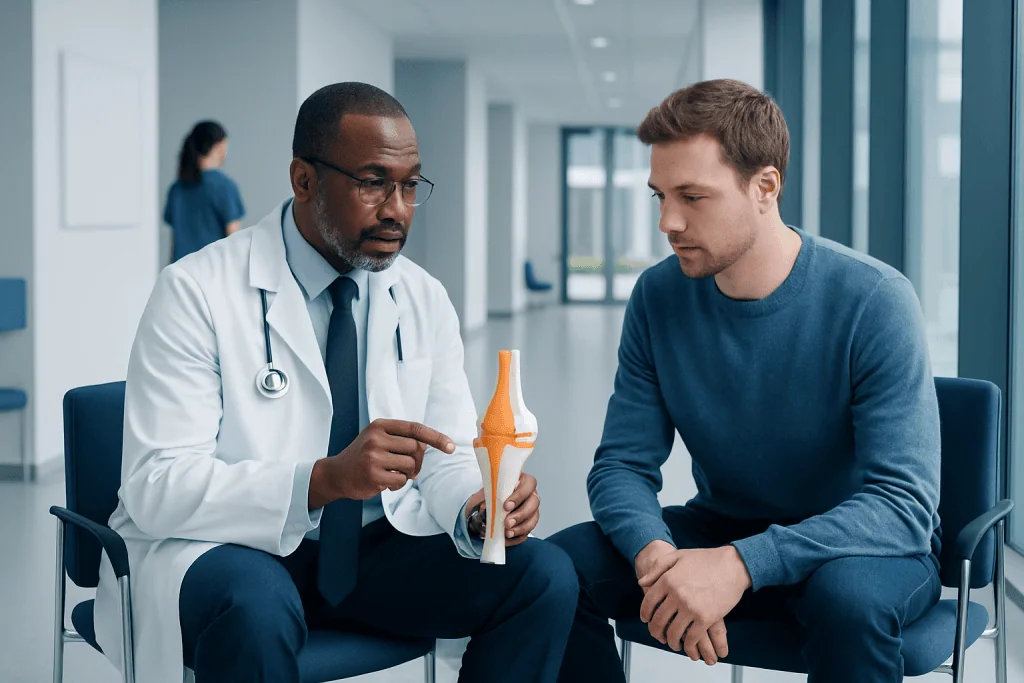
Kneecap patella surgery may be recommended for displaced fractures, repeated patellar dislocation, or selected cartilage and alignment problems. Many patients can stand or walk with a brace and mobility aid soon after surgery, but weight-bearing rules vary by procedure.
Key Takeaways
- Kneecap patella surgery may be recommended for displaced fractures, repeated patellar dislocation, or selected cartilage and alignment problems.
- Many patients can stand or walk with a brace and mobility aid soon after surgery, but weight-bearing rules vary by procedure.
- Rehabilitation is essential for regaining knee bending, quadriceps strength, balance, and confidence with daily activities.
- Pain and swelling are expected early in recovery and are usually managed with a personalized plan that includes medication, elevation, ice when advised, and gentle exercises.
- Possible complications include infection, stiffness, blood clots, fixation problems, and recurrent instability; follow-up appointments help identify concerns early.
Kneecap patella surgery is a group of procedures used to restore the kneecap’s position, stability, or structure after injury or certain chronic knee problems. The operation and recovery plan depend on the underlying cause, but most people need protected movement followed by structured rehabilitation to rebuild knee motion and strength.
Overview: What Is Kneecap Patella Surgery?
Kneecap patella surgery is performed to repair, stabilize, realign, or reconstruct the patella, the small bone at the front of the knee. It may be needed after a patella fracture, repeated kneecap dislocation, a tendon injury, or damage affecting how the patella moves in its groove during bending and straightening.
The exact operation is not the same for every person. A displaced fracture may need fixation with screws, pins, wires, or a plate, while recurrent instability may be treated by reconstructing stabilizing tissues or correcting contributing alignment problems. Some procedures are minimally invasive, whereas others require an open incision.
The aim is to restore a stable, functional knee while protecting the joint surfaces and extensor mechanism, which allows the leg to straighten. An orthopedic surgeon considers symptoms, imaging findings, activity needs, bone and cartilage health, and overall medical condition before recommending surgery.
How It Works and Who May Be a Candidate
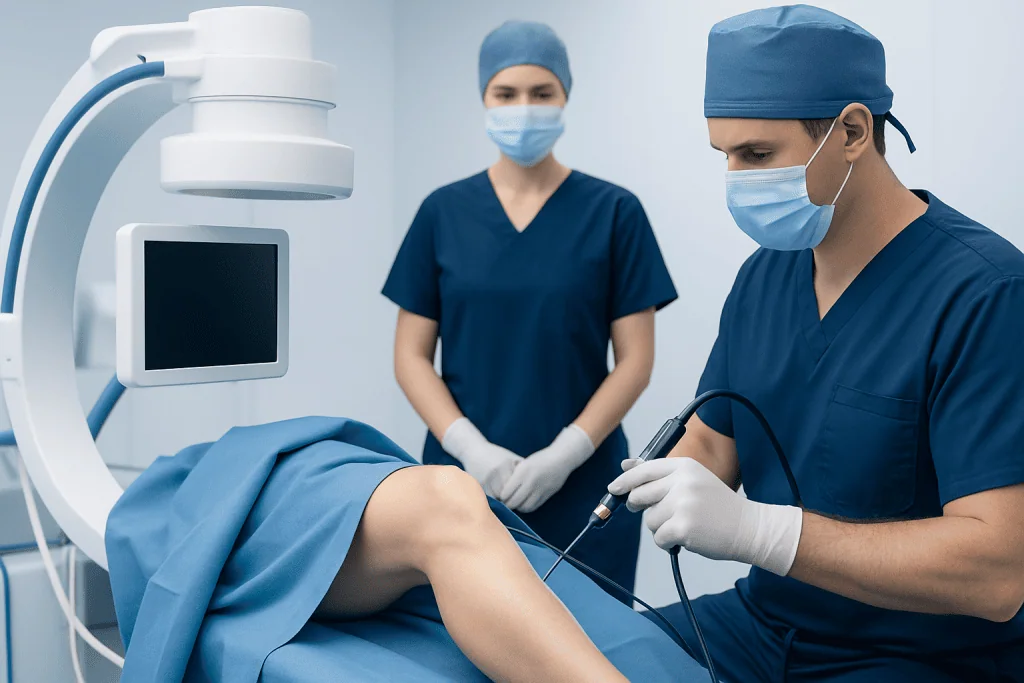
During normal knee movement, the patella glides within a groove at the lower end of the thigh bone. Surgery may restore this tracking by repairing broken bone, reattaching injured soft tissues, or strengthening the structures that keep the patella centered. In some cases, the surgeon may address damaged cartilage or a bone alignment issue at the same time.
People may be candidates when a patella fracture is displaced, the knee’s straightening mechanism is disrupted, or a fracture cannot remain aligned without fixation. Surgery can also be considered for repeated patellar dislocations that continue despite appropriate non-surgical care, particularly when there is a structural cause or an associated cartilage injury.
Not all patella injuries require an operation. Stable fractures, first-time dislocations without major associated injury, and some tracking concerns may improve with bracing, activity modification, pain management, and physiotherapy. Imaging such as X-rays, MRI, or CT may help the surgeon determine the most appropriate approach.
- Displaced or fragmented kneecap fracture
- Inability to actively straighten the knee after an injury
- Recurrent kneecap dislocation or persistent instability
- Cartilage or bone injury associated with patellar instability
- Symptoms that continue despite a well-supervised rehabilitation program
What Happens During the Procedure?
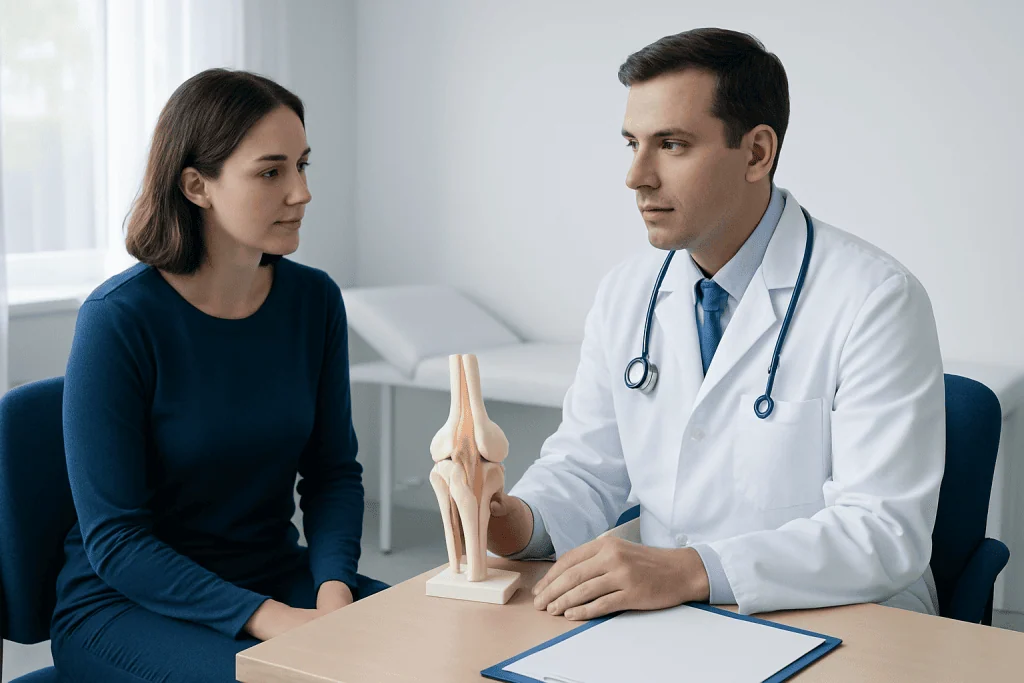
Before kneecap patella surgery, the care team reviews medical history, medications, allergies, imaging, and anesthesia options. The procedure is usually performed under general anesthesia, sometimes with an additional regional nerve block to support pain control after the operation. The surgical plan is tailored to the diagnosis rather than following one standard technique.
For a fracture, the surgeon carefully repositions the bone pieces and secures them using appropriate fixation materials. If the fracture is too severely damaged to reconstruct, a small non-reconstructable fragment may occasionally be removed while preserving as much of the patella and tendon attachment as possible. For instability, the surgeon may repair or reconstruct the medial stabilizing ligament, often called the medial patellofemoral ligament, and may correct other contributing anatomy when indicated.
Once the repair is checked for stability and alignment, the incision is closed and a dressing is applied. A brace may be fitted to limit knee bending initially. The patient receives specific instructions on walking, wound care, medication, exercises, and follow-up; these instructions are important because protection requirements differ between fracture fixation and soft-tissue reconstruction.
How Long After Patella Surgery Can You Walk?
Many people can stand and take protected steps on the day of surgery or within the first few days, using crutches or a walker and a knee brace. However, walking does not always mean full weight-bearing or normal walking. The permitted amount of weight and knee motion depends on the repair, bone quality, fracture pattern, and the surgeon’s assessment of healing.
After some stable fracture repairs or patellar stabilization procedures, weight-bearing may be allowed with the knee held straight in a brace. In other situations, the surgeon may advise partial weight-bearing or a longer period of protection. Crutches are commonly used until gait is safe, swelling is improving, and the quadriceps muscles can control the knee adequately.
Kneecap surgery and recovery should progress according to the individual plan rather than a fixed date. Walking too far, bending beyond the allowed range, or stopping brace use early can place stress on healing tissue. A physiotherapist can help the person relearn a smooth walking pattern and advance activity safely.
How Painful Is Patella Surgery?
Patella surgery can cause moderate pain, swelling, and tightness in the early days because the kneecap and nearby tissues are sensitive and important for movement. The intensity varies with the type of surgery, the extent of injury before surgery, individual pain sensitivity, and whether other structures were repaired at the same time.
Clinicians usually use a multimodal pain-management plan, which may include prescribed medication, local or regional anesthesia techniques, elevation, and carefully timed cold therapy when appropriate. Keeping the leg elevated and following instructions for movement and rest may also help reduce swelling. Pain should gradually become more manageable rather than steadily worsening.
Some discomfort during kneecap surgery rehabilitation is normal, especially when beginning range-of-motion and strengthening exercises. Sharp pain, a sudden increase in swelling, new calf pain, fever, wound drainage, or pain that is not controlled by the agreed plan should be discussed promptly with the surgical team.
How Long Does It Take to Bend the Knee After Patella Surgery?
Knee bending usually begins gradually, but the timing and allowed range depend on the operation. Some people begin gentle, controlled bending soon after surgery, while others need a period with the knee kept mostly straight to protect a fracture repair, tendon repair, or reconstructed stabilizing structures.
Early goals may include reducing swelling, activating the thigh muscles, and regaining safe extension, or the ability to straighten the knee. Bending is then increased in stages under the direction of the surgeon and physiotherapist. Regaining functional movement for everyday tasks can take several weeks, while fuller motion and strength often require months of consistent rehabilitation.
It is common for the knee to feel stiff at first. The safest approach is regular prescribed exercises without forcing the joint beyond its restrictions. If bending stops improving, becomes increasingly painful, or is much more limited than expected, the care team can assess for swelling, scar tissue, hardware concerns, or other causes.
Kneecap Surgery Recovery Time, Benefits and Risks
Kneecap surgery recovery time varies considerably. Initial wound healing generally occurs over the first weeks, but bone healing, ligament healing, muscle recovery, and return to higher-demand activity take longer. Many people need several months of rehabilitation before returning to unrestricted daily movement, and activities involving running, jumping, kneeling, or pivoting may require additional time and clinical clearance.
Potential benefits include improved knee stability, better alignment, restoration of the ability to straighten the leg, reduced pain from an unstable or displaced injury, and improved capacity for everyday activities. Results are influenced by the original injury, cartilage condition, adherence to rehabilitation, and whether complications occur.
All surgery has risks. These may include infection, bleeding, blood clots, anesthesia-related complications, stiffness, persistent pain, numbness around the incision, delayed bone healing, irritation from fixation hardware, loss of fixation, or recurrent patellar instability. The surgeon explains the risks most relevant to the planned procedure and discusses alternatives before consent.
At Acibadem International, multidisciplinary orthopedic, imaging, anesthesia, and rehabilitation specialists in JCI-accredited hospitals support international patients undergoing evaluation and treatment for patellar conditions. A personalized follow-up plan can help coordinate recovery after surgery.
Is Patella Surgery Serious? When to Seek Medical Care
Patella surgery is a significant orthopedic procedure because the kneecap is central to walking, climbing stairs, and straightening the leg. It is generally performed when the expected benefit of restoring stability or function outweighs the risks. With careful surgical planning, protection of the repair, and rehabilitation, many people make meaningful functional improvement.
Medical assessment is important after a direct blow to the knee, a fall, or a dislocation if there is severe swelling, deformity, inability to bear weight, inability to straighten the knee, or a kneecap that appears out of place. Urgent evaluation is also appropriate for a wound near the knee or numbness, coolness, or color change in the lower leg or foot.
After surgery, contact the surgical team urgently for increasing redness, warmth, drainage, fever, uncontrolled pain, sudden swelling, new shortness of breath, chest pain, or calf pain and swelling. These symptoms do not always indicate a complication, but they need timely assessment.
Long-term self-care includes attending follow-up visits, completing prescribed exercises, avoiding premature high-impact activity, and maintaining a healthy body weight where appropriate. Gradual conditioning of the hips, core, and thigh muscles supports knee control and may reduce the chance of future instability.
Frequently asked questions
What is kneecap patella surgery used for?
Kneecap patella surgery may repair a broken kneecap, restore the ability to straighten the knee, or stabilize a kneecap that repeatedly dislocates. The technique depends on the cause, such as a fracture, ligament injury, cartilage injury, or alignment problem. An orthopedic surgeon uses examination findings and imaging to recommend the most suitable option.
Will I need a knee brace after patella surgery?
Many patients use a knee brace after surgery to protect the repair and control how much the knee bends. The length of brace use differs according to the procedure and healing progress. The surgeon or physiotherapist will explain when the brace can be adjusted or discontinued.
When can I return to driving after kneecap surgery?
Return to driving depends on which leg was operated on, the ability to safely control the pedals, pain medication use, knee strength, and reaction time. Driving should not resume while taking medication that impairs alertness. The surgical team can give individualized clearance based on recovery and local driving requirements.
Can a person climb stairs during knee patella surgery recovery?
Stairs may be possible early in recovery with a brace and mobility aid if the care team permits it, but they can be challenging because they place demand on the quadriceps and kneecap. A physiotherapist can teach a safe technique. Stair activity is usually increased gradually as strength, balance, and knee motion improve.
Will metal screws or wires need to be removed after patella fracture surgery?
Fixation materials are often left in place if they are comfortable and the fracture heals well. Removal may be considered if hardware causes ongoing irritation, prominent discomfort, or another complication after healing. It is not routinely needed for every patient.
What exercises are included in kneecap surgery rehabilitation?
Rehabilitation commonly begins with swelling control, gentle muscle activation, and exercises that protect the repair. As healing allows, therapy progresses to knee motion, quadriceps and hip strengthening, balance work, walking training, and activity-specific conditioning. The precise exercises and timing should follow the surgeon’s and physiotherapist’s instructions.
References
- American Academy of Orthopaedic Surgeons
- OrthoInfo – American Academy of Orthopaedic Surgeons
- National Institute of Arthritis and Musculoskeletal and Skin Diseases
- American Physical Therapy Association
- Mayo Clinic
This article is for general information only and is not a substitute for professional medical advice. Please consult a qualified doctor about your individual situation.
Joint and spine care in Turkey — expert assessment & treatment
JCI-accredited · board-certified surgeons · reply within 24h