Outpatient Physical Therapy: How It Works, Results and What to Expect

Outpatient physical therapy is tailored to a person’s diagnosis, abilities, goals and home environment. Treatment commonly combines active exercise, movement training, education and, when appropriate, hands-on techniques.
Key Takeaways
- Outpatient physical therapy is tailored to a person’s diagnosis, abilities, goals and home environment.
- Treatment commonly combines active exercise, movement training, education and, when appropriate, hands-on techniques.
- Progress varies with the condition, its severity, overall health, attendance and consistency with the home program.
- Temporary muscle soreness can occur, but new severe pain, progressive weakness or other warning signs require medical review.
- A therapist works alongside the referring doctor and may recommend reassessment if recovery is not following the expected course.
Outpatient physical therapy is rehabilitation provided in a clinic or hospital setting without an overnight stay. It uses assessment, guided exercise, education and hands-on techniques to help people manage pain, restore movement and return safely to daily activities after injury, surgery or illness.
Overview: What Is Outpatient Physical Therapy?
Outpatient physical therapy is care delivered at scheduled appointments in a rehabilitation clinic, hospital or specialist center, after which the person returns home the same day. It is designed to improve safe movement, physical function, strength, balance and confidence in everyday activities. Care may be recommended after an injury, surgery, prolonged illness or a new or ongoing musculoskeletal problem.
At the first visit, a physiotherapist reviews symptoms, medical history, relevant scans or test results, movement patterns and functional goals. The resulting plan may focus on reducing pain, restoring joint motion, rebuilding strength, improving walking or balance, or preparing for a return to work, sport or independent daily tasks. Treatment plans are adjusted as recovery changes.
Outpatient rehabilitation can support people with back or neck pain, arthritis, sports injuries, fractures, tendon problems, joint replacement recovery and neurological conditions. It may also form part of osteoarthritis care when pain and stiffness affect mobility and daily activity.
How Does Outpatient Physical Therapy Work?
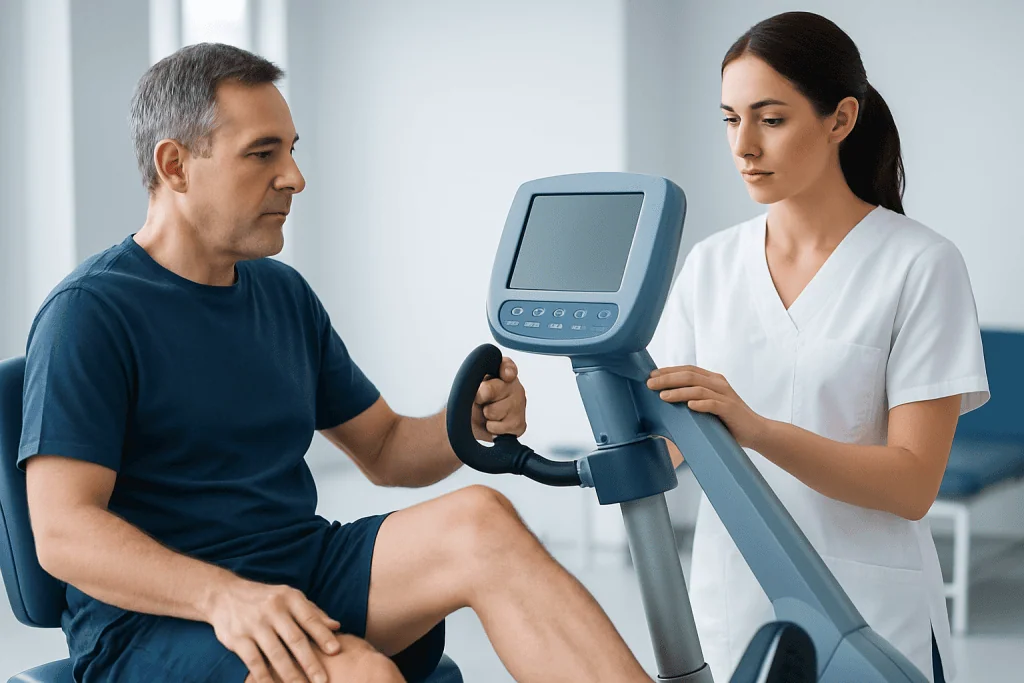
Outpatient physical therapy works through a partnership between the patient and the rehabilitation team. The therapist identifies what limits function, such as restricted range of motion, reduced muscle control, pain during movement, poor balance or reduced endurance. Treatment then targets those limitations while considering the underlying diagnosis and the person’s goals.
Sessions often include therapeutic exercise, functional practice and education. Depending on the individual need, the therapist may use stretching, strengthening, balance activities, walking or stair training, posture and lifting instruction, manual techniques, or strategies to protect a healing area. Some people may also be offered physical agents or equipment where clinically appropriate, but active participation is usually central to rehabilitation.
The therapist typically provides a home exercise program. Doing this program as advised can help maintain progress between appointments, while avoiding activities that have not been cleared during recovery. Communication with the referring surgeon, orthopedist, neurologist or primary doctor helps ensure rehabilitation remains appropriate for the person’s medical condition.
Who May Benefit and What Happens During Treatment?

People may be referred for outpatient physical therapy when they have a functional goal that can be addressed without inpatient rehabilitation. This includes recovery after orthopedic surgery, persistent pain affecting work or sleep, reduced mobility after a period of illness, recurrent injuries, balance concerns or difficulty returning to routine activity. Suitability depends on medical stability, the ability to travel safely to appointments and the level of support needed at home.
During the initial assessment, the therapist asks about symptoms, previous treatment, medications, work demands, activity level and personal priorities. They may measure joint movement, strength, balance, walking pattern, coordination and how a person performs practical tasks such as sitting, standing, climbing stairs or reaching. These findings help set realistic, measurable goals.
Follow-up sessions generally begin with a review of symptoms and response to the previous visit. The therapist guides exercises and functional tasks, checks technique and gradually progresses the program when appropriate. For example, rehabilitation after knee replacement surgery may gradually progress from managing swelling and regaining knee movement to strengthening, walking confidence and stair practice.
- Early phase: protect healing tissues, manage symptoms and restore gentle movement.
- Middle phase: improve strength, endurance, coordination and daily function.
- Later phase: practice work, recreation or sport-specific movements when medically appropriate.
Benefits, Risks and How Long Results May Take
The potential benefits of outpatient physical therapy include better movement, improved strength and endurance, reduced activity-related pain, greater independence and a safer return to valued activities. It can also help people understand their condition, learn pacing strategies and reduce the risk of re-injury by improving movement control and confidence.
Physical therapy should be challenging enough to support adaptation but should not cause uncontrolled or worsening symptoms. Mild temporary muscle fatigue or soreness, particularly after starting a new exercise program, can be normal. However, treatment may need adjustment if pain persists or becomes sharper, swelling increases, symptoms spread, or the person has difficulty completing normal daily tasks afterward.
How long does it take to see results from physical therapy? Some people notice early changes in mobility, confidence or symptom control within a few visits, while meaningful strength and functional improvements commonly take weeks of regular practice. Recovery after surgery, a major injury or a long-standing condition may take longer. The therapist can explain the expected pace based on the diagnosis, healing stage and treatment response, but no timeline is identical for everyone.
What Is the 8 Minute Rule in Physical Therapy?
What is the 8 minute rule in physical therapy? The 8 minute rule is a billing convention used in some United States insurance systems for certain timed therapy services. In simple terms, it helps determine when a therapist may bill one unit of a timed, direct-contact service based on the total minutes of qualifying treatment provided during a visit.
It is not a clinical rule about how long an exercise must be performed, how long a session should last, or whether treatment is effective. Billing rules can vary by insurer, healthcare setting, country and individual policy. Patients who have questions about authorizations, coverage or billing should ask the clinic’s administrative team or their insurer before or during care.
Clinical decisions should be based on need, safety and goals rather than a billing threshold. A good session is individualized: some visits require education and reassessment, while others emphasize guided activity, progressive exercise or functional practice.
What Is a Red Flag in Physical Therapy?
What is a red flag in physical therapy? A red flag is a symptom, examination finding or medical history detail that may suggest a problem requiring prompt medical assessment rather than routine rehabilitation alone. Red flags do not automatically mean a serious condition is present, but they help therapists recognize when they should pause treatment, modify the plan or refer the person to a doctor urgently.
Examples can include new loss of bladder or bowel control, numbness in the groin or saddle area, rapidly worsening weakness, unexplained fever with severe pain, major trauma, a painful swollen calf, chest pain, sudden shortness of breath, or sudden neurological symptoms such as facial drooping, speech difficulty or one-sided weakness. The significance depends on the full clinical situation.
People should tell their therapist about new symptoms, recent diagnoses, medication changes and any history that may affect rehabilitation. A careful physical therapy assessment supports safety, but it does not replace medical evaluation when warning signs are present.
Self-Care, Recovery and When to Seek Medical Care
Recovery between outpatient appointments is an important part of the rehabilitation process. Patients are usually encouraged to follow the home exercise plan at the recommended level, stay generally active within their restrictions, use prescribed mobility aids correctly and prioritize sleep, hydration and balanced nutrition. Rest days and pacing are also important, especially when symptoms increase after unusual activity.
It is helpful to track changes in pain, swelling, movement, walking tolerance and ability to complete daily tasks. This information allows the therapist to tailor the program. People should not push through severe or escalating pain, and they should ask before returning to demanding work, heavy lifting, high-impact exercise or sport after injury or surgery.
When to seek medical care: Urgent medical assessment is needed for chest pain, severe shortness of breath, fainting, sudden weakness or numbness, new difficulty speaking, a painful swollen leg, fever with severe worsening pain, or new bowel or bladder changes. A doctor should also be contacted for pain that is rapidly worsening, a wound that appears infected after surgery, or a loss of function that is not explained by normal post-exercise soreness.
Acibadem International’s multidisciplinary specialists and JCI-accredited hospitals provide assessment and rehabilitation planning for international patients who need coordinated care. Rehabilitation may be considered alongside orthopedic rehabilitation and other specialist-led treatment when appropriate.
Frequently asked questions
How does outpatient physical therapy work?
Outpatient physical therapy involves scheduled clinic visits followed by return home the same day. A physiotherapist assesses movement and functional limitations, creates an individualized plan and guides exercises, education and practical activity training. A home program is often included to support progress between visits.
What should a person wear to an outpatient physical therapy appointment?
Comfortable clothing that allows easy movement and access to the area being assessed is usually best. For example, shorts may be useful for a knee problem and a loose top may help with shoulder assessment. Supportive footwear may be appropriate when walking, balance or lower-limb exercises are planned.
What is the 8 minute rule in physical therapy?
The 8 minute rule is a billing method used by some US insurers for certain timed, direct-contact therapy services. It is not a treatment guideline and does not determine how long a person should exercise. Coverage and billing procedures differ between insurers and healthcare systems.
What is a red flag in physical therapy?
A red flag is a finding that may require medical assessment because it could indicate a condition beyond routine rehabilitation. Examples include progressive weakness, new bladder or bowel changes, chest pain, sudden shortness of breath or signs of a possible blood clot. The therapist may stop or change treatment and arrange referral when needed.
How long does it take to see results from physical therapy?
The timeline depends on the diagnosis, severity, healing stage, overall health and consistency with the treatment plan. Some improvements may be noticed within a few visits, while recovery of strength, endurance and complex daily function often takes several weeks or longer. The therapist can review progress regularly and adjust goals.
Is soreness after physical therapy normal?
Mild muscle fatigue or short-term soreness can occur when beginning or progressing exercises, particularly after a period of reduced activity. Severe pain, increasing swelling, sharp pain, new numbness or symptoms that do not settle should be discussed with the therapist or doctor. Exercises can often be modified to improve comfort and safety.
References
- World Health Organization
- American Physical Therapy Association
- National Institute of Arthritis and Musculoskeletal and Skin Diseases
- Centers for Disease Control and Prevention
- National Health Service
This article is for general information only and is not a substitute for professional medical advice. Please consult a qualified doctor about your individual situation.
Explore treatments in Turkey — costs, top hospitals & a free quote
JCI-accredited · board-certified surgeons · reply within 24h

More from the Health Library



Related Specialists

Dr. Tansu Güdelci
Urology
Prof. Dr. Mustafa Seyhan
Orthopedic Surgery & Traumatology
Assoc. Prof. Dr. Mahmut Subaşı
Thoracic Surgery
Prof. Dr. Burak Akan
Orthopedic Surgery & Traumatology