Ac Joint Sprain Recovery: A Week-by-Week Timeline

The AC joint connects the collarbone to the shoulder blade and can be injured by a fall or direct impact to the shoulder. Most grade 1 and grade 2 AC joint sprains improve with relative rest, pain control and a gradual rehabilitation programme.
Key Takeaways
- The AC joint connects the collarbone to the shoulder blade and can be injured by a fall or direct impact to the shoulder.
- Most grade 1 and grade 2 AC joint sprains improve with relative rest, pain control and a gradual rehabilitation programme.
- Early protection is important, but prolonged complete immobilisation can contribute to shoulder stiffness and weakness.
- A visible bump, persistent pain, numbness, major weakness or difficulty using the arm should be assessed by a clinician.
- Return to sport should be based on pain-free movement, strength and functional control rather than the calendar alone.
AC joint sprain recovery time is commonly about 2–6 weeks for a mild injury, although pain, strength and confidence with overhead activity can take longer to fully return. A higher-grade injury may require several months of rehabilitation, and a small number of people may need surgery when symptoms remain significant.
AC joint sprain recovery time: the usual course
An acromioclavicular (AC) joint sprain is an injury to the ligaments at the top of the shoulder, where the collarbone meets part of the shoulder blade called the acromion. Recovery depends mainly on how much the ligaments have stretched or torn, the person’s activity demands and whether there are associated injuries.
For many people, a mild grade 1 sprain settles substantially within 1–3 weeks. Grade 2 injuries often need around 3–6 weeks before everyday activities are comfortable, while return to contact sport, heavy lifting or repeated overhead work may take longer. More severe AC separations can take several months to rehabilitate, whether managed without surgery or with an operation.
Healing is not always linear. Soreness may temporarily increase after a new exercise, a long day of activity or an accidental knock to the shoulder. A gradual trend toward less pain and better movement is more informative than day-to-day changes.
What is an AC joint sprain and how is it graded?
The AC joint is stabilised by the acromioclavicular ligaments and deeper coracoclavicular ligaments. A direct blow to the outside of the shoulder, such as a fall during cycling, skiing, football or a household accident, can stretch or tear these tissues. This is sometimes called an AC joint separation, even though the injury may be a mild sprain rather than a complete separation.
Clinicians commonly classify AC injuries from grade 1 to grade 6. Grade 1 involves ligament stretching without obvious joint displacement. Grade 2 usually involves a tear of the AC ligament with stretching or partial injury of the deeper supporting ligaments. Grades 3 and above involve more significant displacement; grades 4–6 are uncommon and usually require urgent orthopaedic assessment.
The grade helps guide treatment, but it does not perfectly predict symptoms. Some people with a relatively minor injury have persistent discomfort, while others with a more visible collarbone prominence regain excellent shoulder function with rehabilitation.
What does a grade 2 AC joint sprain look like?
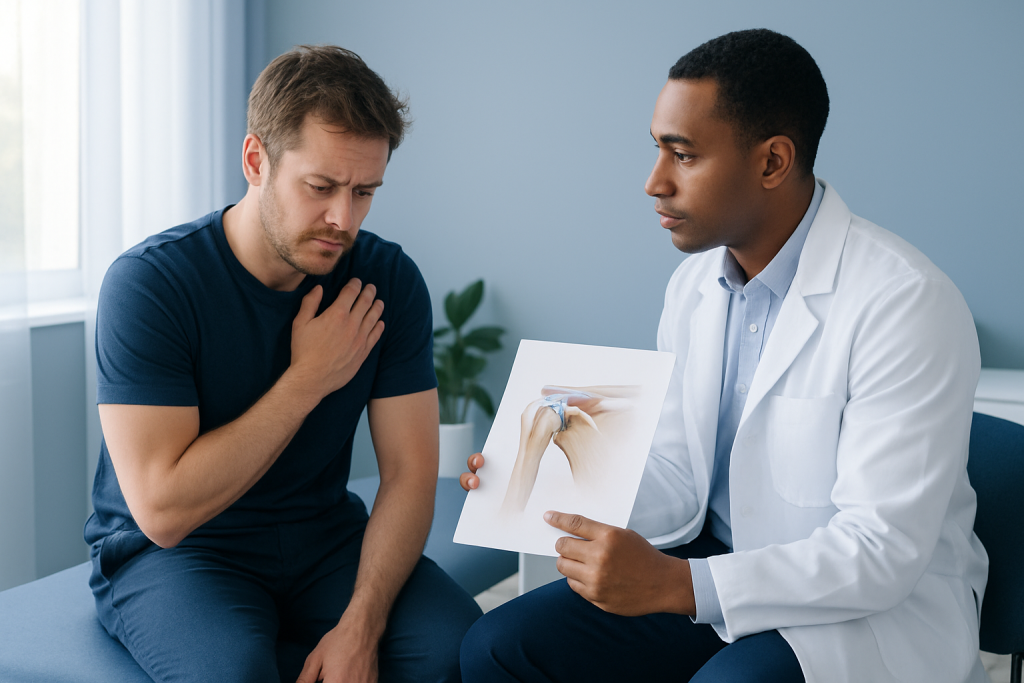
A grade 2 AC joint sprain often causes pain and tenderness directly over the top of the shoulder. Swelling and bruising may develop in the first days, and raising the arm, reaching across the body, carrying a bag or sleeping on the affected side can be uncomfortable. The shoulder may feel weak mainly because pain limits normal use.
There may be a small bump or step at the end of the collarbone, but it is typically less pronounced than with a complete separation. The appearance alone cannot reliably establish the injury grade because swelling, body shape and normal differences between shoulders can affect what is visible.
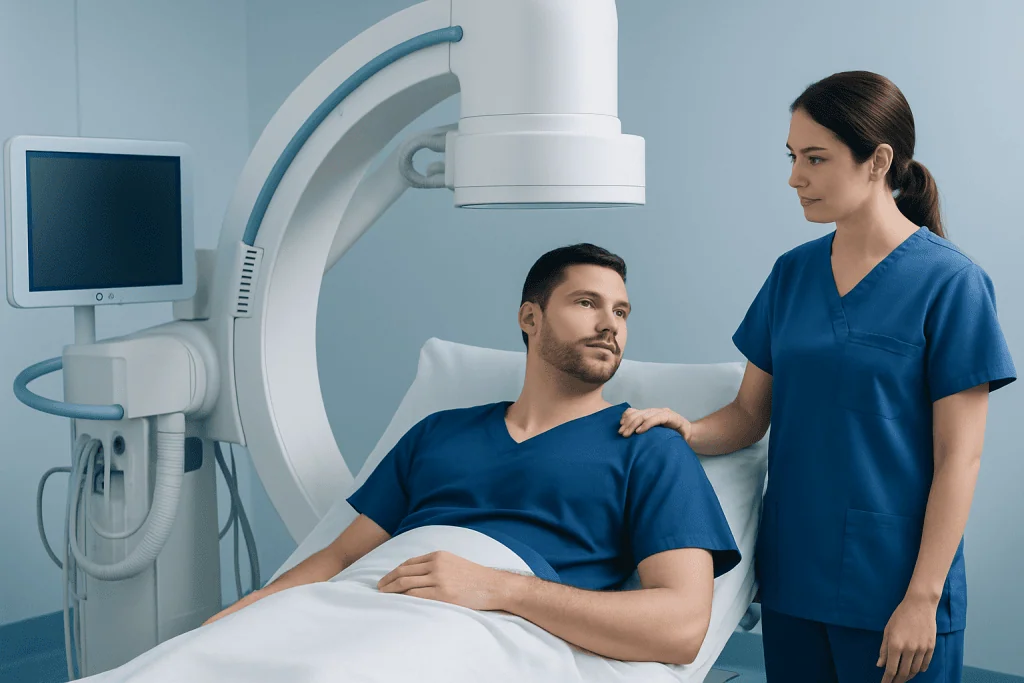
A clinician can assess shoulder alignment, range of motion, strength and tenderness. X-rays may be used after trauma to exclude a fracture or clarify displacement. Ultrasound or MRI is not routinely necessary, but may be considered when the diagnosis is uncertain or another injury is suspected.
Week-by-week AC joint sprain recovery timeline
First 48–72 hours: The priority is protecting the shoulder and managing symptoms. Relative rest, a sling for short-term comfort when advised, ice wrapped in a cloth and appropriate pain relief can help. Gentle movement of the elbow, wrist and hand should continue, and complete inactivity is usually avoided unless a clinician advises otherwise.
Week 1: Pain at the top of the shoulder may still be noticeable, particularly with cross-body reaching or lifting the arm. Many people begin gentle, pain-limited shoulder movement exercises. A grade 1 injury may already be improving clearly; a grade 2 injury may still make dressing, driving or sleeping uncomfortable.
Weeks 2–3: As pain settles, rehabilitation usually progresses toward restoring normal range of motion and activating the muscles around the shoulder blade and rotator cuff. Light daily activities can often be resumed gradually. Heavy lifting, push-ups, contact activities and repetitive overhead work should wait until they can be done without pain or compensation.
Weeks 4–6 and beyond: Many grade 1 and 2 injuries are approaching functional recovery, although direct pressure on the joint and demanding exercise may remain sensitive. Sport-specific drills and resistance training are introduced step by step. Higher-grade injuries, persistent symptoms or physically demanding occupations may require a longer, individually guided programme.
How long to rest a sprained AC joint?
A sprained AC joint usually needs relative rest rather than complete rest. For a mild injury, avoiding painful lifting, pushing, pulling, overhead activity and contact sport for about 1–2 weeks is often appropriate, followed by gradual reintroduction as comfort and movement improve. A grade 2 sprain commonly requires a longer period of activity modification.
A sling may be helpful for a few days to reduce discomfort, especially after the injury, but prolonged sling use can make the shoulder stiff and weak. The appropriate duration depends on injury severity, pain and the clinician’s examination. Gentle exercises are often started early once serious injury has been excluded.
Rest should be adjusted to the activity. Desk work may be possible sooner than manual labour, while collision sports may require medical clearance and a structured return-to-play plan. Pain during an activity, worsening symptoms later that day or the next morning, and altered shoulder mechanics are signs that progression may be too fast.
How to speed up AC joint healing?
Ligaments need time to heal, so there is no safe way to force a faster recovery. The most effective approach is to protect the joint from repeated irritation while gradually restoring movement, shoulder blade control and strength. Following an individual plan from a doctor or physiotherapist can help a person progress without either underusing or overloading the shoulder.
Helpful habits include using ice briefly for symptom relief in the early phase, taking pain medicines only as recommended by a healthcare professional, sleeping in a comfortable supported position and maintaining general nutrition, hydration and sleep. Smoking cessation is also beneficial for overall tissue healing. Exercises should be pain-limited and increased gradually rather than pushed through sharp pain.
Rehabilitation may include range-of-motion work, rotator cuff strengthening, scapular stabilisation and functional exercises tailored to work or sport. If pain continues to limit recovery, a clinician may review the diagnosis and consider supervised physical therapy and rehabilitation or other appropriate options.
Can an AC joint sprain get worse?
An AC joint sprain can feel worse if the shoulder is reinjured, repeatedly overloaded too early or not adequately protected after the initial trauma. A fall, a direct impact or early return to contact sport can aggravate the ligaments and increase pain. Continuing activities that cause sharp pain may also delay recovery.
Not every pain flare means the injury has become structurally worse. Mild soreness after beginning rehabilitation can occur, particularly when tissues and muscles have been inactive. However, new deformity, rapidly increasing swelling, loss of movement, arm weakness, tingling or numbness should be evaluated promptly.
Some people develop ongoing AC joint tenderness, prominence of the collarbone or, less commonly, later degenerative changes in the joint. Persistent symptoms deserve review because other shoulder problems, including rotator cuff injuries or fractures, can sometimes occur alongside an AC injury.
Treatment options, surgery and when to seek medical care
Most grade 1 and grade 2 AC sprains are treated without surgery. Care commonly includes activity modification, short-term support if needed, pain management and progressive rehabilitation. A clinician may recommend imaging after a significant injury, particularly when fracture, major separation or another shoulder injury is possible.
Surgery is not usually needed for minor AC sprains. It may be considered for certain severe separations, for injuries with substantial displacement or for persistent pain and loss of function despite well-conducted non-surgical care. If reconstruction is recommended, the procedure aims to restore stability between the collarbone and shoulder blade using fixation devices, graft tissue or both; rehabilitation then remains an essential part of recovery.
Medical assessment is advisable after a direct shoulder injury if there is severe pain, a visible deformity, inability to lift the arm, significant swelling or bruising, numbness, a cold or pale hand, or concern about a fracture. A person should also arrange review if symptoms are not improving over 1–2 weeks, pain interferes with sleep or daily life, or return to work or sport is difficult. Acibadem International’s multidisciplinary specialists and JCI-accredited hospitals assess and treat shoulder injuries for international patients.
Frequently asked questions
How long does an AC joint sprain take to heal?
A mild AC joint sprain often improves within 1–3 weeks, while a grade 2 injury commonly takes about 3–6 weeks for comfortable everyday function. Full return to contact sport, heavy lifting or overhead training may take longer. Recovery should be based on pain-free movement, strength and shoulder control.
Can a person exercise with an AC joint sprain?
Exercise is usually modified rather than stopped completely after an AC joint sprain. Lower-body exercise and gentle shoulder mobility may be possible when they do not increase pain, but pressing, heavy lifting, contact sport and overhead activity often need to wait. A physiotherapist or doctor can advise on safe progression.
Should an AC joint sprain be put in a sling?
A sling may provide short-term comfort, especially during the first few days after injury. It is not normally intended for prolonged use in a mild or moderate sprain because long periods of immobilisation can contribute to stiffness. The duration should be guided by symptoms and medical advice.
Why is there a bump on top of the shoulder after an AC injury?
A bump can occur when the supporting ligaments allow the outer end of the collarbone to sit higher relative to the shoulder blade. It may be more noticeable with higher-grade injuries, but a bump does not by itself determine pain, function or the need for surgery. A clinician can assess the injury and exclude fracture.
When can a person return to sport after an AC joint sprain?
Return is usually appropriate when the person has full or near-full pain-free movement, normal or near-normal strength and can perform sport-specific movements without symptoms. Contact sports also require confidence tolerating impact and may need a longer recovery period. A clinician can help determine readiness after a more significant injury.
Can an untreated AC joint sprain cause long-term problems?
Many mild AC joint sprains recover well with appropriate activity modification and rehabilitation. However, persistent pain, shoulder weakness, a prominent deformity or repeated aggravation should be assessed, as some people can develop chronic symptoms or AC joint arthritis. Early review is particularly important after high-energy trauma or when movement is markedly limited.
References
- American Academy of Orthopaedic Surgeons
- OrthoInfo
- National Institute of Arthritis and Musculoskeletal and Skin Diseases
- American Orthopaedic Society for Sports Medicine
This article is for general information only and is not a substitute for professional medical advice. Please consult a qualified doctor about your individual situation.
Joint and spine care in Turkey — expert assessment & treatment
JCI-accredited · board-certified surgeons · reply within 24h