

Occupational Therapy News: How It Works, Results and What to Expect

Occupational therapy focuses on daily activities such as dressing, bathing, eating, working, learning and participating in the community. An OT plan begins with an assessment of the person’s abilities, environment, routines and personal goals.
Key Takeaways
- Occupational therapy focuses on daily activities such as dressing, bathing, eating, working, learning and participating in the community.
- An OT plan begins with an assessment of the person’s abilities, environment, routines and personal goals.
- Sessions may include task practice, strengthening, hand therapy, cognitive strategies, sensory approaches and recommendations for adaptive equipment.
- Progress is monitored with observation, goal review and standardized OT outcome measures when appropriate.
- The 8-minute rule is a Medicare billing convention in the United States and does not determine whether therapy is clinically needed or effective.
- Occupational therapy can be part of rehabilitation after neurological, orthopedic, developmental and mental health conditions.
Occupational therapy news often focuses on how occupational therapists help people participate more safely and independently in everyday activities after illness, injury, disability or life changes. OT is a personalized rehabilitation service that assesses meaningful daily tasks, sets functional goals and uses practical strategies, training and adaptive tools to support progress.
Occupational Therapy News: How It Works and What It Means
Occupational therapy news commonly highlights a practical question: how can a person return to the activities that matter in everyday life? Occupational therapy (OT) is a healthcare service that helps children and adults develop, regain or adapt skills for daily living. Despite its name, OT is not limited to paid employment; “occupations” include self-care, home tasks, school, work, hobbies, social participation and rest.
An occupational therapist starts with the individual’s priorities. For one person, this may mean preparing meals after a stroke; for another, it may mean managing a classroom routine, using a computer with less pain, or safely getting dressed after surgery. The therapist considers physical movement, hand function, thinking skills, sensation, mood, fatigue, routines and the home, school or work environment.
OT may be recommended as part of broader rehabilitation for conditions such as stroke, brain injury, arthritis, hand injuries, neurological conditions, developmental differences or recovery after an operation. Care is individualized: the goal is not simply to complete exercises, but to make meaningful everyday activities safer, more manageable and more independent.
Who May Benefit From Occupational Therapy?
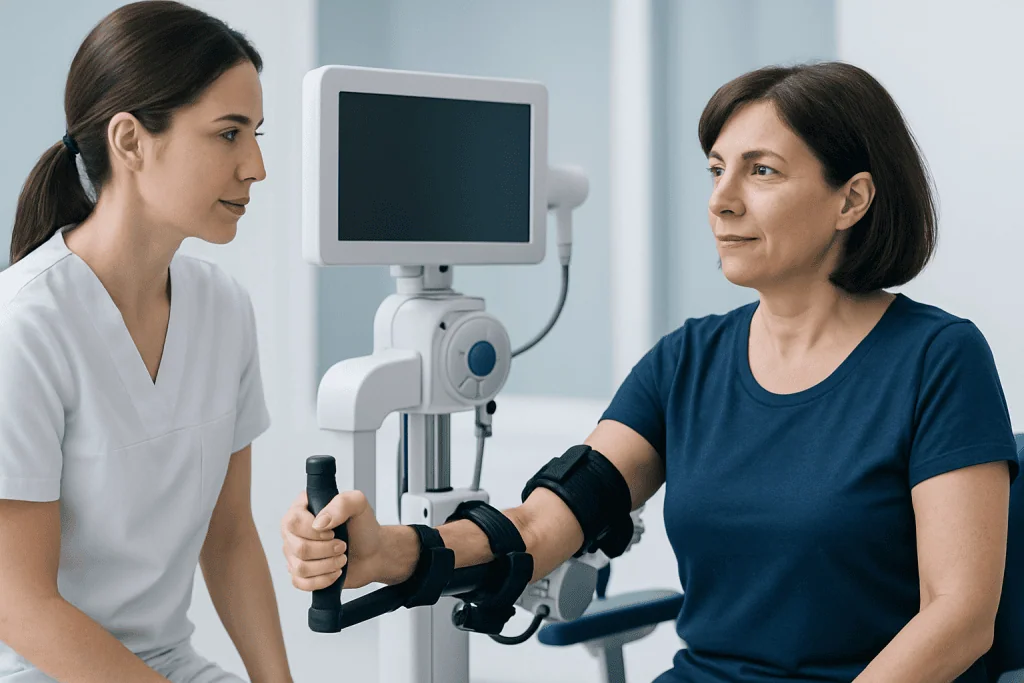
Occupational therapy can be appropriate for people of many ages. A referral may come from a physician, surgeon, neurologist, pediatrician, rehabilitation specialist or another healthcare professional, depending on local practice and insurance requirements. Some people seek OT because a health condition affects a new or important daily task, while others need support with a long-standing disability or changing care needs.
Adults may benefit after a stroke, fracture, joint replacement, spinal injury, hand condition, prolonged hospital stay or a condition that affects memory, balance or fatigue. OT can also help people with chronic pain or arthritis find ways to protect joints, pace activities and use helpful equipment. For neurological recovery, OT often works alongside physiotherapy, speech and language therapy, nursing and medical care.
Children may be referred when challenges affect play, self-care, handwriting, classroom participation, feeding routines, motor coordination or sensory processing. Assessment should be individualized and should not rely on a diagnosis alone. The person’s strengths, culture, home setting and own goals all help guide whether OT is likely to be useful.
How Does Occupational Therapy Work Step by Step?

The first appointment is usually an evaluation. The occupational therapist asks about health history, routines, symptoms, roles and goals, then observes relevant tasks where appropriate. This may include checking range of movement, strength, coordination, hand use, balance, vision-related function, attention, planning or the way a person manages a particular activity.
Next, the therapist and patient—or parent or caregiver when relevant—agree on practical goals. Goals are often specific and functional, such as putting on clothing with less assistance, preparing a simple meal safely, returning to a workstation, or managing a morning routine. The plan may involve individual sessions, group activities, home-based strategies, caregiver education or recommendations for changes at home, school or work.
During treatment, the person practices meaningful tasks and the component skills needed for them. OT may include graded activity, hand and upper-limb rehabilitation, fine-motor training, cognitive strategies, energy-conservation techniques, splinting, education and adaptive devices. When recovery follows a neurological event, stroke rehabilitation may coordinate OT with other therapies and medical follow-up.
At regular intervals, the therapist reviews progress, identifies barriers and adjusts the plan. Some people need a focused course of therapy after an injury or procedure; others benefit from periodic review as their condition, environment or goals change. A discharge plan may include an independent home program, equipment recommendations and advice on when to return for reassessment.
Benefits, Recovery Timeline and Possible Limitations
The potential benefits of occupational therapy include greater independence, safer completion of daily activities, improved confidence and reduced reliance on others for selected tasks. OT may also support return to school, work or community roles. For caregivers, education and practical strategies can make daily routines more manageable while encouraging the person’s participation.
There is no single recovery timeline. Improvement depends on the underlying condition, severity of symptoms, healing, motivation, access to support, frequency of practice and whether the environment can be adapted. Some people notice useful changes in a few visits, while rehabilitation after a major neurological injury or complex surgery may continue for months and progress may be gradual.
OT is generally low risk when it is appropriately tailored, but activities can temporarily cause tiredness, soreness, frustration or symptom flare-ups if demands exceed the person’s current tolerance. Therapists aim to grade tasks carefully, monitor response and modify the plan. Patients should tell the therapist about pain, dizziness, new numbness, marked fatigue, skin irritation from a splint or any change in health.
OT cannot reverse every impairment, and it is not a substitute for urgent medical evaluation or treatment of the underlying condition. However, it can help a person use remaining abilities, learn compensatory strategies and reduce avoidable barriers to participation. In orthopedic recovery, OT may complement physical therapy and rehabilitation when both daily function and movement recovery are priorities.
What Are OT Outcome Measures?
OT outcome measures are tools used to understand a person’s starting point, track change and judge whether therapy is helping with agreed goals. They may be standardized questionnaires, performance-based tests, structured observations or goal-attainment methods. The best measure depends on the person’s age, diagnosis, setting and the activities they want to improve.
Examples may assess independence in daily living, upper-limb function, hand dexterity, cognitive function, balance during tasks, participation, quality of life or caregiver burden. Therapists also use direct observation: for example, the amount of assistance needed to transfer safely, prepare food or organize medication. A score should always be interpreted in context, not treated as the whole picture.
Patient-reported outcomes are particularly important because the person can describe what has changed in real life. A small change in a test score may be meaningful if it allows someone to button a shirt, use a phone, return to a valued hobby or complete a work task with less fatigue. Conversely, a better score may not meet the person’s goals if important barriers remain.
What Is the 8-Minute Rule for Occupational Therapy Session Units?
The 8-minute rule is a billing convention used in parts of the United States, particularly for certain Medicare time-based therapy services. In general, a therapist must provide at least eight minutes of a time-based service to bill one unit, and total direct treatment time is used to determine the number of units that may be billed. Exact rules can vary by payer, service setting and local policy.
This rule is administrative rather than clinical. It does not determine the appropriate length, quality or medical necessity of an OT session. A person’s treatment time should be based on their needs, tolerance, goals and the therapist’s clinical judgment, not on a billing concept alone.
Patients who have questions about coverage, documentation or expected session length should ask their clinic and insurer directly. Outside the United States, funding and reporting systems may use entirely different approaches. The therapist can explain how treatment time is planned and how progress will be reviewed.
Why Are OTs Leaving the Profession?
Reports about occupational therapists leaving jobs or considering a career change should be understood in the context of wider healthcare workforce pressures. Reasons can include high caseloads, administrative demands, documentation requirements, limited staffing, burnout, compensation concerns, reduced autonomy and the emotional demands of supporting people with complex needs. Experiences differ substantially between countries, employers and practice settings.
Workforce challenges do not mean that OT is ineffective or unavailable, but they can affect waiting times, continuity of care and staff wellbeing in some services. Healthcare organizations can help by supporting manageable workloads, supervision, professional development, safe staffing and efficient documentation systems. Patients may benefit from asking how their care will be coordinated if their therapist is unavailable.
Occupational therapists remain important members of multidisciplinary care teams. Their distinctive focus on functional daily life can complement medical treatment and other rehabilitation disciplines. A constructive therapeutic relationship, clear goals and regular communication can help patients make the best use of available sessions.
What Is Harder, PT or OT? When to Seek Medical Care
It is not accurate to say that physiotherapy (PT) or occupational therapy is universally harder. Both are demanding healthcare professions with different emphases. Physiotherapists commonly focus on movement, mobility, pain, balance and physical function, while occupational therapists focus on participation in everyday activities and the interaction between the person, task and environment. Many rehabilitation plans benefit from both approaches.
People should seek medical assessment if new difficulty with daily activities appears suddenly, especially if it occurs with facial drooping, one-sided weakness, speech problems, severe headache, confusion, chest pain, fainting or severe shortness of breath. These symptoms may require urgent emergency care. Prompt assessment is also appropriate for worsening weakness, new falls, persistent hand pain or numbness, substantial changes in memory or thinking, or loss of independence after illness or injury.
For non-urgent concerns, a doctor or rehabilitation professional can determine whether OT, PT, speech therapy or another service is suitable. Acibadem International’s multidisciplinary specialists and JCI-accredited hospitals can assess rehabilitation needs and provide coordinated care for international patients.
Frequently asked questions
What does an occupational therapist do?
An occupational therapist helps people perform activities that are important in daily life, including self-care, household tasks, school, work and leisure. They assess abilities and barriers, then provide task practice, education, strategies, equipment recommendations and environmental adaptations. Treatment plans are based on the person’s own goals.
How long does occupational therapy take to work?
The timeline varies with the underlying condition, the person’s starting abilities, healing, practice opportunities and goals. Some people gain useful strategies quickly, while others need longer-term rehabilitation. The therapist should review progress regularly and discuss whether goals or treatment methods need adjustment.
Is occupational therapy only for work-related injuries?
No. In occupational therapy, the word “occupation” refers to activities that people need or want to do every day. This can include dressing, eating, parenting, studying, driving, cooking, hobbies and paid employment. OT may be helpful after illness, injury, surgery or changes in physical, cognitive or emotional function.
What should a patient expect at the first OT appointment?
The first visit usually includes a discussion of health history, daily routines, current challenges and priorities. The therapist may observe relevant activities and assess physical, sensory or cognitive skills as needed. Together, they develop functional goals and a plan for therapy, home strategies or equipment.
Are OT outcome measures the same for every patient?
No. Outcome measures are selected according to the person’s age, condition, care setting and goals. A hand-function test may be useful for one person, while a daily-living or participation measure may be more relevant for another. The therapist should explain what a measure evaluates and how the results will guide care.
Can occupational therapy be combined with physiotherapy?
Yes. OT and physiotherapy often work together, particularly after surgery, injury, stroke or neurological illness. Physiotherapy may emphasize movement and mobility, while OT applies skills to daily tasks and environments. The exact combination depends on the individual’s needs and care plan.
References
- American Occupational Therapy Association
- World Federation of Occupational Therapists
- Centers for Medicare & Medicaid Services
- World Health Organization
This article is for general information only and is not a substitute for professional medical advice. Please consult a qualified doctor about your individual situation.
Joint and spine care in Turkey — expert assessment & treatment
JCI-accredited · board-certified surgeons · reply within 24h

More from the Health Library



Related Specialists

Embriyolog Hasan Benli
Vitro Fertilization and Reproductive Medicine Center
Prof. Dr. Mehtap Çakır
Endocrinology
Dyt. Nilsu Küçük
Nutrition and Diet
Assoc. Prof. Dr. Yunus Dönder
General Surgery