Fractured Tibia Treatment: How It Works, Results and What to Expect
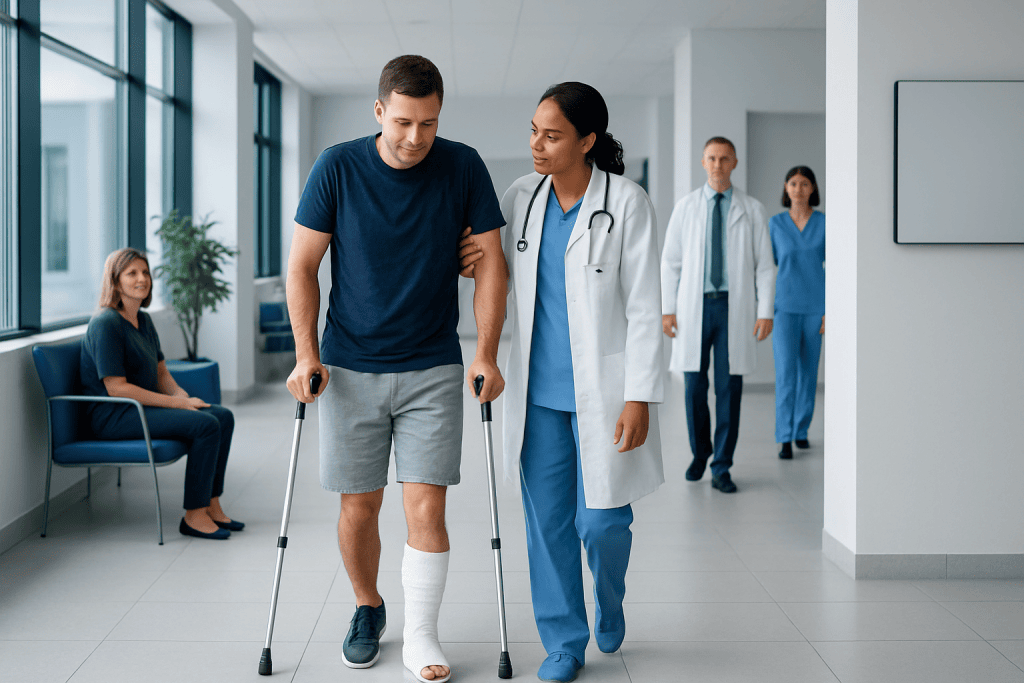
A tibia fracture should be assessed promptly because the bone is important for weight-bearing and is close to the skin. Treatment depends on fracture location, alignment, skin and soft-tissue injury, and the person’s overall health and activity needs.
Key Takeaways
- A tibia fracture should be assessed promptly because the bone is important for weight-bearing and is close to the skin.
- Treatment depends on fracture location, alignment, skin and soft-tissue injury, and the person’s overall health and activity needs.
- Stable fractures may heal in a cast or brace, whereas unstable fractures commonly require surgery to hold the bone in position.
- Most people need a period of restricted weight-bearing followed by physiotherapy; recovery time varies widely.
- Increasing pain, numbness, pale or cold toes, fever, or problems with a cast or wound need urgent medical assessment.
Fractured tibia treatment aims to restore the shin bone’s alignment, protect nearby tissues and help the leg regain safe function. Care may involve a splint or cast for stable fractures, while displaced, open or complex fractures often need surgical fixation and rehabilitation.
Fractured Tibia Treatment: How It Works
Fractured tibia treatment stabilizes a break in the tibia, the larger of the two lower-leg bones commonly called the shin bone. The immediate priorities are to check circulation and nerve function in the foot, protect the skin and muscles around the injury, control pain, and keep the broken bone aligned while it heals.
A clinician may use a splint initially, particularly while swelling settles. For a simple fracture that remains well aligned, a cast or functional brace may be enough. If the bone ends are displaced, the fracture extends into a joint, there are several fragments, or the skin has been broken, an orthopedic trauma specialist may recommend an operation to restore alignment and stability.
Treatment is individualized. X-rays and, when needed, CT scans help the care team understand the fracture pattern and determine whether non-surgical care or fixation with an internal device is the safest route. The aim is not only bone union, but also a leg that can move, bear weight, and function as comfortably as possible.
Who May Need a Cast, Brace or Surgery?
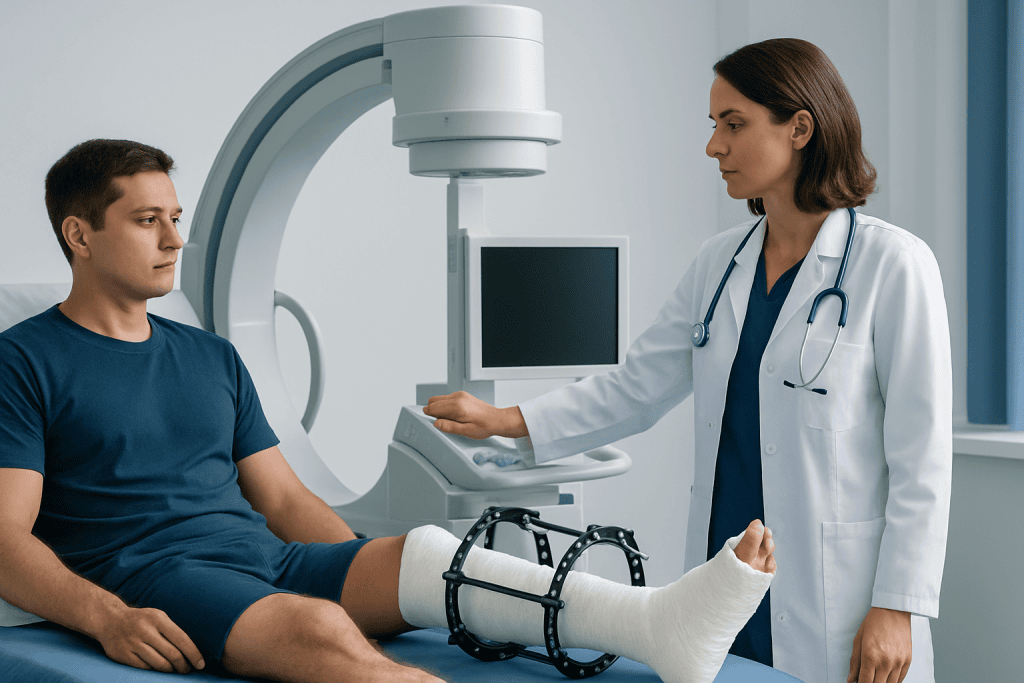
Non-surgical management is often suitable for closed fractures that are stable and adequately aligned, provided the alignment can be maintained during follow-up. A long-leg cast may be used at first, with later transition to a shorter cast or brace as healing progresses. Repeat X-rays are important because some fractures can shift after the initial injury.
Surgery is more likely to be advised for open fractures, fractures with significant displacement or shortening, multiple fracture fragments, injury involving the knee or ankle joint, or fractures that cannot remain aligned in a cast. Surgery may also be considered when associated injuries affect blood vessels, nerves, ligaments, or the soft tissues around the leg.
Common operative methods include an intramedullary nail placed in the marrow canal of the tibia, plates and screws placed along the bone, or an external fixator that stabilizes the leg from outside the body. Orthopedic trauma care can coordinate fracture stabilization with wound, vascular, anesthesia and rehabilitation support when required.
What Happens During Tibia Fracture Treatment?
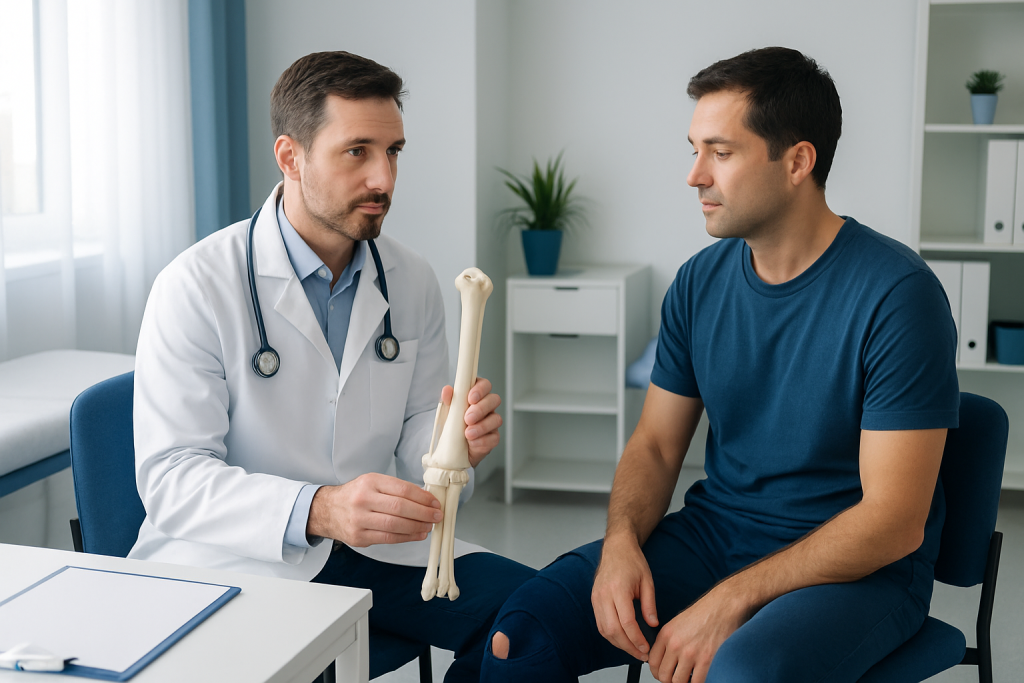
At the first assessment, the team asks how the injury occurred and examines the leg, skin, pulses, sensation, toe movement, and swelling. X-rays usually confirm the diagnosis. A splint is commonly applied rather than a full circumferential cast immediately, because early swelling can make a tight cast unsafe.
If surgery is needed, it is usually performed under anesthesia. The surgeon realigns the bone fragments, called reduction, and secures them with the chosen fixation method. In some severe injuries, especially open fractures or injuries with extensive swelling, surgery may be staged: temporary external fixation and wound care may come first, followed by definitive fixation after the soft tissues are safer to operate on.
After casting or surgery, patients receive instructions about elevation, pain control, wound or cast care, blood-clot prevention when appropriate, and safe use of crutches or a walker. Follow-up appointments include X-rays to check healing and to guide when motion exercises and weight-bearing can advance.
- Intramedullary nailing: often used for many shaft fractures because it supports alignment from within the bone.
- Plates and screws: may be used for fractures near the knee or ankle, or when precise joint-surface restoration is needed.
- External fixation: may provide temporary or definitive stability in selected complex injuries.
- Cast or brace treatment: can be effective for carefully selected stable fractures.
Recovery Timeline, Rehabilitation and Expected Results
Recovery begins with protecting the fracture while maintaining safe movement in the rest of the body. The exact plan varies by fracture type and treatment. Some people can place limited weight through the leg earlier than others, especially after stable fixation, while other fractures require several weeks without weight-bearing. The treating orthopedic team should give the specific instruction, since bearing weight too early can affect alignment or healing.
Bone healing often takes several months, and recovery of strength, balance, ankle and knee movement, and confidence with walking can take longer. Physiotherapy may begin with exercises to preserve motion and reduce stiffness, then progress to strengthening, gait retraining, and return to work, sport, or daily activities. Smoking cessation, adequate protein and calcium intake, vitamin D assessment when appropriate, and good control of conditions such as diabetes can support healing.
Many tibia fractures heal well when alignment, stability, and soft-tissue care are managed appropriately. However, outcomes can be influenced by the severity of injury, infection risk, age, circulation, smoking, nutrition, and adherence to follow-up. Persistent pain, delayed union, malalignment, or reduced joint movement may require further assessment and targeted rehabilitation.
How many days will it take to walk normally after a tibia fracture?
There is no single number of days that applies to everyone. A person may start protected walking with crutches, a walker, or a boot within weeks in some situations, but walking normally without a limp often takes several months. Complex fractures, open fractures, fractures near a joint, and injuries requiring multiple procedures may need a longer recovery.
“Normal” walking depends on more than the bone joining. The muscles of the thigh and calf, as well as the ankle and knee, can become weak or stiff during immobilization. A physiotherapist helps rebuild strength and walking mechanics gradually, while the orthopedic team confirms on examination and imaging when it is safe to increase weight-bearing.
Returning to running, impact exercise, or physically demanding work generally takes longer than returning to ordinary household walking. Patients should avoid setting their timeline by another person’s experience and should follow their own clinician’s guidance.
Does a tibia fracture heal completely?
Many tibia fractures heal completely enough for people to return to their usual daily activities. The likelihood of a good outcome is highest when the bone is aligned and stable, the blood supply and surrounding tissues are protected, and follow-up care is consistent.
Some fractures heal more slowly or incompletely. The tibia has a relatively limited soft-tissue covering along parts of the shin, which can make open injuries and certain fracture patterns more vulnerable to wound problems or infection. Smoking, poor circulation, diabetes, poor nutrition, and taking weight through the leg before it is ready can also increase the chance of delayed healing.
If healing is delayed, clinicians may repeat imaging and review factors that could be contributing. Options may include changing activity restrictions, treating infection or nutritional issues, using bone-healing strategies in selected cases, or considering additional surgery when necessary.
How painful is it to fracture your tibia?
A tibia fracture is usually painful, often causing immediate sharp pain, swelling, bruising, and difficulty or inability to bear weight. The amount of pain varies with the fracture pattern, associated soft-tissue injury, and individual pain experience. A person may also notice deformity, tenderness, or a feeling that the leg is unstable.
Prompt splinting, elevation and clinician-directed pain management can make the injury more comfortable while protecting the bone. Pain should generally improve over time after appropriate stabilization. Severe pain that is escalating, out of proportion to the injury, or not relieved by prescribed measures needs urgent review because it can occasionally signal a serious complication.
Following surgery, discomfort is expected but is managed with a planned approach that may include medication, ice when advised, elevation, rest, and gradual activity. Patients should tell their care team about pain that suddenly worsens or occurs with new numbness, tightness, color changes, fever, or wound drainage.
Can you walk with a fractured tibia?
Some people can take a few steps with a minor, stable tibia fracture, but this does not mean it is safe to continue walking. Other tibia fractures make weight-bearing impossible. Continuing to walk on a suspected fracture can worsen displacement, damage surrounding tissues, and increase pain.
Anyone with a suspected broken shin bone should avoid putting weight on the leg until assessed by a healthcare professional. The leg should be supported in the position found, and the person should use crutches, a wheelchair, or assistance if available. It is not advisable to try to straighten an obviously deformed leg or force it into a shoe or brace.
Once treatment has begun, the care team will specify whether the person is non-weight-bearing, allowed toe-touch or partial weight-bearing, or able to bear weight as tolerated. These instructions can change as healing is confirmed.
When to Seek Medical Care
Urgent medical care is needed after a significant leg injury when there is severe pain, inability to bear weight, visible deformity, rapidly increasing swelling, an open wound, or bone visible through the skin. Emergency assessment is also important if the foot is pale, blue, cold, numb, weak, or has a reduced pulse.
People already receiving fractured tibia treatment should contact their clinician promptly for worsening pain, increasing tightness in a cast, numb or tingling toes, fever, foul-smelling drainage, new redness around a wound, calf swelling, chest pain, or shortness of breath. These symptoms need timely assessment and should not be managed by simply waiting for the next routine visit.
Acibadem International’s multidisciplinary specialists and JCI-accredited hospitals support assessment, surgical care and rehabilitation for international patients with tibia fractures. Ongoing review with an orthopedic specialist remains important to monitor healing and plan a safe return to activity.
Frequently asked questions
What is the usual treatment for a fractured tibia?
Treatment may involve a splint followed by a cast or brace for a stable, aligned fracture. Displaced, unstable, open, or complex fractures often need surgery using an intramedullary nail, plate and screws, or an external fixator. The choice depends on imaging findings, soft-tissue injury, and the person’s health and functional needs.
How long does a tibia fracture take to heal?
Tibia fractures commonly need several months for the bone to heal, although the exact time varies considerably. Simple fractures may heal sooner than complex, open, or displaced fractures. Strength, mobility, and return to higher-impact activities can continue improving after the bone has united.
Will I need physiotherapy after a tibia fracture?
Many people benefit from physiotherapy, especially after immobilization or surgery. Rehabilitation can help restore knee and ankle motion, muscle strength, balance, and a normal walking pattern. The program is adapted to the fracture, treatment method, and stage of healing.
What are signs that a tibia fracture is not healing properly?
Persistent or worsening pain, ongoing inability to progress with weight-bearing, deformity, or lack of improvement on follow-up X-rays can suggest delayed healing. Wound drainage, redness, fever, or increasing swelling may indicate infection, particularly after an open fracture or surgery. A clinician should assess these symptoms promptly.
Can a tibia fracture cause long-term problems?
Some people experience stiffness, weakness, altered walking mechanics, sensitivity around surgical hardware, or pain near the knee or ankle. More serious long-term issues, such as malunion, nonunion, infection, or post-traumatic arthritis, are less common but may occur depending on the injury. Follow-up and rehabilitation help identify and manage concerns early.
When can I drive after a tibia fracture?
Driving should wait until the person can safely control the vehicle, is no longer impaired by sedating pain medication, and has been cleared by their treating clinician. A fracture in the right leg may delay driving more because it affects braking and acceleration. Requirements also depend on local laws and insurance rules.
References
- American Academy of Orthopaedic Surgeons
- National Institute of Arthritis and Musculoskeletal and Skin Diseases
- OrthoInfo, American Academy of Orthopaedic Surgeons
- National Health Service
- Mayo Clinic
This article is for general information only and is not a substitute for professional medical advice. Please consult a qualified doctor about your individual situation.
Joint and spine care in Turkey — expert assessment & treatment
JCI-accredited · board-certified surgeons · reply within 24h