When to Have Cataract Eye Surgery: Procedure, Recovery and Results

Cataract surgery is generally recommended when vision changes affect daily activities or cannot be adequately managed with glasses or lighting changes. The procedure removes the cloudy natural lens and replaces it with a clear artificial intraocular lens.
Key Takeaways
- Cataract surgery is generally recommended when vision changes affect daily activities or cannot be adequately managed with glasses or lighting changes.
- The procedure removes the cloudy natural lens and replaces it with a clear artificial intraocular lens.
- Most surgery is performed as a day procedure using local anaesthetic, with the person awake but comfortable.
- Vision often starts improving within days, while full stabilization can take several weeks.
- Serious complications are uncommon, but prompt follow-up is important if pain, worsening vision or increasing redness occurs.
Cataract eye surgery is usually considered when clouding of the eye’s natural lens begins to interfere with everyday activities, work, driving, reading or personal independence. It is not necessary to wait until a cataract is “mature”; the best timing is decided individually after an eye examination and discussion of visual needs.
When Is the Right Time for Cataract Eye Surgery?
The right time to have cataract eye surgery is when cataract-related vision changes meaningfully affect a person’s quality of life, safety or ability to complete important daily tasks. Examples include difficulty driving, particularly at night; trouble reading medication labels; problems recognizing faces; reduced confidence on stairs; or glare that makes bright light uncomfortable. Surgery is also considered when a cataract prevents the ophthalmologist from monitoring or treating another eye condition.
A cataract does not need to become completely advanced before it can be treated. In fact, waiting until vision is severely limited may make everyday life unnecessarily difficult and can occasionally make surgery more technically challenging. An ophthalmologist will consider the person’s symptoms, visual examination results, overall eye health, occupation, hobbies and personal goals when discussing timing.
Some people have mild cataracts that cause little disruption. In this situation, updated glasses, brighter task lighting, anti-glare measures and regular eye reviews may be appropriate. Cataracts generally progress gradually, but the rate varies between individuals. A person can revisit the decision about surgery whenever visual needs change.
What Cataracts Are and How They Affect Vision
A cataract is clouding of the natural lens inside the eye. The lens normally focuses light onto the retina, the light-sensitive tissue at the back of the eye. When the lens becomes less clear, light does not pass through it as precisely, causing vision to appear blurred, dim, faded or hazy.
Age-related lens changes are the most common cause of cataracts. They may also develop earlier in people with diabetes, long-term corticosteroid use, previous eye injury, eye inflammation, substantial sunlight exposure or a family history of cataracts. Cataracts can occur in one or both eyes, although they do not spread from one eye to the other.
Common symptoms include blurred or cloudy vision, glare or halos around lights, reduced night vision, sensitivity to bright light, colours appearing less vivid and frequent changes in glasses prescriptions. These symptoms can overlap with other eye conditions, including glaucoma and retinal disorders, so a professional eye assessment is important rather than assuming that all visual changes are due to cataracts.
Candidacy and Assessment Before Surgery

Most adults with visually significant cataracts can be considered for surgery. The decision is not based on a single visual acuity measurement alone. Someone whose work requires detailed vision, or whose night-driving glare is severe, may reasonably choose surgery even if a standard eye-chart result is relatively good. Conversely, a person with reduced chart vision but minimal day-to-day difficulty may prefer monitoring for a time.
Before surgery, the ophthalmology team performs a comprehensive eye examination. This usually includes checking vision, examining the front and back of the eye, measuring eye pressure and taking precise measurements of the eye to help select the power of the replacement lens. The clinician will also assess conditions that may influence expected visual improvement, such as dry eye disease, corneal disease, glaucoma, diabetic eye disease or macular degeneration.
Lens selection is an important part of planning. A standard monofocal intraocular lens is designed to provide clear vision at one main distance, often distance vision, with glasses still needed for reading or close work. Other lens options may reduce reliance on glasses for more than one distance in selected people, but they are not suitable for every eye and may involve visual trade-offs such as halos or reduced contrast in some lighting. The ophthalmologist can explain realistic expectations based on individual eye health and lifestyle.
How Cataract Surgery Works: Step by Step
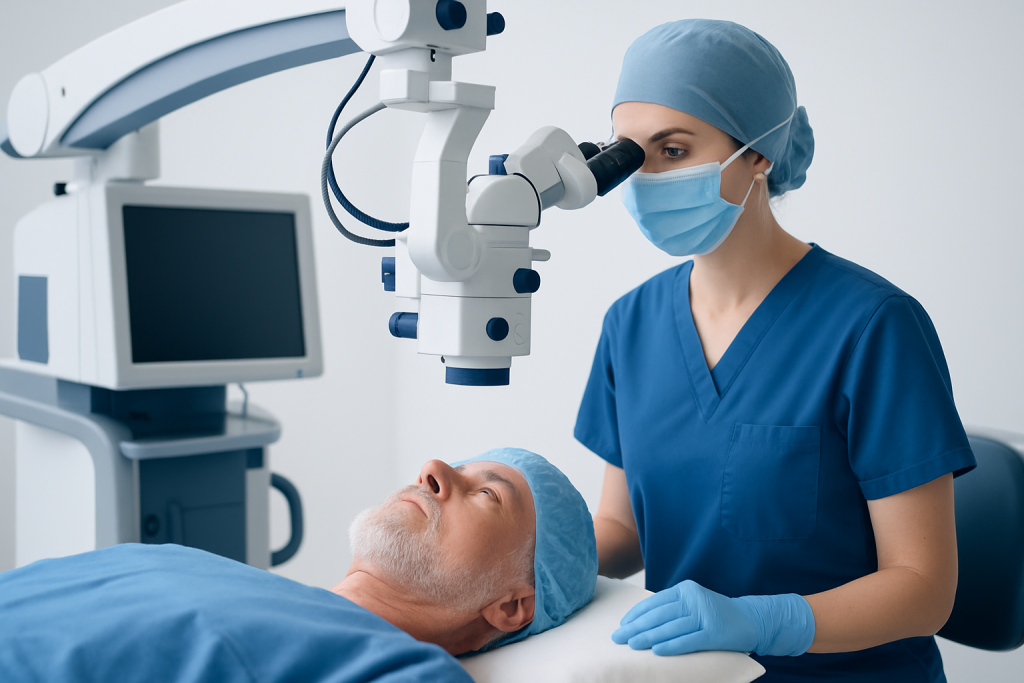
Cataract surgery is a commonly performed procedure in which the cloudy lens is removed and replaced with a clear artificial lens, called an intraocular lens. The most widely used technique is phacoemulsification. It is usually carried out as an outpatient or day procedure, meaning most people return home the same day.
First, dilating and anaesthetic eye drops are given. A sedative may be offered in some circumstances, but many people remain awake and comfortable. The surgeon makes a very small incision at the edge of the cornea, the clear front surface of the eye. An ultrasound instrument breaks the cloudy lens into small pieces, which are gently removed through the incision.
The folded intraocular lens is then placed into the lens capsule, the thin natural membrane that supports it. The small incision often seals without stitches. Surgery itself commonly takes a short time, although preparation and recovery at the surgical centre take longer. Detailed evaluation and planning for cataract surgery help ensure the approach and lens choice are appropriate for the individual.
Usually, only one eye is treated at a time. If both eyes need surgery, the second eye may be scheduled after the first eye has begun to recover and the result can be assessed. The interval depends on clinical factors and local practice.
Benefits, Results and Possible Risks
The main benefit of cataract surgery is clearer vision when the cataract is the primary cause of visual impairment. Many people notice brighter colours, less glare and improved ability to read, watch television, drive or manage daily activities. The degree of improvement depends not only on the cataract but also on the health of the retina, optic nerve, cornea and other eye structures.
It is helpful to understand that surgery removes the cataract but does not treat every cause of reduced vision. For example, a person with significant age-related macular degeneration may experience improvement in cloudiness and glare, but central vision may remain limited by the retinal condition. Careful preoperative testing supports realistic expectations.
Cataract surgery is generally safe, but no operation is risk-free. Possible complications include inflammation, infection, bleeding, raised or lowered eye pressure, swelling in the retina, corneal swelling, retinal detachment, a displaced lens implant or the need for additional treatment. Severe complications are uncommon, and regular postoperative care helps identify concerns early.
Months or years after successful surgery, some people develop clouding of the capsule behind the artificial lens. This is sometimes called a secondary cataract, although the original cataract cannot return. It can usually be treated with a brief laser procedure called YAG laser capsulotomy when it affects vision.
Recovery Timeline and Aftercare
Vision may be blurry or variable immediately after surgery because the eye is healing and dilating drops may still be active. Many people begin to notice improvement within a few days, but healing differs from person to person. Vision commonly continues to settle over several weeks, especially when there is pre-existing dry eye, corneal swelling or another eye condition.
Patients are typically prescribed eye drops after surgery to reduce inflammation and lower the risk of infection. These should be used exactly as directed. The eye should not be rubbed or pressed, and a protective shield may be recommended while sleeping for a short period. Hand hygiene before using drops is important.
In the early recovery period, people are commonly advised to avoid strenuous exercise, heavy lifting, dusty environments and swimming until their clinician confirms it is safe. Normal light activities may often resume quickly, but driving should wait until vision meets legal and practical safety requirements. Follow-up appointments allow the team to monitor healing, eye pressure and visual recovery.
Once the eye has stabilized, an updated glasses prescription may be considered if needed. Some people will still need glasses for reading, computer work or fine detail, depending on the type of intraocular lens selected and their visual goals.
When to Seek Medical Care
Anyone who develops gradual changes in vision, increasing glare, difficulty seeing at night or frequent changes in glasses should arrange a routine eye examination. A comprehensive assessment can determine whether cataracts are present and whether another condition may be contributing to the symptoms.
Urgent medical advice is needed for sudden vision loss, a curtain-like shadow in vision, new flashes of light, a sudden increase in floaters, severe eye pain, marked redness or significant sensitivity to light. These symptoms are not typical of an uncomplicated cataract and may require prompt assessment.
After cataract surgery, contact the surgical team or seek urgent eye care if there is worsening rather than improving vision, severe or increasing pain, increasing redness, discharge, injury to the eye, or new flashes and floaters. Early review is the safest approach when recovery does not seem as expected.
Acibadem International’s multidisciplinary specialists and JCI-accredited hospitals diagnose and treat cataracts and related eye conditions for international patients. A consultation with a qualified ophthalmologist can help each person weigh the likely benefits, limitations and timing of surgery.
Frequently asked questions
Should a person wait until a cataract is mature before surgery?
No. Cataract surgery does not usually need to be delayed until a cataract is mature. It is generally considered when vision symptoms interfere with everyday life, safety, work or independence, or when the cataract affects treatment of another eye condition.
How long does cataract surgery take?
The surgical part of a straightforward cataract operation often takes a short time, although preparation, checks and recovery at the centre make the visit longer. Most procedures are performed as day surgery, so the person usually goes home the same day with an escort.
Is cataract surgery painful?
Cataract surgery is usually performed with numbing eye drops or local anaesthetic. People may feel pressure, notice lights or movement, but should not experience significant pain during the procedure. Mild irritation, grittiness or light sensitivity can occur temporarily afterward.
How quickly will vision improve after cataract surgery?
Many people notice some improvement within a few days, but vision can fluctuate while the eye heals. Full stabilization may take several weeks and can take longer when other eye conditions are present. The ophthalmologist will advise when a new glasses prescription should be checked.
Can cataracts come back after surgery?
The removed natural lens cannot develop another cataract. However, the membrane behind the artificial lens can become cloudy later, causing similar symptoms. This can often be treated effectively with a brief laser procedure.
Will glasses still be needed after cataract surgery?
That depends on the lens implant selected, the eye’s measurements and the person’s visual goals. Many people still need glasses for reading, close tasks or some intermediate work, especially with a monofocal lens. The eye surgeon can discuss likely glasses needs before surgery.
References
- American Academy of Ophthalmology
- National Eye Institute
- National Health Service
- Mayo Clinic
- World Health Organization
This article is for general information only and is not a substitute for professional medical advice. Please consult a qualified doctor about your individual situation.
Eye Surgery in Turkey — costs, top hospitals & a free quote
JCI-accredited · board-certified surgeons · reply within 24h

Ophthalmology
Comprehensive eye care from laser vision correction to retina, cornea and cataract surgery.
75 specialists in this unit