Olif Surgery: Procedure, Recovery and Results

OLIF surgery reaches the lumbar spine through an oblique side approach, often avoiding direct disruption of major back muscles. The procedure can relieve pressure indirectly by restoring disc and nerve-space height while creating conditions for spinal fusion.
Key Takeaways
- OLIF surgery reaches the lumbar spine through an oblique side approach, often avoiding direct disruption of major back muscles.
- The procedure can relieve pressure indirectly by restoring disc and nerve-space height while creating conditions for spinal fusion.
- Walking usually begins soon after surgery, but bone fusion and return to higher-impact activities take several months.
- Suitability depends on the spinal level, the cause of symptoms, anatomy, bone health and response to non-surgical treatment.
- As with any spinal fusion, OLIF has potential risks and requires structured follow-up and rehabilitation.
OLIF surgery, or oblique lumbar interbody fusion, is a type of lumbar spinal fusion performed through the side of the abdomen to restore disc height and stabilize selected lower-back segments. It may be considered when non-surgical care has not relieved symptoms caused by degenerative disc disease, spinal instability, or certain spinal deformities.
OLIF Surgery Overview: How It Works
OLIF surgery stands for oblique lumbar interbody fusion. It is a lumbar fusion technique used to stabilize one or more painful or unstable segments in the lower spine. The surgeon approaches the spine through an incision on the side of the abdomen, passing through a natural corridor in front of the psoas muscle rather than operating directly through the back.
During the procedure, the damaged disc material is removed and replaced with an interbody spacer, sometimes called a cage. The spacer helps restore the height between vertebrae and may improve the space available for nearby nerves. Bone graft material is placed to encourage the two vertebrae to grow together over time, creating a stable fusion.
OLIF may be combined with screws and rods inserted from the back to provide additional stability. Although the side incision may be relatively small, the operation is still a significant spinal procedure because it involves disc removal, implant placement and the biological process of bone fusion.
Who May Be a Candidate for OLIF Surgery?
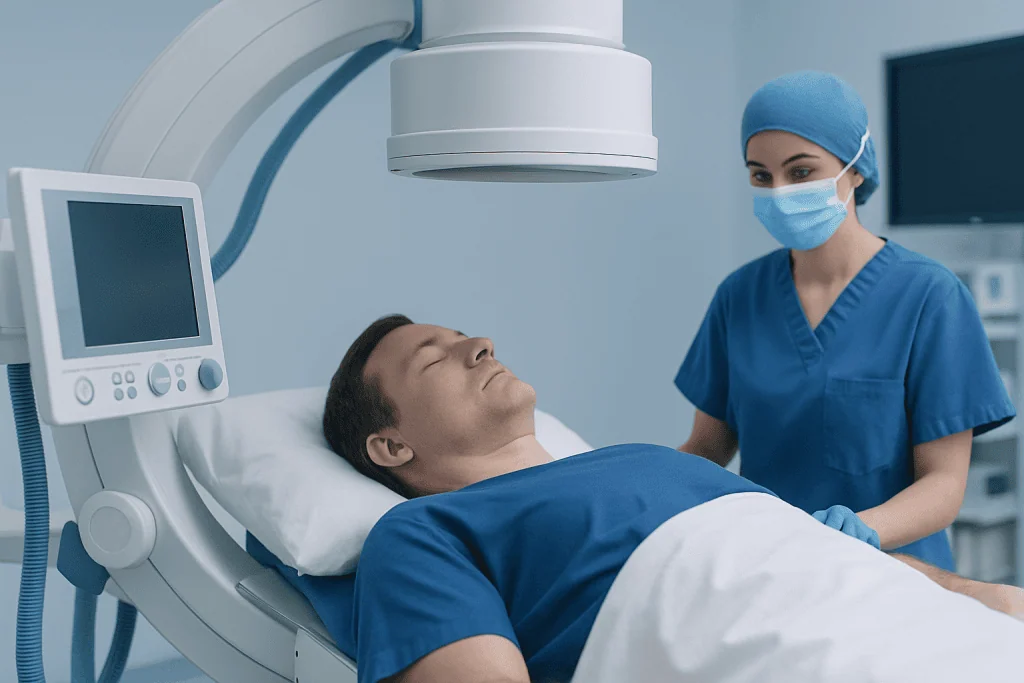
OLIF surgery may be considered for adults with persistent lower-back pain, leg pain, numbness or weakness related to a defined lumbar spine problem. Potential reasons include degenerative disc disease, recurrent disc-space collapse, spondylolisthesis (one vertebra slipping forward), foraminal narrowing around a nerve, some forms of scoliosis, or spinal instability.
Before recommending fusion, a spine team generally confirms that symptoms, examination findings and imaging studies point to the same spinal level or levels. Non-surgical care, such as activity modification, physical therapy, pain management and appropriately selected injections, is commonly tried first unless there is progressive nerve weakness or another urgent concern.
Not every lumbar condition is suitable for an oblique approach. The level of the spine involved, blood-vessel position, prior abdominal surgery, bone density, degree of narrowing and overall medical health can all influence the choice of technique. Related causes of back and leg symptoms may include lumbar disc herniation or spinal stenosis, and the surgical plan should be individualized rather than based on a diagnosis alone.
What Happens During the OLIF Procedure?
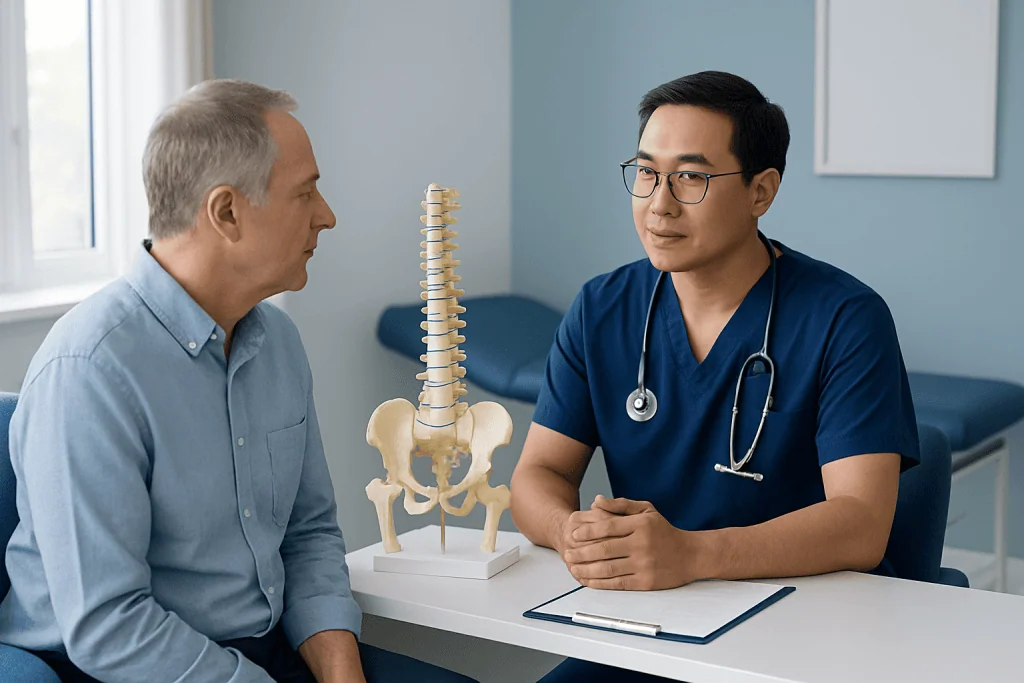
OLIF is performed under general anesthesia. The patient is usually positioned on their side, and the surgical team uses X-ray guidance to identify the correct spinal level. A small incision is made in the flank or lower abdomen, and the surgeon carefully reaches the front-side portion of the lumbar spine through the oblique corridor.
After the disc is accessed, the surgeon removes disc material and prepares the adjacent vertebral endplates. An interbody implant containing bone graft is then placed in the disc space. Restoring disc height can indirectly reduce pressure on nerves by enlarging the openings where they leave the spine, although direct decompression may also be needed in some cases.
Depending on the indication and stability required, a second stage may add posterior screws and rods through small back incisions. The operation length, need for instrumentation and hospital stay vary with the number of levels treated and the person’s overall health. A spinal fusion surgery consultation can explain whether OLIF, another fusion technique or a non-fusion option best matches the clinical findings.
Benefits and Risks of OLIF Surgery
A potential advantage of OLIF is that it can access the disc space while limiting direct dissection of the large muscles at the back of the spine. It may allow placement of a larger interbody implant, restoration of disc height and correction of some alignment problems. For appropriately selected patients, the aim is to reduce pain linked to instability or nerve compression and improve daily function.
However, results are not identical for everyone. Improvement depends on the accuracy of diagnosis, the condition being treated, nerve recovery, bone healing, rehabilitation participation and other health factors. Fusion is intended to address pain from a specific spinal segment; it does not remove every possible source of back pain.
Potential risks include bleeding, infection, blood clots, anesthesia-related complications, nerve injury, weakness or numbness, bowel or urinary problems, injury to blood vessels or nearby abdominal structures, implant movement, failure of bone fusion and persistent or recurrent symptoms. Adjacent spinal levels can also develop degeneration over time. The surgeon discusses these risks in relation to the person’s anatomy and planned procedure before surgery.
How Long Does It Take to Recover From OLLIF Surgery?
“OLLIF” is sometimes used online to refer to minimally invasive lumbar fusion techniques, while OLIF specifically means oblique lumbar interbody fusion. Recovery after OLIF varies, but many patients begin standing and walking with support on the day of surgery or the following day. Hospital discharge may occur after a short stay when pain is manageable, walking is safe and there are no complications.
During the first two to six weeks, walking is usually encouraged in gradually increasing amounts, while bending, twisting, lifting and prolonged sitting may be restricted. Some people return to desk-based work within several weeks, while physically demanding work commonly requires a longer recovery period. The treating surgeon provides individualized restrictions based on the levels fused and fixation used.
Bone fusion develops gradually rather than immediately. Meaningful improvement may continue for several months, and fusion maturation may take six months to a year or longer. A TLIF surgery recovery timeline, TLIF procedure recovery and TLIF recovery time can be broadly similar in that both involve spinal fusion, but incision location, muscle effects, surgical goals and individual recovery plans differ. A formal TLIF surgery rehab protocol should not be substituted for an OLIF-specific plan.
What Days Are the Worst After Spinal Fusion?
For many people, the first several days after spinal fusion are the most uncomfortable. Surgical pain, stiffness, fatigue, constipation from pain medicines, sleep disruption and the effort of moving safely can be most noticeable during this early period. Symptoms should be managed with the care plan provided by the surgical team.
Discomfort often changes rather than disappearing all at once. Incision pain may gradually improve over the first few weeks, while deeper stiffness and reduced stamina can persist longer. Short, frequent walks; taking prescribed medicines as directed; adequate fluids and nutrition; and following instructions for wound care and activity can support early recovery.
Severe or escalating pain, new leg weakness, loss of bladder or bowel control, fever, wound drainage, chest pain or shortness of breath should not be considered a routine part of recovery. These symptoms need prompt medical assessment.
What Is the Success Rate of OLIF Surgery?
There is no single success rate that applies to all OLIF surgeries. Studies use different definitions of success, such as improvement in leg pain, reduction in disability, radiographic fusion, restoration of spinal alignment or avoidance of additional surgery. Outcomes also differ according to the condition treated, number of levels fused, surgical technique and length of follow-up.
In general, carefully selected patients may experience improvement in symptoms and function after OLIF, particularly when pain and neurological symptoms clearly relate to the treated spinal level. Fusion on imaging does not always correspond exactly with how a person feels, and a technically successful fusion cannot guarantee complete relief of all back pain.
The most useful discussion is individualized. A surgeon can review imaging, neurological findings, smoking status, diabetes management, bone health, body weight, previous operations and expectations to explain the likely benefits and limitations. Smoking cessation and treatment of low bone density, when relevant, may improve the chance of successful fusion.
Is OLIF a Major Surgery? When to Seek Medical Care
Yes. OLIF is considered major surgery because it is performed under general anesthesia and involves work near the spine, placement of an implant and a fusion that must heal over time. Its minimally invasive access route may reduce tissue disruption in selected cases, but it does not eliminate the need for careful preparation, hospital monitoring, follow-up imaging and rehabilitation.
Medical assessment is appropriate for persistent back or leg pain that limits walking, sleep, work or everyday activities despite conservative care. Prompt assessment is particularly important for new or worsening weakness, numbness in the groin or saddle area, loss of bladder or bowel control, fever with back pain, or pain after significant trauma.
After surgery, patients should contact their surgical team for increasing wound redness, drainage, fever, worsening neurological symptoms, uncontrolled pain, calf swelling, chest pain or breathlessness. Acibadem International’s multidisciplinary spine specialists and JCI-accredited hospitals diagnose and treat spinal conditions for international patients, including evaluation for minimally invasive spine surgery when appropriate.
Frequently asked questions
How long does OLIF surgery take?
The operating time varies depending on the number of spinal levels treated, whether screws and rods are added, and the complexity of the spinal condition. A surgeon can provide a more accurate estimate after reviewing imaging and the planned approach. Time in the operating room also includes anesthesia preparation and positioning.
How long does it take to recover from OLLIF surgery?
Early mobility often starts within one or two days, but recovery is gradual. Many people increase daily activities over several weeks, while the fusion itself takes months to mature. The exact timeline depends on the procedure performed, the number of levels fused and the individual’s health.
What is the success rate of OLIF surgery?
A single percentage cannot accurately describe OLIF outcomes because research measures success in different ways and patient circumstances vary. Many appropriately selected patients improve in pain and function, but full symptom relief cannot be guaranteed. The surgeon can discuss expected outcomes for the specific diagnosis and planned levels.
What days are the worst after spinal fusion?
The first few days are often the most challenging because of pain, stiffness, tiredness and reduced mobility. Symptoms generally improve gradually with appropriate pain control, walking and rest. New severe pain or neurological symptoms should be reported promptly rather than assumed to be normal recovery.
Is OLIF a major surgery?
Yes. OLIF is a major spinal operation because it involves anesthesia, disc removal, implant placement and bone fusion. Even when performed through a less disruptive approach, it requires medical clearance, careful aftercare and follow-up.
Can OLIF surgery relieve leg pain?
OLIF may help leg pain when nerve irritation is caused by loss of disc height, instability or narrowing that can be improved by restoring the disc space. It may not be suitable for every type of nerve compression. The decision depends on symptoms, examination findings and imaging.
References
- North American Spine Society
- American Association of Neurological Surgeons
- American Academy of Orthopaedic Surgeons
- National Institute of Neurological Disorders and Stroke
- National Health Service
This article is for general information only and is not a substitute for professional medical advice. Please consult a qualified doctor about your individual situation.
Joint and spine care in Turkey — expert assessment & treatment
JCI-accredited · board-certified surgeons · reply within 24h

More from the Health Library



Related Specialists

Prof. Dr. Javad Parvizi
Orthopedic Surgery & Traumatology
Dr. Burcu Duran Tak
Acibadem Life Clinical Service
Assoc. Prof. Dr. Tayfun Yoldaş
General Surgery
Dr. Aydin Aksoy
Cardiology