Operation Entropion: Procedure, Recovery and Results

Entropion surgery repositions an inward-turning eyelid to prevent ongoing irritation of the cornea. The operation is commonly performed under local anaesthesia, often as an outpatient procedure.
Key Takeaways
- Entropion surgery repositions an inward-turning eyelid to prevent ongoing irritation of the cornea.
- The operation is commonly performed under local anaesthesia, often as an outpatient procedure.
- Bruising, swelling and mild tightness are expected initially; visible healing generally improves over one to two weeks.
- The surgical technique depends on the cause of entropion, such as age-related lid laxity, scarring or muscle spasm.
- Urgent assessment is important for eye pain, worsening redness, light sensitivity, reduced vision or suspected corneal injury.
Operation entropion corrects an eyelid that turns inward and causes the lashes or skin to rub against the eye. The procedure is usually performed as day surgery, and most people recover comfortably with careful follow-up and eye protection.
Operation Entropion: what it is and how it works
Operation entropion is a surgical repair for entropion, a condition in which the edge of an eyelid turns inward toward the eye. As a result, eyelashes and skin may rub on the surface of the eye, causing watering, redness, a gritty sensation and sensitivity to light. Surgery aims to rotate and support the eyelid in its natural outward-facing position, protecting the cornea.
Entropion most often affects the lower eyelid and becomes more common with age because eyelid tissues gradually loosen. It can also develop after inflammation, injury, previous surgery, facial nerve problems or scarring of the inner eyelid. Although lubricating drops or temporary taping may reduce symptoms for a short time, an operation is often the lasting treatment when the lid remains turned inward.
The specific operation is tailored to the reason for the eyelid turning in. The surgeon may tighten the lower lid, adjust muscles that pull the lid inward, remove a very small amount of skin, or repair scarring within the eyelid. The central goal is functional: to restore a stable lid position and reduce rubbing against the eye.
Who may be a candidate for entropion surgery?
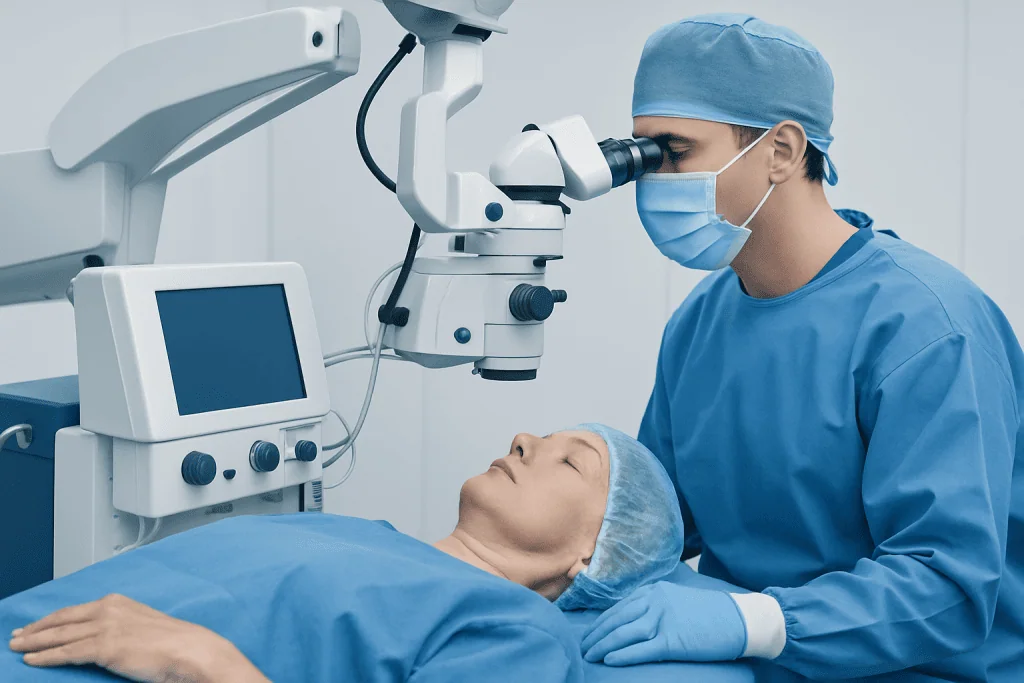
A person may be considered for entropion surgery when the eyelid persistently turns inward, particularly if it causes discomfort, repeated tearing, discharge, recurrent eye irritation or damage to the cornea. The decision is based on an eye examination rather than appearance alone. An ophthalmologist assesses eyelid position, lid tone, lash direction, tear film and the condition of the cornea.
Surgery may be recommended promptly if eyelashes are scratching the cornea or if there are signs of an epithelial defect, ulcer or infection. In some situations, temporary measures such as lubricating eye drops, ointment, a protective contact lens, eyelid taping or treatment for inflammation are used while surgery is planned. These measures do not usually correct the underlying eyelid laxity or scarring.
Before an operation, the clinical team reviews general health, allergies, dry-eye symptoms, previous eyelid procedures and medicines that may affect bleeding or healing. People should not stop prescribed blood-thinning medicines without instructions from the clinician managing their care. If entropion is related to another eyelid or eye-surface problem, that condition may also need assessment and treatment.
What happens during an operation entropion procedure?

Most entropion operations are performed as day surgery. The area around the eyelid is cleaned, and local anaesthetic is commonly used to numb the eyelid. Some people may also receive medicine to help them relax, depending on their health, the planned technique and local practice. The patient remains comfortable while the surgeon works on the eyelid.
The operation usually begins with careful marking of the eyelid. For common age-related lower-lid entropion, the surgeon may make a small incision below the lashes or at the outer corner of the eyelid. The lid-supporting tissues can then be tightened, and the muscles that contribute to inward rotation may be repositioned. Fine stitches hold the correction while the tissues heal.
If internal eyelid scarring is pulling the lid inward, the approach may need to address the scarred tissue and restore the lid’s normal rotation. The precise method varies, so the surgeon should explain the planned technique, expected scar location and follow-up arrangements beforehand. Eyelid surgery may include functional procedures such as entropion repair when they are clinically indicated.
After the operation, an antibiotic ointment, dressing or eye pad may be applied for a short period. Patients are usually able to return home the same day, but they should arrange for someone to accompany them and should avoid driving until their vision is clear and the clinical team says it is safe.
Recovery timeline and expected results
In the first few days after entropion surgery, the eyelid may be swollen, bruised, tender or feel tight. Mild watering, crusting along the lashes and temporary blurred vision from ointment are also common. Cold compresses, used as advised and without pressure on the eye, can help reduce swelling. The care team may prescribe or recommend eye ointment and provide instructions on keeping the area clean.
Many people feel well enough for light daily activities within several days, but bruising and swelling can take one to two weeks to settle visibly. Stitches are often removed or checked at a follow-up appointment, depending on the type used. Strenuous exercise, swimming, heavy lifting and rubbing the eye are usually avoided until the surgeon confirms that healing is progressing appropriately.
Functional improvement can begin quickly because the eyelashes no longer rub against the eye. However, the final eyelid position and scar maturation may continue to improve over several weeks. Follow-up is important to confirm that the eyelid is stable, the cornea is protected and any dry-eye symptoms are being managed.
Results are generally intended to be long-lasting, especially when the procedure addresses the underlying cause. In some cases, recurrent laxity, scar-related changes or other eyelid problems can lead to persistent or returning symptoms and may require additional care.
How long does it take to heal after entropion surgery?
Initial healing after entropion surgery commonly takes about one to two weeks. During this period, swelling, bruising and tenderness usually improve steadily, and any non-dissolving stitches may be removed according to the surgeon’s plan. The timing varies with the surgical technique, the person’s general health and whether scarring or other eye conditions are present.
Although the incision may look substantially healed within a couple of weeks, the eyelid can continue settling for several weeks. It is sensible to attend all scheduled reviews, use prescribed drops or ointment exactly as directed, and ask before returning to contact lenses, eye makeup, sport or strenuous work.
Healing should be assessed sooner if pain is increasing rather than improving, if there is significant discharge, worsening redness, fever, a new change in vision or difficulty closing the eye. These symptoms do not always indicate a serious complication, but they need prompt clinical advice.
How painful is entropion surgery?
Entropion surgery is usually not described as severely painful. Local anaesthetic numbs the eyelid during the procedure, though a person may notice pressure, gentle pulling or movement. The anaesthetic injection can cause a brief sting, and the surgical team can explain what sensations to expect.
Afterward, many people experience mild soreness, tightness or a bruised feeling for a few days. Simple pain relief may be appropriate for some patients, but the safest choice depends on medical history and other medicines. The surgeon or pharmacist can advise on suitable options and on medicines that should be avoided.
Severe pain, pain that increases after initially improving, or pain accompanied by reduced vision, marked light sensitivity or nausea should be assessed urgently. These symptoms are not expected parts of routine recovery and require an eye-care professional’s guidance.
How long do you have to sleep sitting up after eyelid surgery?
After entropion surgery, many surgeons advise sleeping with the head elevated for the first few nights, and sometimes for up to about one week, to help limit swelling. This does not necessarily mean sleeping fully upright in a chair. Using extra pillows or a supportive wedge so that the head is raised comfortably is often sufficient.
Individual instructions may differ based on the operation performed, the degree of swelling and other health considerations. Patients should avoid sleeping face-down or placing pressure on the operated eye unless their surgeon has specifically said this is acceptable.
Good rest, hydration and following the aftercare plan support recovery. If elevated positioning causes neck pain, breathing discomfort or poor sleep, the patient should contact the surgical team for personalised advice rather than stopping all positioning measures without guidance.
Why can't you watch TV after eyelid surgery?
Watching television is not universally forbidden after eyelid surgery, but clinicians may recommend limiting screen time during the first days. Television, phones and computers can reduce blinking and contribute to dryness, particularly when the eye surface is already irritated or when ointment temporarily blurs vision. Focusing on a screen may also feel tiring while the eyelid is swollen.
Short periods may be comfortable for some people if vision is clear enough and they take regular breaks. Lubricating drops or ointment should be used only as directed, and the eye should not be rubbed. Bright screens and prolonged viewing can be reduced until comfort improves.
Personal restrictions vary. A patient should follow their surgeon’s advice, especially if there was corneal injury before surgery, an additional eye procedure or a need for close monitoring of the ocular surface.
Risks, benefits and when to seek medical care
The main benefit of an operation entropion is protection of the eye from lashes and skin rubbing on the cornea. This can relieve watering, foreign-body sensation and redness while reducing the risk of ongoing corneal injury. As with all surgery, however, it involves potential risks, which the surgeon discusses during consent.
Possible complications include bruising, bleeding, infection, scarring, dry-eye symptoms, temporary overcorrection or undercorrection, asymmetry, recurrence and a need for further treatment. Rarely, a problem involving the cornea or vision may develop. Careful assessment, an appropriate technique and follow-up help manage these risks, but no procedure can guarantee a particular outcome.
Medical care should be sought promptly for severe or worsening eye pain, reduced or distorted vision, increasing redness or swelling, pus-like discharge, persistent bleeding, fever, marked sensitivity to light, or an inability to close the eye properly. These symptoms need assessment to protect eye health.
Acibadem International’s multidisciplinary specialists and JCI-accredited hospitals assess and treat eyelid conditions, including entropion, for international patients. An ophthalmologist can determine whether symptoms are due to entropion or another cause and advise on the most appropriate next steps.
Frequently asked questions
Is operation entropion performed under local anaesthesia?
Many entropion repairs are performed using local anaesthesia, which numbs the eyelid while the patient remains awake. Depending on the planned procedure and the patient's needs, sedation or another anaesthetic approach may sometimes be considered. The surgical and anaesthetic teams explain the recommended option beforehand.
Can entropion go away without surgery?
Temporary treatment may ease symptoms, particularly lubricating drops or ointment, eyelid taping or management of inflammation. However, persistent age-related laxity or scarring usually does not correct itself. Surgery is often considered when the eyelid continues to turn inward or threatens the cornea.
How successful is entropion surgery?
Entropion repair is designed to restore a stable outward eyelid position and protect the cornea, and many patients experience significant relief from lash-related irritation. Outcomes depend on the cause of entropion, eyelid tissue quality and the technique used. Recurrence or overcorrection can occur, so follow-up is important.
Will there be a visible scar after entropion surgery?
The incision is usually placed in or near natural eyelid lines, where scars often become less noticeable as healing progresses. Early redness or firmness can occur and generally improves over time. Scar appearance varies between individuals and depends on the surgical approach.
When can someone return to work after entropion surgery?
Some people return to desk-based work or light activities within a few days, while others prefer one to two weeks for swelling and bruising to improve. Jobs involving dust, heavy lifting, physical exertion or a higher risk of eye injury may require more time. The surgeon can give individual clearance based on recovery.
Can entropion damage vision?
If lashes repeatedly rub the cornea, entropion can cause surface injury, infection or ulceration that may affect vision if not treated. Early assessment and appropriate eye protection reduce this risk. Any new loss of vision, substantial pain or light sensitivity warrants urgent medical attention.
References
- American Academy of Ophthalmology
- American Society of Ophthalmic Plastic and Reconstructive Surgery
- National Eye Institute
- Mayo Clinic
This article is for general information only and is not a substitute for professional medical advice. Please consult a qualified doctor about your individual situation.
Explore treatments in Turkey — costs, top hospitals & a free quote
JCI-accredited · board-certified surgeons · reply within 24h
Add us as a Preferred Source to see more of our trusted health content across Google Search, AI Overviews and Discover.

More from the Health Library



Related Specialists

Dt. Itir Aydıntuğ
Dentistry
Dr. Orçun Orhun
Emergency Service
Prof. Dr. Namik Demir
Gynecology & Obstetrics
Dr. Emrah Gezer
Inpatient Clinic Physicians Clinical Service