Izervay Injection: How It Works, Results and What to Expect

Izervay is an intravitreal injection used for geographic atrophy secondary to dry age-related macular degeneration. It works by blocking complement component 5, part of an immune-system pathway involved in retinal damage.
Key Takeaways
- Izervay is an intravitreal injection used for geographic atrophy secondary to dry age-related macular degeneration.
- It works by blocking complement component 5, part of an immune-system pathway involved in retinal damage.
- Treatment is usually repeated at regular intervals, commonly monthly, according to an ophthalmologist’s plan.
- The main expected benefit is slower growth of geographic atrophy; improved vision is not the usual outcome.
- Regular monitoring is important because treatment may be associated with wet AMD and other uncommon but serious eye complications.
Izervay injection is a prescription medicine given into the eye to help slow the progression of geographic atrophy, an advanced form of dry age-related macular degeneration (AMD). It is designed to preserve remaining retinal tissue over time rather than restore vision that has already been lost.
Overview: What Is an Izervay Injection?
An Izervay injection is an intravitreal eye injection containing avacincaptad pegol. It is approved for the treatment of geographic atrophy secondary to age-related macular degeneration, often called dry AMD. Geographic atrophy is a progressive loss of cells in the macula, the central area of the retina responsible for sharp detail vision used for reading, recognising faces and many everyday tasks.
Izervay does not cure dry AMD or replace retinal tissue that has already been damaged. Its purpose is to slow the enlargement of areas of geographic atrophy, which may help preserve functioning retinal tissue for longer. The decision to use it is individual and is made after an eye specialist reviews the person’s retinal scans, vision, overall eye health and treatment goals.
Geographic atrophy differs from neovascular, or wet, AMD, which involves abnormal blood vessel growth. A person may need ongoing assessment for both forms of AMD. For background on the underlying condition, see age-related macular degeneration.
How Izervay Works and Who May Be a Candidate
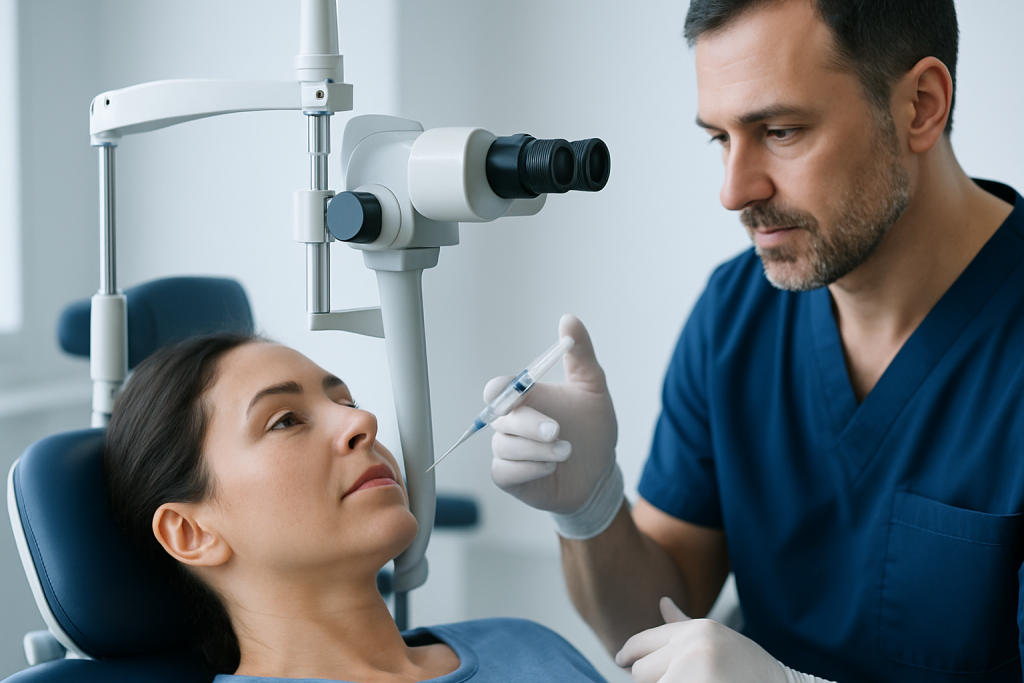
Izervay works by inhibiting complement component 5 (C5), a protein in the complement system. The complement system is part of normal immune defence, but excessive or poorly controlled complement activity is thought to contribute to inflammation and retinal cell injury in geographic atrophy. By targeting C5, Izervay aims to reduce a pathway involved in progression of retinal damage.
Potential candidates are adults with geographic atrophy caused by AMD. An ophthalmologist, usually a retina specialist, confirms the diagnosis using a dilated eye examination and retinal imaging such as optical coherence tomography (OCT) and fundus photography. The specialist also considers the location and size of atrophy, whether one or both eyes are affected, the person’s visual needs and the ability to attend regular follow-up visits.
People should tell their clinician about eye infections, eye pain, new floaters, previous eye injections, glaucoma, medications and allergies. An active infection or inflammation in or around the eye generally needs treatment before an injection is given. A clinician can also discuss whether macular degeneration treatment options and supportive visual rehabilitation may be appropriate alongside monitoring.
Izervay Injection Instructions: The Procedure Step by Step

Izervay is administered by a trained ophthalmologist in a clinical setting; it is not a medicine that patients inject themselves. The usual Izervay injection dosage is 2 milligrams in 0.1 mL, delivered into the vitreous, the gel-like substance inside the eye. The prescribed Izervay injection interval is generally every month, although the precise schedule should always follow the treating ophthalmologist’s instructions and local prescribing information.
Before the procedure, the eye is examined and cleaned carefully with an antiseptic. Numbing drops or local anaesthetic are used to improve comfort. The clinician may place a small device to keep the eyelids open, then gives the injection through the white part of the eye. The injection itself is brief, and most people describe pressure or a momentary sensation rather than significant pain.
Afterward, the clinician checks the eye and provides individual aftercare advice. Patients should not rub or press on the treated eye. Izervay injection instructions may include monitoring vision and symptoms closely, using any prescribed drops exactly as directed, and arranging prompt assessment if concerning symptoms occur. Each planned visit is also an opportunity to check for changes related to AMD or treatment.
What to Expect After an Izervay Injection?
Immediately after an Izervay injection, it is common to have mild irritation, tearing, a scratchy sensation, redness on the white of the eye or temporary blurred vision. Some people notice small spots, bubbles or floaters in their vision for a short time. These effects usually settle over the following hours to several days, but recovery varies between individuals.
Many people can return to gentle daily activities on the same day or the next day, provided vision is comfortable and safe. Driving should be avoided until vision is clear enough to meet local safety requirements. The ophthalmology team may advise avoiding rubbing the eye, swimming or using eye makeup for a short period, depending on the individual situation.
Severe or worsening eye pain, marked redness, increasing light sensitivity, a sudden decline in vision, a curtain-like shadow, or a rapid increase in floaters needs urgent eye assessment. These symptoms are uncommon, but they can signal complications such as infection, retinal detachment or inflammation, which require timely care.
How Long Does Izervay Take to Work?
Izervay begins acting on its biological target after it is injected, but its clinical effect is measured over months rather than days. The treatment is intended to slow the rate at which geographic atrophy grows. Retinal imaging during follow-up visits helps the specialist monitor changes over time and assess whether ongoing treatment remains suitable.
There may be no immediate noticeable change in day-to-day vision after an injection. Geographic atrophy can continue to progress despite treatment, but the goal is for it to progress more slowly than it might without treatment. Because response differs between people, it is important to attend the planned Izervay injection frequency appointments and retinal monitoring visits.
An ophthalmologist can explain what the person’s scan findings mean in the context of the affected eye, including whether atrophy is near the centre of the macula. They can also discuss practical support, such as low-vision services, magnification tools and lighting adjustments when these are helpful.
Does Izervay Improve Vision? Benefits, Limits and Risks
Izervay is not expected to improve vision that has already been lost from geographic atrophy. Its potential benefit is slowing the expansion of the atrophic area, with the aim of preserving retinal function for as long as possible. Whether this translates into a noticeable difference in vision varies according to the stage and location of disease and other eye conditions.
As with all intravitreal injections, Izervay has risks. Commonly reported effects include blood in the white of the eye, eye discomfort, blurred vision and increased pressure inside the eye. More serious complications are uncommon but can include endophthalmitis, an infection inside the eye; retinal detachment; inflammation; and a form of wet AMD called choroidal neovascularisation.
Because wet AMD can cause new distortion or a rapid change in central vision, routine scans and symptom reporting are important. If wet AMD develops, treatment may involve anti-VEGF injections. The ophthalmologist will weigh expected benefits and risks before starting therapy and at regular review appointments.
How Long Does It Take to Recover From a Macular Degeneration Injection?
Recovery from a macular degeneration injection is often quick. Mild blurred vision, irritation or a visible red patch on the white of the eye may improve within a day or several days, while the red patch can last longer as it heals. Some patients feel fully comfortable soon after the procedure, whereas others need a little more time.
The eye itself requires careful observation after every injection, even for people who have had previous treatments without problems. Patients should follow their specialist’s aftercare plan and keep their next appointment, since the Izervay injection schedule is an essential part of monitoring safety and disease activity.
Protecting remaining vision also involves managing general health and following eye-care advice. Not smoking, eating a balanced diet rich in leafy vegetables and fish where appropriate, using recommended visual aids, and attending routine eye reviews can all form part of a broader AMD care plan. Supplements should only be used on the advice of an eye-care professional, as suitability depends on the type and stage of AMD.
When to Seek Medical Care
Anyone who develops a sudden or significant change in vision should contact an eye-care professional promptly. Urgent assessment is particularly important for severe pain, increasing redness, pus-like discharge, flashes of light, a shower of new floaters, worsening blurred vision, or a dark curtain or shadow in the field of vision after an injection.
People with dry AMD should also arrange a review if straight lines become newly wavy, a central blurred or dark area appears, colours seem less vivid, or reading becomes suddenly more difficult. These changes can have several causes and should not be self-diagnosed. Early assessment can help identify whether wet AMD or another treatable eye problem is present.
Acibadem International’s multidisciplinary specialists and JCI-accredited hospitals can assess and treat retinal conditions for international patients. A retina specialist can provide personalised advice about injection therapy, follow-up needs and visual support options.
Frequently asked questions
What is the usual Izervay injection schedule?
Izervay is generally administered as an injection into the eye once a month. The exact schedule is set by the treating ophthalmologist based on approved prescribing information, retinal findings and the person’s clinical needs. Appointments should not be delayed or changed without discussing this with the eye-care team.
How often is Izervay injected?
The usual Izervay injection frequency is monthly. Regular treatment and monitoring are important because the medicine is intended to slow progression over time, not provide a one-time effect. The clinician will review the eye at follow-up visits and discuss the ongoing plan.
Is the Izervay injection painful?
Numbing drops or local anaesthetic are used before the injection, so significant pain is not expected. A person may feel pressure, brief discomfort or a scratchy sensation afterward. Severe or worsening pain is not typical and should be assessed urgently.
What should someone avoid after an Izervay injection?
Patients should avoid rubbing or pressing on the treated eye and follow the specific advice given by their ophthalmology team. Driving should wait until vision is clear and safe. The clinician may also recommend temporarily avoiding swimming, eye makeup or other activities that could increase irritation or infection risk.
Can Izervay stop geographic atrophy from progressing?
Izervay is intended to slow the growth of geographic atrophy, but it does not stop progression in every person or restore retinal cells that have been lost. Ongoing retinal imaging helps the specialist monitor the condition. Individual outcomes depend on the disease stage, location of atrophy and other eye-health factors.
Can Izervay cause wet macular degeneration?
Clinical studies and prescribing information identify an increased risk of choroidal neovascularisation, also called wet AMD, in treated eyes. This is why regular examination and imaging are needed during treatment. New distortion, a central dark spot or a sudden vision change should be reported promptly.
References
- U.S. Food and Drug Administration
- American Academy of Ophthalmology
- National Eye Institute
- Macular Society
This article is for general information only and is not a substitute for professional medical advice. Please consult a qualified doctor about your individual situation.
Explore treatments in Turkey — costs, top hospitals & a free quote
JCI-accredited · board-certified surgeons · reply within 24h
Add us as a Preferred Source to see more of our trusted health content across Google Search, AI Overviews and Discover.

More from the Health Library



Related Specialists

Prof. Dr. Bahar Artım Esen
Rheumatology
Dr. Munara Bolatkhan
Inpatient Clinic Physicians Clinical Service
Prof. Dr. Erkin Öztaş
Gastroenterology
Prof. Dr. Cemal Üstün
Clinical Laboratory