Ingrown Toenail Home Treatment: How It Works, Results and What to Expect

Early, mild ingrown toenails often improve with warm soaks, careful hygiene and wider footwear. The nail should not be cut deeply at the corner or dug out at home.
Key Takeaways
- Early, mild ingrown toenails often improve with warm soaks, careful hygiene and wider footwear.
- The nail should not be cut deeply at the corner or dug out at home.
- Increasing redness, swelling, pus, warmth, worsening pain or fever can indicate infection and needs prompt medical assessment.
- People with diabetes, nerve damage, weakened immunity or circulation problems should seek professional foot care early.
- A clinician can safely remove or treat part of a problematic nail when conservative care does not help.
Ingrown toenail home treatment may relieve discomfort in an early, mild case by softening the surrounding skin, reducing pressure and keeping the toe clean. It is not appropriate for a deeply embedded nail, significant infection, severe pain, or for people with diabetes, poor circulation or reduced sensation in the feet without advice from a clinician.
Overview: How Ingrown Toenail Home Treatment Works
Ingrown toenail home treatment works best when the nail edge has only begun to press into the skin and symptoms are mild. The aim is to soften the skin around the nail, lower swelling and friction, keep the area clean, and allow the nail to grow forward rather than further into the nail fold.
An ingrown toenail, also called onychocryptosis, most often affects the big toe. It can develop when a sharp or curved nail edge grows into nearby skin, causing tenderness, redness and swelling. Tight footwear, trimming nails too short or rounding their corners, repeated pressure during sport, injury and naturally curved nails can all contribute.
Home care is supportive rather than a way to remove a deeply buried nail. It should be stopped in favor of medical assessment if symptoms are progressing, if drainage develops, or if the person has a health condition that makes foot wounds harder to heal. Diabetes can reduce sensation or circulation in the feet, so even small toe problems deserve early professional advice.
What Does a Stage 1 Ingrown Toenail Look Like?
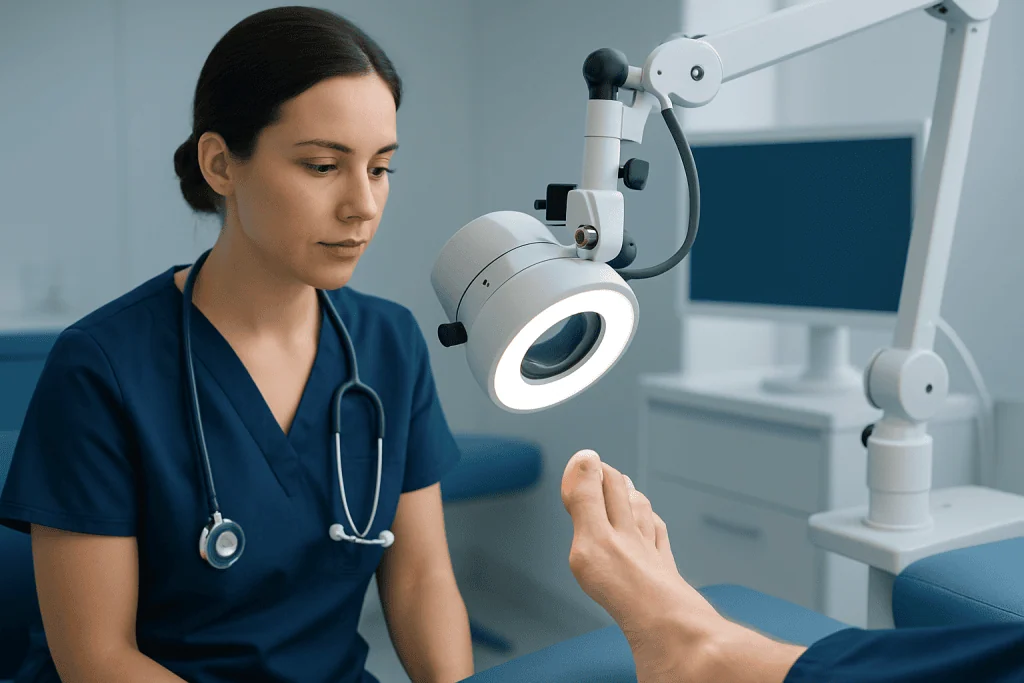
A stage 1 ingrown toenail is generally an early, mild presentation. The skin along one or both sides of the nail may look slightly red and puffy, and the toe may hurt when touched, when wearing shoes, or during walking. There is usually no visible pus, spreading redness or overgrown tissue at this stage.
The corner of the nail may appear to be pressing into the skin, but the nail is not usually deeply embedded. Symptoms can fluctuate during the day because pressure from shoes or activity may make the area more tender. Early care is most likely to be useful at this point.
More advanced cases may involve greater swelling, drainage, bleeding, a small amount of tissue growing over the nail edge, or more persistent pain. These changes should not be managed by attempting to cut underneath the nail. A healthcare professional can assess the toe and recommend the safest next step.
Do At Home Ingrown Toenail Treatments Work?

At-home ingrown toenail treatments can work for some early, uncomplicated cases, particularly when the main issue is mild irritation from pressure or an improperly trimmed corner. Relief may come gradually over several days as swelling settles and the nail is allowed to grow beyond the skin edge.
They are less likely to resolve a nail that is deeply curved, repeatedly ingrown, severely painful or associated with infection. Home care also cannot correct every underlying cause, such as a persistent nail shape or a bony prominence. Recurring symptoms are a reason to discuss longer-term options with a clinician.
Individuals should avoid cutting a V-shape into the middle of the nail, cutting down the side of the nail, tearing off a corner, or using sharp tools to dig under it. These methods can injure the skin, leave a sharp nail spicule behind and raise the risk of infection.
Step-by-Step Ingrown Toenail Home Treatment
For an early ingrown toenail without signs of infection, a simple routine can be used once or more daily as comfort allows. Soak the affected foot in warm, clean water for around 15 to 20 minutes, then dry the toe thoroughly, especially around the nail folds. The water should be comfortably warm rather than hot to avoid skin injury.
After soaking, the skin can be gently dried and the toe protected from rubbing with a clean, non-stick dressing if needed. Wear shoes with a wide toe box, sandals when appropriate, or other footwear that does not press on the affected side of the toe. Clean socks and regular foot hygiene are also helpful.
Do not force cotton, floss, splints or other material beneath the nail at home, especially if the area is painful, broken or inflamed. Although clinicians may use specialized techniques to lift and guide a nail edge in selected cases, this should be done with clean equipment and appropriate assessment. Over-the-counter pain relief may be considered if it is safe for the individual, following the product instructions and advice from a pharmacist or doctor.
- Soak the toe in warm, clean water.
- Dry carefully and keep the surrounding skin clean.
- Reduce pressure with broad, comfortable footwear.
- Allow the nail to grow out; trim it straight across only when it has grown beyond the tender skin.
- Monitor daily for worsening redness, swelling, drainage or pain.
Will Epsom Salt Draw Out an Ingrown Toenail?
Epsom salt does not draw out an ingrown toenail or physically remove the nail edge from the skin. A warm soak may feel soothing and can help soften skin and reduce temporary discomfort, but it does not change the direction in which the nail grows.
Some people choose to add Epsom salt to a warm foot soak, while others use plain clean water. There is no need to use a strong solution, and the skin should be rinsed or dried well afterward. If soaking causes stinging, increased redness, dryness or irritation, it should be stopped.
A soak is only one part of conservative care. Avoid relying on it if the toe has pus, a bad odor, significant swelling or rapidly increasing pain. These features can suggest an infection or a more advanced ingrown toenail that needs assessment.
How Do I Know if My Ingrown Toenail Is Healing?
A healing ingrown toenail should gradually become less painful, less red and less swollen. It may become easier to wear shoes and walk normally, and the skin should look calmer rather than increasingly shiny, tight or inflamed. Improvement is often gradual rather than immediate.
There should be no new drainage, spreading redness or increasing warmth. As the nail grows forward, its corner may become visible beyond the skin edge, which is a positive sign. It is important to continue avoiding tight shoes and to resist cutting the nail corner back prematurely.
If symptoms remain unchanged after several days of careful home care, recur repeatedly, or worsen at any point, a clinician should examine the toe. Persistent cases may need treatment to remove the offending nail edge, manage inflammation or address an associated infection.
Benefits, Risks and Recovery Timeline
The main benefit of conservative home treatment is that it may settle a mild problem without a procedure. It can reduce pressure-related discomfort and give the irritated skin time to recover while the nail grows out. Many early cases begin to feel better within several days, although complete nail growth past the affected skin may take longer.
The main risks arise from delaying care when the condition is not mild or from trying to perform nail surgery at home. Cutting too deeply, probing under the nail or removing a nail corner can cause bleeding, skin damage and infection. Antibiotic creams or tablets should not be self-started without clinical advice, as treatment depends on the examination findings.
If conservative measures are unsuccessful, a clinician may recommend a minor procedure to remove part of the nail. This is commonly performed using local anesthetic and may include treatment of the nail root to reduce recurrence in appropriate cases. Professional ingrown toenail treatment can provide a safe assessment and a tailored plan for ongoing or recurrent symptoms.
When to Seek Medical Care
Medical care should be sought promptly for pus or other drainage, spreading redness, increasing swelling, severe or worsening pain, fever, red streaking from the toe, or difficulty walking. These symptoms may indicate infection or more significant inflammation. Urgent advice is also appropriate if the toe becomes discolored or if there is an open wound that is not healing.
People with diabetes, peripheral artery disease, poor circulation, neuropathy, immune suppression or a history of foot ulcers should contact a healthcare professional early rather than attempting home procedures. Reduced sensation can make it difficult to judge the severity of a foot injury, and circulation problems can slow healing.
For repeated ingrown toenails, assessment by a doctor, podiatrist or foot-care specialist can help identify preventable causes and discuss procedural options. Acibadem International’s multidisciplinary specialists and JCI-accredited hospitals diagnose and treat ingrown toenails for international patients when professional care is needed.
Frequently asked questions
Can an ingrown toenail heal on its own?
A mild ingrown toenail can improve when pressure is reduced and the nail is allowed to grow forward beyond the skin. Warm soaks, careful drying and roomy footwear may help relieve early irritation. A painful, infected or repeatedly ingrown nail should be assessed by a clinician.
Should an ingrown toenail be cut out at home?
No. Cutting down the side of the nail or attempting to remove its corner at home can leave a sharp edge, injure the skin and increase the risk of infection. A clinician can remove part of the nail safely if this is needed.
How long does an ingrown toenail take to heal with home treatment?
Mild pain and swelling may begin to improve within a few days when pressure is avoided and the toe is kept clean. The nail itself grows slowly, so it can take longer for the affected corner to grow fully past the skin. Lack of improvement or worsening symptoms should prompt medical advice.
Can I wear shoes with an ingrown toenail?
Shoes may be worn if they do not press on the painful area. A wide toe box and soft, roomy footwear are usually more comfortable than narrow or pointed shoes. If walking or wearing any shoe is very painful, the toe should be evaluated.
What are signs that an ingrown toenail is infected?
Possible signs include increasing redness, warmth, swelling, throbbing pain, pus or other drainage, and a foul odor. Spreading redness, fever or red streaks require prompt medical attention. Infection risk is especially important for people with diabetes or circulation problems.
How can ingrown toenails be prevented?
Toenails should be trimmed straight across and not too short, with corners left visible rather than rounded deeply. Well-fitting shoes and socks reduce repeated pressure on the toes. People with recurring problems may benefit from professional nail and footwear advice.
References
- American Academy of Dermatology Association
- National Health Service
- Mayo Clinic
- American Podiatric Medical Association
This article is for general information only and is not a substitute for professional medical advice. Please consult a qualified doctor about your individual situation.
Explore treatments in Turkey — costs, top hospitals & a free quote
JCI-accredited · board-certified surgeons · reply within 24h
Add us as a Preferred Source to see more of our trusted health content across Google Search, AI Overviews and Discover.