Stereotactic Radiation: How It Works, Results and What to Expect

Stereotactic radiation uses detailed imaging, planning software, and image guidance to target a defined area accurately. Treatment may be delivered in one session or over several sessions, depending on the site and purpose of treatment.
Key Takeaways
- Stereotactic radiation uses detailed imaging, planning software, and image guidance to target a defined area accurately.
- Treatment may be delivered in one session or over several sessions, depending on the site and purpose of treatment.
- It is not surgery, despite the term stereotactic radiosurgery; no incision is made.
- Results develop over time and are assessed through follow-up imaging, examinations, and sometimes blood tests.
- Side effects depend mainly on the body area treated, dose, and nearby organs, and are often temporary but can occasionally be delayed or serious.
Stereotactic radiation is a highly precise form of radiation therapy that delivers focused, high-dose treatment to a tumor or other selected target while limiting exposure to surrounding healthy tissue. It may be used for tumors in the brain, lung, liver, spine, prostate, and other areas, depending on the person’s diagnosis, tumor location, and overall health.
Overview: what is stereotactic radiation?
Stereotactic radiation is an advanced radiation technique that directs multiple precisely shaped radiation beams toward a small, clearly defined target. Each beam delivers a relatively low dose as it passes through healthy tissue, while the beams combine at the target to deliver the planned therapeutic dose. This approach can help protect nearby organs and structures.
The term includes stereotactic radiosurgery (SRS), most commonly used for targets in the brain and sometimes the spine, and stereotactic body radiation therapy (SBRT), also called stereotactic ablative radiotherapy, for targets elsewhere in the body. Although “radiosurgery” sounds like an operation, it is a noninvasive radiation treatment and does not involve a surgical incision.
Stereotactic radiation can be used as a primary treatment, after surgery, alongside systemic cancer treatments, or to manage a limited number of tumors that have spread. The most appropriate role depends on the cancer type, its extent, earlier treatments, and the aims of care.
How stereotactic radiation works
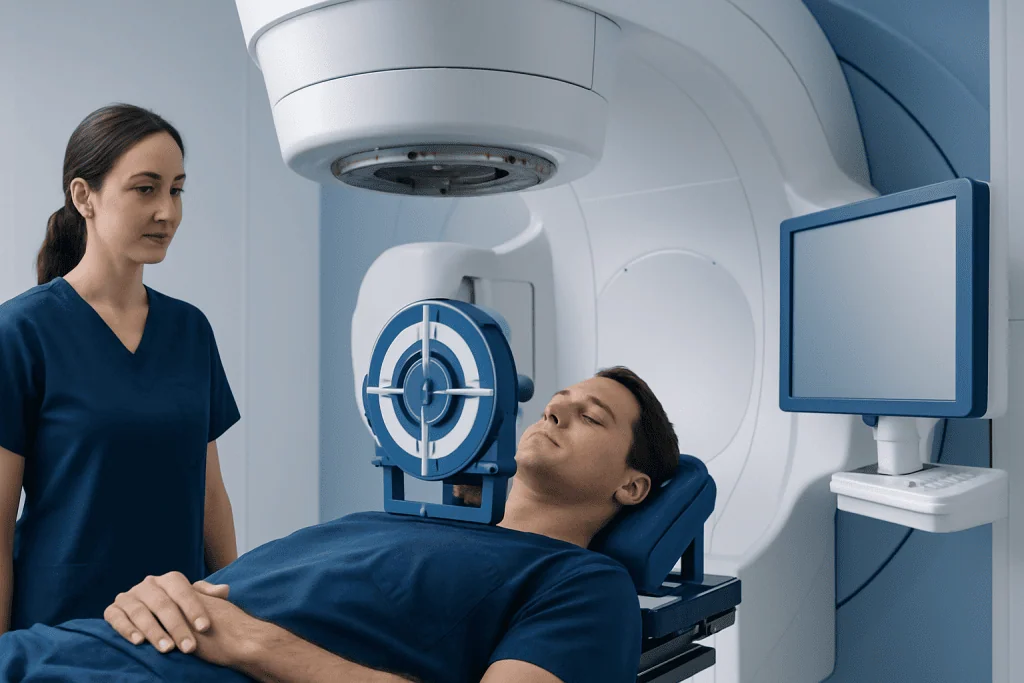
Before treatment, the radiation oncology team obtains detailed scans, such as CT, MRI, PET-CT, or a combination of these. The radiation oncologist outlines the treatment target and identifies healthy organs that need protection. Medical physicists and dosimetrists then create and check an individualized plan that determines beam angles, dose distribution, and treatment delivery.
During each session, the treatment machine delivers radiation from different directions. Image guidance is used immediately before, and sometimes during, treatment to confirm body position and target location. For tumors that move with breathing, the team may use breath-hold instructions, motion monitoring, abdominal compression, or other methods to account for movement.
Radiation damages the genetic material inside treated cells. Cancer cells are often less able than healthy cells to repair this damage, so they may stop dividing and gradually die. The tumor does not necessarily disappear right away; the body may take weeks, months, or longer to clear damaged cells and show changes on scans.
Who may be a candidate for stereotactic radiation?

Candidacy is determined individually by a multidisciplinary team, usually involving a radiation oncologist and, when needed, surgeons, medical oncologists, radiologists, pathologists, and other specialists. Stereotactic radiation is generally most suitable when a target can be seen clearly on imaging and treated safely without exceeding dose limits for nearby healthy organs.
It may be considered for selected early-stage cancers, small or limited metastatic tumors, tumors that cannot be removed safely, recurrences after previous treatment, or noncancerous conditions such as certain brain vascular abnormalities. Common treatment sites include the brain, lung, liver, adrenal glands, prostate, pancreas, lymph nodes, and spine, but suitability varies considerably.
Factors that may affect eligibility include tumor size and number, location near sensitive structures, movement with breathing or digestion, prior radiation treatment, ability to remain in the required position, and general health. A person should ask their specialist why stereotactic radiation is being recommended and what alternatives, including surgery, conventional radiation, medication, or monitoring, may be appropriate.
What happens during the procedure?
The process begins with a planning appointment called simulation. The patient is positioned in a way that can be reproduced accurately for every session. A custom mask may be made for treatment to the head, while a body mold, cushion, or other positioning device may be used for treatment elsewhere. Planning scans are then taken in the treatment position.
After the plan has been reviewed and safety-checked, the patient returns for treatment. They usually change into a gown, lie on the treatment table, and are positioned using the same supports used for simulation. The team leaves the room while the machine operates, but they can see and speak with the patient throughout the session.
The treatment itself is painless. The machine may rotate around the body or head and can make sounds, but it does not touch the patient except for positioning and imaging equipment. A session may last from about 30 minutes to a few hours, including setup and imaging. Some people have one treatment, while others have several sessions over days or weeks.
- Bring questions about eating, medications, and transportation before the first session.
- Continue regular medicines unless the clinical team advises otherwise.
- Tell the team about pain, anxiety, difficulty lying flat, implanted devices, or any chance of pregnancy.
Benefits, limitations and possible risks
A key potential benefit of stereotactic radiation is precision. It may deliver an effective dose in fewer visits than conventional radiation and can be an option when surgery is not suitable or is not preferred. Shorter treatment schedules can reduce travel and disruption to daily life for some people, although follow-up care remains important.
However, precision does not mean there are no risks. Side effects depend on the treatment site and nearby organs. Short-term effects may include tiredness, skin sensitivity, temporary swelling or inflammation, nausea, headache, cough, swallowing discomfort, bowel changes, or urinary irritation. Many side effects are manageable, but they should be reported promptly so the team can provide support.
Less common but important late effects can occur months or years later. These may include scarring, tissue injury, narrowing of airways or blood vessels, changes in organ function, fractures in treated bone, or nerve-related symptoms, depending on the area treated. Previous radiation can increase complexity and risk. The radiation oncologist should explain the specific expected benefits and risks for the individual plan.
How long does it take for stereotactic radiation to work?
Stereotactic radiation begins damaging targeted cells during and soon after treatment, but visible results usually take time. Some tumors shrink gradually over weeks to months. Others may remain the same size while no longer being active or growing, which can still indicate successful local treatment.
The timing depends on the tumor type, location, treatment dose, and how the body responds. Brain lesions may temporarily appear larger on imaging because of treatment-related inflammation, while lung and liver tumors can develop scarring or other scan changes that need expert interpretation. For this reason, an early scan does not always provide a final answer.
Follow-up schedules vary, but often include imaging several weeks or months after treatment and at planned intervals thereafter. The team compares scans over time rather than relying on a single image. Symptoms, physical examination findings, and selected blood tests may also contribute to assessment.
What are the disadvantages of stereotactic radiotherapy?
Stereotactic radiotherapy is not suitable for every tumor. Larger tumors, tumors with poorly defined borders, widespread cancer, or targets very close to highly sensitive structures may require a different approach or a more fractionated radiation schedule. In some situations, surgery, drug treatment, or conventional radiation may offer a better balance of benefit and safety.
Careful planning is essential, and the process can involve several appointments before treatment begins. Remaining still during scans and treatment may be uncomfortable for some people. Tumors in the chest or abdomen can move with breathing or digestion, adding technical complexity and sometimes limiting how much radiation can be safely delivered.
There is also a risk of side effects or delayed tissue changes despite advanced targeting. Stereotactic radiation treats the targeted area; it does not treat cancer cells that may be elsewhere in the body. People with metastatic cancer may therefore need systemic treatment and ongoing monitoring in addition to local radiation.
What is the success rate of stereotactic radiation?
There is no single success rate for stereotactic radiation because outcomes differ widely by diagnosis, treatment site, tumor size, cancer stage, prior therapies, and the definition of success. For some small, localized tumors, stereotactic treatment can provide strong local control. In other settings, its purpose may be to slow growth, relieve symptoms, or control a specific area of metastatic disease.
Local control means that the treated tumor does not grow or recur in the treated location over a defined period. It is different from cure, overall survival, or prevention of cancer growth elsewhere. A physician can discuss results that are relevant to the individual’s cancer type and treatment goal, rather than applying general figures to a personal situation.
Outcome discussions should also include the potential value of other treatments. For example, a person may have surgery or systemic therapy before or after radiation, and these combined approaches can influence results. Decisions are best made after review by a cancer multidisciplinary team.
How do you know if radiation treatment is working?
Radiation treatment is usually assessed through scheduled follow-up rather than by day-to-day symptoms alone. The oncology team may use CT, MRI, PET imaging when appropriate, physical examinations, and laboratory tests such as tumor markers for selected cancers. These results are interpreted in the context of the original scans and the treatment plan.
A tumor becoming smaller can be reassuring, but stable size can also be a favorable outcome when there is no evidence of active growth. After radiation, inflammation, swelling, and scar formation can make scans appear unusual or temporarily worse. This is why serial imaging and specialist review are important.
Improvement in a symptom caused by the tumor, such as pain, cough, or neurological symptoms, may be another encouraging sign, but symptoms can fluctuate for many reasons. New or worsening symptoms should not be assumed to be a normal treatment effect; the patient should contact the clinical team for advice.
Recovery, follow-up and when to seek medical care
Most people return home on the day of stereotactic radiation. Many can resume usual light activities within a day or two, though tiredness may build gradually and can last for several weeks. Recovery needs vary according to the body area treated, other ongoing therapies, and a person’s general health.
Patients should follow their team’s individualized instructions about skin care, food and fluid intake, activity, and prescribed medicines. Keeping follow-up appointments is essential because radiation effects may evolve over time. At Acibadem International, multidisciplinary specialists in JCI-accredited hospitals assess and treat international patients who may be candidates for stereotactic radiation.
When to seek medical care: The patient should contact the radiation oncology team promptly for symptoms that are severe, persistent, or worsening, including fever, uncontrolled pain, repeated vomiting, significant shortness of breath, chest pain, new confusion, seizure, severe headache, sudden weakness, new trouble speaking, heavy bleeding, or inability to drink fluids or pass urine. For sudden severe symptoms or signs of an emergency, local emergency services should be contacted.
Frequently asked questions
Is stereotactic radiation the same as surgery?
No. Stereotactic radiation is a noninvasive treatment that uses focused radiation beams and does not require an incision. The term stereotactic radiosurgery is used because the radiation is delivered with surgical-like precision, not because an operation is performed.
How many sessions of stereotactic radiation are needed?
Treatment may be delivered in a single session or divided into several sessions. The number depends on the target’s size and location, nearby healthy tissue, previous treatments, and the radiation oncologist’s safety plan.
Does stereotactic radiation hurt?
The radiation itself is painless and cannot usually be felt while it is being delivered. Some people may experience discomfort from lying still or from the positioning devices, and the care team can help manage this.
Will I be radioactive after stereotactic radiation?
No. External-beam stereotactic radiation does not make a person radioactive. It is safe to be around family members, including children and pregnant people, after treatment unless the care team gives different instructions for another type of therapy.
Can stereotactic radiation be repeated?
In selected situations, another course of stereotactic radiation may be possible. The decision requires detailed review of the previous dose, the time since treatment, the new target, and the tolerance of nearby organs.
What should a patient ask before starting stereotactic radiation?
Useful questions include the goal of treatment, expected benefits, alternatives, number of visits, likely short- and long-term side effects, and how follow-up will be arranged. Patients can also ask who to contact if symptoms develop after treatment and whether other cancer treatments are planned.
References
- National Cancer Institute
- American Society for Radiation Oncology
- Radiological Society of North America
- European Society for Radiotherapy and Oncology
- National Health Service
This article is for general information only and is not a substitute for professional medical advice. Please consult a qualified doctor about your individual situation.
Joint and spine care in Turkey — expert assessment & treatment
JCI-accredited · board-certified surgeons · reply within 24h
Add us as a Preferred Source to see more of our trusted health content across Google Search, AI Overviews and Discover.

More from the Health Library



Related Specialists

Dr. Mohammad Youssef Halak Fattal
Emergency Service
Assoc. Prof. Dr. Çağlar Baysal
Gastroenterology
Dr. Ersen Hürmüzlü
Infectious Diseases & Clinical Microbiology
Assoc. Prof. Dr. Nilgün Güldoğan
Radiology