First Degree Burn Treatment: How It Works, Results and What to Expect

First degree burns cause redness, tenderness, and mild swelling but do not usually form blisters. Cooling the burn under cool running water soon after injury is an important first-aid step.
Key Takeaways
- First degree burns cause redness, tenderness, and mild swelling but do not usually form blisters.
- Cooling the burn under cool running water soon after injury is an important first-aid step.
- Most small first degree burns heal in about 3 to 7 days without permanent scarring.
- A loose, clean non-stick dressing can help if clothing or friction irritates the area.
- Burns on the face, hands, feet, genitals, major joints, or large skin areas should be assessed by a clinician.
First degree burn treatment involves promptly cooling the skin, protecting it from further irritation, managing discomfort, and watching for signs that the injury may be deeper than it first appears. These burns affect only the outer skin layer and usually heal well with simple home care, although location, size, cause, and symptoms can change when medical assessment is needed.
Overview: What Is First Degree Burn Treatment?
First degree burn treatment is focused on reducing heat-related skin damage, relieving pain, and allowing the outermost layer of skin to recover naturally. A first degree burn, also called a superficial burn, affects the epidermis only. It commonly causes red, dry, painful or tender skin and mild swelling, but it does not usually cause blisters or break the skin.
Common causes include brief contact with hot surfaces, steam, hot liquids, sunlight, and mild chemical or electrical exposures. The same treatment principles are used for many minor burns: remove the source of heat, cool the area safely, avoid further injury, and monitor healing. A burn that looks minor at first can occasionally develop more noticeable symptoms over the following hours, so reassessment is important.
First degree burn treatment is generally home-based for a small, uncomplicated injury. However, burns involving sensitive areas, large areas of the body, children, older adults, or people with conditions that affect healing may need professional evaluation even when the skin appears intact.
How First Degree Burn Treatment Works
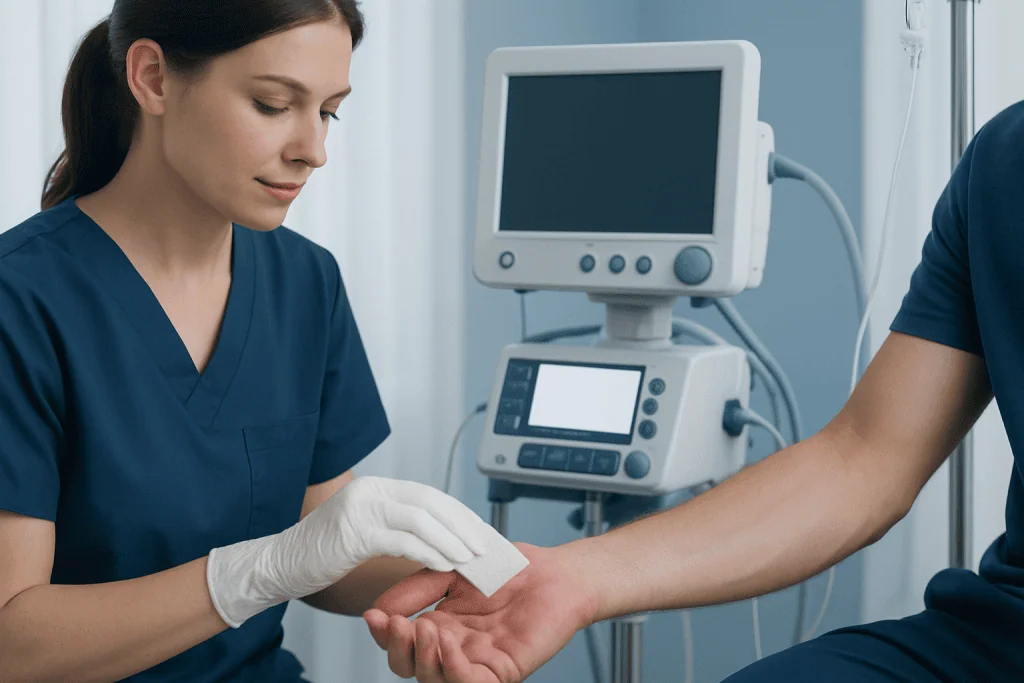
The first step is to stop the burning process. The person should move away from the heat source and remove nearby clothing, jewelry, watches, or belts if these are not stuck to the skin. This matters because swelling can make rings and other tight items difficult to remove later. Clothing that has adhered to burned skin should not be pulled away.
Cooling the affected area with cool or lukewarm running water is usually the most helpful immediate measure. It can ease pain and limit ongoing heat injury in the skin. Ice, iced water, butter, oils, toothpaste, and other household products should not be applied, as they can worsen tissue injury, trap heat, or raise the risk of irritation and infection.
After cooling, gentle protection and comfort care support recovery. A clinician or pharmacist may advise suitable non-prescription pain relief or a simple moisturizer for intact skin. If the area is likely to rub against clothing or surfaces, a clean, loose, non-stick covering may be useful. The aim is not to “dry out” the skin but to keep it clean, comfortable, and protected while it heals.
Who Can Use Home Care and When to Seek Medical Care

Home care is often appropriate for a small first degree burn in a healthy adult when the cause is clear, the skin is intact, pain improves after cooling, and the affected area is not in a high-risk location. People should continue to observe the burn because deeper injury may become clearer after the initial event.
Medical advice is recommended for burns on the face, hands, feet, genitals, buttocks, or over a major joint; burns that circle a finger, limb, or chest; or burns larger than the person’s palm. Assessment is also important after chemical or electrical burns, inhalation of smoke or hot gases, or burns caused by an explosion. Children, older adults, and people with diabetes, reduced sensation, circulation problems, or weakened immunity may need earlier review.
Urgent medical care is needed if there are blisters over a substantial area, white, brown, charred, numb, or leathery-looking skin, worsening pain, trouble breathing, facial swelling, confusion, or signs of shock. These features can suggest a deeper burn or another injury requiring prompt treatment.
Step-by-Step First Degree Burn Treatment and What to Expect
For a minor superficial burn, the practical sequence is simple: stop contact with the heat source, remove constricting items, and cool the skin under cool running water. The water should feel comfortably cool rather than extremely cold. The area can then be patted dry gently with a clean cloth; rubbing may increase irritation.
If the skin remains intact, a light layer of a bland moisturizer or burn gel may be considered if recommended by a healthcare professional. A sterile non-stick dressing can be placed loosely over areas exposed to friction. Dressings should be changed if wet, dirty, or uncomfortable. Adhesive materials should not be placed directly on fragile or injured skin.
During recovery, the person should avoid sun exposure to the healing skin, as it may be more sensitive and prone to temporary color changes. Once the skin has healed, broad-spectrum sun protection and covering the area can help protect it. There is no need to puncture any blisters that develop; a clinician can advise if blistering means the injury should be reassessed.
- Do cool the burn promptly with cool running water.
- Do remove rings and tight items near the injury if possible.
- Do keep the area clean and protect it from rubbing.
- Do not apply ice, butter, oils, toothpaste, or powders.
- Do not break blisters or remove skin that is stuck to the burn.
How Long Does It Take to Heal a 1st Degree Burn?
Most first degree burns improve steadily and heal within about 3 to 7 days. Redness and tenderness are often strongest soon after the injury, then fade as the superficial skin layer recovers. Mild peeling or itching may occur near the end of healing and does not necessarily mean there is a problem.
Healing can take longer when the burn covers a larger area, is repeatedly exposed to friction or sunlight, or occurs in a person with reduced circulation, diabetes, or another condition that affects skin repair. A burn that has not improved after several days, becomes increasingly painful, or develops blisters may be deeper than a first degree burn and should be checked by a healthcare professional.
Superficial burns generally heal without scarring because the deeper layers of the skin are not damaged. Temporary changes in skin color can occur, especially after sunburn or in darker skin tones, and may fade gradually over time. Sun protection is helpful during and after recovery.
Do Burns Heal Better, Covered or Uncovered?
For a small first degree burn with intact skin, either approach can be appropriate depending on comfort and location. Leaving it uncovered may be reasonable when the area is clean, protected from sunlight, and unlikely to be rubbed. A loose, clean non-stick dressing may be more comfortable when clothing, movement, or daily activities irritate the skin.
A covering should not be tight, sticky, or made from materials that shed fibers into the burn. The purpose is protection, not compression. If a dressing is used, it should be kept clean and changed when it becomes damp or soiled. Increasing redness, swelling, drainage, fever, or worsening pain should prompt medical assessment.
Blistering changes the situation. Blisters may indicate a partial-thickness, or second degree, burn rather than a first degree injury. It is safest not to pop them, and a clinician can advise on the right dressing and whether further treatment is needed.
How to Tell if a Burn Is 1st, 2nd, or 3rd Degree
Burn depth describes how many layers of skin have been injured. A first degree burn affects the epidermis and is red, dry, sore, and usually without blisters. It may resemble a mild sunburn and generally maintains normal sensation because the deeper skin structures remain intact.
A second degree burn extends into the deeper dermis. It often causes blisters, wet or shiny skin, marked tenderness, swelling, and a mottled pink or red appearance. These burns can take longer to heal and may need clinical assessment, particularly if they are large, located on a high-risk body area, or affect a child or vulnerable adult.
A third degree burn damages the full thickness of the skin and can appear white, waxy, brown, black, dry, or leathery. It may be less painful in the center because nerves are damaged, although surrounding skin can be very painful. Third degree burns require urgent specialist care. If there is doubt about the depth of a burn, medical review is the safest choice.
How Do I Know if My Burn Is Getting Better?
A first degree burn is usually getting better when pain, warmth, redness, and swelling gradually lessen each day. The skin should remain intact or may develop mild dryness and peeling as it recovers. Normal movement and comfort should return progressively, although the area may stay more sensitive than usual for a short time.
Signs that deserve medical advice include redness that spreads rather than fades, increasing swelling, new or worsening pain, pus-like drainage, unpleasant odor, fever, red streaks, or blisters that develop after the injury. These changes can indicate infection, a deeper burn, or another complication. A burn that does not show clear improvement within several days should also be assessed.
For burns needing more than basic first aid, specialist services may provide wound assessment, dressings, pain management, and follow-up. Acibadem International’s multidisciplinary specialists and JCI-accredited hospitals diagnose and treat burn injuries for international patients.
Frequently asked questions
What is the best first aid for a first degree burn?
The immediate priority is to remove the heat source and cool the area under cool or lukewarm running water. Remove jewelry or tight items nearby if they are not stuck to the skin, then protect the area from rubbing. Ice and household substances such as butter, oils, or toothpaste should not be used.
Can I put moisturizer on a first degree burn?
A simple, fragrance-free moisturizer may be suitable once the skin is intact and the area has been cooled, but it should not replace medical assessment when a burn is extensive or concerning. Products that sting, contain irritants, or are heavily fragranced should be avoided. A pharmacist or clinician can help select an appropriate option.
Should a first degree burn blister?
First degree burns do not usually blister because they affect only the outermost layer of skin. Blisters may suggest that the injury is a second degree burn or deeper. It is best not to pop a blister and to seek medical advice if it is large, painful, or located on the face, hands, feet, genitals, or a joint.
Can a first degree burn leave a scar?
A true first degree burn usually heals without a permanent scar because the deeper layers of skin are not injured. Temporary redness, darker or lighter pigmentation, and sensitivity can remain for a while after healing. Protecting the area from sunlight may reduce lasting color changes.
When should a burn be seen by a doctor?
A doctor should assess burns that are large, blistered, deep-looking, caused by chemicals or electricity, or located on the face, hands, feet, genitals, buttocks, or major joints. Medical care is also important for breathing symptoms, smoke exposure, severe pain, numbness, signs of infection, or slow healing. Children, older adults, and people with diabetes or circulation problems should seek advice earlier.
Is a sunburn a first degree burn?
A mild sunburn with red, tender skin and no blisters is generally considered a first degree burn. Severe sunburn with blistering can be a second degree burn and may need medical advice. Staying out of the sun, cooling the skin, drinking fluids, and using sun protection during recovery are important.
References
- American Burn Association
- National Institute of General Medical Sciences
- National Health Service
- Mayo Clinic
This article is for general information only and is not a substitute for professional medical advice. Please consult a qualified doctor about your individual situation.
Explore treatments in Turkey — costs, top hospitals & a free quote
JCI-accredited · board-certified surgeons · reply within 24h
Add us as a Preferred Source to see more of our trusted health content across Google Search, AI Overviews and Discover.