Monobloc Surgery: Procedure, Recovery and Results

Monobloc surgery advances the forehead and midface together to improve facial balance, eye protection and, in some cases, breathing. It is most often considered for people with syndromic craniosynostosis and significant forehead, orbit or midface differences.
Key Takeaways
- Monobloc surgery advances the forehead and midface together to improve facial balance, eye protection and, in some cases, breathing.
- It is most often considered for people with syndromic craniosynostosis and significant forehead, orbit or midface differences.
- Distraction techniques can move the bone gradually over time, allowing new bone to form in the created space.
- Recovery requires close monitoring, follow-up imaging and support from a multidisciplinary craniofacial team.
- The expected changes, risks and long-term care needs vary widely and should be discussed individually with an experienced surgeon.
Monobloc surgery is a complex craniofacial operation that moves the forehead, eye sockets and upper midface forward as one bone segment. It is mainly used for selected children and adults with syndromic craniosynostosis or severe midface underdevelopment, following detailed planning by a specialist craniofacial team.
Overview: what monobloc surgery can address
Monobloc surgery is a major craniofacial operation in which the forehead, upper eye sockets and upper middle part of the face are carefully moved forward together. It may improve the relationship between the skull and face in people whose facial bones have not developed in the usual position. The operation is planned individually and is performed in highly specialized centers.
The procedure is most commonly associated with syndromic craniosynostosis, a group of conditions in which skull sutures close too early and can affect head shape, the eye sockets, facial growth and sometimes the airway. It may be considered when forward movement of both the forehead and midface is needed, rather than treatment of one region alone.
Although online searches may use the term “monoblock surgery,” the usual medical spelling is “monobloc.” It should not be confused with monobloc removal surgery or a monobloc revision stem, which are terms used in orthopedic implant surgery and describe entirely different procedures.
What is monoblock surgery?
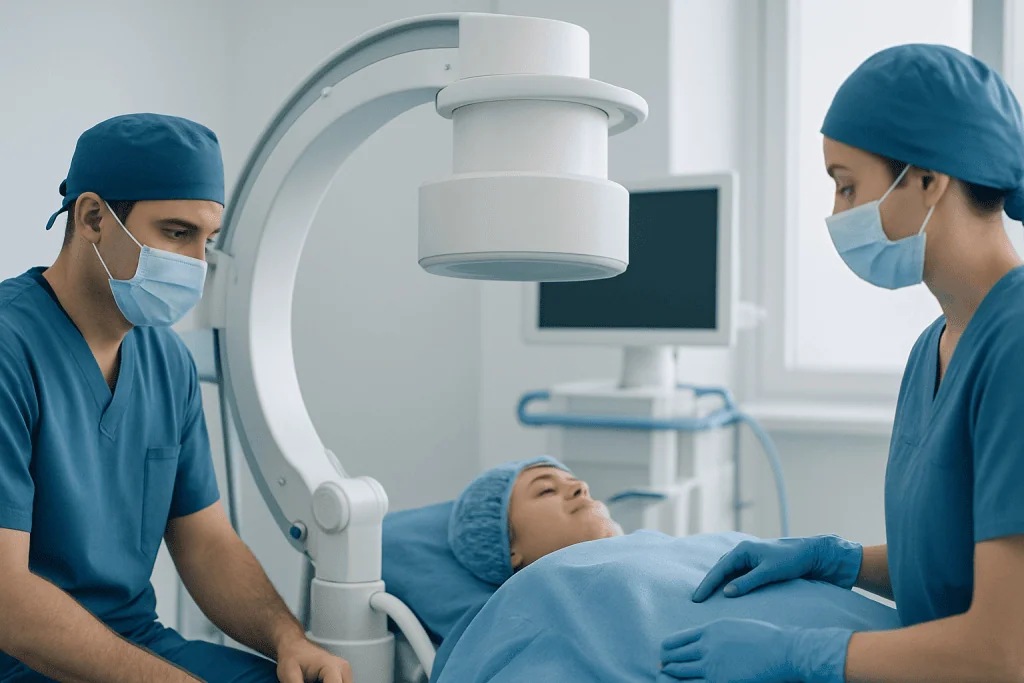
“Monoblock surgery” generally refers to monobloc craniofacial advancement. During this operation, surgeons create a planned bone segment that includes the forehead and upper facial skeleton, then reposition it forward. The aim is not simply cosmetic: for selected patients, it can help protect prominent eyes, improve facial proportions and create more space in the nasal and upper airway region.
It is usually performed by a multidisciplinary craniofacial team. This may include craniofacial and plastic surgeons, neurosurgeons, anesthesiologists, ophthalmologists, ear, nose and throat specialists, orthodontists, speech and swallowing professionals, genetic specialists and psychologists. The precise team depends on the patient’s age, anatomy and medical needs.
Not every person with craniosynostosis needs this operation. Some need earlier cranial surgery, a different type of midface advancement, or non-surgical monitoring. Decisions are based on symptoms, physical examination, eye findings, dental development, airway assessment and detailed imaging.
What is a monobloc distraction procedure?

A monobloc distraction procedure is a technique used to advance the bone segment gradually instead of moving it to its final position in a single step. After the bone is surgically separated in a planned pattern, distraction devices are attached. These may be internal, external or a combination, depending on the surgical plan.
Following an initial healing period, the devices are adjusted in small planned increments. This slowly increases the distance between the moved bone segment and the skull, while the body forms new bone in the gap. The gradual approach can allow a larger advancement and gives surrounding soft tissues time to adapt.
After the desired position is reached, the bones need a consolidation period to become stable. Devices are later removed when the surgical team determines that healing is adequate. The schedule varies, so families should follow the individualized instructions provided by the treating team.
What is a midface advancement?
Midface advancement is a broad term for operations that move the middle portion of the face forward. It may be recommended when the upper jaw, cheek area and region around the nose sit too far back relative to the forehead and lower face. In craniofacial conditions, this can contribute to eye exposure, bite differences, nasal obstruction or obstructive sleep apnea.
A monobloc operation is one type of midface advancement because it moves the midface together with the forehead and eye sockets. Other operations, such as Le Fort III advancement, focus on the midface without moving the forehead. The best approach depends on which areas need correction, the person’s growth stage and the functional goals of treatment.
Planning commonly involves three-dimensional CT imaging, photographs, dental and orthodontic assessment, eye evaluation and airway review. Computer-based surgical planning may help the team determine the intended direction and amount of movement while taking individual anatomy into account.
Candidacy, planning and the steps of the monobloc procedure
Potential candidates usually have a diagnosed craniofacial condition with clinically meaningful forehead and midface retrusion. Reasons for considering surgery can include severe eye prominence or difficulty closing the eyelids, progressive facial imbalance, airway concerns, dental and bite problems, or challenges caused by the position of the facial bones. The operation may be performed in childhood or later, depending on the condition and treatment goals.
Before surgery, the team reviews medical history, previous operations, breathing and sleep symptoms, vision, neurological status, dental development and nutrition. Imaging and other tests are used to map the skull and facial bones. Families are also counseled about the hospital stay, postoperative care, possible blood transfusion, follow-up requirements and the likelihood that future craniofacial or dental treatment may still be needed.
During the monobloc procedure, surgery is carried out under general anesthesia. The surgeons make carefully planned incisions, perform bone cuts to mobilize the forehead-orbit-midface segment, and either move it forward immediately or attach distraction equipment for gradual advancement. The segment is stabilized with appropriate devices or fixation materials. The operation can be lengthy and requires specialized anesthesia, intensive postoperative monitoring and coordinated surgical care.
For people who need evaluation for complex facial skeletal reconstruction, craniofacial surgery assessment and treatment can help define the safest and most appropriate treatment pathway.
Recovery timeline, results and follow-up
Recovery begins in hospital, often with close observation in an intensive care or high-dependency setting. Swelling around the face and eyes is expected after this type of surgery and usually improves gradually. Pain control, fluid and nutrition support, wound care, eye protection and monitoring for breathing or bleeding concerns are important parts of early care.
If distraction is used, families receive detailed training on device care and the adjustment schedule before leaving hospital. Regular appointments are essential. The surgical team checks facial position, wound healing, device function, vision and signs of infection, while imaging may be used to assess bone formation and stability.
When people search for “monobloc surgery before and after” or “monobloc before and after,” images can show the visible change in forehead and midface position. However, photographs do not show the full clinical picture, including airway function, eye health, growth, complications, additional procedures or the time needed for swelling to settle. Results are individual and may continue to evolve as a child grows.
Long-term follow-up is important because craniofacial growth, dental development, vision and sleep-related breathing can change over time. Some patients need orthodontic treatment, further facial surgery or ongoing support from other specialists.
Benefits, risks and when to seek medical care
For carefully selected patients, monobloc surgery may improve eye protection, bring the forehead and midface into a more balanced position, and support airway or facial function. It can also reduce the practical and emotional effects of severe facial differences. The benefits that matter most vary from person to person and should be agreed on before treatment.
As with any major craniofacial operation, risks include bleeding, infection, reactions to anesthesia, wound healing problems, fluid leakage around the brain, changes in sensation, device-related complications, incomplete bone healing, asymmetry, relapse and the need for further surgery. Depending on anatomy and surgical details, there can also be risks affecting the eyes, brain coverings, teeth or airway. A specialist team explains the specific risks for each patient.
Medical review should be sought promptly after surgery for fever, increasing redness or drainage from a wound, rapidly worsening swelling, persistent vomiting, unusual sleepiness, severe headache, breathing difficulty, vision changes, uncontrolled pain or a device that appears loose or displaced. Urgent symptoms should be assessed through local emergency services.
Acibadem International’s multidisciplinary specialists and JCI-accredited hospitals provide assessment and treatment for complex craniofacial conditions for international patients. Ongoing care should always remain coordinated with qualified craniofacial, neurosurgical and pediatric specialists where relevant.
Frequently asked questions
How long does recovery from monobloc surgery take?
The initial hospital recovery commonly takes days to weeks, while swelling and activity restrictions may continue for longer. When distraction is used, there is also an active adjustment phase followed by a consolidation period while new bone strengthens. Full recovery and long-term assessment take months, and follow-up continues as facial growth changes.
Is monobloc surgery only performed in children?
It is often performed in children with syndromic craniosynostosis because the condition affects skull and facial growth early in life. However, timing is individualized, and some people may be assessed or treated later depending on prior operations, symptoms and anatomy. A craniofacial team can advise on the most appropriate timing.
Is monobloc surgery painful?
This is a major operation, so discomfort is expected during early recovery. Pain is managed with medications and close hospital monitoring, and the care team also addresses swelling, nutrition and sleep. Families should report pain that is increasing, poorly controlled or accompanied by other concerning symptoms.
Does monobloc surgery improve breathing?
Advancing the midface may increase space in parts of the upper airway for some patients. However, breathing outcomes depend on many factors, including nasal anatomy, tonsils and adenoids, sleep apnea severity and overall craniofacial structure. Airway assessment, sometimes including a sleep study, helps determine likely benefit.
Will more surgery be needed after a monobloc procedure?
Some patients need additional treatment as they grow, particularly orthodontic care, dental treatment or further facial skeletal surgery. This does not mean the monobloc procedure was unsuccessful; craniofacial conditions can require staged care over many years. The team should explain the likely long-term treatment plan before surgery.
What is the difference between monobloc surgery and Le Fort III surgery?
Both procedures can advance the midface, but a monobloc operation moves the forehead and upper facial bones together. A Le Fort III advancement focuses on the midface and does not move the forehead. The choice depends on which facial areas require correction and the patient’s functional needs.
References
- American Cleft Palate-Craniofacial Association
- Craniofacial Society of Great Britain and Ireland
- National Institute of Neurological Disorders and Stroke
- MedlinePlus
- Children's Craniofacial Association
This article is for general information only and is not a substitute for professional medical advice. Please consult a qualified doctor about your individual situation.
Joint and spine care in Turkey — expert assessment & treatment
JCI-accredited · board-certified surgeons · reply within 24h
Add us as a Preferred Source to see more of our trusted health content across Google Search, AI Overviews and Discover.