Does Cataract Cause Headaches: An Evidence-Based Patient Guide

Cataracts mainly cause gradual, painless changes in vision rather than headaches. Blurred vision, glare, and frequent changes in glasses prescription can contribute to eye strain and head discomfort.
Key Takeaways
- Cataracts mainly cause gradual, painless changes in vision rather than headaches.
- Blurred vision, glare, and frequent changes in glasses prescription can contribute to eye strain and head discomfort.
- New, severe, sudden, or painful headache with vision changes needs urgent medical assessment.
- Cataract surgery replaces the cloudy natural lens with an artificial intraocular lens.
- Most people notice improving vision within days after surgery, while full visual adaptation may take several weeks.
Cataracts do not usually directly cause headaches. However, the blurred or distorted vision they create can lead to eye strain, squinting, and difficulty focusing, which may contribute to headaches in some people.
Does cataract cause headaches?
Cataracts do not usually directly cause headaches. A cataract is clouding of the eye’s natural lens, and its typical effects are gradual, painless blurring, glare, fading colors, and reduced contrast. It does not generally affect the pain pathways that cause a primary headache disorder.
Still, cataract-related visual changes can make the eyes work harder. Squinting, trying to read in dim light, difficulty shifting focus, and struggling with glare may contribute to eye strain. For some people, this strain can be associated with an aching feeling around the eyes or forehead, especially after reading, screen use, or driving.
Because headaches have many possible causes, it is important not to assume a cataract is responsible. A new headache with sudden vision loss, severe eye pain, halos around lights, nausea, weakness, trouble speaking, or a sudden “worst-ever” headache requires urgent medical care.
How cataracts affect vision and daily life
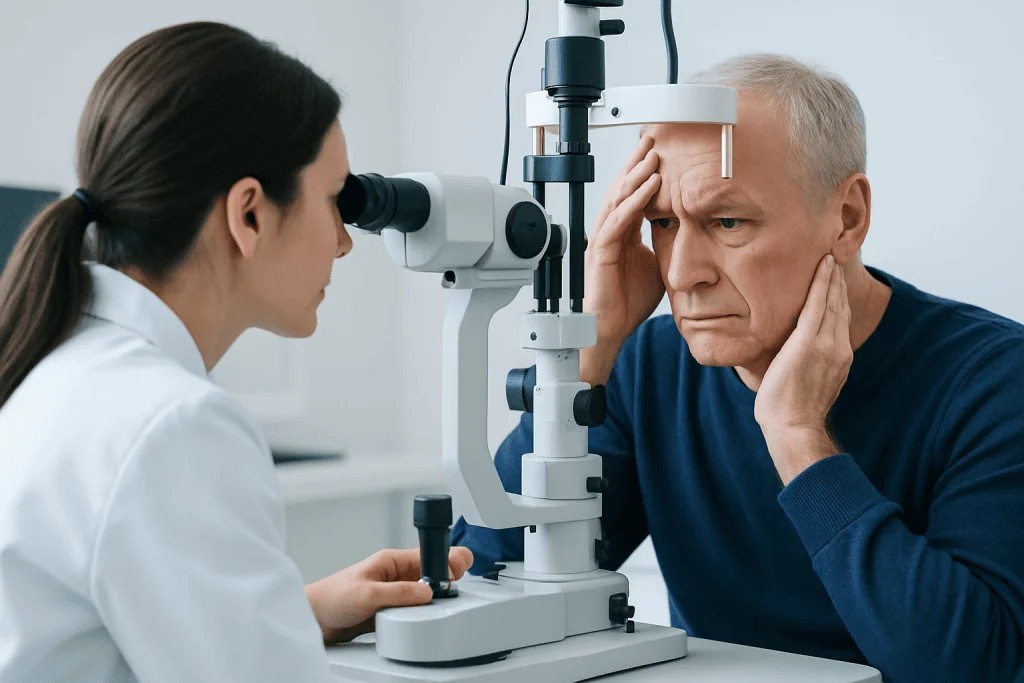
A cataract develops when proteins in the normally clear lens clump together and scatter light before it reaches the retina. Aging is the most common reason, but cataracts can also be associated with diabetes, smoking, long-term corticosteroid use, eye injury, previous eye surgery, radiation exposure, and family history.
Symptoms often develop slowly. A person may feel that glasses are dirty even after cleaning them, need brighter light for reading, become more sensitive to glare, or find night driving increasingly difficult. Colors may appear less vivid, and double vision may occasionally occur in one eye.
These changes can affect confidence with driving, work, hobbies, and recognizing faces. An eye examination can determine whether a cataract is the likely cause of reduced vision or whether another eye condition, such as glaucoma, macular degeneration, or an uncorrected refractive error, also needs attention.
- Cloudy, blurry, or dim vision
- Glare from sunlight, headlights, or lamps
- Halos around lights, especially at night
- Frequent changes in eyeglass prescription
- Reduced color brightness or contrast
Are headaches a common symptom of cataracts?

Headaches are not considered a common or defining symptom of cataracts. Most cataracts are painless, and many people first notice difficulty with night driving, reading, or seeing clearly in bright light rather than pain in the head or eyes.
When headaches happen alongside cataract symptoms, eye strain may be one contributor. For example, a person may unconsciously tense facial muscles, squint, or spend extra effort trying to focus. Updating an eyeglass prescription, improving lighting, taking visual breaks, and arranging an eye examination may help clarify the cause.
Headache and visual symptoms can also occur with migraine, dry eye, sinus problems, medication effects, high blood pressure, glaucoma, and neurological conditions. A clinician should evaluate persistent or changing headaches instead of attributing them to a cataract without an examination.
Diagnosis and deciding whether treatment is needed
An ophthalmologist diagnoses cataracts through a comprehensive eye examination. This commonly includes checking visual acuity, measuring the need for glasses, examining the lens with a slit lamp microscope, assessing eye pressure when appropriate, and dilating the pupils to examine the retina and optic nerve.
A cataract does not need to be removed simply because it is present. Early on, stronger glasses, anti-glare lenses, brighter task lighting, magnification, and limiting night driving may improve function. Surgery is usually considered when the cataract meaningfully interferes with daily activities, work, mobility, safety, or the management of another eye condition.
The decision is individual. The ophthalmologist considers the person’s symptoms, goals, eye health, general health, and expected visual benefit. Cataract surgery may also be recommended when the cloudy lens prevents the doctor from adequately viewing or treating the retina.
Cataract surgery: how it works, candidacy, and steps
Cataract surgery is the only treatment that removes a cataract. During the procedure, the surgeon removes the cloudy natural lens and replaces it with a clear artificial intraocular lens, often called an IOL. The chosen lens can be selected to support distance vision, near vision, astigmatism correction, or a range of visual needs, depending on the eye and the person’s preferences.
Most people are candidates when cataract symptoms affect their quality of life and the eye is otherwise suitable for surgery. The preoperative assessment includes eye measurements for lens selection and a review of medications and medical conditions. Conditions such as severe dry eye, retinal disease, glaucoma, corneal disease, or prior eye surgery may influence planning and expected results.
The procedure is commonly performed with local anesthetic drops and light sedation if needed. The surgeon makes a very small opening, uses ultrasound energy to break up and remove the cloudy lens, then places the IOL in the lens capsule. It is usually an outpatient procedure, and the operation itself often takes a short time, although preparation and monitoring take longer.
People considering treatment can discuss modern cataract surgery options with an ophthalmologist, including the type of intraocular lens that best fits their visual priorities. No lens option can guarantee complete freedom from glasses or eliminate every cause of imperfect vision.
What doctors don't tell you about cataract surgery?
Cataract surgery is widely performed and often improves vision, but realistic expectations are important. Surgery removes lens clouding; it does not cure all eye conditions. Problems involving the retina, optic nerve, cornea, or long-standing amblyopia may limit how sharp vision becomes afterward.
Another practical consideration is that the brain needs time to interpret clearer, brighter images. Colors may initially seem unusually vivid, and differences between the operated and unoperated eye may feel noticeable. People who have different prescriptions in each eye may temporarily find glasses less comfortable until the second eye is treated or a new prescription is issued.
Dryness, light sensitivity, mild irritation, and fluctuating vision can occur during the early healing period. Some people later develop clouding of the lens capsule behind the implanted lens, often called posterior capsule opacification. This is not a new cataract and can usually be treated with a brief laser procedure when it affects vision.
Although uncommon, important surgical risks include infection, bleeding, retinal swelling or detachment, raised eye pressure, corneal swelling, lens-position problems, and reduced vision. The surgical team explains personal risk factors, warning symptoms, postoperative drops, and follow-up needs before treatment.
How long does it take for your brain to adjust after cataract surgery?
Many people see more clearly within a few days after cataract surgery, but the pace of recovery varies. Vision can fluctuate during the first days or weeks as the eye heals, inflammation settles, and the surface of the eye recovers. The final eyeglass prescription is often assessed after the eye has stabilized.
Brain adaptation can take several weeks, especially with multifocal or extended-depth-of-focus lenses, significant astigmatism correction, or a large difference between the two eyes. During this period, some people notice halos, glare, altered depth perception, or that colors and brightness appear different. These effects often become less distracting as the visual system adapts.
Following the postoperative plan supports recovery. This typically includes prescribed eye drops, avoiding rubbing the eye, using protection as advised, and attending follow-up visits. The surgeon can advise when it is safe to return to driving, exercise, swimming, work, and other usual activities.
What is the biggest complaint after cataract surgery?
In the early recovery period, the most frequent concerns are usually temporary blurred or fluctuating vision, dryness, scratchiness, and sensitivity to light. These symptoms commonly improve as the eye heals, but they should be discussed at follow-up visits so that dry eye, inflammation, or another treatable issue is not missed.
For people receiving multifocal lenses, glare, halos, and reduced contrast in low light can be especially noticeable at first. Some people also remain dependent on glasses for certain tasks, even after a lens designed to reduce spectacle use. Careful preoperative counseling and lens selection help align treatment with lifestyle needs.
Contact the surgical team promptly for worsening pain, marked redness, a sudden drop in vision, increasing flashes or floaters, a curtain-like shadow, nausea with eye pain, or discharge. These symptoms are uncommon but can signal a complication that needs urgent assessment.
When to seek medical care
Arrange a routine eye examination if vision is gradually becoming blurry, glare is making driving uncomfortable, glasses no longer provide clear vision, or headaches repeatedly occur after visually demanding activities. An eye professional can check for cataracts and other causes of eye strain or vision change.
Seek same-day urgent assessment for sudden vision loss, severe eye pain, a red eye with halos and nausea, new double vision, flashes of light with many new floaters, or a dark curtain over vision. Emergency services should be contacted for a sudden severe headache accompanied by confusion, fainting, weakness, numbness, facial drooping, difficulty speaking, or loss of coordination.
Acibadem International’s multidisciplinary specialists and JCI-accredited hospitals diagnose and treat cataracts and related eye concerns for international patients. A personalized ophthalmology assessment can help distinguish cataract-related visual strain from other eye or headache conditions.
Frequently asked questions
Can cataracts cause pain behind the eyes?
Cataracts themselves are usually painless and do not typically cause pain behind the eyes. Blurry vision and squinting may contribute to eye strain, but persistent eye pain should be evaluated because it may have another cause. Severe pain with redness, halos, nausea, or sudden vision change needs urgent assessment.
Can removing a cataract help headaches?
If headaches are related to eye strain from blurred vision or an outdated prescription, clearer vision after cataract surgery may reduce that trigger. However, cataract surgery is not a primary treatment for headache disorders. Ongoing headaches should be discussed with a doctor, particularly if they change in pattern or severity.
Do cataracts make headaches worse at night?
Cataracts can make night vision more difficult because headlights and streetlights may create glare or halos. The extra effort of driving or focusing in low light may contribute to eye strain in some people. However, nighttime headaches can have many causes and are not specific to cataracts.
How long does it take for your brain to adjust after cataract surgery?
Clearer vision is often noticed within days, while visual recovery and brain adaptation commonly continue over several weeks. Adjustment may take longer with certain premium lens types, dry eye, or different vision between the two eyes. The ophthalmologist can assess whether healing is progressing as expected at follow-up appointments.
What is the biggest complaint after cataract surgery?
Temporary blurry or fluctuating vision, dry-eye symptoms, and light sensitivity are common early concerns. Some people also notice glare or halos, particularly with multifocal lenses. Worsening pain, redness, or a sudden vision decrease should be reported promptly.
Is cataract surgery safe?
Cataract surgery is a commonly performed procedure and is generally considered safe when appropriately recommended and performed. As with any operation, there are possible risks, including infection, inflammation, retinal problems, pressure changes, and vision that does not meet expectations. A preoperative assessment helps the surgeon explain individual benefits and risks.
References
- American Academy of Ophthalmology
- National Eye Institute
- Mayo Clinic
- National Health Service
- American Society of Cataract and Refractive Surgery
This article is for general information only and is not a substitute for professional medical advice. Please consult a qualified doctor about your individual situation.
Persistent digestive symptoms? Get evaluated in Turkey
JCI-accredited · board-certified surgeons · reply within 24h
Add us as a Preferred Source to see more of our trusted health content across Google Search, AI Overviews and Discover.
Check your numbers in seconds
BMI, calories, due date, blood pressure and 30+ more clinical calculators — free, instant, doctor-reviewed ranges.