Knee Replacement Surgery: Candidates, Implant Types, and Recovery

Knee replacement surgery is most often considered for severe arthritis or joint damage that limits daily life despite medication, therapy, injections, or lifestyle measures. A total knee replacement resurfaces all major joint compartments, while partial knee replacement may be suitable when damage is limited to one area.
Key Takeaways
- Knee replacement surgery is most often considered for severe arthritis or joint damage that limits daily life despite medication, therapy, injections, or lifestyle measures.
- A total knee replacement resurfaces all major joint compartments, while partial knee replacement may be suitable when damage is limited to one area.
- Implants are selected according to anatomy, bone quality, ligament stability, activity level, and the surgeon’s assessment.
- Recovery depends on rehabilitation, pain control, wound care, and gradual return to activity under medical guidance.
- Patients should seek urgent medical advice after surgery for fever, increasing redness, sudden calf swelling, chest pain, or shortness of breath.
Knee replacement surgery is a well-established orthopedic procedure that can reduce pain and improve mobility when severe knee damage no longer responds to nonsurgical care. Understanding candidacy, implant options, and recovery helps patients make informed decisions with their orthopedic team.
Overview
Knee replacement surgery, also called knee arthroplasty, is an operation to replace damaged joint surfaces of the knee with artificial components. It is usually recommended when the knee joint has become severely worn, painful, stiff, or deformed, and when nonsurgical treatments no longer provide enough relief. The goal is not to create a brand-new knee, but to reduce pain, improve alignment, and help the person walk and perform daily activities more comfortably.
The knee is a complex joint formed by the thigh bone, shin bone, and kneecap, with cartilage, menisci, ligaments, tendons, and muscles working together for movement and stability. In conditions such as osteoarthritis, rheumatoid arthritis, post-traumatic arthritis, or certain bone disorders, the smooth cartilage can wear away. When bone surfaces rub together, pain, swelling, stiffness, and reduced mobility may become persistent.
Knee replacement is an elective procedure for most patients, which means there is usually time to prepare, ask questions, and consider the benefits and risks. The decision is individualized. It depends on the severity of symptoms, X-ray or imaging findings, overall health, expectations, and the patient’s ability to participate in rehabilitation after surgery.
Who Is a Candidate for Knee Replacement Surgery?
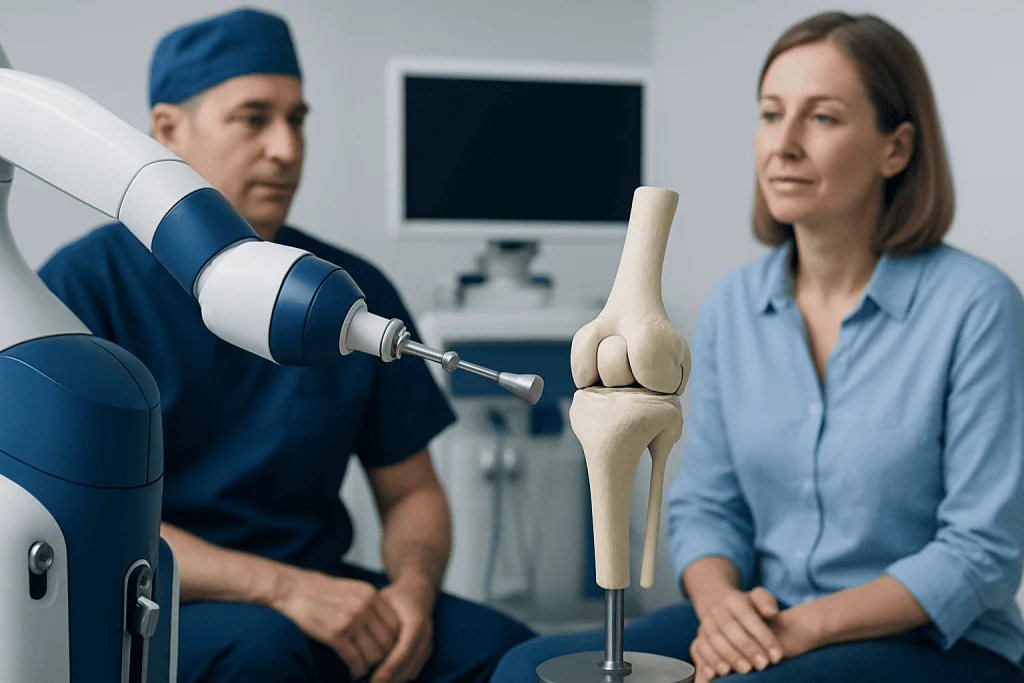
A person may be considered a candidate for knee replacement when knee pain and stiffness significantly affect quality of life. Typical examples include pain while walking short distances, climbing stairs, standing from a chair, or sleeping at night. Some patients also develop bowing of the leg, a feeling that the knee may give way, or a reduced ability to work, exercise, or care for themselves.
Orthopedic specialists usually recommend trying appropriate nonsurgical treatments before surgery, unless joint damage is advanced and disabling. These may include weight management if needed, activity modification, physiotherapy, walking aids, anti-inflammatory medicines when safe, pain relievers, bracing, or joint injections. If these measures no longer control symptoms, surgery may become a reasonable option.
Good candidates are generally healthy enough to undergo anesthesia and participate in postoperative rehabilitation. Conditions such as uncontrolled diabetes, active infection, severe circulation problems, untreated dental or skin infections, or major heart or lung disease may need to be addressed before surgery. Age alone is not the main deciding factor; functional limitation, pain, joint damage, and overall medical fitness are more important.
A patient’s expectations also matter. Knee replacement can often provide substantial pain relief and improved function, but it does not guarantee a completely normal knee or unlimited activity. High-impact sports, repeated jumping, or heavy manual strain may be discouraged to protect the implant. A clear discussion with the surgeon helps align the treatment plan with the patient’s goals.
Types of Knee Replacement and Implant Options
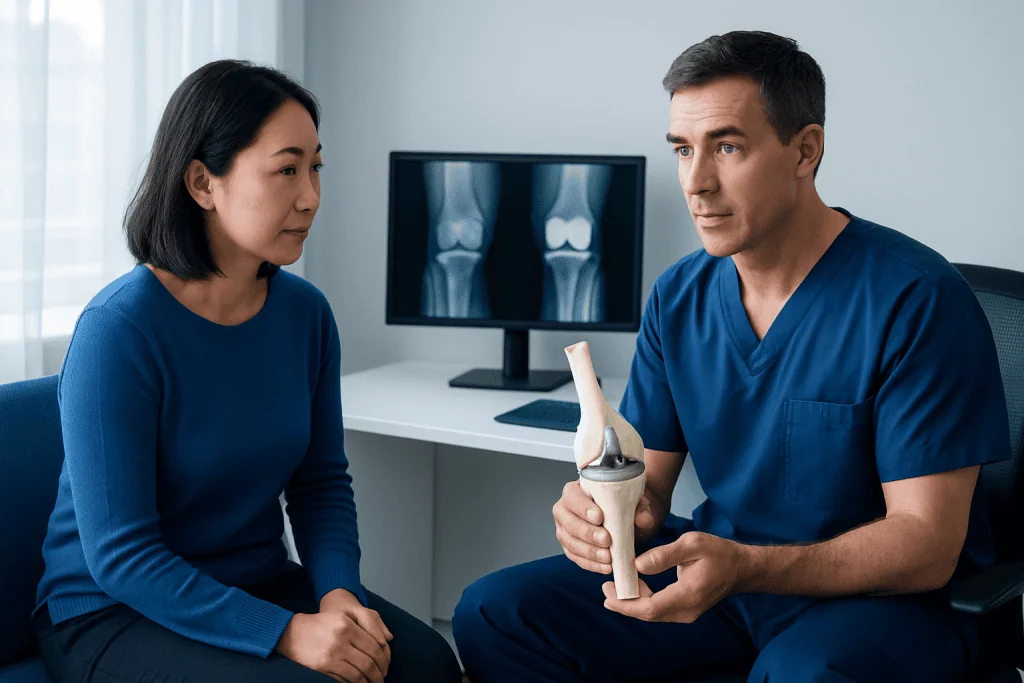
There are several types of knee replacement procedures. In total knee replacement, the surgeon replaces the damaged surfaces of the thigh bone and shin bone and may also resurface the underside of the kneecap. This is the most common approach when arthritis affects multiple compartments of the knee. It is designed to restore a smoother gliding surface and correct deformity when possible.
Partial knee replacement, also called unicompartmental knee replacement, may be considered when arthritis is limited to one compartment of the knee and the ligaments are stable. Because less bone is removed, recovery may be faster for selected patients. However, it is not suitable for everyone, and arthritis in other parts of the knee can progress over time.
Implants are made from combinations of metal alloys, high-grade polyethylene plastic, and sometimes ceramic-related materials. The surgeon may use cemented fixation, where bone cement holds the components in place, or cementless fixation, where bone grows onto the implant surface over time. The best choice depends on bone quality, age, activity level, anatomy, and the surgeon’s experience.
Implant designs also differ in how they work with the knee ligaments. Some implants preserve the posterior cruciate ligament, while others substitute for it with a special design. More constrained implants may be used when ligaments are weak or deformity is significant. Patients do not need to choose an implant alone; the orthopedic surgeon explains the options and recommends a design suited to the individual knee.
Diagnosis and Preoperative Assessment
Before recommending knee replacement, the orthopedic team performs a detailed assessment. This includes a medical history, physical examination, and imaging. The doctor asks about pain location, stiffness, walking distance, previous injuries, medications, medical conditions, and how symptoms affect daily life. During the examination, the doctor checks range of motion, swelling, tenderness, leg alignment, muscle strength, and knee stability.
Weight-bearing X-rays are commonly used to show joint-space narrowing, bone spurs, deformity, and the pattern of arthritis. In some cases, MRI or CT imaging may be used, especially if the diagnosis is uncertain, previous surgery has changed the anatomy, or a customized surgical plan is being considered. Blood tests and other investigations may be requested to evaluate general health before anesthesia.
Preoperative planning also includes reviewing medicines, allergies, past anesthesia experiences, and risks such as blood clots or infection. Patients may be advised to stop smoking, improve blood sugar control, treat skin or dental infections, and strengthen muscles before surgery. Prehabilitation exercises can make early recovery easier by improving flexibility, balance, and confidence.
The surgical team also discusses practical preparation. This may include arranging help at home, removing tripping hazards, preparing a comfortable sleeping area, and planning transportation. Patients are usually taught how to use crutches or a walker and how to perform early exercises safely.
How the Procedure Is Performed
Knee replacement surgery is performed in an operating room under anesthesia. The anesthesia plan may include general anesthesia, spinal or regional anesthesia, and nerve blocks for pain control, depending on the patient’s health and the anesthesiologist’s recommendation. Antibiotics are typically given around the time of surgery to reduce infection risk, and measures are used to help prevent blood clots.
During the operation, the surgeon makes an incision over the knee, moves the soft tissues carefully, removes damaged cartilage and a small amount of bone, and shapes the bone surfaces to fit the implant components. The components are then fixed in position, and the knee is tested for alignment, stability, and movement. The incision is closed with sutures, staples, or surgical glue, depending on the technique used.
Many hospitals use enhanced recovery pathways, which aim to reduce discomfort, support early mobility, and shorten unnecessary bed rest. Some procedures may be assisted by computer navigation, robotic-arm technology, or patient-specific planning tools. These technologies can help with precision in selected cases, but the surgeon’s judgment, experience, and proper rehabilitation remain central to the outcome.
After surgery, patients are monitored as they wake from anesthesia. Pain is managed with a planned combination of medicines and non-drug methods such as ice, elevation, and gentle movement. Most patients begin standing and walking with support soon after surgery, as guided by the medical and physiotherapy team.
Recovery and Rehabilitation
Recovery after knee replacement is gradual. The first days focus on pain control, wound care, prevention of blood clots, and safe walking. Physiotherapy begins early and usually includes ankle pumps, gentle knee bending and straightening, quadriceps activation, and assisted walking. The exact schedule varies according to the hospital protocol, the patient’s health, and the surgeon’s instructions.
At home, patients are encouraged to follow the exercise program consistently without overdoing it. Swelling, warmth, bruising, and fatigue can be expected in the early weeks, but these should slowly improve. Elevating the leg, applying cold therapy as advised, taking prescribed medicines safely, and keeping the wound clean and dry are important parts of recovery.
Rehabilitation aims to restore range of motion, strength, balance, and walking confidence. Many patients progress from a walker to crutches or a cane and then to independent walking as strength improves. Returning to driving, work, household tasks, and travel depends on which knee was operated on, pain medicine use, reaction time, job demands, and medical clearance.
Low-impact activities such as walking, swimming, stationary cycling, and gentle strengthening are commonly encouraged after healing. High-impact activities may place excessive stress on the implant and should be discussed with the surgeon. A successful recovery is usually the result of teamwork between the patient, surgeon, physiotherapist, and primary care or medical specialists when needed.
Risks, Implant Lifespan, and Long-Term Care
Like all major surgery, knee replacement has possible risks, although many patients recover well with appropriate care. Potential complications include infection, blood clots, stiffness, persistent pain, wound healing problems, nerve or blood vessel injury, implant loosening, instability, or the need for revision surgery in the future. The orthopedic team takes preventive steps, and patients receive instructions to reduce these risks.
Implants are designed to be durable, but they can wear or loosen over time. Longevity depends on several factors, including body weight, activity level, bone quality, implant position, medical conditions, and whether injuries occur after surgery. Regular follow-up visits allow the surgeon to monitor the implant and address concerns early.
Long-term care includes maintaining a healthy weight, staying active with joint-friendly exercise, managing chronic conditions, and protecting against falls. Patients should inform healthcare professionals that they have a knee implant before certain procedures or evaluations. Any new, unexplained pain, swelling, or instability in a replaced knee should be assessed rather than ignored.
Patients considering treatment abroad should also plan for continuity of care after returning home, including physiotherapy and follow-up. Acibadem International’s multidisciplinary specialists and JCI-accredited hospitals diagnose and treat knee conditions, including knee replacement, for international patients who need coordinated orthopedic care.
When to See a Doctor
A person with persistent knee pain should see a doctor when symptoms interfere with walking, sleep, work, or daily activities, especially if pain continues despite rest, exercise modification, medication, or physiotherapy. Early evaluation can confirm the cause and help determine whether nonsurgical options remain appropriate or whether referral to an orthopedic surgeon is needed.
After knee replacement surgery, patients should contact their healthcare team if pain suddenly worsens, the wound becomes increasingly red or drains fluid, fever develops, or swelling does not improve as expected. Medical advice is also important for calf pain, marked calf swelling, shortness of breath, chest pain, or sudden dizziness, as these symptoms may require urgent evaluation.
Patients should also seek review if the knee becomes increasingly stiff, unstable, or difficult to move during recovery. Timely physiotherapy adjustments, pain management changes, or further examination can help keep recovery on track. No patient should change prescribed blood thinners, antibiotics, or pain medicines without guidance from a qualified doctor.
Frequently asked questions
What conditions most often lead to knee replacement surgery?
Severe osteoarthritis is the most common reason for knee replacement surgery. Other causes include rheumatoid arthritis, post-traumatic arthritis after injury, and certain deformities or bone conditions that damage the joint surface.
Is total knee replacement better than partial knee replacement?
Neither option is automatically better for everyone. Total knee replacement is used when damage affects several areas of the knee, while partial knee replacement may be suitable when arthritis is limited to one compartment and the ligaments are stable. The surgeon recommends the approach based on examination, imaging, and the patient’s goals.
How painful is recovery after knee replacement?
Some pain and swelling are expected after surgery, especially in the early weeks. Modern pain management often uses a combination of medications, ice, elevation, nerve blocks, and physiotherapy. Pain should gradually become more manageable, and worsening or unusual pain should be discussed with the healthcare team.
How long does it take to walk normally after knee replacement?
Many patients begin walking with assistance soon after surgery, but a normal walking pattern takes time to return. Progress depends on strength, balance, swelling, pain control, and commitment to rehabilitation. The physiotherapist and surgeon provide individualized milestones.
How long do knee implants last?
Knee implants are designed for long-term use, but they are not permanent in every case. Wear, loosening, injury, infection, or changes in bone quality can affect implant lifespan. Regular follow-up and joint-friendly activity help protect the replacement knee.
Can both knees be replaced at the same time?
Some patients with severe arthritis in both knees may be candidates for bilateral knee replacement, either at the same operation or in staged procedures. The decision depends on age, general health, heart and lung fitness, support at home, and the surgeon’s assessment. Staged surgery may be safer or more practical for many patients.
What activities should be avoided after knee replacement?
Patients are usually encouraged to return to low-impact activities such as walking, swimming, cycling, and strengthening exercises after medical clearance. High-impact sports, repetitive jumping, and heavy strain may increase wear or injury risk. Activity choices should be discussed with the orthopedic surgeon.
References
- American Academy of Orthopaedic Surgeons
- National Institute for Health and Care Excellence
- Mayo Clinic
- Arthritis Foundation
- World Health Organization
This article is for general information only and is not a substitute for professional medical advice. Please consult a qualified doctor about your individual situation.
Joint and spine care in Turkey — expert assessment & treatment
JCI-accredited · board-certified surgeons · reply within 24h